



Is Hell a Place or a State of Mind? Zen’s Answer
Quick Summary
- In Zen, “hell” is often understood less as a destination and more as a lived experience created by the mind under pressure.
- Hell shows up when attention narrows, stories harden, and everything feels personal, urgent, and inescapable.
- This doesn’t deny suffering; it points to how suffering is intensified by resistance, fixation, and reactive habits.
- Zen language tends to describe hell in ordinary terms: conflict at work, resentment in relationships, exhaustion, and spiraling thoughts.
- “Place” and “state of mind” can overlap: the same room can feel like a refuge or a prison depending on what the mind is doing.
- Seeing hell as a mental state is not self-blame; it’s a way to notice what adds fuel to pain.
- The meaning becomes clearest in real moments—when reactivity loosens and experience becomes a little more spacious.
Introduction
If you’re searching for “zen hell meaning,” you’re probably stuck between two unsatisfying options: either hell is a literal place you’re supposed to fear, or it’s “just in your head” and therefore not real. Zen doesn’t force that choice—it points to how hell is experienced, moment by moment, when the mind locks onto a story and can’t let go. This approach is grounded in practical observation rather than belief, and it’s been tested for centuries in the plain facts of attention, reaction, and daily life.
When people ask whether hell is a place or a state of mind, they’re often asking something more personal: “Why does my life feel unbearable even when nothing ‘big’ is happening?” Zen answers by looking closely at what the mind does under stress—how it tightens, argues with reality, and turns ordinary discomfort into something that feels endless.
What Zen Points To When It Uses the Word “Hell”
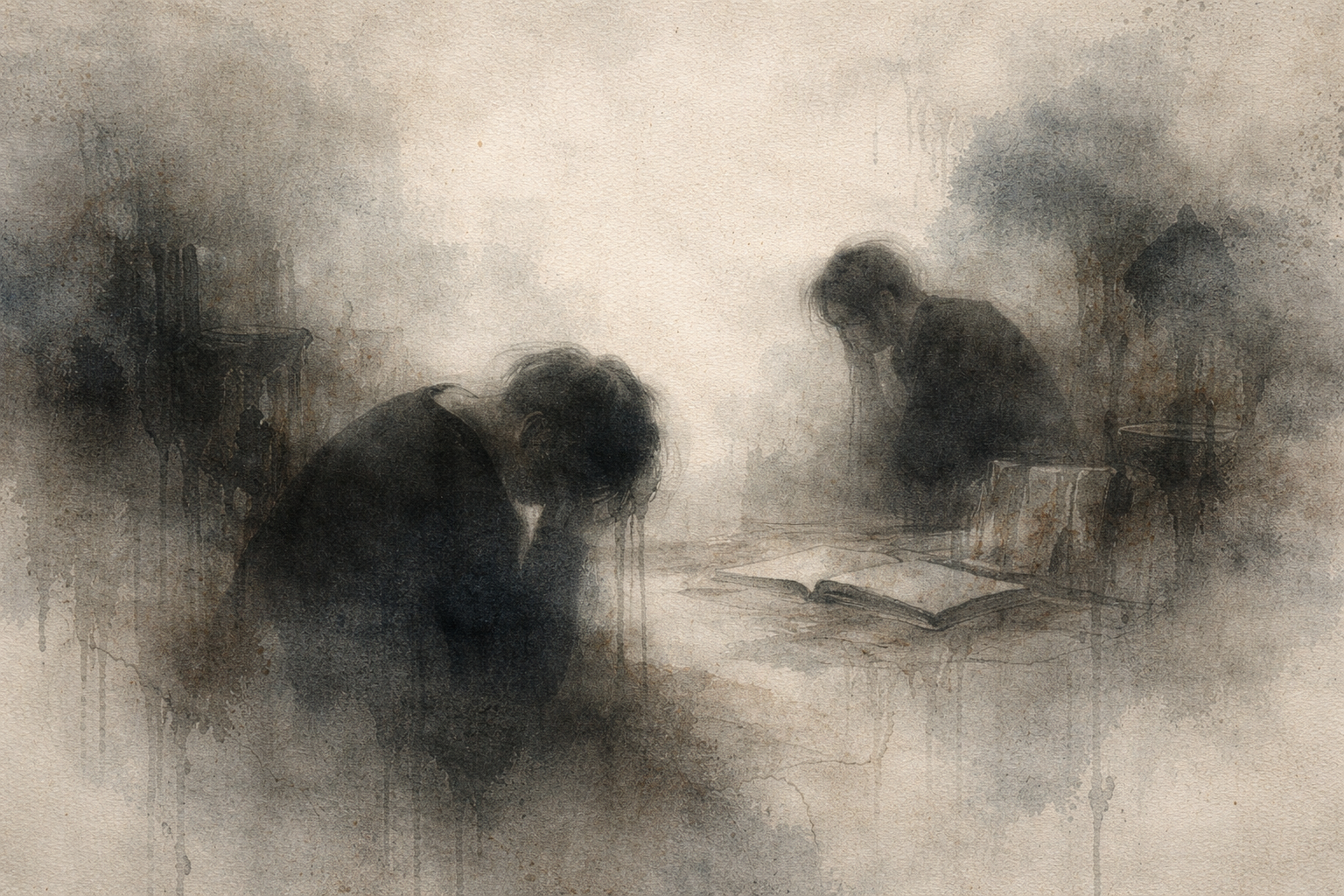
In Zen, “hell” is often used as a mirror for a certain kind of experience: the feeling of being trapped inside your own reactions. It’s not presented as a theory to accept, but as a lens for noticing how suffering is constructed in real time—especially when the mind insists that things must be different right now.
Seen this way, hell isn’t primarily about flames or punishment. It’s the heat of friction: the mind rubbing against what is happening. At work, it can look like replaying a conversation for the tenth time, trying to win an argument that already ended. In relationships, it can look like keeping score, silently building a case, and calling that tension “protection.”
Zen also doesn’t require you to pretend that circumstances don’t matter. Fatigue, grief, conflict, and uncertainty are real. The point is simpler: when the mind narrows around pain and adds a rigid story—“This shouldn’t be happening,” “They always do this,” “I can’t stand this”—the experience becomes more claustrophobic than the situation alone.
So the “meaning” of hell in Zen is often experiential. It’s what life feels like when awareness is squeezed into a single, repetitive channel, and everything outside that channel disappears—silence, nuance, humor, patience, and the possibility that the next moment might not be identical to the last.
How Hell Shows Up in Ordinary Moments
Hell can appear in the smallest situations: an email that feels accusatory, a delayed train, a partner’s distracted tone. The outer event may be minor, but the inner response can become total. Attention collapses onto a single interpretation, and the body follows—tight jaw, shallow breath, a restless need to fix or defend.
Often it starts as a quick reaction that seems reasonable: “That was unfair.” Then the mind returns to it again and again, not because it’s helpful, but because it’s sticky. The story gains weight with each replay. Soon the day is organized around it, and everything else—food, sunlight, a kind message from someone else—barely registers.
In relationships, hell can look like certainty. Not certainty about facts, but certainty about motives: “They meant to hurt me.” Once that certainty sets in, listening becomes difficult. Even silence becomes suspicious. The mind keeps scanning for evidence, and the heart stays braced, as if tenderness would be unsafe.
At work, hell can be the feeling that you’re always behind. The task list becomes a verdict on your worth. Even when you sit down to rest, the mind keeps working—planning, regretting, rehearsing. The body is in a chair, but attention is trapped in a future that hasn’t arrived.
Fatigue has its own version. When you’re tired, everything can feel sharper and more personal. A small inconvenience becomes insulting. A neutral comment sounds like criticism. The mind doesn’t just register discomfort; it argues with it. And that argument can be more exhausting than the tiredness itself.
Even quiet can become hellish when the mind is unsettled. In a silent room, thoughts can get louder. Old memories surface. Imagined conversations start up. The mind tries to fill space with control, and the more it tries, the less spacious the silence feels.
Zen points to a subtle shift that sometimes happens in the middle of all this: a moment of noticing. Noticing that the mind is repeating. Noticing the body is braced. Noticing that the story has become the whole world. In that noticing, the “place” of hell is revealed as a way experience is being held—tight, fast, and unquestioned.
Misreadings That Make the Idea Harder Than It Needs to Be
A common misunderstanding is that calling hell a “state of mind” means suffering isn’t real. But Zen’s emphasis is usually the opposite: it takes suffering seriously enough to examine how it operates. Pain can be unavoidable; the extra layers—rumination, self-attack, rigid blame—often aren’t as inevitable as they feel.
Another misunderstanding is self-blame: “If hell is in the mind, then it’s my fault.” Zen tends to frame these patterns as conditioned habits, not moral failures. When someone is stressed, sleep-deprived, or scared, the mind does what minds do: it narrows, it grasps, it tries to secure certainty. Seeing that pattern is not condemnation; it’s clarity.
Some people also hear “hell is a state of mind” and assume it means you should stay calm all the time. That expectation can become its own trap—another standard to fail, another reason to feel inadequate. Zen language is often plainer: it points to what is happening, including agitation, without demanding a different personality.
Finally, it’s easy to turn the idea into a debate about metaphysics: place versus mind, literal versus symbolic. Zen usually keeps returning to the immediate question: what is this moment like when the mind is clenched, and what is it like when the clenching softens even slightly? The meaning is found there, in ordinary experience.
Why This View Can Feel Relevant in Daily Life
When hell is understood as an experience shaped by reactivity, daily life becomes a clearer mirror. A tense commute, a difficult meeting, a lonely evening—these aren’t just “events,” they’re places where the mind’s habits become visible. The same situation can feel completely different depending on whether the mind is fighting, clinging, or simply registering what’s here.
This perspective can also soften how people relate to each other. When someone is harsh or withdrawn, it may be less about their character and more about the inner pressure they’re living with. That doesn’t excuse harm, but it can reduce the sense that every conflict must be taken as a final statement about who someone is.
It can change how silence is interpreted, too. Silence isn’t automatically peaceful; it can expose what’s been avoided. But it can also reveal that thoughts are events, not commands. In small gaps—between one reaction and the next—there can be a hint of space, even if nothing outward changes.
And it can make ordinary kindness feel less sentimental and more practical. When the mind is not adding fuel to pain, there is often more room for patience, for listening, for not escalating. The “meaning” of hell becomes less like a concept and more like a contrast you recognize in your own day.
Conclusion
Hell is sometimes closest when experience is tightened into a single story and everything else is pushed out. When that tightening is seen, even briefly, the world can feel less sealed. The Dharma is not far from this: it appears in the simple difference between being carried by reaction and knowing reaction as reaction. The rest is verified in the texture of ordinary moments.
Frequently Asked Questions
- FAQ 1: What does “hell” mean in Zen?
- FAQ 2: Is hell a literal place in Zen Buddhism?
- FAQ 3: Is Zen hell meaning the same as “hell is just a state of mind”?
- FAQ 4: How does Zen describe the experience of “hell” in daily life?
- FAQ 5: Does Zen deny the existence of hell realms?
- FAQ 6: Why does Zen talk about hell if it focuses on the present moment?
- FAQ 7: What is the difference between pain and “hell” in Zen terms?
- FAQ 8: Can relationships feel like “hell” in the Zen sense?
- FAQ 9: How does anger relate to zen hell meaning?
- FAQ 10: How does anxiety relate to zen hell meaning?
- FAQ 11: Is zen hell meaning about punishment or morality?
- FAQ 12: Does Zen use “hell” as a metaphor?
- FAQ 13: How does compassion fit with zen hell meaning?
- FAQ 14: Why do some Zen texts use vivid hell imagery?
- FAQ 15: What is the simplest way to understand zen hell meaning?
FAQ 1: What does “hell” mean in Zen?
Answer: In Zen usage, “hell” often points to a lived experience of intense constriction—when the mind is caught in reactivity, fixation, and resistance, and life feels inescapable even if the outer situation is ordinary. It’s less a doctrine to believe and more a description of what experience feels like when attention narrows and the inner story becomes absolute.
Takeaway: Zen hell meaning is often about how suffering is experienced when the mind is tightly caught.
FAQ 2: Is hell a literal place in Zen Buddhism?
Answer: Zen discussions commonly emphasize what can be verified in immediate experience, so “hell” is frequently treated as something you can recognize here and now as a mental state. That said, Zen doesn’t always frame the question as “literal versus not literal”; it tends to ask what the word is pointing to in lived reality—how suffering is made heavier or lighter in the present.
Takeaway: Zen often shifts the question from “Where is hell?” to “How is hell being experienced right now?”
FAQ 3: Is Zen hell meaning the same as “hell is just a state of mind”?
Answer: It’s close, but Zen usually avoids the dismissive tone that “just a state of mind” can imply. Zen hell meaning highlights that mental states are powerful and embodied—affecting breath, posture, speech, and relationships—so the suffering is real even if it’s not a physical location. The emphasis is on noticing the mechanics of how the mind intensifies pain.
Takeaway: In Zen, “state of mind” doesn’t mean “not real”—it means “directly observable.”
FAQ 4: How does Zen describe the experience of “hell” in daily life?
Answer: Zen hell meaning often shows up as everyday stuckness: replaying arguments, feeling trapped by resentment, spiraling in worry, or turning fatigue into irritability and blame. The outer conditions may be manageable, but the inner resistance makes the moment feel sealed and airless. Zen points to that “sealed” quality as a key feature of hell-like experience.
Takeaway: Hell can be recognized by the feeling of being trapped inside reaction.
FAQ 5: Does Zen deny the existence of hell realms?
Answer: Zen tends not to center debates about unseen realms, because its language often aims at what can be confirmed in experience. Many Zen explanations focus on how “hell” is created and ended in the mind’s immediate grasping and resistance. This focus doesn’t have to function as a denial; it’s a shift toward what is most directly knowable.
Takeaway: Zen commonly prioritizes the hell you can recognize in lived experience.
FAQ 6: Why does Zen talk about hell if it focuses on the present moment?
Answer: Because “hell” is often used to name a present-moment experience: the mind’s contraction into hostility, fear, or despair. Zen hell meaning is not mainly about the afterlife; it’s about what happens now when the mind fights reality and multiplies suffering through repetitive stories and reactive impulses.
Takeaway: In Zen, hell is often a description of what the present moment can feel like.
FAQ 7: What is the difference between pain and “hell” in Zen terms?
Answer: Pain can be a direct fact—physical discomfort, loss, disappointment. Zen hell meaning often refers to what gets added: the mental struggle, the insistence that it must not be happening, the self-judgment, the blame, and the sense of being trapped. The “hell” quality is frequently tied to that added layer of resistance and fixation.
Takeaway: Pain may be unavoidable; “hell” often points to the extra suffering created by resistance.
FAQ 8: Can relationships feel like “hell” in the Zen sense?
Answer: Yes. Zen hell meaning can describe relational moments where the mind hardens into certainty—about motives, about who is right, about what someone “always” does. When listening collapses and the body stays braced, even small interactions can feel unbearable. Zen points to the inner tightening that turns conflict into a closed world.
Takeaway: Relationship “hell” often comes from rigid stories that leave no room to breathe.
FAQ 9: How does anger relate to zen hell meaning?
Answer: Anger can create a hell-like experience when it becomes self-sustaining: replaying offenses, scanning for threats, and interpreting everything through a hostile lens. In Zen hell meaning, the key is not that anger exists, but that attention becomes captured by it, making the world feel smaller, harsher, and more personal than it needs to be.
Takeaway: Anger becomes “hell” when it takes over the whole field of experience.
FAQ 10: How does anxiety relate to zen hell meaning?
Answer: Anxiety can resemble hell when the mind lives in a future that never arrives—endless planning, rehearsing, and bracing. Zen hell meaning highlights how this future-focus can feel like imprisonment: the body is here, but attention is trapped in imagined outcomes. The suffering comes from the tight grip of anticipation and the inability to rest in what is actually happening.
Takeaway: Anxiety can be hell when attention cannot leave the imagined future.
FAQ 11: Is zen hell meaning about punishment or morality?
Answer: Zen discussions often treat “hell” less as punishment and more as cause-and-effect in experience: when the mind clings, resists, and reacts, suffering increases; when that grip loosens, suffering eases. This isn’t framed as a moral scorecard so much as a description of how certain mental habits burn and how others cool.
Takeaway: Zen hell meaning is commonly about how suffering is generated, not about being condemned.
FAQ 12: Does Zen use “hell” as a metaphor?
Answer: Often, yes—though Zen tends to use metaphors as pointers to direct experience rather than as literary decoration. “Hell” can function as a vivid name for the felt sense of contraction, isolation, and relentless inner conflict. The metaphor matters because many people recognize it immediately in their own mind-states.
Takeaway: In Zen, “hell” frequently points to a recognizable inner experience.
FAQ 13: How does compassion fit with zen hell meaning?
Answer: If hell is understood as a mind caught in painful patterns, compassion becomes a natural response rather than a sentimental ideal. It acknowledges that people act harshly when they feel trapped, threatened, or humiliated inside. Zen hell meaning can soften the impulse to escalate by recognizing the pressure underneath reactivity—both in oneself and others.
Takeaway: Seeing “hell” as inner constriction can make compassion feel practical and grounded.
FAQ 14: Why do some Zen texts use vivid hell imagery?
Answer: Vivid imagery can make an inner reality unmistakable. Zen hell meaning is often about intensity—how the mind can create torment through fixation, hatred, or fear—so strong images can serve as a mirror for that intensity. The point is frequently to recognize the pattern, not to provide a map of a physical underworld.
Takeaway: Strong hell imagery often functions as a mirror for strong mental suffering.
FAQ 15: What is the simplest way to understand zen hell meaning?
Answer: Zen hell meaning can be understood as this: hell is what life feels like when the mind is clenched around a story and cannot release it. The “place” is the same room, the same day, the same people—but the inner grip makes it feel unlivable. When the grip loosens, the same conditions can feel more workable and less absolute.
Takeaway: In Zen, hell is often the felt experience of a mind that cannot let go.