



Why Some Buddhist Deities Look Like Gods but Are Understood Differently
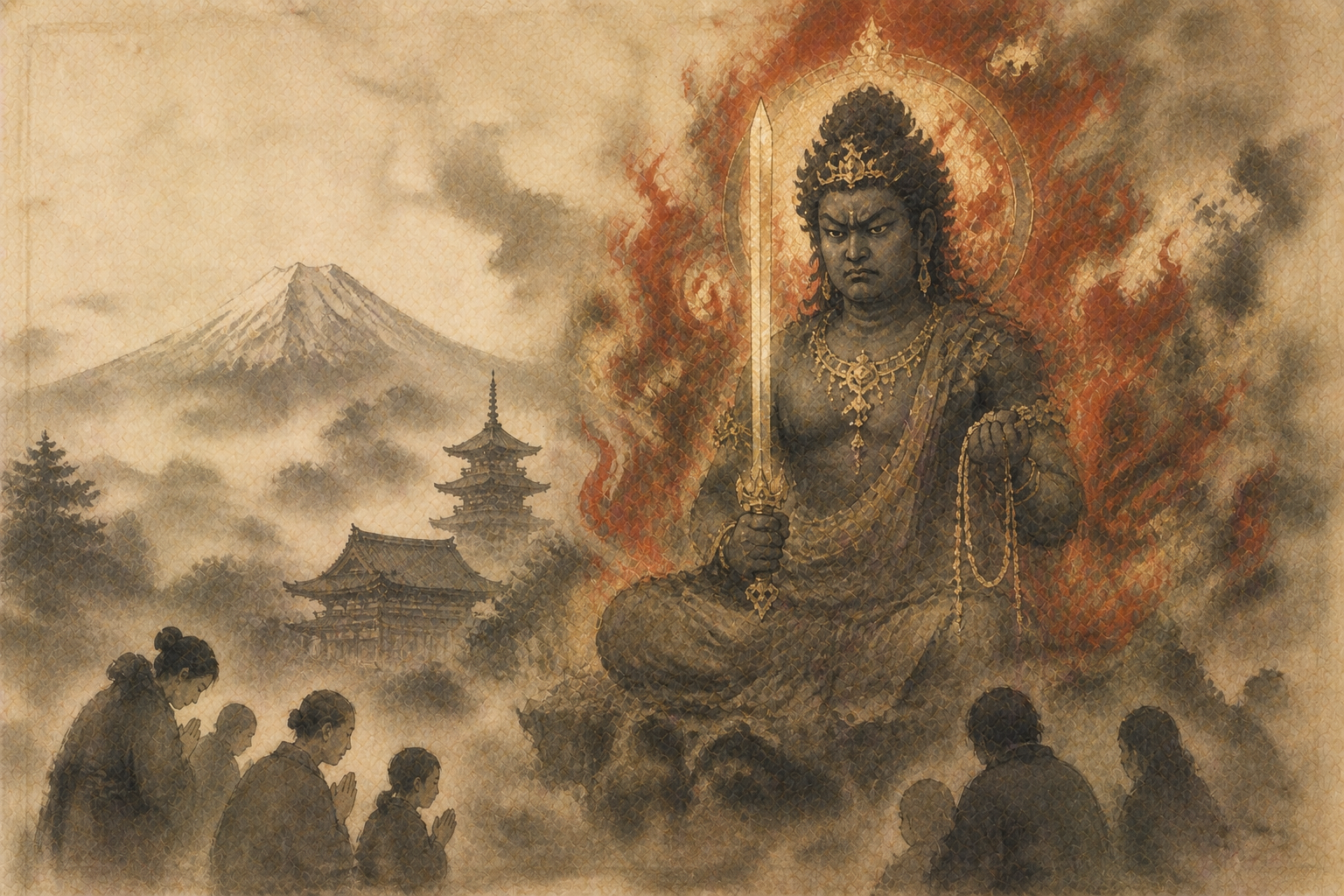
Why Some Buddhist Deities Look Like Gods but Are Understood Differently
Quick Summary
- Buddhist “deities” can resemble gods in art, but they often function as symbols, supports, or personifications of qualities rather than creators or ultimate rulers.
- Many images are designed to work on the mind: they shape attention, emotion, and intention through recognizable forms.
- Offerings and prayers can be understood as relationship-practices that train gratitude, humility, and clarity, not necessarily as bargaining with a supernatural power.
- Wrathful faces and weapons frequently represent fierce compassion and the cutting of confusion, not “evil” or violence.
- Multiple arms, heads, and halos are visual language for capacity and awareness, not literal anatomy.
- Different cultures shaped Buddhist iconography, so familiar “god-like” aesthetics can appear without implying the same theology.
- You can engage these figures as psychological mirrors, ethical reminders, or devotional supports—without needing to force a single interpretation.
Introduction
If you come across Buddhist statues or paintings and think, “This looks exactly like a god,” your confusion is reasonable—and it’s often made worse by translations that flatten everything into the word “deity.” The key is that similar-looking imagery can be doing a very different job: instead of pointing to an all-powerful creator who demands belief, it often points back to the mind, to qualities worth cultivating, and to ways of relating to fear, love, and responsibility. At Gassho, we focus on practical Buddhist understanding and how symbols and rituals function in lived experience.
Some Buddhist figures are serene and radiant, others look royal, and some appear terrifying—crowned with skulls, holding weapons, surrounded by flames. If you grew up around the idea of “God” as a singular, ultimate authority, it can feel like Buddhism is quietly doing the same thing while using different names.
But Buddhist iconography is often closer to a visual psychology than a divine family tree. The images are crafted to communicate: compassion that doesn’t collapse, wisdom that cuts through self-deception, protection that looks fierce because confusion can be stubborn.
GASSHO
Ask and learn about Buddhism in daily life.
GASSHO is a Buddhist community app where you can learn Buddhist teachings and ask questions to the head priest of Kongosanmaiin Temple on Mount Koya.
A Different Lens: What “Deity” Means in Buddhist Context
A helpful way to approach Buddhist deities is to treat them as a lens for understanding experience rather than as a demand to adopt a particular belief about the universe. In many Buddhist settings, a “deity” image is less about describing an external ruler and more about giving form to qualities the mind can recognize, remember, and embody—like compassion, clarity, courage, patience, or protection.
That’s why the same figure can be understood on multiple levels without contradiction. On one level, it can be a cultural religious figure honored with offerings and prayers. On another, it can be a symbolic representation of a human capacity—an artistic “handle” for something subtle. The point is not to win an argument about what exists “out there,” but to support a shift in how you relate to suffering, reactivity, and care.
Iconography is a language. Multiple arms can mean “many skillful ways to help.” A calm face can mean steadiness under pressure. A weapon can mean cutting through confusion. A halo can mean awakened awareness. When you read the image as a language, it stops being a claim like “this being controls the cosmos” and becomes a message like “this is what compassion looks like when it’s strong.”
So yes, some Buddhist deities look like gods because they borrow the visual vocabulary of power, radiance, and protection. But they are often understood differently: not as ultimate creators, but as teachings in form—mirrors, reminders, and supports for practice.
How the Imagery Shows Up in Ordinary Life
In everyday terms, a “god-like” image can function like a steadying reference point. When you’re anxious, your attention narrows and your body braces. Seeing a calm, compassionate figure can cue a different internal posture: shoulders soften, breath lengthens, and the mind remembers a wider view.
When you feel resentment, a wrathful protector image can be surprisingly relevant—not because it validates anger, but because it models intensity without pettiness. The face is fierce, but the meaning is often “no more excuses for harmful habits.” It can help you notice the moment you’re about to speak sharply, and choose a cleaner strength instead.
Offerings can also be understood in a grounded way. Lighting incense, placing flowers, or bowing can train the nervous system to pause. The action says, “I’m not the center of the universe for the next 30 seconds.” That small interruption can be enough to loosen compulsive self-focus.
Prayers can work similarly. Even if you interpret them as speaking to your own deepest intention, the structure matters: you name what you value, you ask for help aligning with it, and you remember that your life affects others. This can shift attention from “How do I get what I want?” to “How do I respond wisely?”
In moments of grief, a compassionate figure can give you permission to feel without drowning. The image becomes a container: not a promise that pain will vanish, but a reminder that tenderness and steadiness can coexist.
In moments of temptation—scrolling, overworking, numbing out—symbolic “deity” language can make inner conflict easier to see. Instead of “I’m bad,” it becomes “confusion is strong right now, and clarity needs support.” That reframing reduces shame and increases responsibility.
Over time, the “god-like” look matters less than the practical effect: does this image, chant, or ritual help you notice your reactions sooner, choose less harm, and return to what’s wholesome? That’s a very different question than “Do I believe in a god?”
Where People Commonly Get Stuck
One common misunderstanding is assuming that if something looks like a god, it must be treated as a god in the same way—an all-powerful being who grants favors if properly pleased. In many Buddhist contexts, devotion is less transactional and more transformational: the point is to shape the heart-mind, not to negotiate outcomes.
Another sticking point is taking symbolic features literally. Multiple heads, flaming auras, and elaborate weapons can look like fantasy mythology. But iconography often compresses meaning into visual shorthand. The “unrealistic” parts are frequently the most instructive parts, because they’re not trying to be biology—they’re trying to be a teaching.
People also get tripped up by the word “worship.” Some Buddhists do use devotional language, and some do not. But even when devotion is present, it can be aimed at awakening qualities rather than surrendering moral agency. The healthiest forms of devotion don’t replace your responsibility; they strengthen it.
A final misunderstanding is thinking Buddhism must be either “purely psychological” or “purely supernatural.” Real communities often hold a range of interpretations at once. You can respect the tradition and engage the practices without forcing yourself into certainty about metaphysics.
Why This Difference Matters in Daily Practice
If you assume Buddhist deities are just gods in disguise, you may either reject them too quickly or relate to them in a way that doesn’t actually help—hoping for rescue while ignoring the patterns that create suffering. Understanding the “different job” these figures do can make the practices feel honest and usable.
When you see a deity image as a skillful symbol, you gain a practical tool for working with attention. The mind learns through repetition and association. A consistent visual reminder of compassion or clarity can be more effective than abstract self-talk when you’re stressed.
This perspective also protects you from spiritual bypassing. Instead of outsourcing your life to a higher power, you’re invited to notice what you’re doing right now—how you speak, what you cling to, what you avoid—and to make small, real changes.
And it can soften cultural friction. You don’t have to mock religious art as “idol worship,” and you don’t have to pretend it matches your old idea of God. You can let the imagery be what it is: a compassionate technology for the heart.
Conclusion
Some Buddhist deities look like gods because the art uses familiar signals of power, protection, and radiance. But they are often understood differently: as symbolic forms, personified qualities, and practical supports that point back to your own mind and conduct. When you approach them as a language of transformation rather than a demand for belief, the “god-like” appearance becomes less of a contradiction and more of an invitation to practice.
Ask a Buddhist priest
Have a question about Buddhism?
In the GASSHO app, you can ask questions about Buddhist teachings, daily concerns, and how to understand Buddhism in everyday life.
Frequently Asked Questions
- FAQ 1: Why do some Buddhist deities look like gods from other religions?
- FAQ 2: Are Buddhist deities considered gods in the creator sense?
- FAQ 3: If they aren’t gods, why are offerings made to Buddhist deities?
- FAQ 4: What do multiple arms and heads mean on Buddhist deities?
- FAQ 5: Why do some Buddhist deities look wrathful or frightening?
- FAQ 6: Are Buddhist deities meant to be taken literally or symbolically?
- FAQ 7: How is praying to a Buddhist deity different from praying to a god?
- FAQ 8: Why do Buddhist deities have crowns, jewelry, and royal clothing?
- FAQ 9: Does Buddhism teach polytheism because there are many deities?
- FAQ 10: Are Buddhist deities the same as Buddhas?
- FAQ 11: If Buddhist deities aren’t ultimate gods, why ask them for protection or help?
- FAQ 12: Why do some Buddhist deities carry weapons if Buddhism values non-harming?
- FAQ 13: Is it “idol worship” to bow to Buddhist deity statues?
- FAQ 14: Why do Buddhist deities sometimes resemble Hindu gods?
- FAQ 15: How can I relate to Buddhist deities respectfully if I don’t believe in gods?
FAQ 1: Why do some Buddhist deities look like gods from other religions?
Answer: Buddhist art developed in cultures that already used royal and divine imagery to represent power, protection, and blessing. Buddhism often adopted that visual vocabulary, but the figures are frequently interpreted as symbolic embodiments of qualities (like compassion or wisdom) rather than as creator-gods who rule the universe.
Takeaway: Similar aesthetics don’t automatically mean the same theology.
FAQ 2: Are Buddhist deities considered gods in the creator sense?
Answer: Typically, no. Many Buddhist contexts do not treat these figures as ultimate creators or final authorities over reality. They are more often understood as awakened exemplars, protective figures, or symbolic forms that support practice and ethical living.
Takeaway: “Deity” in Buddhism often points to function and meaning, not a creator role.
FAQ 3: If they aren’t gods, why are offerings made to Buddhist deities?
Answer: Offerings can be practiced as a way to cultivate gratitude, humility, generosity, and recollection of what matters. Even when devotion is present, the act often aims to transform the practitioner’s mind rather than to purchase favors from a divine being.
Takeaway: Offerings can be inner training, not a transaction.
FAQ 4: What do multiple arms and heads mean on Buddhist deities?
Answer: They are usually symbolic. Multiple arms can represent many skillful ways to help; multiple heads can represent expanded awareness or different aspects of wisdom. The imagery is meant to communicate capacity, not literal anatomy.
Takeaway: Iconography is visual language, not a biology claim.
FAQ 5: Why do some Buddhist deities look wrathful or frightening?
Answer: Wrathful forms often symbolize fierce compassion and the energy to cut through confusion, fear, and harmful habits. The intensity is aimed at protecting what is wholesome, not expressing hatred or cruelty.
Takeaway: “Wrathful” often means protective clarity, not evil.
FAQ 6: Are Buddhist deities meant to be taken literally or symbolically?
Answer: Different practitioners and communities hold different views, and some hold more than one view at once. A practical approach is to notice what the image or practice does in your mind—does it cultivate compassion, steadiness, and responsibility?—without forcing a single rigid interpretation.
Takeaway: Many people engage deities as meaningful symbols even without literal certainty.
FAQ 7: How is praying to a Buddhist deity different from praying to a god?
Answer: In many Buddhist settings, prayer functions as alignment: naming wholesome intentions, requesting support for clarity and compassion, and remembering interdependence. It may be less about asking an all-powerful being to change reality and more about changing how you meet reality.
Takeaway: Prayer can be a practice of orientation, not dependence.
FAQ 8: Why do Buddhist deities have crowns, jewelry, and royal clothing?
Answer: Royal imagery communicates dignity, abundance of qualities, and the “nobility” of awakened conduct. It can also reflect historical artistic conventions where sacred power was depicted using courtly symbols.
Takeaway: Royal styling often signals inner qualities, not worldly domination.
FAQ 9: Does Buddhism teach polytheism because there are many deities?
Answer: Not necessarily. The presence of many deity figures does not automatically equal polytheism in the creator-god sense. Many are understood as different expressions of compassion and wisdom, or as skillful supports for different temperaments and life situations.
Takeaway: “Many figures” can mean “many skillful approaches,” not “many competing gods.”
FAQ 10: Are Buddhist deities the same as Buddhas?
Answer: The terms can overlap in everyday speech, but they are not always the same category. Some figures are Buddhas (awakened exemplars), some are bodhisattva figures (compassionate ideals), and some are protectors; all may be called “deities” in English, which can blur important distinctions.
Takeaway: English labels can be imprecise; roles and meanings differ.
FAQ 11: If Buddhist deities aren’t ultimate gods, why ask them for protection or help?
Answer: Asking for help can be a way of activating your own protective qualities—courage, restraint, clarity—and remembering ethical commitments. For some, it also expresses trust in a compassionate order of practice and community, rather than a belief in a controlling deity.
Takeaway: “Help” can mean strengthening your response, not outsourcing it.
FAQ 12: Why do some Buddhist deities carry weapons if Buddhism values non-harming?
Answer: Weapons in Buddhist iconography are commonly symbolic tools: cutting through ignorance, severing attachment, or protecting against harmful impulses. The message is often about inner discipline and clarity, not endorsing violence.
Takeaway: The “weapon” is frequently a metaphor for wisdom and boundary.
FAQ 13: Is it “idol worship” to bow to Buddhist deity statues?
Answer: Bowing is often practiced as respect for awakened qualities and as a method for softening ego-clinging. The gesture can be directed toward what the image represents—compassion, wisdom, ethical clarity—rather than toward the statue as an object with independent power.
Takeaway: Bowing can be a practice of humility and recollection, not object-worship.
FAQ 14: Why do Buddhist deities sometimes resemble Hindu gods?
Answer: Buddhism and Hindu traditions developed in overlapping regions and shared artistic and cultural environments. Visual similarities can come from shared symbols and aesthetics, while the Buddhist interpretation often reframes the figure’s meaning toward liberation from suffering rather than devotion to a creator deity.
Takeaway: Shared cultural roots can produce similar imagery with different intent.
FAQ 15: How can I relate to Buddhist deities respectfully if I don’t believe in gods?
Answer: You can approach them as symbolic representations of qualities you want to cultivate, and engage respectfully through learning the basic meanings, avoiding mockery, and treating rituals as contemplative practices. It’s possible to participate with sincerity while holding a non-theistic interpretation.
Takeaway: Respectful engagement doesn’t require adopting a creator-god belief.