



Why Shojin Ryori Focuses on Balance, Simplicity, and Attention
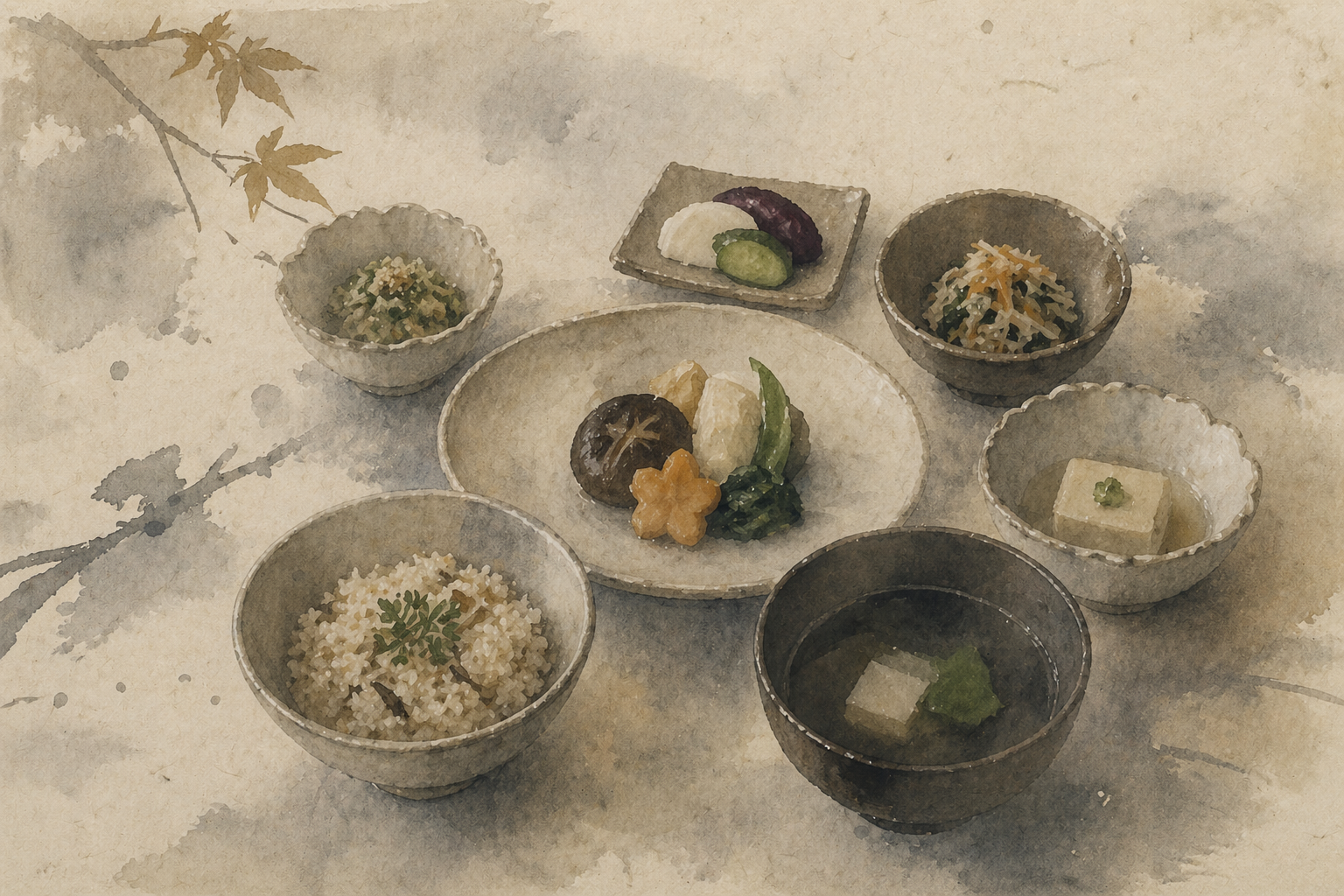
Quick Summary
- Shojin ryori emphasizes balance to keep the mind steady and the body supported without excess.
- Simplicity reduces distraction, making it easier to taste, notice, and stop chasing “more.”
- Attention is trained through small choices: cutting, seasoning, plating, and eating with care.
- Balance includes flavor, texture, color, temperature, and effort—not just nutrition.
- The approach is practical: use what’s available, waste less, and cook within limits.
- It’s not about being bland or strict; it’s about clarity and restraint that still feels complete.
- You can apply the same principles to everyday meals without following a formal tradition.
Why This Food Can Feel So “Quiet”
You might look at shojin ryori and think: why so restrained, why so plain, and why all the fuss about small details? The confusion is understandable—modern food culture trains us to equate intensity with satisfaction, and complexity with skill. Shojin ryori points in a different direction: balance, simplicity, and attention are not aesthetic preferences, but a practical way to reduce agitation and make eating feel complete without needing excess. At Gassho, we focus on how Zen-adjacent practices work in ordinary life, including what happens when you cook and eat this way.
GASSHO
Ask and learn about Buddhism in daily life.
GASSHO is a Buddhist community app where you can learn Buddhist teachings and ask questions to the head priest of Kongosanmaiin Temple on Mount Koya.
The Lens Behind Balance, Simplicity, and Attention
A helpful way to understand shojin ryori is to see it as a training in relationship: relationship to ingredients, to appetite, and to the moment you’re actually in. Balance, simplicity, and attention work together as a single method. Balance keeps the meal from pulling you into extremes (too heavy, too stimulating, too monotonous). Simplicity keeps the meal from becoming a performance. Attention keeps the whole process honest—so you can notice what you’re doing and why.
Balance here is broader than “healthy.” It includes the balance of flavors (salty, sweet, bitter, sour, umami), textures (soft, crisp, chewy), colors, temperatures, and even the balance between effort and ease. When these elements are considered, the meal tends to feel settled. You’re less likely to keep searching for the missing “hit” because the experience is already rounded.
Simplicity is not a claim that fewer ingredients are morally superior. It’s a way to reduce noise. When there are fewer moving parts, you can actually perceive what’s present: the character of a vegetable, the effect of heat, the difference between “enough” seasoning and “too much.” Simplicity also makes it easier to cook consistently, which matters if the goal is steadiness rather than novelty.
Attention is the bridge between intention and reality. Without attention, “balance” becomes a vague ideal and “simplicity” becomes an excuse for carelessness. With attention, even a modest meal becomes precise: you notice the knife work, the timing, the aroma, the way hunger rises and falls, and the moment satisfaction appears. The point is not to adopt a belief about food, but to use food as a clear mirror for how the mind reaches, judges, and settles.
How These Principles Show Up While Cooking and Eating
In everyday cooking, it’s easy to operate on autopilot: rush, multitask, snack while standing, and chase a flavor that never quite lands. Shojin ryori’s emphasis on attention interrupts that loop in a gentle way. You start by noticing what you have, what’s in season, and what can be used without waste. That simple inventory already changes the mood from “I need something” to “something is here.”
Balance often appears first as restraint. Instead of adding more salt, more oil, more heat, you pause and ask what’s missing in a different dimension: maybe acidity, maybe crunch, maybe warmth, maybe a clean broth to reset the palate. This kind of balancing doesn’t dull flavor; it prevents one note from dominating and exhausting your senses.
Simplicity shows up when you stop trying to prove something. You choose a small number of preparations and do them cleanly: a simmered dish, a dressed vegetable, a soup, a bit of pickling. The mind that wants to impress relaxes, and the mind that wants to control relaxes too. You’re left with the straightforward work in front of you—wash, cut, heat, taste, adjust.
Attention becomes very concrete at the cutting board. If you slice unevenly, things cook unevenly. If you rush, you bruise delicate greens. If you don’t pay attention to heat, you burn aromatics and then compensate with stronger seasoning. Shojin ryori quietly teaches that care is efficient: precision reduces the need for dramatic fixes later.
At the table, attention changes the experience of hunger. You notice the first few bites are often the most vivid, and then the mind starts wandering—planning, judging, comparing. When you return to the taste and texture, you may find you need less to feel satisfied. Not because you’re forcing restraint, but because you’re actually receiving the meal.
Balance also shows up as pacing. If you eat quickly, the body lags behind and the mind keeps pushing. If you slow down, you can sense the shift from hunger to enough. That “enough” is one of the most practical outcomes of shojin ryori: it makes satisfaction easier to detect, which makes excess less tempting.
Even cleanup becomes part of the same training. When you’ve cooked simply and attentively, there’s less waste, fewer half-used ingredients, fewer sticky pans from over-saucing. The end of the meal doesn’t feel like a crash. It feels like completion—quiet, ordinary, and surprisingly stabilizing.
Common Misunderstandings About This Style of Cooking
One common misunderstanding is that shojin ryori is “bland food.” In practice, it often has clear, layered flavor—just not the kind that relies on heaviness or constant stimulation. The aim is to let ingredients speak while still creating a satisfying whole.
Another misunderstanding is that simplicity means minimal effort or low skill. Simplicity can be demanding because it removes hiding places. When there are fewer ingredients and fewer strong flavors, timing, texture, and seasoning become more visible. The food doesn’t let you fake it.
People also confuse balance with rigid rules. Balance is responsive, not dogmatic. What feels balanced in summer may not feel balanced in winter. What feels balanced for one person may not for another. The point is to notice effects—how a meal lands in the body and mind—then adjust.
Finally, attention is sometimes mistaken for making meals solemn. It doesn’t have to be serious. Attention can be light and practical: tasting as you go, noticing when you’re rushing, appreciating the color of a simple dish, and eating without stacking extra distractions on top.
Why These Qualities Matter Beyond the Plate
Balance, simplicity, and attention matter because they reduce the feeling of being pushed around—by cravings, by habits, by the constant sense that something else would be better. When meals are built around balance, you’re less likely to swing between deprivation and overindulgence. The food supports steadiness rather than drama.
Simplicity matters because it protects your time and energy. A simple, repeatable way of cooking makes it easier to feed yourself well on ordinary days. It also reduces decision fatigue: fewer ingredients, fewer steps, fewer last-minute substitutions that turn dinner into a negotiation with your own impatience.
Attention matters because it’s transferable. The same skill that notices “this is enough salt” can notice “this is enough scrolling” or “this is enough talking.” Shojin ryori is not only about what you eat; it’s practice in recognizing sufficiency and responding with care.
And there’s a quiet ethical dimension that doesn’t need to be preached: when you cook with attention, you waste less. When you aim for balance, you don’t need excess. When you keep things simple, you can respect ingredients without turning them into spectacle. It’s a grounded way to live a little more gently.
Conclusion
Shojin ryori focuses on balance, simplicity, and attention because those three qualities make eating a place where the mind can settle. Balance prevents extremes, simplicity reduces noise, and attention turns cooking and eating into something you can actually feel—moment by moment—without needing constant novelty. You don’t have to replicate a formal meal to learn from it; you can start with one dish, one careful cut, one quieter bite, and see what changes.
Ask a Buddhist priest
Have a question about Buddhism?
In the GASSHO app, you can ask questions about Buddhist teachings, daily concerns, and how to understand Buddhism in everyday life.
Frequently Asked Questions
- FAQ 1: Why does shojin ryori emphasize balance instead of maximizing flavor?
- FAQ 2: What kind of “balance” is shojin ryori actually aiming for?
- FAQ 3: Why is simplicity so central to shojin ryori?
- FAQ 4: Does simplicity in shojin ryori mean the food should be bland?
- FAQ 5: Why is attention treated as part of the cuisine, not just a personal habit?
- FAQ 6: How do balance and attention work together in shojin ryori?
- FAQ 7: Why does shojin ryori avoid “too much” even when the ingredients are healthy?
- FAQ 8: Is the attention in shojin ryori mainly about mindfulness while eating?
- FAQ 9: How does simplicity support attention in shojin ryori?
- FAQ 10: Why does shojin ryori care about visual balance and plating?
- FAQ 11: Does shojin ryori’s simplicity mean using very few ingredients?
- FAQ 12: How does shojin ryori define “enough,” and why is that tied to attention?
- FAQ 13: Why is seasonal cooking often linked to balance and simplicity in shojin ryori?
- FAQ 14: Can shojin ryori still feel satisfying if it prioritizes simplicity?
- FAQ 15: What is one practical way to apply balance, simplicity, and attention from shojin ryori at home?
FAQ 1: Why does shojin ryori emphasize balance instead of maximizing flavor?
Answer: Because “maximizing” often means pushing one note (salt, fat, heat, sweetness) until it dominates, which can leave you restless and still searching. Balance aims for a complete experience—flavor, texture, temperature, and aftertaste—so satisfaction arrives without excess.
Takeaway: Balance is designed to feel complete, not intense.
FAQ 2: What kind of “balance” is shojin ryori actually aiming for?
Answer: It’s a practical balance across multiple dimensions: flavors, textures, colors, cooking methods, and how the meal sits in the body afterward. The goal is steadiness—food that supports clarity rather than spikes and crashes.
Takeaway: Balance includes sensory and bodily effects, not just nutrition.
FAQ 3: Why is simplicity so central to shojin ryori?
Answer: Simplicity reduces distraction. With fewer ingredients and fewer strong overlays, you can taste what’s actually there and notice when “enough” has been reached. It also makes the cooking process more repeatable and less wasteful.
Takeaway: Simplicity makes perception clearer and habits steadier.
FAQ 4: Does simplicity in shojin ryori mean the food should be bland?
Answer: No. Simplicity means fewer competing signals, not less taste. Seasoning can still be precise and satisfying; it’s just used to support the ingredient rather than overpower it.
Takeaway: Simple doesn’t mean flavorless; it means uncluttered.
FAQ 5: Why is attention treated as part of the cuisine, not just a personal habit?
Answer: Shojin ryori is built around actions that reward careful noticing—knife work, timing, gentle seasoning, and thoughtful plating. The cuisine “invites” attention because small changes in care produce noticeable changes in outcome.
Takeaway: The method is designed to train attention through cooking.
FAQ 6: How do balance and attention work together in shojin ryori?
Answer: Balance is the aim; attention is the tool. You can’t balance flavors, textures, or portions if you’re rushing or distracted. Attention lets you sense what’s missing and adjust with small, measured changes instead of dramatic fixes.
Takeaway: Attention is what makes balance possible in real time.
FAQ 7: Why does shojin ryori avoid “too much” even when the ingredients are healthy?
Answer: Because excess isn’t only about health; it’s also about the mind’s tendency to chase stimulation. Even wholesome foods can be used in a way that reinforces restlessness. Balance and simplicity help you recognize sufficiency.
Takeaway: The focus is on sufficiency, not just “good ingredients.”
FAQ 8: Is the attention in shojin ryori mainly about mindfulness while eating?
Answer: It includes eating, but it starts earlier: choosing ingredients, washing, cutting, cooking, tasting, and serving. Attention across the whole process tends to produce a meal that feels calmer and more coherent at the table.
Takeaway: Attention is practiced from prep to the last bite.
FAQ 9: How does simplicity support attention in shojin ryori?
Answer: When there are fewer steps and fewer ingredients, it’s easier to stay present and notice details like heat, texture, and seasoning. Complexity can be enjoyable, but it can also encourage multitasking and distraction.
Takeaway: Simplicity makes attention easier to sustain.
FAQ 10: Why does shojin ryori care about visual balance and plating?
Answer: Visual balance supports mental balance. When the plate is orderly and harmonious, it reduces the urge to grasp and rush. It also encourages you to notice color, portion, and variety without needing excess seasoning.
Takeaway: A balanced presentation helps settle the mind before eating.
FAQ 11: Does shojin ryori’s simplicity mean using very few ingredients?
Answer: Not necessarily. It means using ingredients with restraint and purpose, avoiding cluttered combinations that blur taste and increase waste. A meal can include several small dishes and still be “simple” if each one is clear and not overworked.
Takeaway: Simplicity is about clarity and restraint, not minimalism for its own sake.
FAQ 12: How does shojin ryori define “enough,” and why is that tied to attention?
Answer: “Enough” is discovered through noticing: the point where flavor is complete, hunger is met, and the body feels steady afterward. Attention helps you detect that point, while balance and simplicity make it easier to recognize without being overwhelmed by stimulation.
Takeaway: Attention helps you feel sufficiency instead of guessing.
FAQ 13: Why is seasonal cooking often linked to balance and simplicity in shojin ryori?
Answer: Seasonal ingredients tend to taste more complete on their own, which supports simplicity. They also naturally guide balance—lighter preparations in warmer months, more grounding ones in colder months—without needing constant novelty or heavy seasoning.
Takeaway: Seasonality makes balance easier and simplicity more satisfying.
FAQ 14: Can shojin ryori still feel satisfying if it prioritizes simplicity?
Answer: Yes, because satisfaction is often a result of completeness rather than intensity. When flavors and textures are balanced and you’re paying attention while eating, the meal can feel deeply satisfying without relying on heaviness or constant stimulation.
Takeaway: Satisfaction can come from completeness plus attention, not excess.
FAQ 15: What is one practical way to apply balance, simplicity, and attention from shojin ryori at home?
Answer: Make one simple meal with a clear structure: a soup, a cooked vegetable, and a fresh or lightly dressed element. Keep seasoning restrained, taste as you go, and eat without rushing. Notice what changes when you aim for “complete” rather than “more.”
Takeaway: A small, balanced meal is an easy entry point to the practice.