



Why Do People Pray to Jizo? Protection, Travelers, and the Dead
Quick Summary
- People pray to Jizo to name a wish for protection and to steady the mind when life feels uncertain.
- Jizo is widely associated with caring for children, travelers, and those who have died, especially when grief is complicated.
- Praying to Jizo often functions as a simple, repeatable ritual that helps attention settle and compassion come forward.
- Offerings (like water, flowers, or a small bib) are less “payment” and more a visible way to practice care.
- Many people pray to Jizo not to escape reality, but to meet it with less panic and more tenderness.
- Jizo devotion is commonly connected to safe journeys, crossroads, and “in-between” times—moves, illness, endings, and beginnings.
- You don’t need special beliefs to pray to Jizo; you need a sincere intention and a willingness to pause.
Introduction
If you’re confused about why pray to Jizo when Buddhism often emphasizes direct practice, you’re not alone—and the confusion is reasonable. Jizo prayer can look like asking an outside power to fix your life, but for many people it’s closer to a grounded way of relating to fear, travel, loss, and responsibility without hardening the heart. I’m writing from the perspective of Gassho, a Zen/Buddhism site focused on practical understanding rather than superstition.
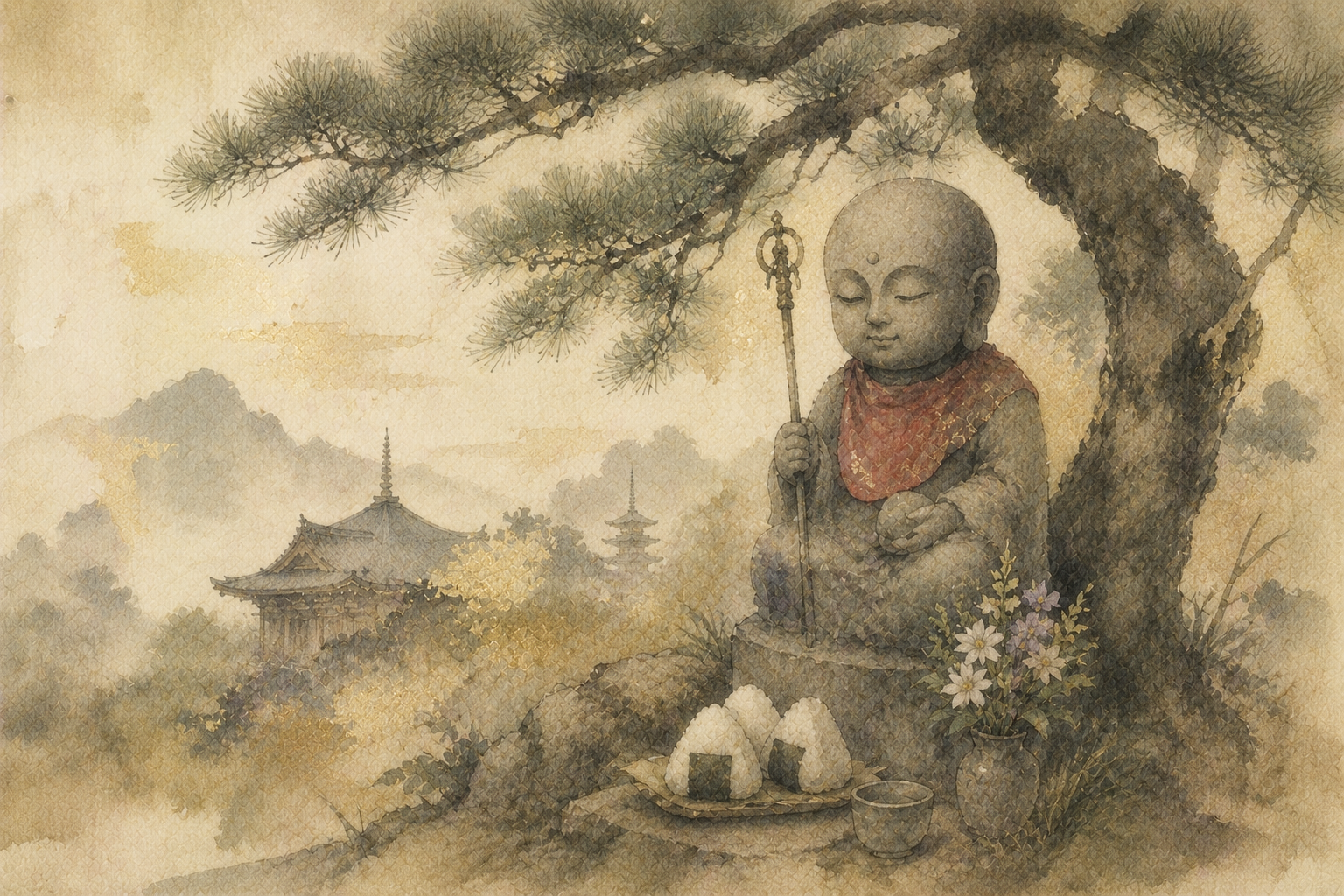
Jizo (often seen as a gentle monk figure) is widely loved because the symbolism is simple: someone who stays close to the vulnerable and doesn’t turn away from difficult places. That “difficult place” might be a literal road, a hospital corridor, a graveside, or the private terrain of regret and grief.
When people pray to Jizo, they’re often doing two things at once: expressing a human need for protection and training the mind toward care. The prayer becomes a small container—something you can do when you don’t know what else to do.
A Practical Lens for Understanding Jizo Prayer
A helpful way to understand why pray to Jizo is to treat it as a lens for experience rather than a test of belief. Jizo represents the impulse to protect what is fragile—children, the grieving, the lost, the traveling, and the dead. When you pray, you’re stepping into that impulse and letting it shape your next moment.
In that sense, prayer is less about “getting” something and more about “aligning” something. You align attention with what matters, you align speech with sincerity, and you align the body with a deliberate pause. Even a short bow or a few words can interrupt the momentum of worry and bring you back to what you can actually do.
Jizo is also closely tied to thresholds: roads, crossroads, transitions, and the emotional in-between where certainty is missing. People reach for Jizo in those moments because the mind wants a steady reference point—something compassionate that doesn’t demand you be brave or spiritually impressive.
Finally, praying to Jizo can be understood as practicing relationship. Not relationship as fantasy, but as a way to speak honestly: “I’m scared,” “Please protect them,” “I’m sorry,” “Thank you,” “Help me not abandon what’s tender.” Those sentences change the person saying them.
GASSHO
Ask and learn about Buddhism in daily life.
GASSHO is a Buddhist community app where you can learn Buddhist teachings and ask questions to the head priest of Kongosanmaiin Temple on Mount Koya.
How Jizo Prayer Shows Up in Ordinary Life
Most people don’t pray to Jizo during dramatic spiritual moments. They do it when the day is normal but the heart is not: a child is sick, a parent is aging, a trip feels risky, a relationship is strained, or grief keeps returning in waves.
You might notice the mind searching for control—replaying scenarios, bargaining, trying to predict outcomes. A brief Jizo prayer gives that restless energy a simpler job: name the concern, offer it, and stop feeding the spiral for a moment.
In practice, the body often leads. You slow down, bring hands together, bow, or stand quietly. That physical gesture matters because it changes breathing and posture, and posture changes how thoughts land. The prayer becomes a small reset.
Then there’s the emotional shift many people recognize: the move from “Why is this happening?” to “What care is needed now?” Jizo symbolizes care that stays close, so the prayer gently nudges attention away from blame and toward responsibility—without turning cold.
For travelers, the experience is often very plain. Before leaving, you acknowledge risk without dramatizing it. You ask for protection, but you also remember to drive carefully, rest when tired, and stay considerate. The prayer doesn’t replace common sense; it supports it.
For grief, Jizo prayer can function like a steady place to put love that has nowhere to go. People may feel unfinished business with the dead—words unsaid, apologies delayed, gratitude not expressed. Speaking to Jizo can make room for those words without needing a perfect explanation of what happens after death.
And for those carrying quiet guilt—about parenting, caregiving, or choices made under pressure—Jizo prayer can soften the inner voice that says you must be punished to be sincere. The ritual says: take responsibility, yes, but don’t add cruelty on top of pain.
Common Misunderstandings About Praying to Jizo
Misunderstanding 1: “Praying to Jizo is just superstition.” It can become superstitious if it’s treated like a transaction. But many people use it as a disciplined pause that organizes intention, grief, and care—something closer to a moral and emotional practice than a magical claim.
Misunderstanding 2: “If I pray correctly, nothing bad will happen.” Jizo devotion is often strongest precisely because life is not guaranteed. The point is not certainty; it’s steadiness. Prayer can support wise action and a calmer mind, but it doesn’t erase risk.
Misunderstanding 3: “Jizo is only for children.” Children are a central association, but Jizo is also linked with travelers, crossroads, caregivers, and remembrance for the dead. The broader theme is protection for those who cannot fully protect themselves.
Misunderstanding 4: “Offerings are payment.” Offerings are better understood as training in generosity and attention. A cup of water, a flower, or cleaning a small statue is a way of practicing care with your hands, not buying a result.
Misunderstanding 5: “Prayer means you’re avoiding real practice.” For many, prayer is real practice: it shapes speech, intention, and the ability to stay present with fear and sorrow. It can sit alongside meditation, ethical living, and service without competing with them.
Why This Devotion Still Matters Today
Modern life creates a particular kind of loneliness: you’re expected to handle everything privately, efficiently, and without visible need. Jizo prayer gives people permission to admit vulnerability—briefly, plainly, without performance.
It also protects something important in the psyche: the capacity to care without burning out. When you pray to Jizo for a child, a traveler, or the dead, you’re rehearsing compassion that doesn’t require you to fix everything. That matters for caregivers, parents, and anyone living with ongoing uncertainty.
For grief, Jizo devotion offers a culturally simple ritual language: bow, speak, offer, remember. Even if you don’t know what you believe about death, you can still practice respect and connection. That can reduce the feeling that loss must be carried alone or kept silent.
And in daily ethics, praying to Jizo can quietly influence choices. If you ask for protection for travelers, you may drive less aggressively. If you ask for care for children, you may speak more gently. The prayer becomes a reminder that your actions are part of the protection you’re requesting.
Conclusion
Why pray to Jizo? Because it’s a simple way to meet fear, transition, and grief with a steadier heart. People pray to Jizo for protection, for safe travel, and for the dead not only to ask for help, but to practice the kind of care they don’t want to abandon.
If you’re drawn to Jizo, you don’t need to force certainty. Try a small, sincere ritual—one bow, a few honest words, one act of kindness—and notice what it changes in you.
Ask a Buddhist priest
Have a question about Buddhism?
In the GASSHO app, you can ask questions about Buddhist teachings, daily concerns, and how to understand Buddhism in everyday life.
Frequently Asked Questions
- FAQ 1: Why pray to Jizo instead of praying directly for my own needs?
- FAQ 2: Why do people pray to Jizo for protection?
- FAQ 3: Why pray to Jizo for travelers and safe journeys?
- FAQ 4: Why pray to Jizo for the dead?
- FAQ 5: Why pray to Jizo for children?
- FAQ 6: Why pray to Jizo when Buddhism teaches impermanence?
- FAQ 7: Why pray to Jizo if I’m not sure I “believe” in Jizo?
- FAQ 8: Why pray to Jizo at roadside statues and crossroads?
- FAQ 9: Why pray to Jizo with offerings like water or flowers?
- FAQ 10: Why pray to Jizo during grief that keeps returning?
- FAQ 11: Why pray to Jizo for someone who is sick or in the hospital?
- FAQ 12: Why pray to Jizo if I feel guilty about someone who died?
- FAQ 13: Why pray to Jizo for a miscarriage, stillbirth, or infant loss?
- FAQ 14: Why pray to Jizo repeatedly—does repeating a prayer matter?
- FAQ 15: Why pray to Jizo if I’m afraid it conflicts with my personal beliefs?
FAQ 1: Why pray to Jizo instead of praying directly for my own needs?
Answer: People pray to Jizo because Jizo symbolizes protective compassion—especially for those who feel vulnerable or “in-between.” Praying to Jizo can make your request less self-centered and more relational: you’re asking to be guided toward care, steadiness, and responsible action, not just a personal win.
Takeaway: Praying to Jizo often reframes “help me” into “help me care wisely.”
FAQ 2: Why do people pray to Jizo for protection?
Answer: Jizo is commonly associated with protection because the image points to staying close to suffering rather than avoiding it. For many practitioners, the prayer is a way to calm fear, clarify intention, and remember to act carefully—especially when outcomes can’t be controlled.
Takeaway: Jizo prayer supports a protective mindset and more mindful choices.
FAQ 3: Why pray to Jizo for travelers and safe journeys?
Answer: Jizo is often linked with roads, crossroads, and transitions, so travelers pray to Jizo to acknowledge risk and to cultivate attentiveness and humility on the move. It’s a ritual way of saying, “May this journey be safe, and may I travel responsibly.”
Takeaway: Travel prayers to Jizo combine hope for safety with a reminder to be careful.
FAQ 4: Why pray to Jizo for the dead?
Answer: People pray to Jizo for the dead as a way to express continuing care, gratitude, apology, and remembrance. Even without firm beliefs about the afterlife, the act can help the living hold grief with tenderness and keep love from turning into numbness.
Takeaway: Praying to Jizo for the dead is often about remembrance and compassion, not certainty.
FAQ 5: Why pray to Jizo for children?
Answer: Jizo is widely seen as a guardian figure for children and those who are small, dependent, or easily harmed. Praying to Jizo for children can be a way for parents and caregivers to steady anxiety and renew a commitment to gentle, protective action.
Takeaway: Jizo prayer for children often strengthens a caregiver’s calm and care.
FAQ 6: Why pray to Jizo when Buddhism teaches impermanence?
Answer: For many people, praying to Jizo is not a denial of impermanence but a response to it. When life changes and control is limited, prayer becomes a way to meet impermanence with compassion and steadiness rather than panic or resignation.
Takeaway: Jizo prayer can be a practical way to face impermanence with a softer heart.
FAQ 7: Why pray to Jizo if I’m not sure I “believe” in Jizo?
Answer: Many people pray to Jizo as a practice of intention and attention, not as a belief test. You can treat Jizo as a symbol of protective compassion and use the prayer to organize your mind: naming what matters, expressing care, and committing to wise action.
Takeaway: You can pray to Jizo as a sincere ritual even with uncertainty.
FAQ 8: Why pray to Jizo at roadside statues and crossroads?
Answer: Roadside Jizo statues often mark places of passage—literal and emotional. People stop to pray because the pause itself is meaningful: it interrupts rushing, acknowledges vulnerability, and offers a moment of care for travelers (including oneself).
Takeaway: Stopping to pray to Jizo on the road is a practice of mindful transition.
FAQ 9: Why pray to Jizo with offerings like water or flowers?
Answer: Offerings are commonly used to embody care in a tangible way. Water and flowers are simple, non-extravagant gestures that express respect and remembrance; they also train generosity and attention, turning prayer into something you do with your hands, not only your thoughts.
Takeaway: Offerings in Jizo prayer are a practice of care, not a transaction.
FAQ 10: Why pray to Jizo during grief that keeps returning?
Answer: Recurrent grief often needs a steady container. Praying to Jizo can provide a repeatable ritual that makes room for love, sadness, and unfinished words without forcing you to “move on” before you’re ready.
Takeaway: Jizo prayer can give returning grief a gentle, structured outlet.
FAQ 11: Why pray to Jizo for someone who is sick or in the hospital?
Answer: People pray to Jizo in illness because it’s a time when helplessness is intense and the mind can become frantic. The prayer can steady attention, support compassionate presence, and help you show up with patience for the person who is suffering.
Takeaway: Jizo prayer during illness often supports calm presence more than guarantees outcomes.
FAQ 12: Why pray to Jizo if I feel guilty about someone who died?
Answer: Guilt after a death is common, especially when things ended abruptly or imperfectly. Praying to Jizo can be a way to speak honestly—apologize, express love, and commit to living differently—without turning guilt into endless self-punishment.
Takeaway: Jizo prayer can transform guilt into responsibility and care.
FAQ 13: Why pray to Jizo for a miscarriage, stillbirth, or infant loss?
Answer: People pray to Jizo in these losses because the grief can feel isolating and hard to name. Jizo devotion offers a gentle form for mourning—acknowledging love, sorrow, and remembrance—when there may be few public rituals or words that fit.
Takeaway: Jizo prayer can provide a compassionate ritual for tender, private grief.
FAQ 14: Why pray to Jizo repeatedly—does repeating a prayer matter?
Answer: Repetition matters because it trains attention. Saying a short Jizo prayer again and again can reduce mental noise, soften reactivity, and keep compassion close during stressful periods. The benefit is often cumulative in the mind and behavior, not dramatic in external signs.
Takeaway: Repeating Jizo prayer is often about steadying the heart through practice.
FAQ 15: Why pray to Jizo if I’m afraid it conflicts with my personal beliefs?
Answer: Many people approach Jizo prayer as a respectful, non-exclusive practice: a moment of gratitude, care, and remembrance. If conflict is a concern, you can frame the prayer as an intention—wishing protection and cultivating compassion—without making claims you don’t hold.
Takeaway: You can pray to Jizo in a way that emphasizes intention and compassion over doctrine.