



Why People Visit Temples in Japan Even If They’re Not Religious
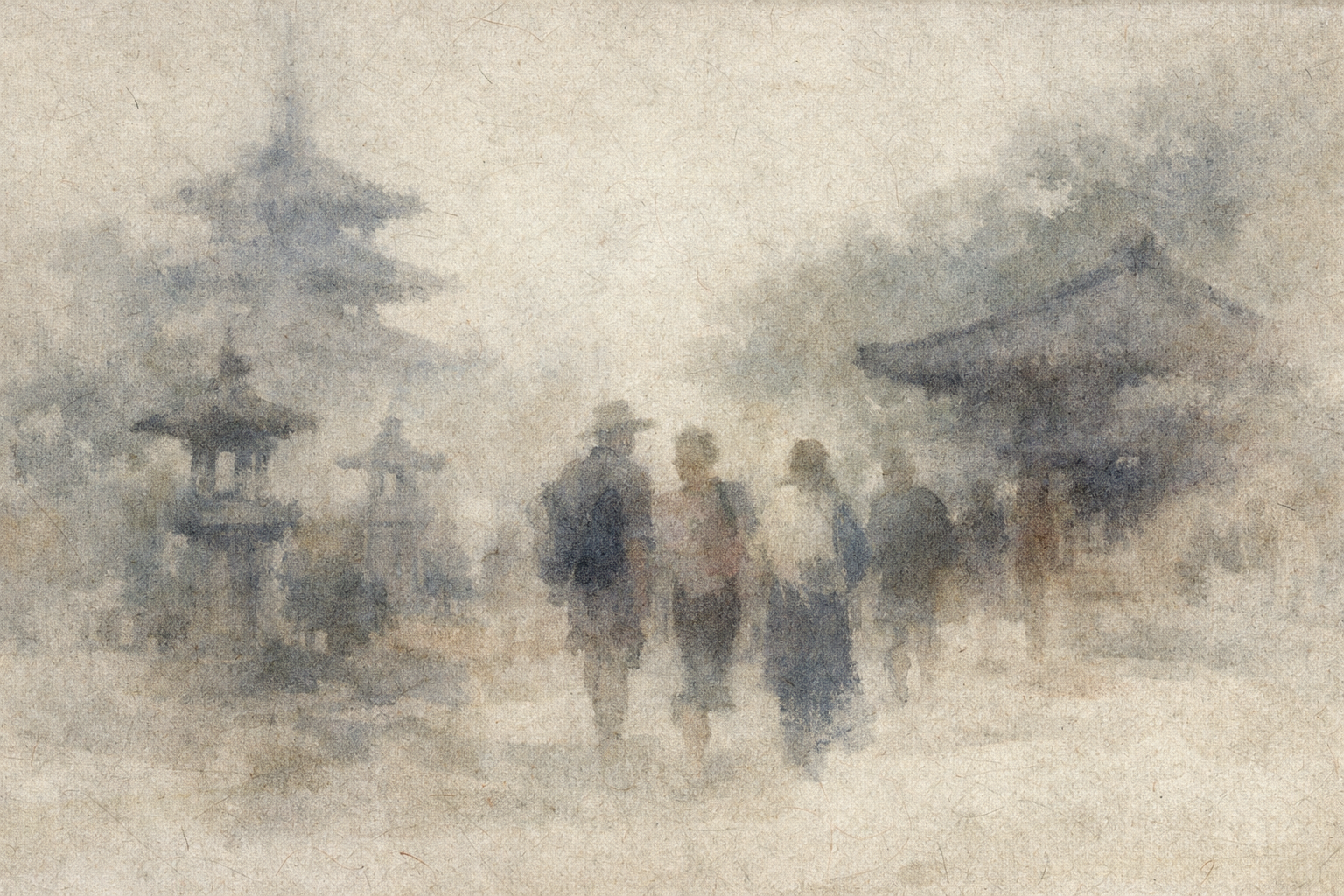
Why People Visit Temples in Japan Even If They’re Not Religious
Quick Summary
- In Japan, visiting temples often functions as culture and habit, not a declaration of belief.
- Temples offer a quiet, structured space that naturally settles attention without requiring faith.
- Many people go for life moments—grief, gratitude, exams, new jobs—because ritual gives shape to feelings.
- Architecture, gardens, incense, and seasonal events make temples meaningful even as “just a place to visit.”
- Small actions—bowing, washing hands, offering a coin—can be seen as etiquette rather than worship.
- Temples are community spaces: festivals, memorials, and local identity live there.
- You can visit respectfully without converting, performing perfectly, or knowing the “right” doctrine.
Introduction
You see photos of people lining up at temple gates, buying charms, lighting incense, and praying—yet you also hear that many Japanese people “aren’t religious,” and it can feel like a contradiction. It isn’t: for a lot of visitors, a temple is less a place to sign onto beliefs and more a place to steady the mind, mark a moment, and participate in a shared cultural language. Gassho writes about Zen and everyday practice with a focus on lived experience rather than labels.
GASSHO
Ask and learn about Buddhism in daily life.
GASSHO is a Buddhist community app where you can learn Buddhist teachings and ask questions to the head priest of Kongosanmaiin Temple on Mount Koya.
A Practical Lens: Temples as Places for Meaning, Not Membership
A helpful way to understand temple visits in Japan is to treat them as a relationship with place and practice, not a membership test. Many people don’t approach a temple asking, “Do I believe the right things?” They approach asking, often quietly, “Can I breathe here?” or “Can I acknowledge what matters?”
Temples offer a container: clear boundaries, a slower pace, and a set of simple forms. You walk through a gate, you lower your voice, you notice your steps, you smell incense, you see a garden that has been cared for over time. None of that requires a theological commitment. It’s a designed environment that invites attention.
Ritual, in this lens, is not primarily about proving belief. It’s a way to give shape to human experience—gratitude, grief, uncertainty, hope—without needing to explain it all. A small bow can be read as respect. A coin offering can be read as participation. A moment of stillness can be read as a pause from noise.
So the “non-religious” temple visit isn’t empty or fake. It’s often a practical, embodied way of relating to life: acknowledging impermanence, honoring ancestors, appreciating beauty, and letting the mind settle—without turning it into an identity statement.
What It Feels Like on the Ground: Ordinary Reasons People Actually Go
Sometimes the reason is as simple as needing quiet. A city day can be loud and fast, and a temple grounds can change your posture and breathing without you trying. You notice the sound of gravel, the weight of the air, the way your phone suddenly feels less urgent.
Often, people go when they don’t have the right words. After a loss, for example, you may not want a debate about beliefs. You may just want a place where grief is allowed to exist. Lighting incense or standing before a memorial can externalize what’s inside, making it a little more bearable.
There are also “threshold moments” that don’t look dramatic but feel significant: starting a new job, moving houses, taking entrance exams, having a child, ending a relationship. Visiting a temple can be a way to mark the shift. The mind likes punctuation. A visit provides it.
Many visitors are also responding to aesthetics in a very direct way. The lines of wood beams, the patina of age, the moss in shade, the bell sound that lingers—these are sensory experiences that naturally gather attention. You don’t have to call it spiritual to feel that it changes you for a few minutes.
Then there’s the social layer: you go because family goes, because it’s New Year’s, because a friend is visiting from abroad, because the neighborhood festival is happening. In those moments, the temple is less a private sanctuary and more a shared civic space where people behave a little more carefully than usual.
Even the small actions can work on you. Washing hands, bowing, taking off shoes, walking slowly—these are tiny interruptions to autopilot. You may arrive thinking you’re just sightseeing, and leave noticing that your mind has softened, even if you never “believed” anything new.
Common Misunderstandings About “Non-Religious” Temple Visits
Misunderstanding 1: “If you go to a temple, you must be religious.” In many places, visiting a temple is closer to visiting a memorial, a historic site, or a community landmark. It can be respectful and meaningful without being a declaration of faith.
Misunderstanding 2: “It’s hypocritical to pray if you don’t believe.” A lot of temple “prayer” is closer to making a wish, expressing gratitude, or acknowledging uncertainty. People often use the gesture to clarify what they care about, not to prove certainty about the universe.
Misunderstanding 3: “Temples are only for tourists.” Tourism is real, but many temples are woven into local life through memorial services, seasonal events, and family visits. A temple can be both a destination and a living community space.
Misunderstanding 4: “You need to know the rules perfectly.” Basic etiquette matters—be quiet, follow signs, don’t block others, ask before photographing—but most places don’t expect perfection. Sincerity and consideration go further than flawless technique.
Misunderstanding 5: “It’s all superstition.” Some practices can look superstitious from the outside, but many visitors treat them as symbolic actions. Symbols can be psychologically useful even when you interpret them in a non-literal way.
Why This Matters Beyond Travel: Attention, Grief, and Community
Understanding why people visit temples in Japan even if they’re not religious helps you see a broader human pattern: we need places that slow us down. Modern life trains attention to fragment. A temple visit—brief, ordinary, unheroic—can restore a sense of wholeness for a moment.
It also shows how communities care for difficult realities without constant explanation. Death, aging, and change are not “solved” by a visit, but they can be held. Temples provide a socially recognized space for remembrance and respect, which reduces the pressure to perform the right emotions.
And it matters because it challenges a narrow idea of religion as only belief. In practice, many people relate to the sacred through behavior: how they walk, how they speak, how they show respect, how they pause. Even if you call it culture, the effect can be quietly transformative.
If you’re visiting Japan, this lens can make your own temple visits more comfortable. You don’t need to pretend. You can simply participate in the atmosphere with care—letting the place do what it does: invite steadiness.
Conclusion
People visit temples in Japan even if they’re not religious because temples meet everyday needs that don’t require a creed: quiet, beauty, ritual, memory, and a way to mark life’s turning points. If you approach a temple as a place to practice attention and respect—rather than a place to prove belief—the “contradiction” disappears, and what remains is something very human.
Ask a Buddhist priest
Have a question about Buddhism?
In the GASSHO app, you can ask questions about Buddhist teachings, daily concerns, and how to understand Buddhism in everyday life.
Frequently Asked Questions
- FAQ 1: Why do people visit temples in Japan even if they’re not religious?
- FAQ 2: Is it normal in Japan to pray at a temple if you don’t believe in Buddhism?
- FAQ 3: Are Japanese people actually religious if they visit temples?
- FAQ 4: Do people visit temples in Japan mainly for tourism or for personal reasons?
- FAQ 5: What do non-religious visitors usually do at Japanese temples?
- FAQ 6: Why do temples feel calming even if you’re not religious?
- FAQ 7: Is it disrespectful to visit a temple in Japan if you’re not religious?
- FAQ 8: Why do people buy charms or amulets at temples if they’re not religious?
- FAQ 9: Why do Japanese families visit temples for memorials even if they say they’re not religious?
- FAQ 10: Why do people visit temples around New Year in Japan if they’re not religious?
- FAQ 11: Do people visit temples in Japan for luck even if they’re skeptical?
- FAQ 12: Why do temples in Japan attract people who just want peace and quiet?
- FAQ 13: Can visiting temples in Japan be meaningful without believing in anything spiritual?
- FAQ 14: Why do people keep visiting the same temple in Japan if they’re not religious?
- FAQ 15: What’s the simplest respectful way to visit a Japanese temple if you’re not religious?
FAQ 1: Why do people visit temples in Japan even if they’re not religious?
Answer: Many visits are cultural and practical: people go for quiet, beauty, tradition, family events, or to mark life moments like exams, new jobs, or grief. The visit can be meaningful without being a statement of belief.
Takeaway: In Japan, temple visits often function as culture and care, not conversion.
FAQ 2: Is it normal in Japan to pray at a temple if you don’t believe in Buddhism?
Answer: Yes. Many people treat “prayer” as expressing gratitude, making a wish, or acknowledging uncertainty rather than affirming doctrine. The gesture can be symbolic and still sincere.
Takeaway: Prayer can be an expression of intention, not a belief test.
FAQ 3: Are Japanese people actually religious if they visit temples?
Answer: Not necessarily. In Japan, religious identity is often less emphasized than participation in customs. Someone may visit temples regularly and still describe themselves as “not religious.”
Takeaway: Practice and identity don’t always match in the way outsiders expect.
FAQ 4: Do people visit temples in Japan mainly for tourism or for personal reasons?
Answer: Both. Famous temples attract tourists, but locals also visit for seasonal events, memorial services, family traditions, and personal reflection. One place can serve multiple roles at once.
Takeaway: Temples can be tourist sites and living community spaces simultaneously.
FAQ 5: What do non-religious visitors usually do at Japanese temples?
Answer: Common actions include walking the grounds quietly, appreciating gardens and architecture, lighting incense where appropriate, making a small offering, joining a seasonal visit, or simply pausing in silence.
Takeaway: A temple visit can be simple, respectful, and low-pressure.
FAQ 6: Why do temples feel calming even if you’re not religious?
Answer: Temples are often designed to slow you down: quieter spaces, natural elements, deliberate pathways, and fewer distractions. That environment supports steadier attention regardless of beliefs.
Takeaway: The setting itself can calm the mind without any doctrine.
FAQ 7: Is it disrespectful to visit a temple in Japan if you’re not religious?
Answer: Not if you behave respectfully. Follow posted rules, keep your voice down, don’t block worshippers, ask before photographing restricted areas, and treat the space as more than a backdrop.
Takeaway: Respectful behavior matters more than religious identity.
FAQ 8: Why do people buy charms or amulets at temples if they’re not religious?
Answer: Many people see charms as cultural tokens, reminders of intentions, or gifts connected to milestones (health, exams, safe travel). They can be symbolic rather than literal “magic.”
Takeaway: Charms often function as meaningful symbols and keepsakes.
FAQ 9: Why do Japanese families visit temples for memorials even if they say they’re not religious?
Answer: Memorial customs are deeply woven into family life. A temple provides a recognized place and set of forms for remembrance, respect, and continuity across generations, even for people who don’t identify as religious.
Takeaway: Temples often serve as cultural homes for remembrance.
FAQ 10: Why do people visit temples around New Year in Japan if they’re not religious?
Answer: New Year visits are widely treated as a seasonal custom: starting fresh, offering thanks, and setting intentions. Participation can be more about tradition and atmosphere than belief.
Takeaway: New Year temple visits are often cultural “reset” rituals.
FAQ 11: Do people visit temples in Japan for luck even if they’re skeptical?
Answer: Yes, and “luck” can mean different things: hope, motivation, or a way to focus effort. Even skeptics may appreciate the psychological boost of stating a wish clearly in a special place.
Takeaway: Seeking “luck” can be a practical way to clarify intention.
FAQ 12: Why do temples in Japan attract people who just want peace and quiet?
Answer: Temples often maintain calm grounds, predictable etiquette, and a slower rhythm. For many visitors, that’s a rare environment where the nervous system can settle without needing to explain anything.
Takeaway: Temples are one of the few socially accepted places to be quietly present.
FAQ 13: Can visiting temples in Japan be meaningful without believing in anything spiritual?
Answer: Yes. Meaning can come from attention, beauty, history, gratitude, and reflection. A temple visit can be like a mindful pause—valuable even when interpreted in purely human terms.
Takeaway: You can receive real benefit from the visit without adopting beliefs.
FAQ 14: Why do people keep visiting the same temple in Japan if they’re not religious?
Answer: Familiar temples can feel like anchors: tied to family history, neighborhood identity, or personal routines. Repetition builds a sense of continuity, especially during stressful or changing periods.
Takeaway: Returning to a temple can be about continuity and grounding.
FAQ 15: What’s the simplest respectful way to visit a Japanese temple if you’re not religious?
Answer: Enter quietly, follow signs, observe how others move, keep photos discreet, and treat any prayer areas as active spaces rather than scenery. If you choose to bow or offer a coin, do it simply and step aside for others.
Takeaway: Quiet attention and consideration are the core of respectful visiting.