



Why Did the Japanese Court Accept Buddhism?
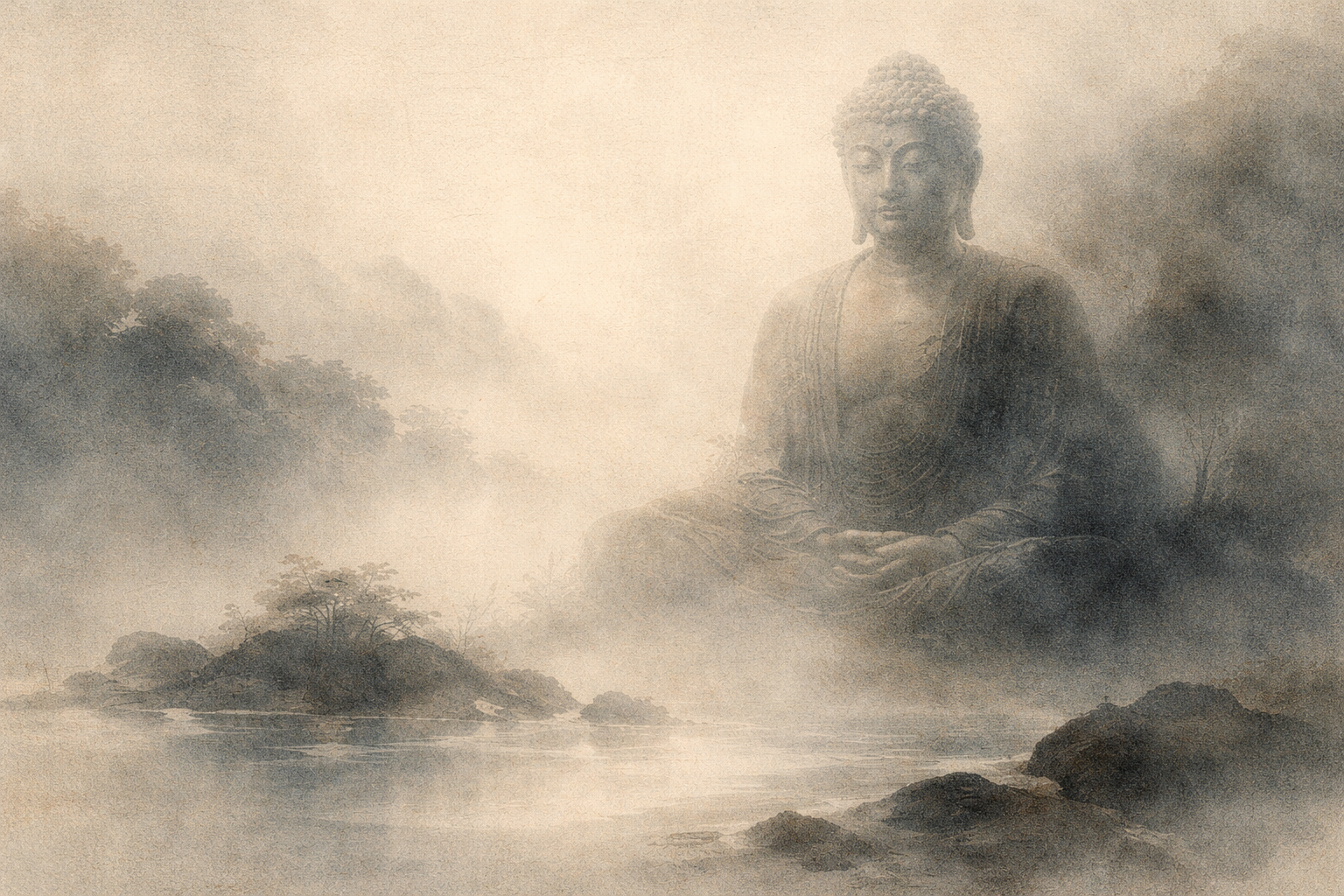
- The Japanese court accepted Buddhism as a practical tool for statecraft, not just a private faith.
- It arrived with prestige: continental learning, diplomacy, and elite culture from Korea and China.
- Rulers used Buddhist rituals to protect the realm, legitimize authority, and manage uncertainty.
- Temples supported administration through literacy, record-keeping, and networks of trained specialists.
- Acceptance was contested; court factions argued over foreign influence and political advantage.
- Rather than replacing older practices, Buddhism was often layered onto existing rites and values.
- Over time, court patronage helped Buddhism become a public institution tied to governance.
You’re trying to pin down a simple question—why did the Japanese court accept Buddhism—but every answer you find either turns it into a miracle story or a dry timeline. The clearer view is that the court treated Buddhism as a high-status technology of legitimacy, protection, and administration, and then learned how to live with the tensions it created. I’m writing from the Gassho perspective: calm, practice-informed, and historically grounded without turning history into propaganda.
A Clear Lens: Buddhism as Courtcraft, Not Just Belief
A useful way to understand why the Japanese court accepted Buddhism is to see “acceptance” less as a single conversion and more as an adoption decision. Courts adopt what helps them govern: symbols that unify, rituals that stabilize, and institutions that extend their reach. Buddhism arrived offering all three, packaged with the prestige of the wider East Asian world.
From this lens, Buddhism functioned as a public language of authority. Images, temples, and ceremonies made power visible and shareable. When a ruler sponsors a temple or a grand rite, it signals order: “the center holds, the realm is protected, the court is aligned with something larger than personal ambition.” That signal matters in a landscape of competing clans and fragile alliances.
It also helped that Buddhism came with people and skills. Monastics and artisans carried literacy, texts, medicine, calendrical knowledge, and diplomatic know-how. Even when the court’s motives were political, the practical benefits were real: a court that can write, count, archive, and standardize becomes a court that can govern more consistently.
Finally, acceptance did not require erasing what already existed. The court could sponsor Buddhist rites while continuing older ceremonies, treating them as complementary tools for different needs. That flexibility made Buddhism easier to integrate: it could be used without demanding an immediate, total cultural replacement.
GASSHO
Ask and learn about Buddhism in daily life.
GASSHO is a Buddhist community app where you can learn Buddhist teachings and ask questions to the head priest of Kongosanmaiin Temple on Mount Koya.
How Acceptance Happens in Real Life: The Human Side of Court Decisions
In ordinary experience, people accept something new when it reduces uncertainty. A court is made of people—advisers, rivals, relatives—each scanning for threats and opportunities. When a new tradition arrives with a reputation for protection and order, attention naturally gravitates toward what it might solve: illness, famine, conflict, bad omens, political instability.
Notice how quickly the mind moves from “Is this true?” to “Will this work?” That shift is not cynical; it’s human. If you’re responsible for a household, you try what keeps the household steady. If you’re responsible for a realm, you try what promises stability at scale. Buddhist rituals, vows, and temple-building offered a concrete way to “do something” in the face of forces that felt uncontrollable.
There’s also the social pressure of prestige. When something is associated with advanced neighbors—diplomatic gifts, refined art, powerful states—people feel the pull to align with it. You can see this in daily life: a new method, a new credential, a new style spreads because it signals competence. For the court, Buddhism signaled participation in a broader, respected civilizational order.
At the same time, acceptance rarely feels clean. Internally, there’s a push-pull: curiosity and fear, admiration and suspicion. Some court figures would have felt genuine devotion; others would have felt strategic interest; many likely felt both. In lived terms, that’s like adopting a new habit for practical reasons and then discovering it changes your values—or resisting it because it threatens your identity.
Conflict is part of the process. When a new institution enters a system, it rearranges status and resources. Temples require land, labor, and patronage; specialists gain influence; old networks feel displaced. In everyday terms, it’s what happens when a new department is created at work: roles shift, alliances form, and people argue about what counts as “the right way.”
Over time, what was once “foreign” becomes familiar through repetition. A rite performed for protection becomes a seasonal expectation. A temple becomes a landmark. A set of texts becomes a curriculum. This is how acceptance often settles: not through one decisive moment, but through routines that make the new thing feel normal.
And even after it becomes normal, it remains a tool that can be used well or poorly. The same ritual can be sincere or performative; the same institution can serve the public or serve factional interests. That ambiguity is not a flaw in the story—it’s the story.
Common Misreadings of Why the Court Embraced Buddhism
One common misunderstanding is that the Japanese court accepted Buddhism because everyone suddenly “converted.” Court patronage doesn’t automatically equal mass belief. Early acceptance often meant sponsorship, tolerance, and institutional support—especially among elites—while popular practice developed unevenly over time.
Another misreading is that Buddhism was accepted only for spiritual reasons, as if politics and faith live in separate rooms. In court settings, spiritual and political aims frequently overlap. A protection rite can be an expression of devotion and a public act of governance at the same time.
It’s also easy to imagine a smooth, inevitable spread. In reality, acceptance was contested. Factions could support or oppose Buddhism based on alliances, access to continental networks, and the fear that new institutions would shift power. The court’s “acceptance” was a negotiated outcome, not a unanimous vote.
Finally, some accounts treat Buddhism as replacing earlier practices in a clean swap. A more accurate picture is layering and blending: older rites continued, and Buddhist forms were added, adapted, and sometimes used to reinterpret what was already there. That flexibility helped Buddhism take root without demanding a cultural reset.
Why This History Still Matters Today
Understanding why the Japanese court accepted Buddhism helps you read religious history without either cynicism or naïveté. Institutions can be adopted for practical reasons and still carry genuine meaning. Seeing both at once keeps the story human: people reach for what promises stability, dignity, and coherence.
It also clarifies how “religion” can function as public infrastructure. Temples were not only places of prayer; they could be centers of learning, art, care, and administration. When you notice that, you can better understand why courts invested heavily in them: they were building a system, not just sponsoring private devotion.
On a personal level, this history invites a gentle question: when you accept a new worldview, practice, or community, what are you really accepting—ideas, identity, support, protection, belonging? The court’s story is a large-scale version of a familiar inner process: choosing what helps life feel workable, then living with the consequences.
Conclusion: Acceptance as Strategy, Sincerity, and Adaptation
The Japanese court accepted Buddhism because it offered prestige, practical governance tools, and a compelling public language of protection and legitimacy—while remaining flexible enough to be integrated alongside existing rites. The decision was not a single moment of belief but an ongoing process shaped by factional politics, diplomatic realities, and the human need to stabilize an uncertain world.
Ask a Buddhist priest
Have a question about Buddhism?
In the GASSHO app, you can ask questions about Buddhist teachings, daily concerns, and how to understand Buddhism in everyday life.
Frequently Asked Questions
- FAQ 1: Why did the Japanese court accept Buddhism instead of rejecting it as foreign?
- FAQ 2: Why did the Japanese court accept Buddhism in the first place—what problem did it solve?
- FAQ 3: Why did the Japanese court accept Buddhism even though there was opposition?
- FAQ 4: Why did the Japanese court accept Buddhism as a state-supported institution?
- FAQ 5: Why did the Japanese court accept Buddhism from Korea and China specifically?
- FAQ 6: Why did the Japanese court accept Buddhism if it already had local rites and deities?
- FAQ 7: Why did the Japanese court accept Buddhism as a source of legitimacy?
- FAQ 8: Why did the Japanese court accept Buddhism and invest in temples?
- FAQ 9: Why did the Japanese court accept Buddhism’s rituals for protection and healing?
- FAQ 10: Why did the Japanese court accept Buddhism even if some saw it as a threat to tradition?
- FAQ 11: Why did the Japanese court accept Buddhism in terms of administration and literacy?
- FAQ 12: Why did the Japanese court accept Buddhism if acceptance wasn’t universal among the population?
- FAQ 13: Why did the Japanese court accept Buddhism as part of international diplomacy?
- FAQ 14: Why did the Japanese court accept Buddhism despite internal clan rivalries?
- FAQ 15: Why did the Japanese court accept Buddhism and still keep older ceremonies?
FAQ 1: Why did the Japanese court accept Buddhism instead of rejecting it as foreign?
Answer: Because it arrived with diplomatic prestige and practical benefits—rituals for protection, elite culture, and skilled specialists—so the court could adopt it as a resource without immediately abandoning existing traditions.
Takeaway: “Foreign” didn’t mean “unusable”; it often meant “prestigious and useful.”
FAQ 2: Why did the Japanese court accept Buddhism in the first place—what problem did it solve?
Answer: It helped the court address instability by offering public rites for safeguarding the realm, a shared elite ideology of order, and institutions that supported governance through literacy and organization.
Takeaway: The court treated Buddhism as a stabilizing tool as much as a faith.
FAQ 3: Why did the Japanese court accept Buddhism even though there was opposition?
Answer: Court acceptance was contested, but supporters could point to diplomatic advantages, cultural capital, and the political value of temple patronage; over time, repeated use and institutional growth made Buddhism harder to exclude.
Takeaway: Acceptance emerged through power struggles and gradual normalization.
FAQ 4: Why did the Japanese court accept Buddhism as a state-supported institution?
Answer: State support allowed the court to standardize rituals, display legitimacy, and build networks of temples and specialists that could serve administrative and ideological needs across regions.
Takeaway: Patronage turned Buddhism into public infrastructure.
FAQ 5: Why did the Japanese court accept Buddhism from Korea and China specifically?
Answer: Those regions were major sources of advanced writing systems, law, art, and diplomatic models in East Asia; Buddhism traveled along those same channels as part of a broader package of continental learning and prestige.
Takeaway: Buddhism came bundled with high-status international connections.
FAQ 6: Why did the Japanese court accept Buddhism if it already had local rites and deities?
Answer: The court could add Buddhist practices without fully replacing existing rites, using different ceremonies for different social and political needs; this “layering” made adoption easier and less disruptive.
Takeaway: Buddhism was often integrated alongside older practices, not swapped in.
FAQ 7: Why did the Japanese court accept Buddhism as a source of legitimacy?
Answer: Buddhist symbols and rituals provided a widely respected language of sacred authority in the region, helping rulers present themselves as protectors of order and benefactors of the people through visible acts like temple building and public rites.
Takeaway: Buddhism helped make authority look orderly, protective, and “bigger than politics.”
FAQ 8: Why did the Japanese court accept Buddhism and invest in temples?
Answer: Temples were durable public projects that concentrated art, learning, ritual services, and networks of trained personnel; supporting them strengthened the court’s cultural prestige and administrative reach.
Takeaway: Temple-building was both religious patronage and state-building.
FAQ 9: Why did the Japanese court accept Buddhism’s rituals for protection and healing?
Answer: In a world of epidemics, crop failures, and political uncertainty, protection rites offered a structured response to fear and risk; sponsoring them also demonstrated responsible leadership to elites and subjects.
Takeaway: Protective rituals addressed uncertainty while signaling competent rule.
FAQ 10: Why did the Japanese court accept Buddhism even if some saw it as a threat to tradition?
Answer: Because the court could frame Buddhism as an additional resource rather than a replacement, and because the political and diplomatic advantages of adoption often outweighed the risks of cultural change.
Takeaway: The court managed the “threat” by controlling how Buddhism was used.
FAQ 11: Why did the Japanese court accept Buddhism in terms of administration and literacy?
Answer: Buddhist institutions relied on texts, training, and record-keeping; supporting them encouraged literacy and created communities skilled in copying, archiving, and organizing knowledge—capabilities valuable to a centralizing court.
Takeaway: Text-based religion supported text-based governance.
FAQ 12: Why did the Japanese court accept Buddhism if acceptance wasn’t universal among the population?
Answer: Courts often adopt elite institutions first; patronage can begin at the top for political and diplomatic reasons, while broader popular practice develops later through local temples, rituals, and social ties.
Takeaway: Court acceptance and popular adoption can move at different speeds.
FAQ 13: Why did the Japanese court accept Buddhism as part of international diplomacy?
Answer: Accepting Buddhism helped the court communicate within a shared East Asian cultural sphere where Buddhist symbols, texts, and patronage were recognized markers of refinement and legitimacy in diplomatic relationships.
Takeaway: Buddhism functioned as a diplomatic “common language.”
FAQ 14: Why did the Japanese court accept Buddhism despite internal clan rivalries?
Answer: Rivalries actually made Buddhism attractive: patronage could strengthen a faction’s status, provide new alliances, and supply public rituals that projected stability; the court’s eventual support reflected which coalitions gained influence.
Takeaway: Buddhism became part of how factions competed and consolidated power.
FAQ 15: Why did the Japanese court accept Buddhism and still keep older ceremonies?
Answer: Because acceptance often meant addition and adaptation: the court could sponsor Buddhist rites for protection and legitimacy while continuing older ceremonies for continuity, identity, and local cohesion.
Takeaway: The court’s approach was pragmatic—expand the toolkit, don’t erase the past.