



Who Is Guru Rinpoche in Tibetan Buddhism?
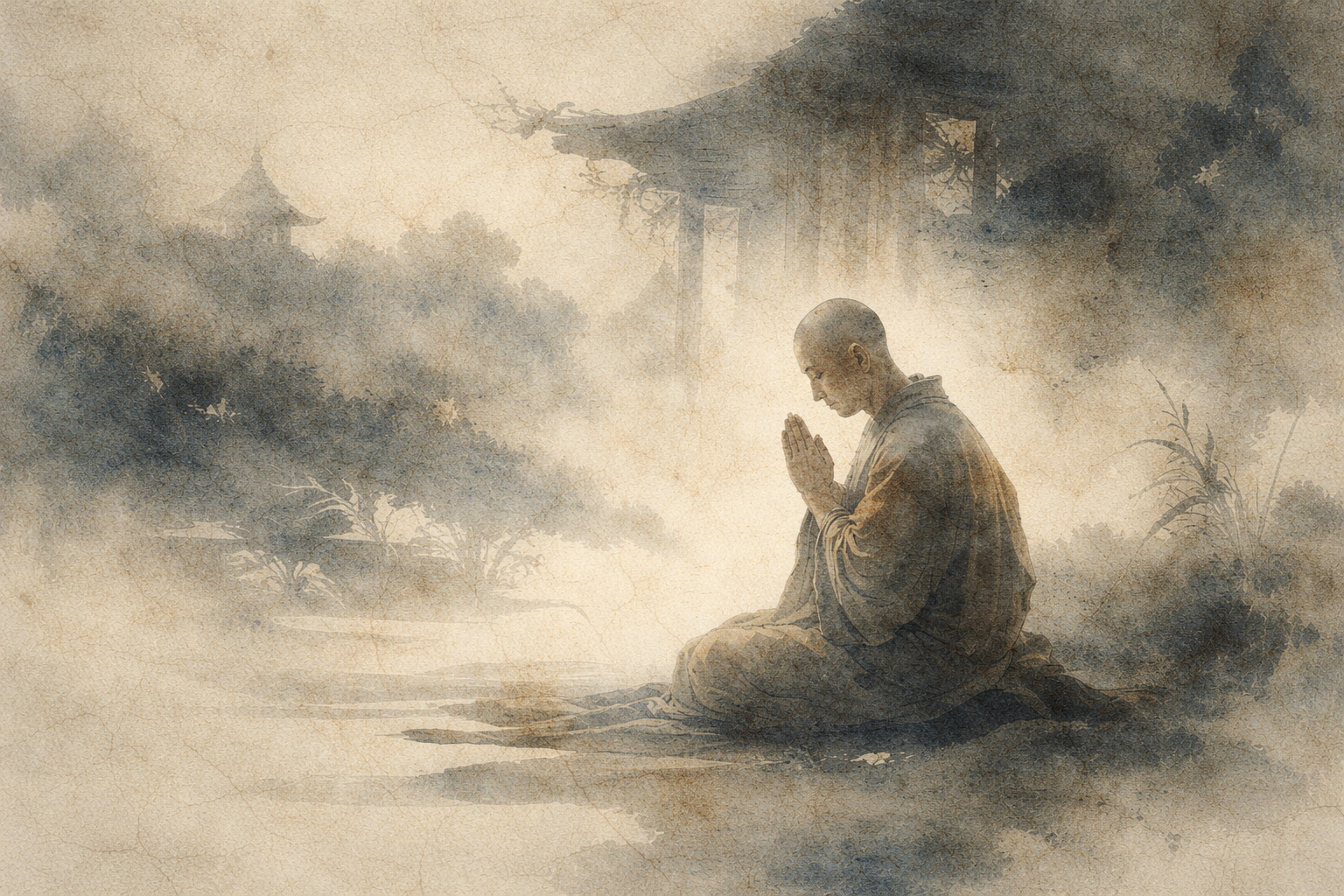
Quick Summary
- Guru Rinpoche is the honorific name for Padmasambhava, a pivotal figure in Tibetan Buddhism.
- He is remembered as a master who helped establish Buddhism in Tibet and make it workable in local culture.
- Many people relate to him less as “a distant saint” and more as a living symbol of awakened guidance.
- Stories about him often function as teaching tools—pointing to courage, clarity, and compassion under pressure.
- His imagery (lotus birth, staff, mantra) is meant to shape attention and intention, not just decorate belief.
- Devotion to Guru Rinpoche can be understood as training the heart to trust wisdom rather than fear.
- If you’re confused by the mix of history and myth, you’re not alone—and you don’t have to “pick a side” to learn from him.
Introduction: Clearing Up the Confusion Around Guru Rinpoche
If you’ve tried to figure out who Guru Rinpoche is in Tibetan Buddhism, you’ve probably hit the same wall most people do: some sources describe a historical teacher, others describe a near-mythic figure who appears in visions, and both are treated as “real” in practice. The useful way through isn’t to force a simplistic answer, but to understand what he represents, why he matters, and how people actually relate to him without needing to suspend common sense. At Gassho, we focus on practical clarity and respectful accuracy when explaining Buddhist figures and ideas.
“Guru Rinpoche” is a title that means “Precious Guru,” and it commonly refers to Padmasambhava, a master traditionally credited with bringing key forms of Buddhist practice into Tibet and helping them take root. Over time, his role became more than biographical: he became a central reference point for what awakened guidance looks like when life is messy, fearful, and unpredictable.
That’s why you’ll see him described in two registers at once. On one level, he’s a teacher associated with a particular time and place. On another level, he’s treated as a timeless embodiment of skillful compassion—something practitioners can turn toward when they need steadiness, protection from inner chaos, or a reminder of their own capacity for wakefulness.
A Clear Lens: What “Guru Rinpoche” Points To
A grounded way to understand Guru Rinpoche is to treat him as a lens for seeing how wisdom meets real conditions. Instead of asking only, “Was he exactly like this historically?” you can also ask, “What human problems do these stories and practices address?” In that sense, Guru Rinpoche points to the possibility of clarity that doesn’t depend on comfort, and compassion that doesn’t collapse under fear.
Many depictions emphasize responsiveness: the ability to meet different minds, different obstacles, and different environments without losing the thread of what matters. This is less about supernatural spectacle and more about a practical message—wisdom isn’t one rigid method; it adapts. When people call him “Precious Guru,” they’re often naming that adaptive, protective quality of guidance.
Another key lens is transformation. Guru Rinpoche is frequently associated with turning obstacles into supports—using what feels like a problem (fear, anger, confusion, resistance) as material for insight rather than something to suppress or deny. Read this psychologically and it’s immediately relatable: the mind’s rough edges can become the very place where attention wakes up.
Finally, Guru Rinpoche points to trust—specifically, trust in awake awareness rather than trust in our most reactive narratives. This isn’t blind belief. It’s the kind of trust you build when you repeatedly notice that panic is loud but not wise, and that steadiness is available even when circumstances don’t cooperate.
GASSHO
Ask and learn about Buddhism in daily life.
GASSHO is a Buddhist community app where you can learn Buddhist teachings and ask questions to the head priest of Kongosanmaiin Temple on Mount Koya.
How Guru Rinpoche Shows Up in Ordinary Life
In everyday experience, “Guru Rinpoche” often shows up as a shift in how you relate to difficulty. A stressful email arrives, a conflict starts to brew, or a familiar worry loops in your head. The usual habit is contraction: you narrow, you brace, you rehearse worst-case outcomes. Remembering Guru Rinpoche can function as a cue to widen attention instead of tightening it.
That widening can be very simple. You notice the body first—jaw clenched, shoulders raised, breath shallow. Rather than treating that as a failure, you recognize it as the mind’s alarm system doing what it does. The “precious” part of the guru principle is the reminder that you don’t have to obey the alarm.
Then there’s the moment of choice around reactivity. Someone says something sharp. The mind offers a fast story: “They disrespected me,” “I need to win,” “I need to disappear.” In practice, invoking Guru Rinpoche can mean pausing long enough to see the story as a story. The pause isn’t dramatic; it’s just long enough to stop feeding the fire.
In that pause, you may notice a second layer: the wish underneath the reaction. Often it’s a wish to be safe, to be seen, to be understood. When you can feel that wish directly, the situation becomes less about attacking or defending and more about responding. This is one of the most practical ways devotion works: it softens the heart so the mind can be honest.
Another ordinary place this appears is in self-judgment. People often imagine spiritual figures as standards they can’t meet, which becomes another reason to feel inadequate. But Guru Rinpoche is frequently approached as someone who meets you where you are—confused, tired, inconsistent—and still points you back to what’s sane. The lived experience is less “I must become perfect” and more “I can return, again and again.”
Even the famous mantra associated with Guru Rinpoche can be understood in a down-to-earth way: as a way to interrupt rumination and reorient attention. Repetition steadies the mind, not by force, but by giving it a simple track to follow when it wants to spiral. The point isn’t to perform holiness; it’s to remember what you value when you’re tempted to forget.
Over time, the figure of Guru Rinpoche can become a mirror. When you feel courageous, you recognize courage. When you feel compassion, you recognize compassion. When you feel lost, you recognize that being lost is also an experience that can be known clearly. In that sense, “Who is Guru Rinpoche?” becomes inseparable from “What is awake attention like in my life today?”
Common Misunderstandings That Make Him Harder to Understand
One common misunderstanding is thinking you must choose between “historical person” and “mythic symbol,” as if only one can be meaningful. In many Buddhist cultures, sacred biography is not written like modern academic history. It often teaches through layered storytelling—history, symbolism, and practice instructions woven together.
Another misunderstanding is assuming devotion means surrendering critical thinking. In practice, devotion can be closer to training the heart: repeatedly orienting toward patience, clarity, and compassion when the mind wants to orient toward fear and aggression. You can respect the tradition while still being honest about what you do and don’t know historically.
People also get stuck on the idea that Guru Rinpoche is only relevant if you accept every miraculous account literally. But many practitioners relate to these accounts as “meaningful truth” rather than journalistic reporting—stories that communicate how wisdom feels and functions when it meets chaos.
Finally, it’s easy to reduce Guru Rinpoche to aesthetics: a striking icon, a dramatic name, a mantra you’ve heard online. Without context, it can feel like exoticism. With context, the imagery becomes a practical language for inner life—fear, confidence, protection, and the possibility of a mind that doesn’t have to be pushed around by its own storms.
Why Knowing Who Guru Rinpoche Is Can Change Your Practice
Understanding Guru Rinpoche matters because it clarifies what “guidance” can mean in Buddhism. It’s not only advice from outside you; it’s also the capacity to recognize what is wholesome and steady from within experience. Guru Rinpoche becomes a name for that capacity—especially when you feel least capable of accessing it.
It also matters because many people carry a quiet fear that spirituality is about escaping life. The Guru Rinpoche principle points the other way: meet life directly, including its rough edges, and let those very conditions become the place where attention matures. That’s a deeply practical stance for relationships, work stress, grief, and uncertainty.
Finally, it offers a healthier relationship with inspiration. Instead of comparing yourself to an ideal and feeling smaller, you can treat the figure as a compass. A compass doesn’t shame you for being lost; it simply points. In that way, Guru Rinpoche can support a practice that is steady, humane, and realistic.
Conclusion: A Practical Answer to “Who Is Guru Rinpoche?”
Guru Rinpoche, commonly identified as Padmasambhava, is a central figure in Tibetan Buddhism remembered for helping establish Buddhism in Tibet and for embodying a style of guidance that adapts to real human conditions. If the mix of history, symbolism, and devotion feels confusing, you don’t need to flatten it into one category to benefit from it. A practical approach is to see Guru Rinpoche as a name for awakened responsiveness—clarity and compassion that can meet fear without becoming fear.
When you hold that lens, the question “Who is Guru Rinpoche?” becomes less like trivia and more like a living inquiry: what does wise response look like in this moment, in this body, in this ordinary life?
Ask a Buddhist priest
Have a question about Buddhism?
In the GASSHO app, you can ask questions about Buddhist teachings, daily concerns, and how to understand Buddhism in everyday life.
Frequently Asked Questions
- FAQ 1: Who is Guru Rinpoche in Tibetan Buddhism?
- FAQ 2: Is Guru Rinpoche the same person as Padmasambhava?
- FAQ 3: What does the name “Guru Rinpoche” mean?
- FAQ 4: Why is Guru Rinpoche so important in Tibetan Buddhism?
- FAQ 5: Was Guru Rinpoche a historical person or a mythic figure?
- FAQ 6: What is Guru Rinpoche known for doing in Tibet?
- FAQ 7: Why is Guru Rinpoche associated with protection?
- FAQ 8: What is the relationship between Guru Rinpoche and the idea of a “guru”?
- FAQ 9: What does Guru Rinpoche’s “lotus birth” symbolize?
- FAQ 10: What mantra is associated with Guru Rinpoche, and what is it for?
- FAQ 11: Is Guru Rinpoche considered a Buddha in Tibetan Buddhism?
- FAQ 12: Why do images of Guru Rinpoche look so different from other Buddhist figures?
- FAQ 13: Do you have to believe every story about Guru Rinpoche to respect him?
- FAQ 14: How do Tibetan Buddhists relate to Guru Rinpoche in daily practice?
- FAQ 15: What is a simple, non-sectarian way to understand who Guru Rinpoche is?
FAQ 1: Who is Guru Rinpoche in Tibetan Buddhism?
Answer: Guru Rinpoche (“Precious Guru”) is the honorific name commonly used for Padmasambhava, a revered master traditionally credited with helping establish Buddhism in Tibet and becoming a lasting symbol of awakened guidance in practice.
Takeaway: Guru Rinpoche refers to Padmasambhava and to the living idea of wise, compassionate guidance.
FAQ 2: Is Guru Rinpoche the same person as Padmasambhava?
Answer: Yes. In most contexts, “Guru Rinpoche” is a title used to refer to Padmasambhava, though the title can also emphasize his role as an ideal of the guru principle rather than just a historical biography.
Takeaway: Padmasambhava is the person most people mean when they say “Guru Rinpoche.”
FAQ 3: What does the name “Guru Rinpoche” mean?
Answer: “Guru” means teacher, and “Rinpoche” means precious or valuable. Together, the phrase conveys deep respect: “Precious Teacher,” highlighting the role of guidance that leads the mind toward clarity and compassion.
Takeaway: The title expresses reverence for the function of awakened teaching.
FAQ 4: Why is Guru Rinpoche so important in Tibetan Buddhism?
Answer: He is important because he is traditionally associated with bringing key teachings and methods into Tibet and making them workable in a new cultural setting. Over time, he also became a central symbol of protection, transformation, and skillful compassion in practice.
Takeaway: His importance is both historical (establishing Buddhism) and practical (a model of awakened responsiveness).
FAQ 5: Was Guru Rinpoche a historical person or a mythic figure?
Answer: Many people understand Guru Rinpoche as rooted in history while also surrounded by sacred stories that teach through symbolism. In Tibetan Buddhist culture, these layers often coexist: biography, teaching narrative, and practice inspiration are not always separated the way modern history writing separates them.
Takeaway: You don’t have to force an either/or; the tradition often holds both history and teaching-story together.
FAQ 6: What is Guru Rinpoche known for doing in Tibet?
Answer: He is traditionally known for helping Buddhism take root in Tibet by teaching, guiding practice, and addressing obstacles that prevented the teachings from being established. Stories often portray him as meeting challenges with adaptability and fearlessness.
Takeaway: He is remembered as a key figure in establishing Buddhism under difficult conditions.
FAQ 7: Why is Guru Rinpoche associated with protection?
Answer: “Protection” here is often understood as protection from inner and outer obstacles—especially fear, confusion, and destabilizing forces. Devotion to Guru Rinpoche can function as a way to steady attention and reconnect with courage and clarity when the mind feels threatened.
Takeaway: Protection often points to stabilizing the mind and meeting fear skillfully.
FAQ 8: What is the relationship between Guru Rinpoche and the idea of a “guru”?
Answer: Guru Rinpoche is often treated as an archetype of awakened guidance: a “guru” not merely as a person to admire, but as the principle of wisdom that points the mind back to what is sane, compassionate, and clear—especially when we are reactive.
Takeaway: He represents the guru principle as guidance toward clarity, not just a personality.
FAQ 9: What does Guru Rinpoche’s “lotus birth” symbolize?
Answer: The lotus is commonly used in Buddhism to symbolize purity and awakening arising from messy conditions—like a lotus growing from mud. The lotus-birth imagery can be read as pointing to the possibility of wisdom appearing within ordinary, imperfect life.
Takeaway: The lotus imagery emphasizes transformation and purity within real-world conditions.
FAQ 10: What mantra is associated with Guru Rinpoche, and what is it for?
Answer: The best-known mantra is “Om Ah Hum Vajra Guru Padma Siddhi Hum.” In practice, it is used to steady attention, evoke devotion, and orient the mind toward awakened qualities associated with Guru Rinpoche—like clarity, courage, and compassionate action.
Takeaway: The mantra is a practical tool for recollection and mental steadiness centered on Guru Rinpoche.
FAQ 11: Is Guru Rinpoche considered a Buddha in Tibetan Buddhism?
Answer: Many Tibetan Buddhist sources regard Guru Rinpoche as an enlightened being, and some treat him as inseparable from buddhahood in function and realization. How this is explained can vary, but devotion typically focuses on what he embodies: awakened guidance and compassionate skill.
Takeaway: He is widely regarded as enlightened, with emphasis on his role as awakened guide.
FAQ 12: Why do images of Guru Rinpoche look so different from other Buddhist figures?
Answer: His iconography often includes distinctive elements (such as specific robes, a staff, and symbolic implements) that communicate qualities like mastery, protection, and adaptability. These are visual “teaching cues” meant to shape how practitioners remember and relate to awakened qualities.
Takeaway: The imagery is symbolic—designed to communicate function and qualities, not just appearance.
FAQ 13: Do you have to believe every story about Guru Rinpoche to respect him?
Answer: Not necessarily. Many people approach the stories as sacred teaching narratives that carry meaning even when read symbolically. Respect can be expressed through learning what the stories point to—courage, compassion, and transformation—without forcing yourself into certainty about every detail.
Takeaway: You can engage respectfully through meaning and practice, even with a symbolic reading.
FAQ 14: How do Tibetan Buddhists relate to Guru Rinpoche in daily practice?
Answer: Many relate through prayer, mantra recitation, visualization, and remembrance—using his image and name to reorient the mind toward steadiness and compassion. In daily life, this can look like pausing before reacting, reconnecting with courage, and choosing a clearer response.
Takeaway: Relationship with Guru Rinpoche is often a daily reorientation of attention and intention.
FAQ 15: What is a simple, non-sectarian way to understand who Guru Rinpoche is?
Answer: A simple way is to see Guru Rinpoche as Padmasambhava and, at the same time, as a symbol of awakened guidance that meets fear and confusion with clarity and compassion. This approach lets you learn from the tradition without needing to turn the figure into either mere legend or mere history.
Takeaway: Guru Rinpoche can be understood as both a revered teacher and a practical symbol of wise responsiveness.