



What Does White Mean in Buddhism? Purity, Peace, and Awakening Explained
Quick Summary
- In Buddhism, white commonly points to purity, clarity, and a mind not stained by grasping or aversion.
- White is often used in ritual and art to express peace, protection, and calm presence.
- It can symbolize awakening qualities: openness, honesty, and seeing things as they are.
- White clothing in Buddhist contexts is usually about simplicity and respect, not “being holy.”
- White flowers and offerings often represent sincerity, impermanence, and clean intention.
- Meanings vary by culture and setting; the most reliable meaning is how it supports practice here and now.
- Used well, white is a reminder to return to steadiness, kindness, and clear attention.
Introduction: Why “White” Feels So Loaded in Buddhist Symbolism
You see white robes, white lotus imagery, white offerings, even white light in Buddhist art—and it’s easy to feel unsure whether white means “purity,” “mourning,” “emptiness,” “enlightenment,” or something else entirely. The confusion is reasonable because Buddhism uses color symbolically, but it also uses symbols as practical reminders rather than fixed definitions. At Gassho, we focus on grounded Buddhist symbolism that supports real-life practice rather than superstition or aesthetic guesswork.
The Core Meaning of White: A Practical Lens, Not a Rule
When people search for “white meaning Buddhism,” they’re usually looking for a single translation: white equals X. A more useful Buddhist lens is that white points toward qualities of mind—especially clarity, non-staining, and peace—because those are the qualities that reduce suffering in ordinary life.
“Purity” here doesn’t mean moral perfection or a spotless personality. It’s closer to the idea of a mind that is not currently being colored by compulsive grasping, resentment, or confusion. White becomes a visual shorthand for “nothing extra added,” like clear water that hasn’t been muddied.
White also suggests openness and simplicity. In many Buddhist settings, white is used to quiet the senses rather than excite them. That quietness supports steadier attention, less reactivity, and a more honest look at what is happening inside.
Finally, white can be read as a reminder of awakening qualities—not as a badge that someone has “arrived,” but as a direction: return to clarity, return to kindness, return to what is true before the mind starts decorating it with fear or desire.
GASSHO
Ask and learn about Buddhism in daily life.
GASSHO is a Buddhist community app where you can learn Buddhist teachings and ask questions to the head priest of Kongosanmaiin Temple on Mount Koya.
How White Shows Up in Lived Experience
In daily life, the “white meaning” is often felt as a pause. You notice the moment before you react, the small gap where you could choose a cleaner response instead of the usual habit.
For example, you read a message that irritates you. The mind starts building a story: what they meant, why it’s unfair, what you should say back. Remembering white as “non-staining” can be as simple as noticing the heat in the body and letting the story remain unconfirmed for a few breaths.
White can also show up as a preference for simplicity. You might feel the relief of not adding commentary—doing the next necessary thing without turning it into a personal drama. That relief is not numbness; it’s the mind choosing less friction.
In relationships, white can mean clean intention. You still set boundaries, you still speak clearly, but you try to remove the extra wish to punish, win, or prove yourself. The conversation becomes more direct because it’s less contaminated by hidden agendas.
In moments of grief or uncertainty, white can feel like quiet dignity. Not forced positivity, not denial—just the willingness to be present without making the pain into an identity. White here is “peaceful” in the sense of not escalating what already hurts.
In a busy day, white can be the practice of returning to the obvious: feet on the ground, breath moving, sounds arriving and leaving. The mind doesn’t need to be special; it needs to be honest. White symbolizes that honesty—plain, unadorned, workable.
And when you do something kind without needing credit, white is there too. The action feels clean because it isn’t tangled up with performance. It’s just what the moment calls for.
Common Misunderstandings About White in Buddhism
Misunderstanding 1: White means you are “pure” as a person. In Buddhist practice, purity is more about what the mind is doing right now than what you “are.” A mind can be clear in one moment and reactive in the next; the symbol points to returning, not achieving.
Misunderstanding 2: White always means the same thing everywhere. Cultural context matters. In some places, white is associated with mourning; in others, with celebration or ritual cleanliness. Buddhism often adapts to local symbolism while keeping the practical aim: reducing suffering and supporting wholesome states.
Misunderstanding 3: White is about rejecting the world. Simplicity can look like withdrawal, but the point is usually clarity and non-entanglement. White can remind you to engage without being consumed—participating in life while staying less driven by compulsions.
Misunderstanding 4: White is “better” than other colors. Buddhist color symbolism is not a ranking system. Different colors can point to different qualities—compassion, wisdom, stability, energy—depending on the context. White is one helpful pointer among many.
Why the Symbol of White Matters in Everyday Life
Symbols matter when they change how you meet the next moment. White is useful because it’s easy to remember: clear, simple, un-stained. That memory can interrupt spirals of overthinking and bring you back to what is actually happening.
It also supports ethical living in a very practical way. “Clean intention” is a strong filter: before speaking, ask whether you’re trying to clarify or trying to harm; before acting, ask whether you’re trying to help or trying to feed an image of yourself.
White can even soften perfectionism. If purity is understood as “not adding extra,” then practice becomes less about becoming flawless and more about releasing what doesn’t need to be carried—resentment, self-justification, and the constant need to be right.
Most importantly, white points to peace that is available without changing your entire life first. Peace here is not the absence of problems; it’s the absence of unnecessary inner conflict layered on top of problems.
Conclusion: White as a Reminder to Return to Clarity
The white meaning in Buddhism is best understood as a practical reminder: keep the mind clear, keep intention clean, and let experience be what it is without staining it with extra struggle. Whether you encounter white in robes, offerings, art, or ritual, the symbol is most alive when it helps you notice reactivity and choose a calmer, kinder response.
Ask a Buddhist priest
Have a question about Buddhism?
In the GASSHO app, you can ask questions about Buddhist teachings, daily concerns, and how to understand Buddhism in everyday life.
Frequently Asked Questions
- FAQ 1: What does white symbolize in Buddhism?
- FAQ 2: Does white mean purity in Buddhism, and what kind of purity is that?
- FAQ 3: Why do some Buddhists wear white clothing?
- FAQ 4: What is the meaning of white robes in Buddhism?
- FAQ 5: Is white associated with peace in Buddhism?
- FAQ 6: What does white mean in Buddhist art and iconography?
- FAQ 7: Does white mean enlightenment in Buddhism?
- FAQ 8: What is the meaning of white flowers in Buddhism?
- FAQ 9: Why is white sometimes linked with mourning in Buddhist cultures?
- FAQ 10: Is the meaning of white in Buddhism the same across all countries?
- FAQ 11: What does “white light” mean in Buddhism?
- FAQ 12: Does white in Buddhism mean emptiness?
- FAQ 13: What does a white lotus mean in Buddhism?
- FAQ 14: How can I apply the white meaning in Buddhism to daily life?
- FAQ 15: Is it disrespectful to wear white to a Buddhist temple if I’m not Buddhist?
FAQ 1: What does white symbolize in Buddhism?
Answer: White commonly symbolizes purity (a non-stained mind), clarity, peace, and sincerity of intention. It’s less a fixed doctrine and more a visual reminder to return to simplicity and calm awareness.
Takeaway: In Buddhism, white usually points to clarity and non-staining rather than “being perfect.”
FAQ 2: Does white mean purity in Buddhism, and what kind of purity is that?
Answer: Yes, but “purity” typically means purity of mind and intention—less greed, hatred, and confusion shaping your response. It’s about what you’re cultivating moment by moment, not a claim that you are morally flawless.
Takeaway: Buddhist purity is practical: a cleaner intention and a clearer mind right now.
FAQ 3: Why do some Buddhists wear white clothing?
Answer: White clothing is often worn to express simplicity, respect, and a wish for mental cleanliness during ceremonies or periods of practice. It can also reflect local cultural customs around modesty and ritual purity.
Takeaway: White clothing usually signals simplicity and respectful intention, not spiritual status.
FAQ 4: What is the meaning of white robes in Buddhism?
Answer: White robes often represent renunciation in the sense of “less clutter,” along with calmness and clean conduct. Depending on the region, white robes may be used for lay practice, ceremonies, or specific observances rather than as a universal marker.
Takeaway: White robes generally emphasize simplicity and calm discipline, shaped by local tradition.
FAQ 5: Is white associated with peace in Buddhism?
Answer: Often, yes. White is visually quiet and can symbolize a settled, non-agitated mind. In Buddhist symbolism, peace is not escapism; it’s the easing of inner conflict and reactivity.
Takeaway: White can be a cue to soften reactivity and return to steadiness.
FAQ 6: What does white mean in Buddhist art and iconography?
Answer: In art, white commonly highlights qualities like purity, openness, protection, and clarity. Artists may use white to create a sense of spaciousness or to emphasize a calm, luminous presence rather than intense emotion.
Takeaway: In Buddhist art, white often communicates clarity and spacious calm.
FAQ 7: Does white mean enlightenment in Buddhism?
Answer: White can gesture toward awakening qualities—clarity, non-grasping, and peace—but it’s not a simple “white equals enlightenment” equation. Buddhism tends to use symbols as pointers to cultivate, not labels to claim.
Takeaway: White may point toward awakening, but it’s mainly a reminder to practice clarity.
FAQ 8: What is the meaning of white flowers in Buddhism?
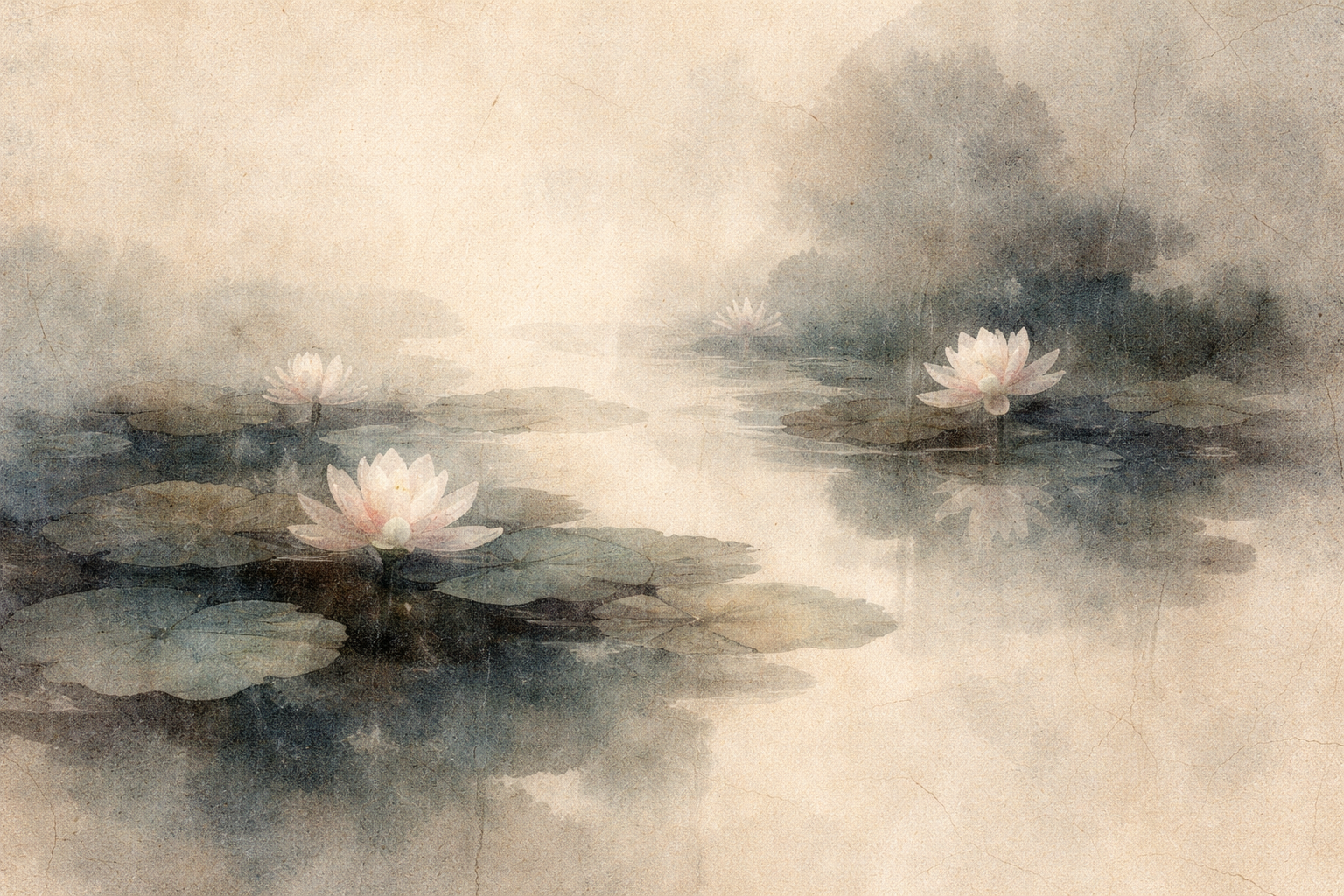
Answer: White flowers are often offered to express sincerity, respect, and a clean intention. Because flowers fade, they can also quietly point to impermanence—beauty that is real but not possessable.
Takeaway: White flowers commonly represent sincere offering and a reminder of impermanence.
FAQ 9: Why is white sometimes linked with mourning in Buddhist cultures?
Answer: In several Asian cultures influenced by Buddhism, white is a traditional mourning color, expressing simplicity and the stripping away of decoration in the face of death. This is cultural symbolism that can coexist with Buddhist reflections on impermanence and compassion.
Takeaway: White can signify mourning culturally while still aligning with Buddhist themes of impermanence.
FAQ 10: Is the meaning of white in Buddhism the same across all countries?
Answer: No. While white often suggests purity and peace, local customs can shift how it’s used—especially in funerals, festivals, and clothing. The most consistent Buddhist use is as a support for wholesome mental qualities.
Takeaway: White’s meaning varies culturally, but it often points back to clarity and simplicity.
FAQ 11: What does “white light” mean in Buddhism?
Answer: White light in Buddhist imagery or devotional language often symbolizes clarity, protection, and the illuminating quality of awareness. It’s generally best understood as symbolic language for purification and calm rather than a requirement to see literal lights.
Takeaway: “White light” usually functions as a symbol of clarity and purification, not a test of experience.
FAQ 12: Does white in Buddhism mean emptiness?
Answer: Sometimes people associate white space or blankness with emptiness, but in Buddhism “emptiness” is not mere nothingness. White may be used artistically to suggest openness and lack of clutter, yet emptiness is better understood as freedom from fixed, independent essence.
Takeaway: White can suggest openness, but emptiness in Buddhism is deeper than “blank.”
FAQ 13: What does a white lotus mean in Buddhism?
Answer: The lotus often symbolizes purity that isn’t dependent on perfect conditions—growing from muddy water yet appearing clean. A white lotus commonly emphasizes mental purity, sincerity, and peaceful clarity.
Takeaway: A white lotus often points to clear, sincere mind even amid messy life.
FAQ 14: How can I apply the white meaning in Buddhism to daily life?
Answer: Use white as a cue for “clean intention”: pause before speaking, notice the urge to add blame or self-importance, and choose the simplest honest response. It can also mean reducing mental clutter—doing one thing at a time with steady attention.
Takeaway: Let white remind you to simplify, pause, and act from clear intention.
FAQ 15: Is it disrespectful to wear white to a Buddhist temple if I’m not Buddhist?
Answer: Usually it’s not disrespectful, and in many places it’s considered modest and appropriate. The safest approach is simple clothing, clean presentation, and following local guidance if posted; the deeper “white meaning” is respectful intention rather than the color itself.
Takeaway: White is often acceptable at temples; respect and modesty matter more than symbolism.