



Where Did Buddhism Start? How Buddhism Began in India
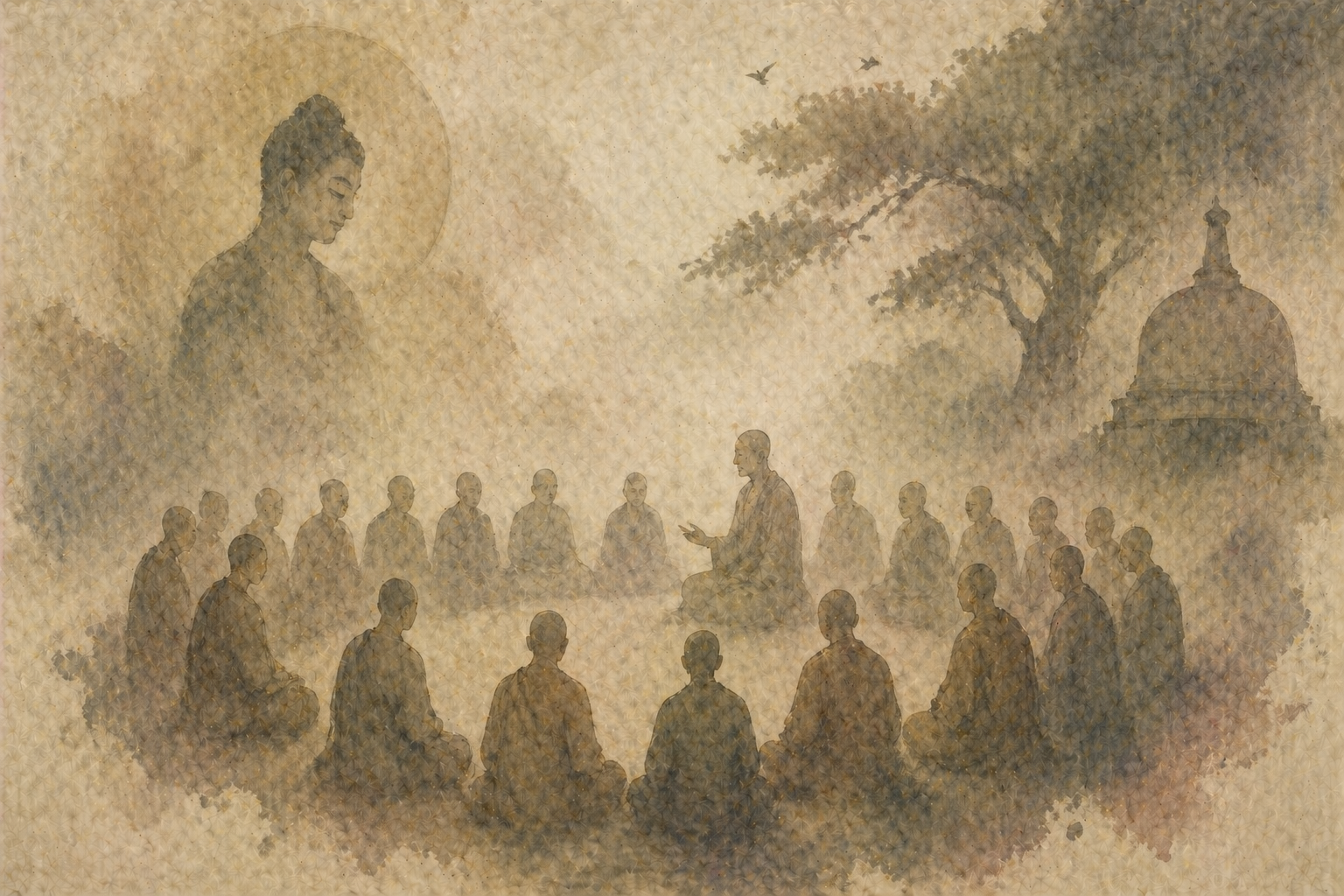
Quick Summary
- Buddhism started in northern India in the 5th century BCE (often dated roughly 480–400 BCE, with scholarly debate).
- Its origin is tied to Siddhartha Gautama’s awakening at Bodh Gaya and his first teachings at Sarnath.
- The earliest Buddhist communities formed around the Ganges plain, in places like Magadha and Kosala.
- “Where Buddhism started” can mean geography (India), time period (early historic India), or the first community (the early sangha).
- Buddhism began as a practical path focused on suffering, its causes, and a way of living with clarity and restraint.
- It spread beyond India through travel, trade routes, and royal support, especially under Ashoka in the 3rd century BCE.
- Understanding the origin helps separate early Buddhism’s historical roots from later cultural forms across Asia.
Introduction
If you’re trying to pin down where Buddhism started, the confusion usually comes from mixing three different “starts”: the place where the Buddha lived, the place where the teachings were first spoken, and the places where Buddhism later became famous. The clean answer is that Buddhism began in northern India, centered on the Ganges plain, and it took shape through a few specific locations tied to the Buddha’s life and earliest community. This guide is written for Gassho, a Zen/Buddhism site focused on clear, grounded explanations.
When people ask “where did Buddhism start,” they often want a single dot on a map. Historically, it’s more accurate to think of a small region with several key sites: where Siddhartha Gautama was born, where he awakened, where he taught, and where the first community stabilized. Those sites sit in what is today northern India and southern Nepal, but the movement itself began in the cultural and political landscape of ancient India.
It also helps to be honest about dates. The Buddha’s lifetime is commonly placed in the 5th century BCE, but exact years are debated because the earliest sources were preserved orally before being written down. Even with that uncertainty, the geographic origin is not in doubt: Buddhism started in India, in the northeastern part of the subcontinent.
A Clear Lens on What “Start” Really Means
A useful way to understand where Buddhism started is to treat “start” as a practical label, not a sacred claim. A tradition begins when a way of seeing life becomes shareable: it gets expressed in words, tested in daily conduct, and carried by a community. In Buddhism’s case, that shareable beginning happened in northern India, where the Buddha’s insight was first articulated and then practiced by others.
So the origin isn’t just a birthplace. The Buddha was born in Lumbini (in today’s Nepal), but Buddhism as a living path begins most clearly with awakening at Bodh Gaya (in today’s Bihar, India) and the first teaching at Sarnath (near Varanasi, India). Those moments mark the shift from a private realization to a public path that others could follow.
This lens keeps the topic grounded. Instead of asking, “Where did a religion appear fully formed?” you ask, “Where did a method for meeting suffering become established and transmitted?” That method—training attention, clarifying intention, and living ethically—was shaped in the social world of the Ganges plain, among towns, forests, and early kingdoms.
Seen this way, “where Buddhism started” points to a region and a set of early communities rather than a single building or institution. The earliest sangha (community of practitioners) formed around the Buddha’s teaching activity in northeastern India, and that community is the real engine of Buddhism’s beginning.
GASSHO
Ask and learn about Buddhism in daily life.
GASSHO is a Buddhist community app where you can learn Buddhist teachings and ask questions to the head priest of Kongosanmaiin Temple on Mount Koya.
How the Origin Shows Up in Ordinary Life
Even though the question sounds historical, it often comes from a present-day feeling: life is busy, the mind is reactive, and you want to know whether Buddhism is rooted in something real or just a vague “Eastern philosophy.” Tracing where Buddhism started can be a way of checking whether the tradition is grounded in human experience rather than in slogans.
In everyday moments—waiting in traffic, reading the news, having a tense conversation—you can notice how quickly the mind builds a story: blame, justification, fear, or craving. The early Buddhist setting matters because it reminds you that the teachings were shaped in ordinary human conditions: uncertainty, conflict, aging, illness, and social pressure were not theoretical topics; they were the air people breathed.
When you learn that Buddhism began as a spoken teaching in a specific place and time, it subtly shifts how you listen. You may find yourself paying more attention to what is practical: what helps reduce unnecessary suffering right now, what helps you speak more carefully, what helps you see a reaction before it becomes a decision.
That practicality shows up in small internal movements. You notice irritation arise, and instead of treating it as “me,” you see it as a passing event. You notice desire arise, and instead of feeding it automatically, you pause long enough to feel its texture. This kind of noticing is not dependent on believing anything; it’s dependent on looking closely.
The origin story also highlights community. Buddhism didn’t start as a private self-help project; it started as something practiced with others—through shared guidelines, shared reflection, and shared accountability. In modern life, that can translate into simple choices: seeking wise conversation, choosing environments that support steadiness, and being honest about habits that pull you off-center.
And because Buddhism began in a diverse, changing society, it can feel less like a rigid identity and more like a set of tools. You can test what reduces reactivity, what increases clarity, and what supports kindness—without needing to perform a cultural costume. The historical beginning in India points to a human beginning: a response to suffering that can be examined and practiced.
Finally, knowing where Buddhism started can soften the urge to treat later forms as the “original.” When you see how teachings traveled and adapted, you become less anxious about getting the aesthetics perfect and more interested in the core function: seeing clearly, acting carefully, and letting go of what doesn’t help.
Common Misunderstandings About Buddhism’s Beginning
Misunderstanding 1: “Buddhism started in China or Japan.” Buddhism became deeply influential in China, Korea, Japan, Tibet, Sri Lanka, and Southeast Asia—but it did not start there. It began in India and spread outward over centuries.
Misunderstanding 2: “It started as a fully organized religion with temples and scriptures.” Early Buddhism began with oral teachings and a community organized around practice and discipline. Large institutions, extensive written canons, and regional styles developed later.
Misunderstanding 3: “The Buddha invented everything from scratch.” The Buddha taught within a broader Indian spiritual environment that already included renunciation, meditation, and philosophical debate. Buddhism started as a distinct approach within that world, emphasizing a direct path to understanding suffering and its causes.
Misunderstanding 4: “We can date the exact year Buddhism started.” Scholars debate precise dates for the Buddha’s life. What remains stable is the general period (5th century BCE, give or take) and the geographic region (northeastern India).
Misunderstanding 5: “Where it started doesn’t matter.” The origin matters if you want clarity. It helps you separate early teachings from later cultural layers and prevents the common mistake of treating one later form as the only authentic one.
Why the Indian Origin Still Matters Today
Knowing where Buddhism started keeps the tradition anchored. It points back to a real human setting—towns, forests, teachers, students, arguments, and daily needs—rather than an imagined timeless philosophy floating above history. That anchoring can make your practice feel less like adopting an identity and more like learning a craft.
It also clarifies what is essential versus what is local. As Buddhism moved beyond India, it expressed itself through many languages, art forms, and social norms. When you know the starting region and early context, you can appreciate those later expressions without confusing them for the origin itself.
On a personal level, the origin story can encourage humility. Buddhism began as a response to suffering that anyone can recognize: stress, loss, restlessness, and the constant attempt to secure life through control. That recognition is not owned by any one culture, but it did arise in a particular place where people were willing to look closely and live differently.
Finally, the Indian beginning highlights a simple point: Buddhism started through practice and conversation, not through coercion. It grew because people found it workable. That’s a useful standard to keep today—test what you hear, notice what changes your mind and behavior, and keep what genuinely reduces harm.
Conclusion
So, where did Buddhism start? It started in northern India, in the cultural world of the Ganges plain, during the 5th century BCE (approximately, with debated specifics). The most important “starting points” are Bodh Gaya (awakening) and Sarnath (first teaching), with the early community forming across northeastern India. If you keep “start” grounded in geography, time, and the first shared practice, the origin becomes clear—and the tradition becomes easier to understand without mythologizing it.
Ask a Buddhist priest
Have a question about Buddhism?
In the GASSHO app, you can ask questions about Buddhist teachings, daily concerns, and how to understand Buddhism in everyday life.
Frequently Asked Questions
- FAQ 1: Where did Buddhism start geographically?
- FAQ 2: Where did Buddhism start in terms of the first teaching?
- FAQ 3: Where did Buddhism start in terms of awakening?
- FAQ 4: Did Buddhism start in India or Nepal?
- FAQ 5: When did Buddhism start?
- FAQ 6: What region of India did Buddhism start in?
- FAQ 7: Where did Buddhism start as a community (sangha)?
- FAQ 8: Where did Buddhism start according to historical evidence?
- FAQ 9: Where did Buddhism start before it spread to other countries?
- FAQ 10: Where did Buddhism start and what are the four main early sites?
- FAQ 11: Where did Buddhism start in relation to the Ganges River?
- FAQ 12: Where did Buddhism start if the Buddha traveled so much?
- FAQ 13: Where did Buddhism start compared to Hinduism?
- FAQ 14: Where did Buddhism start, and why do some sources give different answers?
- FAQ 15: Where did Buddhism start, and what is the simplest accurate one-sentence answer?
FAQ 1: Where did Buddhism start geographically?
Answer: Buddhism started in northern India, especially in the northeastern region of the Indian subcontinent along the Ganges plain, where the Buddha lived, taught, and gathered an early community.
Takeaway: The geographic origin of Buddhism is India, centered on the Ganges plain.
FAQ 2: Where did Buddhism start in terms of the first teaching?
Answer: Buddhism is often said to “start” publicly at Sarnath (near present-day Varanasi, India), where the Buddha gave his first discourse after awakening.
Takeaway: Sarnath is a key “starting point” because it marks the first public teaching.
FAQ 3: Where did Buddhism start in terms of awakening?
Answer: The Buddha’s awakening is traditionally located at Bodh Gaya in present-day Bihar, India, making it one of the most important sites for understanding where Buddhism began.
Takeaway: Bodh Gaya is central because awakening is the source event behind the teachings.
FAQ 4: Did Buddhism start in India or Nepal?
Answer: The Buddha was born in Lumbini (in today’s Nepal), but Buddhism as a teaching movement began in ancient India, where awakening and early teaching activity took place and where the first communities formed.
Takeaway: Birthplace is in modern Nepal; Buddhism’s formation as a tradition began in India.
FAQ 5: When did Buddhism start?
Answer: Buddhism started during the 5th century BCE (with scholarly debate on exact dates), during the period when the Buddha lived and taught in northern India.
Takeaway: The best-supported timeframe is the 5th century BCE, even if exact years vary.
FAQ 6: What region of India did Buddhism start in?
Answer: Buddhism began in northeastern India, associated with the Ganges plain and early kingdoms such as Magadha and Kosala (in terms of ancient geography).
Takeaway: Northeastern India is the core region for Buddhism’s earliest development.
FAQ 7: Where did Buddhism start as a community (sangha)?
Answer: The earliest Buddhist community formed around the Buddha’s teaching activity in northern India, beginning with the first group of disciples after the initial teachings near Sarnath and expanding across the Ganges region.
Takeaway: Buddhism “started” socially when a practicing community formed in northern India.
FAQ 8: Where did Buddhism start according to historical evidence?
Answer: Historical and archaeological evidence supports an origin in northern India, with early sites and inscriptions (especially later, under Ashoka) pointing back to the Buddha’s activity in that region.
Takeaway: History and archaeology consistently locate Buddhism’s origin in northern India.
FAQ 9: Where did Buddhism start before it spread to other countries?
Answer: Before spreading to Sri Lanka, Central Asia, and East Asia, Buddhism began in India and developed there for centuries, establishing teachings, communities, and pilgrimage sites in the subcontinent.
Takeaway: India is the starting base from which Buddhism later spread outward.
FAQ 10: Where did Buddhism start and what are the four main early sites?
Answer: Buddhism started in northern India, and four widely recognized early sites tied to its beginnings are Lumbini (birth), Bodh Gaya (awakening), Sarnath (first teaching), and Kushinagar (passing away).
Takeaway: The origin is Indian, with key sites marking major early events.
FAQ 11: Where did Buddhism start in relation to the Ganges River?
Answer: Buddhism began in the broader Ganges plain culture, where many towns, trade routes, and kingdoms supported travel and dialogue, allowing the Buddha’s teachings to circulate and communities to form.
Takeaway: The Ganges plain was the social landscape where Buddhism first took root.
FAQ 12: Where did Buddhism start if the Buddha traveled so much?
Answer: Even though the Buddha traveled widely within northern India, the origin still points to that same region: awakening at Bodh Gaya and the first teaching at Sarnath, with ongoing teaching across northeastern India.
Takeaway: Travel doesn’t change the origin; it clarifies that the “start” is a regional network of places.
FAQ 13: Where did Buddhism start compared to Hinduism?
Answer: Buddhism started in northern India in the 5th century BCE, within an Indian religious and philosophical environment that also included Vedic and non-Vedic traditions; it emerged as a distinct path with its own teachings and community.
Takeaway: Buddhism began in India alongside other Indian traditions, but as a distinct movement.
FAQ 14: Where did Buddhism start, and why do some sources give different answers?
Answer: Different answers usually reflect different meanings of “start”: birthplace (Lumbini), awakening (Bodh Gaya), first teaching (Sarnath), or early growth region (northeastern India). All of these still point to the India–Nepal borderlands of the ancient Ganges region.
Takeaway: The “different answers” are about different definitions, not different origins.
FAQ 15: Where did Buddhism start, and what is the simplest accurate one-sentence answer?
Answer: Buddhism started in northern India in the 5th century BCE, arising from the Buddha’s awakening at Bodh Gaya and his first teachings near Sarnath, where an early community formed and spread the path.
Takeaway: The simplest accurate answer is: Buddhism began in northern India around the 5th century BCE.