



What Should You Notice First When Visiting a Temple in Japan?
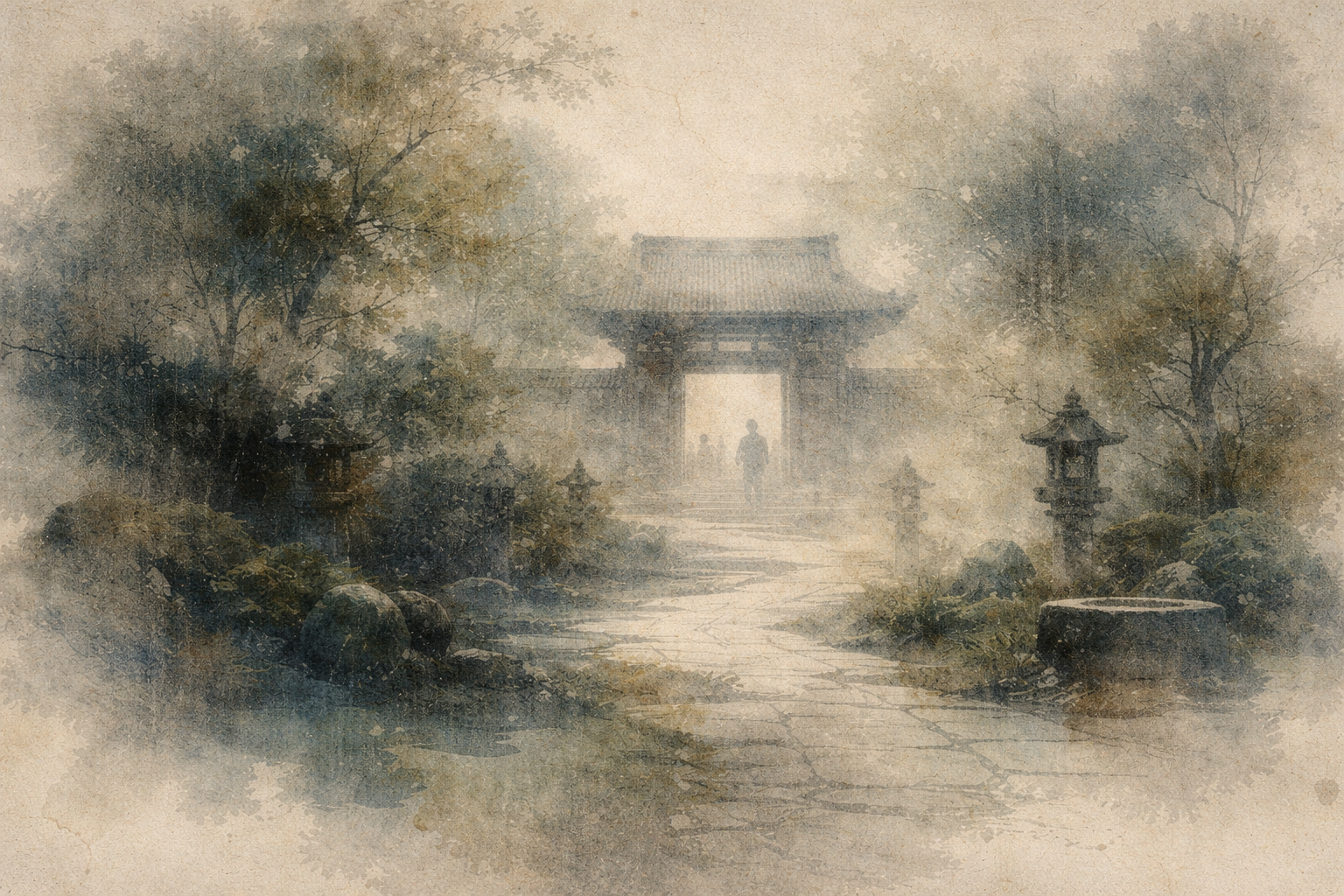
What Should You Notice First When Visiting a Temple in Japan?
- Notice the threshold: the shift from street pace to temple pace starts at the gate and path.
- Watch your own volume, speed, and posture before you worry about “doing it right.”
- Look for cues: signs, shoe shelves, ropes, and the flow of local visitors quietly teach etiquette.
- Pay attention to what is “inside” and what is “outside” (halls, tatami areas, off-limits zones).
- Notice the main object of respect (altar, statue, memorial tablets) and how people approach it.
- Let the atmosphere lead: incense, bells, gardens, and silence are part of the visit.
- When unsure, choose the least disruptive option: pause, observe, then move gently.
You’re standing at a temple entrance in Japan and the confusion hits fast: where do you walk, what do you do with your hands, should you bow, should you be silent, and what if you accidentally disrespect something important. The most useful first step isn’t memorizing rules—it’s noticing the moment your attention needs to soften and widen so you can move with the place instead of against it. At Gassho, we focus on practical, respectful ways to meet Buddhist spaces without turning them into a performance.
The First Thing to Notice: The Shift in Pace and Attention
If you want one answer to “what should you notice first when visiting a temple in Japan,” notice the threshold: the subtle transition from everyday urgency to a calmer, more deliberate way of moving. This isn’t mystical. It’s a simple change in how you place your feet, how you hold your voice, and how you let your eyes take in the space.
Think of a temple as a place designed to guide attention. Paths, gates, courtyards, and halls are not only architecture; they’re cues. When you notice those cues early, etiquette becomes less about fear of mistakes and more about responding appropriately to what’s in front of you.
This perspective is a lens: “Let the environment teach you.” Instead of arriving with a checklist, you arrive with sensitivity—watching how others behave, reading posted instructions, and noticing where the space naturally asks for quiet, shoes-off, or a pause.
From that lens, respect is not a special gesture you perform once. It’s the ongoing choice to be less intrusive: fewer sudden movements, less noise, fewer assumptions, and more careful attention to boundaries.
GASSHO
Ask and learn about Buddhism in daily life.
GASSHO is a Buddhist community app where you can learn Buddhist teachings and ask questions to the head priest of Kongosanmaiin Temple on Mount Koya.
How Noticing Works While You Walk Through the Grounds
The first few steps often decide the whole visit. You enter and your mind wants to label everything—gate, lantern, statue, garden—while also worrying about what you “should” do. Notice that mental rush. Then let your body do something simple: slow down.
As you slow down, you start to see the practical signals that were invisible at street speed: a sign asking for silence, a rope marking an area you shouldn’t cross, a small shelf for shoes, or arrows showing a one-way route. Noticing first means you give those signals time to register.
You may notice other visitors offering a small bow, putting hands together briefly, or pausing before a hall. The point isn’t to copy perfectly; it’s to sense the shared rhythm. When you match the rhythm—quiet feet, patient waiting, gentle turns—you reduce the chance of interrupting someone else’s moment.
Inside halls, noticing becomes even more physical. You feel the change in flooring, the closeness of objects, the way sound carries. You might notice that your backpack bumps things, your shoes squeak, or your phone feels loud even on vibrate. These are not moral failures—just information.
When you approach an altar or statue, notice what people do with distance. Many temples have a natural “edge” where visitors stop, bow, or stand quietly. If you’re unsure, the safest move is to pause behind others, watch for a moment, and keep your gestures small and sincere.
Noticing also includes what you’re tempted to do: take photos quickly, step into the best angle, talk to your companion, or read every plaque while blocking the path. You can feel that impulse arise, and you can choose a softer version—step aside, whisper, wait, or skip the shot.
Finally, notice your own reaction when you don’t know the “correct” action. Many visitors tighten up and become awkward. A calmer approach is to treat uncertainty as a cue to become more observant: look for posted guidance, follow the flow, and when in doubt, do less rather than more.
Common Mistakes Visitors Make at Japanese Temples
One common misunderstanding is thinking the first thing to notice is a specific object—like a statue, a bell, or a gate—so you can “do the right ritual.” Objects matter, but the more reliable first notice is the atmosphere and the boundaries of the space. Ritual without sensitivity can become noisy.
Another mistake is treating a temple like a museum where the goal is to capture everything. Temples can welcome visitors, but they are also living religious spaces. If your first instinct is to photograph, you may miss signs about restricted areas, no-photo zones, or moments when photography would be disruptive.
People also overcorrect by freezing up—afraid to step wrong, bow wrong, or stand wrong. The reality is that most temples are used to visitors. If you notice first, move slowly, and follow posted instructions, small imperfections are rarely a problem.
A final misunderstanding is assuming all sacred sites in Japan work the same way. Temples vary widely. Some are quiet and contemplative; others are busy and community-centered. Noticing first means you let this specific temple tell you what kind of place it is today.
Why This Kind of Noticing Changes the Whole Visit
When you notice the shift in pace first, you stop treating etiquette as a test and start treating it as care. That care protects other visitors’ experience and honors the people who maintain the temple as a place of practice, remembrance, and community.
This approach also makes your visit more vivid. You hear the gravel underfoot, notice the smell of incense, and see how light falls in a hall. Those details are easy to miss when you’re busy performing “correctness.”
Outside the temple, the same skill is useful: noticing your own speed, your impact on shared spaces, and the cues that tell you how to behave respectfully. It’s a small discipline that makes travel—and daily life—less self-centered and more responsive.
Conclusion: Start by Noticing the Threshold
If you’re wondering what you should notice first when visiting a temple in Japan, notice the threshold where your attention can change: slow down, soften your voice, and let the space instruct you. From there, etiquette becomes straightforward—observe signs, follow the flow of people, respect boundaries, and keep your presence gentle. You don’t need a perfect script; you need a respectful way of seeing.
Ask a Buddhist priest
Have a question about Buddhism?
In the GASSHO app, you can ask questions about Buddhist teachings, daily concerns, and how to understand Buddhism in everyday life.
Frequently Asked Questions
- FAQ 1: What should you notice first when visiting a temple in Japan?
- FAQ 2: When you arrive at a Japanese temple, what is the first physical cue to look for?
- FAQ 3: Should you bow first thing when visiting a temple in Japan?
- FAQ 4: What should you notice first to avoid being disrespectful at a temple in Japan?
- FAQ 5: What should you notice first about your own behavior when entering a Japanese temple?
- FAQ 6: What should you notice first before taking photos at a temple in Japan?
- FAQ 7: What should you notice first when you step into a temple hall in Japan?
- FAQ 8: What should you notice first if you don’t know the temple’s etiquette?
- FAQ 9: What should you notice first about where to walk at a temple in Japan?
- FAQ 10: What should you notice first when approaching an altar at a Japanese temple?
- FAQ 11: What should you notice first about sound and conversation at temples in Japan?
- FAQ 12: What should you notice first to understand what kind of temple you’re visiting in Japan?
- FAQ 13: What should you notice first if you’re visiting a temple in Japan with children or a group?
- FAQ 14: What should you notice first about shoes and flooring when visiting a temple in Japan?
- FAQ 15: What should you notice first before leaving a temple in Japan?
FAQ 1: What should you notice first when visiting a temple in Japan?
Answer: Notice the shift in pace and atmosphere at the entrance—lower your voice, slow your steps, and look for cues like signs, shoe areas, and the flow of other visitors.
Takeaway: Start with awareness of the space, not a memorized ritual.
FAQ 2: When you arrive at a Japanese temple, what is the first physical cue to look for?
Answer: Look for the entrance path and any posted instructions, then check whether there’s a shoe-removal area before entering buildings or tatami spaces.
Takeaway: Let the layout and signage tell you how to enter.
FAQ 3: Should you bow first thing when visiting a temple in Japan?
Answer: A small bow at the gate or before entering a main hall is common, but the best “first move” is to notice what others are doing and whether the space suggests a pause or a line to follow.
Takeaway: If unsure, pause and observe before copying gestures.
FAQ 4: What should you notice first to avoid being disrespectful at a temple in Japan?
Answer: Notice boundaries: ropes, closed doors, “no entry” signs, and areas where people are praying. Staying out of restricted zones matters more than perfect hand positions.
Takeaway: Respect starts with not crossing lines—literally.
FAQ 5: What should you notice first about your own behavior when entering a Japanese temple?
Answer: Notice your volume, speed, and where you place your body (especially in doorways and narrow corridors). Temples often amplify sound and feel crowded quickly.
Takeaway: Your presence is part of the environment—make it lighter.
FAQ 6: What should you notice first before taking photos at a temple in Japan?
Answer: Notice signs about photography and watch whether people are praying nearby. Some halls allow photos outside but not inside, and some areas are no-photo even if they look “touristy.”
Takeaway: Check rules and context before lifting your camera.
FAQ 7: What should you notice first when you step into a temple hall in Japan?
Answer: Notice whether shoes must come off, where to stand or sit, and where the main altar area begins. Many halls have a clear “visitor edge” you shouldn’t cross.
Takeaway: Inside spaces require extra attention to floors and boundaries.
FAQ 8: What should you notice first if you don’t know the temple’s etiquette?
Answer: Notice the simplest teachers: posted instructions, the direction of foot traffic, and how local visitors pause, bow, or keep distance. Then choose the least disruptive action.
Takeaway: When uncertain, observe first and do less.
FAQ 9: What should you notice first about where to walk at a temple in Japan?
Answer: Notice the main path and whether there’s a natural center line or a guided route. If the space is busy, follow the flow and avoid stopping in the middle of walkways.
Takeaway: Move with the path, not against the crowd.
FAQ 10: What should you notice first when approaching an altar at a Japanese temple?
Answer: Notice how close people stand, whether there’s a place to offer incense, and whether someone is already praying. Wait your turn and keep your gestures quiet and brief.
Takeaway: Approach altars with patience and respectful distance.
FAQ 11: What should you notice first about sound and conversation at temples in Japan?
Answer: Notice the ambient quiet and how far voices carry, especially in wooden halls and corridors. If others are silent or whispering, match that level.
Takeaway: Let the temple’s quiet set your volume.
FAQ 12: What should you notice first to understand what kind of temple you’re visiting in Japan?
Answer: Notice what the space emphasizes: memorial areas, a main hall for worship, a garden for walking, or a busy courtyard for community visits. The “feel” of the place guides how you behave.
Takeaway: Each temple has its own rhythm—notice it early.
FAQ 13: What should you notice first if you’re visiting a temple in Japan with children or a group?
Answer: Notice narrow areas, prayer spaces, and places where people queue. Keep the group compact, step aside to talk, and avoid blocking entrances or altars.
Takeaway: Group visits work best when you notice space and flow.
FAQ 14: What should you notice first about shoes and flooring when visiting a temple in Japan?
Answer: Notice the transition points: steps, raised thresholds, tatami rooms, and shoe shelves. If you see slippers provided, use them where indicated and don’t wear outdoor shoes inside.
Takeaway: Floors are a major etiquette signal—watch for transitions.
FAQ 15: What should you notice first before leaving a temple in Japan?
Answer: Notice whether you’ve returned slippers, collected your shoes, and left spaces as you found them. Many visitors also pause briefly at the exit to bow or offer a quiet moment of thanks.
Takeaway: End the visit with the same care you used to enter.