



What Is Urabon? The Buddhist Origin of Obon Explained Simply
Quick Summary
- Urabon (Ullambana) is the Buddhist source tradition behind Japan’s Obon, centered on gratitude and care for ancestors.
- The classic Urabon story highlights a simple point: compassion becomes real when it turns into concrete support for others.
- Obon customs—lanterns, offerings, temple visits, and dances—can be understood as cultural expressions of Urabon’s intent.
- Urabon is less about “summoning spirits” and more about remembering interdependence and repaying kindness.
- You don’t need perfect rituals; sincerity, remembrance, and ethical action are the heart of the observance.
- Urabon offers a practical way to meet grief: acknowledge love, regret, and gratitude without getting stuck in them.
- Even small acts—donation, volunteering, reconciliation, caring for family—fit Urabon’s original spirit.
Introduction
If Obon feels like a mix of family reunion, summer festival, and vague “spirit” imagery, you’re not alone—and it can leave you unsure what you’re actually supposed to be honoring. Urabon is the clearer Buddhist root beneath the seasonal customs: a focused practice of gratitude, remembrance, and generosity directed toward those who came before us, explained here in plain language by Gassho.
In Japanese usage, “Urabon” often points to the Buddhist observance that later shaped Obon, while “Obon” names the broader cultural season with regional variations. Understanding Urabon helps you see why offerings, temple services, and family gatherings aren’t random traditions—they’re ways of expressing a single theme: we live because we were supported.
When you approach Urabon as a lens rather than a rulebook, the practices become less about getting details “right” and more about aligning your actions with appreciation and care. That shift matters, especially if you’re navigating grief, complicated family history, or the quiet feeling that you’ve lost touch with what these days are for.
The Simple Heart of Urabon
Urabon is best understood as a way of seeing: our lives are not self-made, and gratitude is not just a feeling—it is something we enact. The observance points attention toward the web of support behind us: parents, grandparents, teachers, neighbors, and countless unnamed people whose labor and care made our present possible.
The traditional Urabon narrative (often connected with the idea of “Ullambana”) is frequently summarized through a story of a devoted disciple who worries about a parent’s suffering and seeks a way to help. The resolution emphasizes offering and sharing—supporting the community and those in need—rather than trying to control unseen outcomes through anxiety or superstition.
Seen this way, Urabon is not asking you to adopt a particular metaphysical claim about where the dead are or how they “travel.” It’s offering a practical orientation: when love meets helplessness, we can respond by widening our care—making merit through generosity, ethical conduct, and communal support.
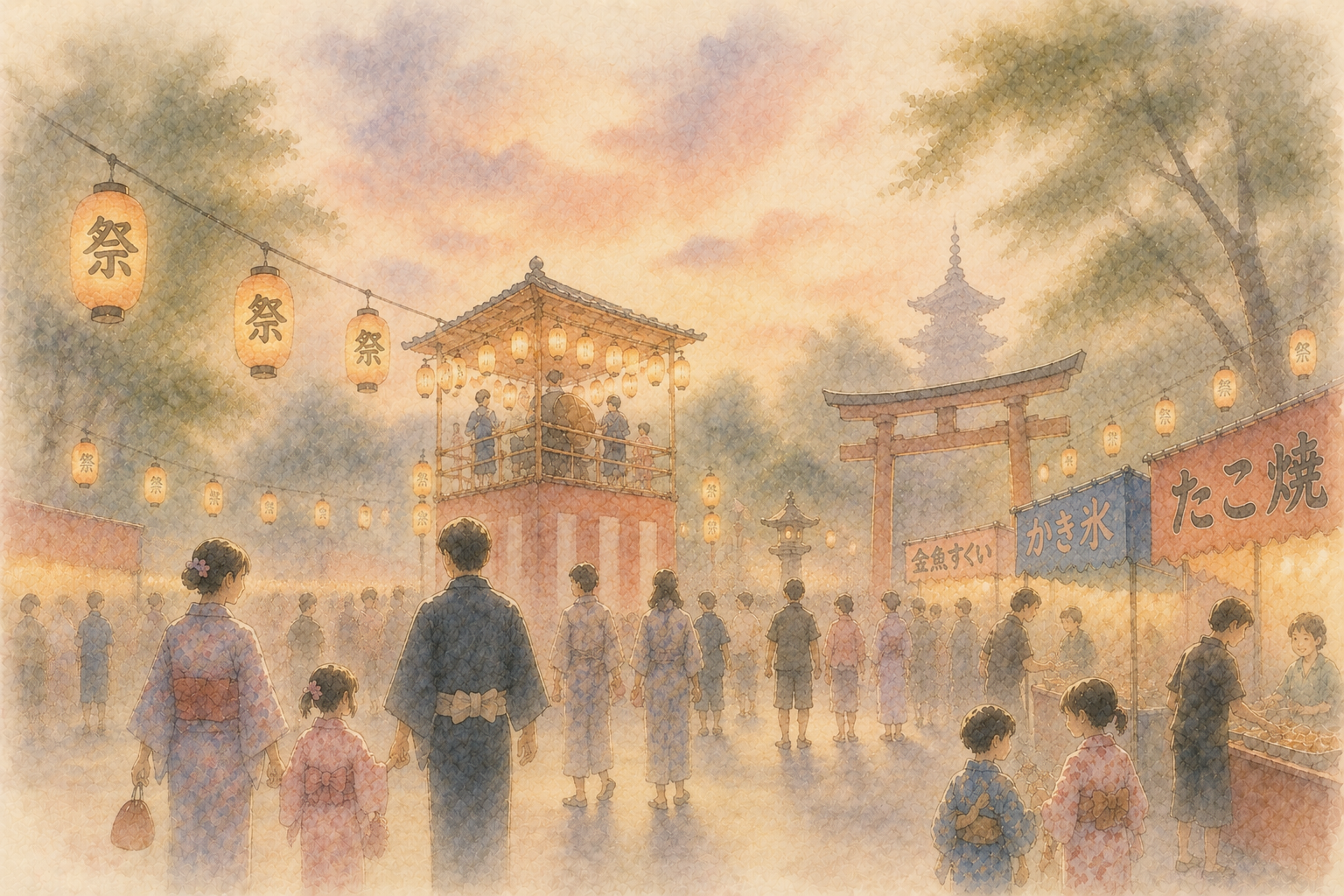
Obon customs can then be read as cultural language for that orientation. Lanterns, altars, food offerings, and visits to graves are not the point by themselves; they are containers for remembrance and gratitude—ways to make the invisible support of the past visible in the present.
GASSHO
Ask and learn about Buddhism in daily life.
GASSHO is a Buddhist community app where you can learn Buddhist teachings and ask questions to the head priest of Kongosanmaiin Temple on Mount Koya.
How Urabon Shows Up in Ordinary Life
You notice Urabon most clearly when memory arrives without being invited. A smell from a childhood kitchen, a phrase you catch yourself repeating, a habit you inherited—suddenly the past isn’t “back then.” It’s active in you right now, shaping how you speak, work, and care for others.
In those moments, the mind often swings between two reactions. One is warmth: “I was loved.” The other is tension: “I didn’t do enough,” or “It was complicated.” Urabon doesn’t demand that you force a clean story. It asks you to stay honest—letting gratitude be gratitude, and letting regret be regret, without turning either into self-punishment.
When you set out an offering or visit a grave, what changes internally is attention. You slow down. You remember names. You feel the weight of time. The heart may soften, not because you solved anything, but because you stopped pretending you owe nothing to anyone.
Urabon also shows up as a quiet question: “What would it look like to repay kindness today?” Not in a dramatic way—more like choosing patience with family, making a donation, cooking for someone, or finally sending a message you’ve delayed. The practice becomes less about the dead as an idea and more about the living as your responsibility.
Sometimes the most honest Urabon moment is noticing avoidance. You might feel the urge to keep it “festive” so you don’t have to feel grief, or to keep it “religious” so you don’t have to deal with family conflict. Seeing that impulse clearly is already part of the practice: it reveals where you tighten, where you run, and where you can gently return.
Even communal Obon events—dances, gatherings, temple services—can be experienced inwardly as a shift from isolation to belonging. You realize your private story is part of a shared human pattern: people love, people lose, people remember, and people try to live in a way that honors what they received.
Over time, Urabon can become a yearly reset of priorities. Not a promise to be perfect, but a simple re-centering: “I will live as someone who remembers.” That remembrance naturally leans toward kindness, because it’s hard to feel supported by countless causes and still insist you stand alone.
Misunderstandings That Make Urabon Harder Than It Is
One common misunderstanding is that Urabon is mainly about fear—appeasing spirits so nothing goes wrong. While folk beliefs exist in many cultures, the Buddhist thrust of Urabon is more grounded: gratitude expressed through generosity and care. If fear is driving the observance, it’s worth gently returning to the simpler intention.
Another confusion is thinking you must perform the “correct” set of rituals or you’ve failed your ancestors. In practice, Urabon has always adapted to place, family, and era. What matters most is sincerity: remembering, offering what you can, and letting the observance shape your conduct.
Some people assume Urabon requires a perfect relationship with family history. It doesn’t. If your past includes harm, absence, or conflict, Urabon can still be meaningful—because it’s also about acknowledging reality and choosing what you will carry forward. You can honor life’s support without excusing what was painful.
Finally, Urabon is sometimes reduced to “just a festival.” Celebration isn’t a problem; it can be a beautiful expression of community. The misunderstanding is forgetting the inner axis: remembrance and gratitude. When that axis is present, even simple actions—cleaning, cooking, visiting, donating—become part of the observance.
Why Urabon Still Matters Today
Modern life trains us to act as if we are self-sufficient. Urabon quietly contradicts that story. It reminds us that independence is built on dependence—on care received, systems maintained, and sacrifices made by people we may never meet.
That reminder has ethical force. When you feel your life as “received,” generosity stops being a performance and becomes a natural response. Supporting a temple, helping a neighbor, giving to those in need, or simply treating family with more patience can be understood as Urabon in action.
Urabon also offers a humane way to hold grief. It doesn’t demand that you “move on,” and it doesn’t romanticize loss. It gives you a container—time, gestures, community—so remembrance can be lived rather than suppressed.
And in families, Urabon can be a rare moment when values are transmitted without lectures. Children learn by watching: cleaning a grave, hearing stories, seeing adults offer thanks. Even if they don’t understand everything, they absorb a sense that life is connected and that gratitude is something you do.
Conclusion
Urabon is the Buddhist root that helps Obon make sense: a practice of remembering the dead by caring for the living, and of expressing gratitude through concrete generosity. If you keep that intention close, the season becomes less confusing—lanterns, offerings, visits, and gatherings turn into simple ways of saying, “I remember what I received, and I will pass it on.”
Ask a Buddhist priest
Have a question about Buddhism?
In the GASSHO app, you can ask questions about Buddhist teachings, daily concerns, and how to understand Buddhism in everyday life.
Frequently Asked Questions
- FAQ 1: What does “Urabon” mean?
- FAQ 2: Is Urabon the same thing as Obon?
- FAQ 3: What is the main story associated with Urabon?
- FAQ 4: What is the purpose of Urabon in Buddhist practice?
- FAQ 5: When is Urabon observed?
- FAQ 6: What are typical Urabon practices?
- FAQ 7: Are lanterns and fires part of Urabon or only Obon?
- FAQ 8: Does Urabon require believing that ancestors literally return?
- FAQ 9: What is the relationship between Urabon and “making merit”?
- FAQ 10: Can I observe Urabon if I’m not Japanese?
- FAQ 11: What offerings are appropriate for Urabon?
- FAQ 12: Is Urabon mainly a family event or a temple event?
- FAQ 13: How is Urabon connected to Obon dancing (Bon Odori)?
- FAQ 14: What if I have complicated feelings about my ancestors during Urabon?
- FAQ 15: What is a simple Urabon practice I can do at home?
FAQ 1: What does “Urabon” mean?
Answer: Urabon is the Japanese reading connected to the Buddhist term “Ullambana,” and it refers to an observance focused on honoring and benefiting ancestors through remembrance, offerings, and acts of generosity.
Takeaway: Urabon names the Buddhist observance behind many Obon meanings.
FAQ 2: Is Urabon the same thing as Obon?
Answer: They’re closely related, but not identical: Urabon points to the Buddhist origin and intent, while Obon often refers to the broader seasonal customs and community events that developed around that origin.
Takeaway: Obon is the cultural season; Urabon is the Buddhist root and purpose.
FAQ 3: What is the main story associated with Urabon?
Answer: The best-known Urabon story describes a devoted disciple concerned about a parent’s suffering and learning that compassionate offerings and support for the community are the appropriate response, rather than panic or magical control.
Takeaway: Urabon emphasizes compassion expressed through giving.
FAQ 4: What is the purpose of Urabon in Buddhist practice?
Answer: Urabon aims to cultivate gratitude, repay kindness, and transform remembrance into ethical action—often through offerings, charitable giving, and community support dedicated to ancestors.
Takeaway: The purpose is gratitude that becomes action.
FAQ 5: When is Urabon observed?
Answer: In Japan it is commonly associated with the Obon period, often mid-July or mid-August depending on region and local calendar customs, with temple services and family observances held during that time.
Takeaway: Urabon timing usually aligns with regional Obon dates.
FAQ 6: What are typical Urabon practices?
Answer: Common practices include visiting graves, making offerings at home or at a temple, participating in memorial services, donating or giving food, and dedicating the goodness of these actions to ancestors and all beings.
Takeaway: Urabon practices combine remembrance with generosity.
FAQ 7: Are lanterns and fires part of Urabon or only Obon?
Answer: Lanterns and welcoming/sending-off fires are widely associated with Obon customs, and many people understand them as symbolic expressions of Urabon’s remembrance—guiding attention toward ancestors and the continuity of care.
Takeaway: Lantern customs are cultural expressions that can carry Urabon meaning.
FAQ 8: Does Urabon require believing that ancestors literally return?
Answer: No. Many people participate in Urabon as an ethical and emotional practice of gratitude and remembrance, regardless of how literally they interpret traditional imagery about return or presence.
Takeaway: Urabon can be practiced meaningfully without literal interpretations.
FAQ 9: What is the relationship between Urabon and “making merit”?
Answer: Urabon is often framed as a time to perform wholesome actions—offerings, charity, support for the community—and dedicate that goodness in memory of ancestors, expressing gratitude through beneficial deeds.
Takeaway: Urabon links remembrance with doing good and dedicating it.
FAQ 10: Can I observe Urabon if I’m not Japanese?
Answer: Yes. Urabon’s core themes—gratitude, remembrance, generosity, and care—are universal, and can be practiced respectfully in any culture without copying every regional custom.
Takeaway: Urabon is accessible across cultures when approached respectfully.
FAQ 11: What offerings are appropriate for Urabon?
Answer: Simple offerings are common: flowers, incense, water or tea, fruit, or foods meaningful to the family, along with donations or acts of service dedicated in remembrance.
Takeaway: Keep offerings simple and sincere, and pair them with generosity.
FAQ 12: Is Urabon mainly a family event or a temple event?
Answer: It can be both. Many people observe Urabon through family practices at home and graveside, while temples may hold memorial services and communal observances that express the same intention publicly.
Takeaway: Urabon can be practiced privately, communally, or both.
FAQ 13: How is Urabon connected to Obon dancing (Bon Odori)?
Answer: Bon Odori is a cultural form that developed within the Obon season; many communities treat it as a shared act of remembrance and gratitude, aligning with Urabon’s spirit even when it feels festive.
Takeaway: Bon Odori can be celebration that still carries Urabon remembrance.
FAQ 14: What if I have complicated feelings about my ancestors during Urabon?
Answer: Urabon doesn’t require idealized emotions. You can acknowledge mixed feelings, focus on gratitude for what was supportive, and dedicate your actions toward reducing harm and increasing care in the present.
Takeaway: Urabon can hold honesty; it doesn’t demand a perfect family story.
FAQ 15: What is a simple Urabon practice I can do at home?
Answer: Set aside a quiet moment to remember ancestors by name, offer a candle or incense (or simply a glass of water/flowers), and then do one concrete act of generosity—donate, help someone, or reconcile—dedicating that goodness in their memory.
Takeaway: A small home ritual plus a real act of giving captures Urabon’s heart.