



Mahaparinibbana Sutta Explained: The Buddha’s Final Days and Last Teachings
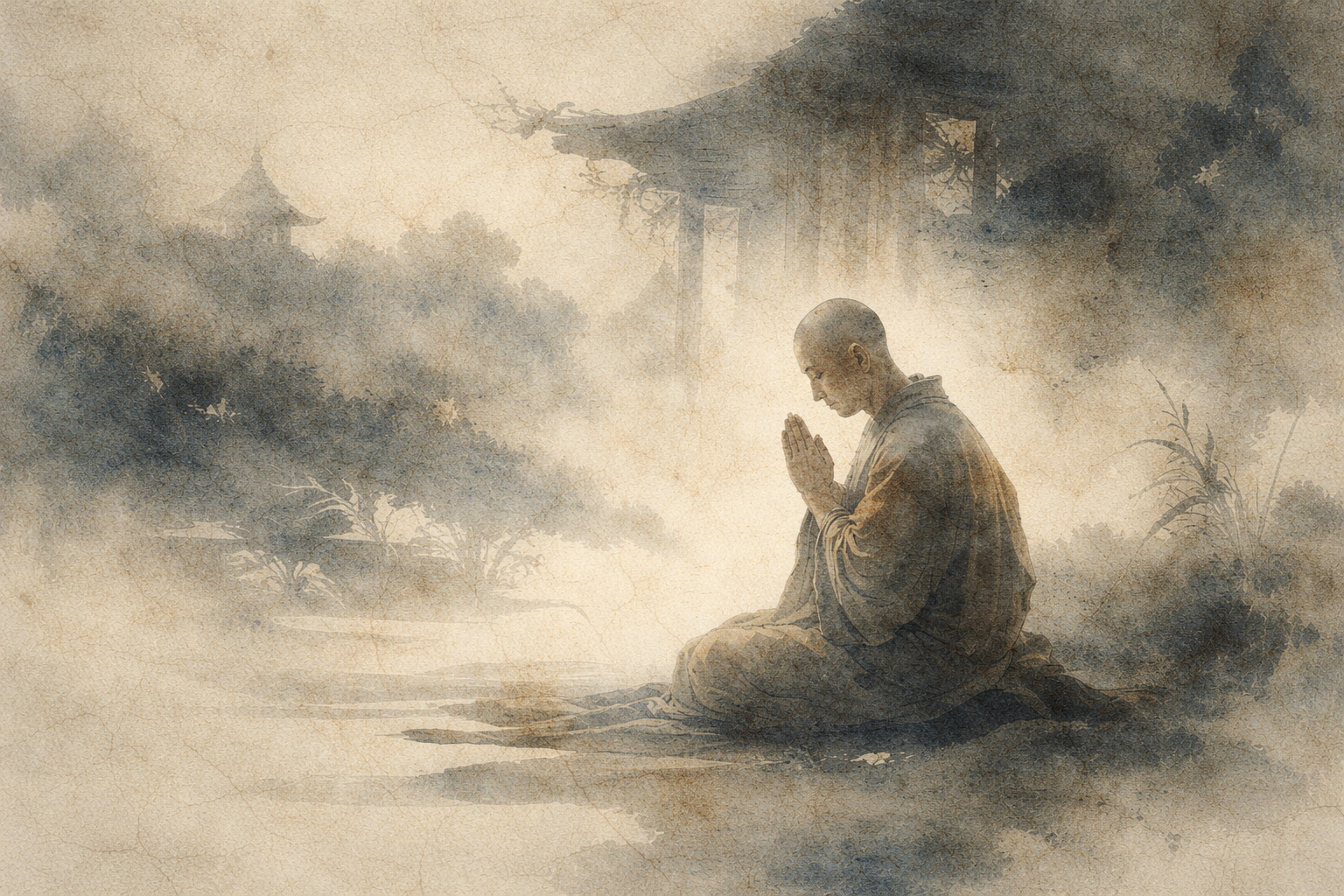
What Is the Mahaparinibbana Sutta? The Buddha’s Final Days Explained
Quick Summary
- The Mahaparinibbana Sutta is a long early Buddhist discourse describing the Buddha’s final journey, last teachings, death, and what followed.
- It’s less a “biography” than a practical record of how a wise person meets aging, illness, and loss without panic.
- Key themes include impermanence, careful attention, community responsibility, and relying on the teachings rather than personality.
- It includes famous lines about “all conditioned things” being subject to decay and the call to practice with diligence.
- The sutta also addresses how the community should handle leadership, discipline, and remembrance after the Buddha’s passing.
- Some episodes are historical, some are stylized; either way, the text is designed to shape how you relate to endings.
- Reading it slowly can turn “the Buddha’s death” into a mirror for your own everyday letting go.
Introduction
If you’ve tried to read the Mahaparinibbana Sutta and felt lost in the names, places, and ceremonial details, you’re not alone—and you’re not missing the point. The real value isn’t memorizing the route of the Buddha’s last trip; it’s seeing how the text trains the mind to face change, separation, and responsibility without turning away. At Gassho, we focus on practical reading: what a text is doing to your attention, not just what it says.
The Mahaparinibbana Sutta (often found as DN 16 in the Digha Nikaya) is one of the longest and most influential discourses in early Buddhism. It recounts the Buddha’s final months: traveling with attendants, speaking with householders and monastics, giving guidance on community life, falling ill, and eventually passing away (parinibbana).
It’s also a text about what happens after a central figure is gone: grief, confusion, practical decisions, and the need for a stable reference point. Again and again, the sutta redirects attention away from personality and toward practice—toward what can be verified in experience.
Read this way, the sutta becomes less about “the end of the Buddha” and more about the end of your assumptions: that things will stay, that someone else will carry the weight, that there will always be more time.
A Lens for Reading the Buddha’s Last Days
A helpful way to approach the Mahaparinibbana Sutta is to treat it as a lens on endings rather than a demand for belief. The text keeps returning to a simple, usable perspective: everything that arises due to conditions changes, and clinging to what must change creates strain.
From that perspective, the “final days” are not presented as a tragedy to be dramatized or a mystery to be solved. They are presented as a lived demonstration of how to stay close to reality—body aging, energy fading, relationships shifting—without adding extra suffering through denial or frantic control.
The sutta also offers a social lens. It shows how a community can remain grounded when a unifying presence is no longer available. Instead of replacing one authority with another, the text emphasizes shared standards, careful speech, and a commitment to what is actually practiced and remembered.
Finally, it’s a lens for trust. Not trust in a person as a savior, but trust in a path that can be tested: ethical restraint, steady attention, and clear seeing. The narrative elements serve that practical aim—guiding the reader toward what can be relied on when circumstances cannot.
GASSHO
Ask and learn about Buddhism in daily life.
GASSHO is a Buddhist community app where you can learn Buddhist teachings and ask questions to the head priest of Kongosanmaiin Temple on Mount Koya.
How the Mahaparinibbana Sutta Shows Up in Ordinary Life
Most people meet “impermanence” in small, repetitive ways before they meet it in big ones. A plan changes. A message doesn’t get answered. Your body feels different this year than last year. The Mahaparinibbana Sutta trains you to notice the first moment the mind tightens around that change.
You can watch the reflex: the mind reaches for a story that makes the change feel personal—“This shouldn’t be happening,” “I’m being abandoned,” “I’m falling behind.” The sutta’s atmosphere is almost the opposite: events unfold, and the emphasis is on meeting them without adding extra heat.
In daily life, this can look like pausing before reacting. Not as a performance of calm, but as a simple check: “What is actually happening right now?” The sutta’s repeated reminders about decay and passing away aren’t meant to make you gloomy; they’re meant to make you accurate.
It also shows up when you’re tempted to outsource your steadiness. When you’re stressed, it’s easy to think, “If only someone wiser were here, they’d fix this.” The Mahaparinibbana Sutta keeps pointing back to what you can do: be diligent, be careful, rely on what is wholesome and verifiable rather than on reassurance.
Another ordinary place it appears is in how you handle transitions: leaving a job, moving homes, ending a relationship, losing a routine. The sutta doesn’t romanticize endings, but it doesn’t treat them as failures either. It normalizes the fact that things conclude, and it asks for a clean, honest participation in that conclusion.
Even grief becomes more workable through this lens. Grief still hurts, but it doesn’t have to become confusion. The sutta’s tone suggests a kind of respect for grief that doesn’t collapse into it: acknowledging loss while also remembering what remains possible—kindness, clarity, and responsibility.
Finally, the text shows up in the smallest ethical moments: what you say when people are anxious, how you speak about someone who is gone, whether you exaggerate, whether you stir conflict, whether you keep your commitments. The Mahaparinibbana Sutta quietly insists that the “final teaching” is not a secret sentence—it’s the way you live when no one is watching.
Common Misreadings That Flatten the Sutta
Misunderstanding 1: “It’s just a historical travelogue.” The place names and sequence of events can feel like a chronicle, but the text is arranged to highlight themes: impermanence, communal stability, and the shift from relying on a person to relying on practice.
Misunderstanding 2: “It’s mainly about miracles or relics.” The Mahaparinibbana Sutta does include extraordinary elements and detailed attention to funeral rites and relic distribution. But those sections sit inside a larger message: how people respond to loss, and how remembrance can be shaped toward responsibility rather than obsession.
Misunderstanding 3: “The Buddha’s death contradicts the teaching.” Some readers feel that a teacher’s death makes the path feel less solid. The sutta addresses this directly by emphasizing that what is conditioned will pass, and that the reliable refuge is not a body that lasts, but a way of seeing and living that can be practiced.
Misunderstanding 4: “The message is to detach from people.” The tone can be mistaken for coldness. But the sutta repeatedly shows care, guidance, and concern for harmony. The point is not to stop loving; it’s to stop demanding that love guarantee permanence.
Misunderstanding 5: “It’s only relevant to monks or ancient communities.” The community guidance can sound specialized, yet the underlying skills—clear communication, shared standards, not turning leadership into dependency—apply to families, workplaces, and any group under stress.
Why This Text Still Matters When Life Gets Real
The Mahaparinibbana Sutta matters because it refuses to treat endings as exceptions. It places aging, illness, and death inside the same field as everything else you deal with: change, uncertainty, and the mind’s habit of clinging.
It also matters because it models a mature kind of devotion—one that doesn’t depend on constant proximity to a teacher or constant emotional uplift. The sutta’s emphasis on diligence is not harsh; it’s stabilizing. It’s what you lean on when inspiration fades.
For many readers, the most practical takeaway is how the text handles authority. It points away from personality worship and toward shared principles and direct practice. In modern life—where charisma can be confused with wisdom—that is quietly protective.
And it matters because it gives grief a container. Not a way to bypass grief, but a way to keep grief from becoming a collapse of meaning. The sutta suggests that remembrance can be active: you honor what you’ve received by living it.
Conclusion
The Mahaparinibbana Sutta is the Buddha’s final-days narrative, but its real subject is how to meet what ends—without denial, without theatrics, and without outsourcing your steadiness. If you read it as training, the long route and the many scenes become a single instruction repeated in different forms: stay close to what is true, care for what is wholesome, and practice with diligence because conditions do not wait.
When you return to the sutta with that in mind, even the most unfamiliar passages start to feel practical. They are not asking you to become someone special; they are asking you to stop arguing with change and start living responsibly inside it.
Ask a Buddhist priest
Have a question about Buddhism?
In the GASSHO app, you can ask questions about Buddhist teachings, daily concerns, and how to understand Buddhism in everyday life.
Frequently Asked Questions
- FAQ 1: What is the Mahaparinibbana Sutta?
- FAQ 2: Where does the Mahaparinibbana Sutta appear in the Buddhist canon?
- FAQ 3: What does “Mahaparinibbana” mean?
- FAQ 4: What are the main events described in the Mahaparinibbana Sutta?
- FAQ 5: What is the central message of the Mahaparinibbana Sutta?
- FAQ 6: Does the Mahaparinibbana Sutta include the Buddha’s final words?
- FAQ 7: Why does the Mahaparinibbana Sutta spend time on relics and funeral rites?
- FAQ 8: Is the Mahaparinibbana Sutta meant to be read as literal history?
- FAQ 9: What does the Mahaparinibbana Sutta say about leadership after the Buddha’s death?
- FAQ 10: Who is Ananda in the Mahaparinibbana Sutta, and why is he important?
- FAQ 11: What is the significance of the Buddha’s illness in the Mahaparinibbana Sutta?
- FAQ 12: What places are associated with the Mahaparinibbana Sutta?
- FAQ 13: How long is the Mahaparinibbana Sutta compared to other suttas?
- FAQ 14: What is a good way to read the Mahaparinibbana Sutta without getting overwhelmed?
- FAQ 15: What makes the Mahaparinibbana Sutta especially important in Buddhism?
FAQ 1: What is the Mahaparinibbana Sutta?
Answer: The Mahaparinibbana Sutta is a major early Buddhist discourse that recounts the Buddha’s final journey, his last instructions to the community, his passing away (parinibbana), and the immediate aftermath, including funeral rites and the distribution of relics.
Takeaway: It’s a foundational text for understanding the Buddha’s final teachings and how the tradition frames endings.
FAQ 2: Where does the Mahaparinibbana Sutta appear in the Buddhist canon?
Answer: It is commonly identified as DN 16 in the Digha Nikaya (“Long Discourses”) of the Pali Canon, and parallel versions exist in other early collections preserved in different languages.
Takeaway: DN 16 is the standard reference, but the story also appears in closely related early sources.
FAQ 3: What does “Mahaparinibbana” mean?
Answer: “Mahā” means “great,” and “parinibbāna” refers to the final passing away of a fully awakened Buddha—used to indicate the completion of the Buddha’s life and the end of rebirth as described in early Buddhist terms.
Takeaway: The title points to the Buddha’s “great final passing,” not just an ordinary death narrative.
FAQ 4: What are the main events described in the Mahaparinibbana Sutta?
Answer: The sutta describes the Buddha’s last travels, teachings to monastics and laypeople, guidance on community conduct, his illness, final instructions, his passing away, and the honoring of his remains and relics afterward.
Takeaway: It combines narrative, practical guidance, and communal concerns into one long discourse.
FAQ 5: What is the central message of the Mahaparinibbana Sutta?
Answer: A central message is that conditioned things change and pass away, so practitioners should rely on diligent practice, ethical conduct, and clear understanding rather than dependence on a single person’s presence.
Takeaway: The sutta repeatedly redirects attention from personality to practice.
FAQ 6: Does the Mahaparinibbana Sutta include the Buddha’s final words?
Answer: Yes. It contains a well-known final exhortation emphasizing diligence (often rendered along the lines of “All conditioned things are subject to decay; strive on with diligence”), though translations vary in wording.
Takeaway: The “final words” are presented as a practical instruction, not a mystical secret.
FAQ 7: Why does the Mahaparinibbana Sutta spend time on relics and funeral rites?
Answer: Those passages show how a community responds to loss, how remembrance is organized, and how social stability is maintained after the Buddha’s passing; they also reflect ancient Indian cultural practices around honoring revered figures.
Takeaway: The relic sections are part of the text’s focus on what happens after a teacher is gone.
FAQ 8: Is the Mahaparinibbana Sutta meant to be read as literal history?
Answer: It contains many details that may preserve historical memory, but it also functions as a shaped religious narrative meant to convey teachings and community guidance; many readers treat it as both historically informative and pedagogically purposeful.
Takeaway: Whether fully literal or partly stylized, it’s designed to teach through the story of the final days.
FAQ 9: What does the Mahaparinibbana Sutta say about leadership after the Buddha’s death?
Answer: The sutta emphasizes relying on the Dhamma (teaching) and the discipline (Vinaya) as guiding standards, rather than seeking a single replacement authority in the same personal sense.
Takeaway: It points to shared principles and practice as the community’s anchor.
FAQ 10: Who is Ananda in the Mahaparinibbana Sutta, and why is he important?
Answer: Ananda is portrayed as the Buddha’s close attendant during the final period, present for many conversations and events; his role highlights devotion, human emotion, and the practical responsibilities of caring for a teacher and preserving teachings.
Takeaway: Ananda’s presence makes the sutta feel human while keeping the focus on practice.
FAQ 11: What is the significance of the Buddha’s illness in the Mahaparinibbana Sutta?
Answer: The illness underscores the theme that the body is conditioned and vulnerable, even for a fully awakened teacher; the narrative uses this to emphasize realism, composure, and the urgency of diligent practice.
Takeaway: The illness is not a side detail—it reinforces the sutta’s central lens on change.
FAQ 12: What places are associated with the Mahaparinibbana Sutta?
Answer: The sutta mentions multiple locations along the Buddha’s final route, culminating in Kusinara (Kushinagar), where the passing away is described; it also references other towns and sites connected to teachings and community interactions.
Takeaway: The geography supports the narrative, but the practical teachings are the main point.
FAQ 13: How long is the Mahaparinibbana Sutta compared to other suttas?
Answer: It is one of the longest discourses in the Digha Nikaya, combining extended narrative with multiple teaching passages, which is why it can feel dense on a first read.
Takeaway: Its length is part of its function: it’s a comprehensive “ending” text for both individuals and community.
FAQ 14: What is a good way to read the Mahaparinibbana Sutta without getting overwhelmed?
Answer: Read it in short sections, track recurring themes (impermanence, diligence, community guidance), and don’t worry about memorizing every name; using a clear modern translation and noting repeated refrains can help the structure emerge.
Takeaway: Focus on the repeated instructions and the emotional tone, not on perfect recall of details.
FAQ 15: What makes the Mahaparinibbana Sutta especially important in Buddhism?
Answer: It shapes how Buddhists understand the Buddha’s passing, how teachings are to be relied upon afterward, and how the reality of impermanence is faced directly; it also influenced later Buddhist memory, ritual, and community identity.
Takeaway: It’s a key text for both personal reflection on endings and the tradition’s continuity after the Buddha.