



What Is Sangha? The Role of the Buddhist Community
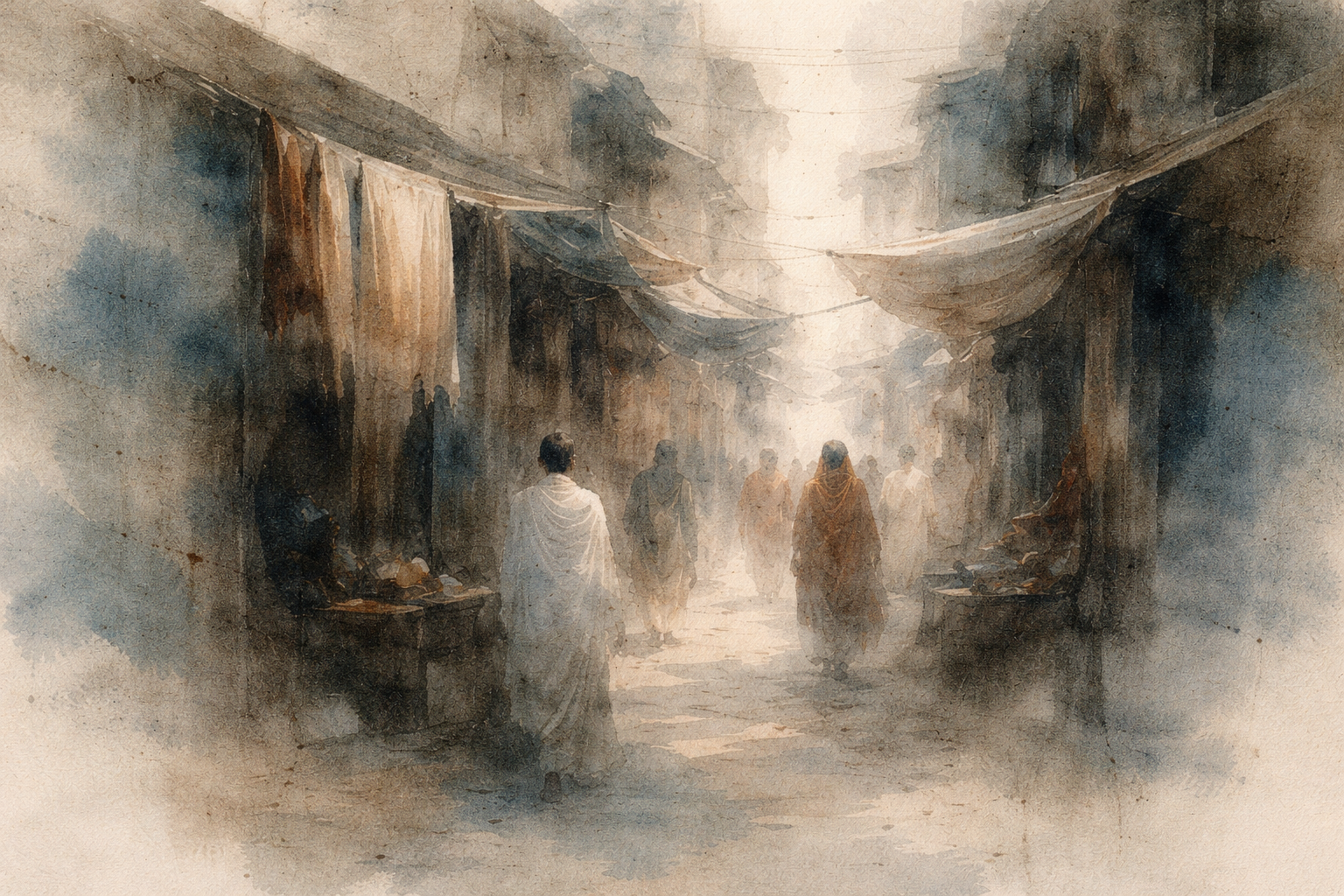
Quick Summary
- Sangha means the Buddhist community—people who support one another in living with clarity and care.
- In everyday terms, sangha is the relational container that helps practice show up beyond private intentions.
- It can be formal (a temple or group) or informal (a few friends who share the same orientation).
- Sangha isn’t about being “spiritual enough”; it’s about showing up with honesty, limits, and respect.
- A healthy sangha supports accountability without pressure and belonging without conformity.
- Community can reveal blind spots gently—through ordinary friction, not dramatic breakthroughs.
- When sangha works, it feels like less isolation and more steadiness in daily life.
Introduction
If “what is sangha” keeps sounding like a religious club, a social circle, or something you’re supposed to join to be a “real” Buddhist, the word will stay vague and slightly uncomfortable. Sangha is simpler and more human than that: it points to the way community holds practice in place when motivation fades, emotions spike, or life gets loud. This explanation is written for Gassho, a Zen/Buddhism site focused on clear, lived understanding rather than insider language.
People often ask about sangha when they feel drawn to Buddhist practice but don’t want dogma, hierarchy, or forced belonging. That hesitation is reasonable. Community can help, but it can also overwhelm if it’s treated as an identity project instead of a support for awareness in ordinary life.
It also helps to name the quiet problem: practicing alone can turn into practicing inside your own assumptions. Sangha, at its best, is a way of being with others that makes it harder to hide from your own habits—without anyone needing to “fix” you.
A Clear Way to Understand Sangha
Sangha can be understood as the human environment that supports waking up in small, repeatable moments. Not as a belief system, and not as a badge, but as a living context where attention, speech, and behavior are naturally influenced by the people around you. In the same way a workplace culture shapes how you speak in meetings, a sangha shapes how you relate to silence, difficulty, and responsibility.
Seen this way, sangha is less about “joining” and more about relationship. When you spend time with people who value steadiness and honesty, you start noticing your own reactivity sooner. When you spend time with people who normalize rushing, gossip, or constant stimulation, you tend to drift in that direction too. Sangha names the fact that none of us practice in a vacuum.
It also helps to keep sangha ordinary. It’s not required to be intimate, intense, or emotionally confessional. It can be as simple as sitting in the same room, listening carefully, and letting your nervous system learn that it’s possible to be present without performing. Even brief contact can change how the rest of the day feels.
And sangha isn’t only about comfort. Community brings friction: different personalities, different pacing, different ways of speaking. That friction can be a mirror. Not a moral judgment—just a chance to see how quickly the mind tightens, defends, or withdraws in everyday social conditions.
How Sangha Shows Up in Real Life
In a quiet group setting, attention often behaves differently than it does alone. The mind still wanders, but it may wander with less drama. There’s a subtle sense of being accompanied, and that can soften the urge to fight your own thoughts or to turn practice into a private performance.
At work, sangha can show up as a memory of tone. After spending time with people who speak carefully, you may notice your own email drafts becoming less sharp. Not because someone told you to be nicer, but because your body remembers what it felt like to be around steadiness. The shift is small, almost physical.
In relationships, sangha often appears as a pause before reacting. You might feel irritation rise during a familiar argument, and at the same time remember a room where nobody needed to win. That memory doesn’t solve the argument. It simply makes space for a different next sentence.
When fatigue hits, solitary practice can become negotiable: “Maybe tomorrow.” With sangha, the mind meets a different kind of momentum. Not pressure, not guilt—just the quiet fact that others are showing up too. That shared rhythm can carry you through days when your own willpower is thin.
Sangha also reveals how quickly comparison happens. You notice someone who seems calm, someone who seems confident, someone who knows the forms. Then you notice the mind making a story: “I don’t belong.” In a healthy community, that story is simply seen as a story, because belonging isn’t earned by appearing composed.
Even simple conversation after a gathering can be part of sangha. Not as networking, and not as therapy, but as ordinary human contact where listening is valued. You may notice how often you rush to fill silence, how often you steer toward being impressive, how often you avoid saying what’s true because it feels inconvenient.
Over time, sangha can feel like a reduction in isolation. Not the disappearance of loneliness, but a loosening of the belief that you have to carry everything privately. In that loosening, the day-to-day mind becomes easier to observe—because it isn’t constantly bracing.
Misunderstandings That Make Sangha Harder Than It Is
One common misunderstanding is that sangha is a social identity you must adopt. That assumption can make people either cling to the group for certainty or avoid it entirely to protect their independence. But community doesn’t have to become a personality. It can remain a simple condition that supports clarity, like good lighting in a room.
Another misunderstanding is that sangha should always feel warm and harmonious. When discomfort appears—awkwardness, disagreement, boredom—it can seem like something has gone wrong. Often it’s just the mind meeting ordinary human difference. The value isn’t in constant ease; it’s in noticing what happens inside you when ease isn’t available.
Some people also assume sangha is only “real” if it’s large, formal, or highly structured. That can lead to overlooking the quiet forms of community that already exist: a small group that meets regularly, a friend who shares the same intention, even a consistent space where people gather without needing to be close friends.
And it’s easy to confuse sangha with approval. If you’re used to earning belonging through achievement, you might bring that habit into spiritual community too. Then practice becomes another arena for self-judgment. Sangha points in a different direction: being seen as you are, including the parts that don’t feel polished.
Why Sangha Matters in Ordinary Days
Most of life is not spent in silence. It’s spent in kitchens, commutes, meetings, and tired evenings. Sangha matters because it keeps the heart of practice connected to those places, not as a special mood but as a familiar orientation you can recognize again.
In small moments—waiting in line, hearing criticism, noticing impatience—community can function like a quiet reference point. Not a rulebook, not a voice telling you what to do, but a remembered atmosphere where attention was possible without strain.
It also matters because modern life trains isolation. Even when surrounded by people, it’s easy to feel privately burdened. Sangha doesn’t remove difficulty, but it can make difficulty less personal and less lonely, simply by reminding the mind that others are meeting the same human patterns.
And when things are going well, sangha can keep the good days from turning into self-congratulation. Shared practice has a way of returning experience to something plain and workable—less about “my progress,” more about what is happening right now.
Conclusion
Sangha is the simple fact that awakening is not separate from relationship. Voices, silence, friction, and kindness all become part of what is noticed. Nothing needs to be finalized. The meaning of sangha is verified in the next ordinary encounter, right where life is already happening.
Frequently Asked Questions
- FAQ 1: What is sangha in Buddhism?
- FAQ 2: What does the word “sangha” literally mean?
- FAQ 3: Is sangha only the community of monks and nuns?
- FAQ 4: What is the difference between sangha and a meditation group?
- FAQ 5: Do you need a sangha to be Buddhist?
- FAQ 6: What is a “noble sangha”?
- FAQ 7: Can sangha be online, or does it have to be in person?
- FAQ 8: What role does sangha play in daily life?
- FAQ 9: How do I know if a sangha is healthy?
- FAQ 10: What should I expect when visiting a sangha for the first time?
- FAQ 11: Is sangha the same as friendship?
- FAQ 12: What if I don’t feel like I belong in a sangha?
- FAQ 13: Can a small group of friends be a sangha?
- FAQ 14: Why is sangha considered one of the Three Jewels?
- FAQ 15: What is the simplest definition of sangha?
FAQ 1: What is sangha in Buddhism?
Answer: Sangha is the Buddhist community—people who support one another in living with awareness, ethical care, and steadiness. Depending on context, it can mean the community of ordained practitioners, the wider community of lay practitioners, or both together.
Real result: Encyclopaedia Britannica describes the sangha as the Buddhist monastic community and, in broader usage, the community of Buddhist practitioners more generally (Britannica: “sangha”).
Takeaway: Sangha is community as a support for practice, not a label to wear.
FAQ 2: What does the word “sangha” literally mean?
Answer: “Sangha” is commonly translated as “community,” “assembly,” or “congregation.” In practical terms, it points to people gathered around a shared commitment to the path, rather than a purely social gathering.
Real result: Many standard Buddhist reference works translate sangha as an “assembly” or “community,” emphasizing its meaning as a gathered group rather than an individual pursuit (Britannica: “sangha”).
Takeaway: The word itself points to “together,” not “alone.”
FAQ 3: Is sangha only the community of monks and nuns?
Answer: In some traditional contexts, “sangha” refers specifically to ordained monastics. In many modern contexts, it’s also used more broadly to include lay practitioners who practice together and support one another’s understanding.
Real result: Reference sources commonly note both uses: a narrower meaning (monastic community) and a broader meaning (the community of practitioners) (Britannica: “sangha”).
Takeaway: Sangha can be narrow or broad, depending on how the term is being used.
FAQ 4: What is the difference between sangha and a meditation group?
Answer: A meditation group is any group that meditates together; sangha usually implies a community oriented toward Buddhist practice as a whole, including how people relate, speak, and support one another over time. A meditation group can be a sangha, but not every meditation group functions as one.
Real result: Many Buddhist organizations use “sangha” to describe an ongoing community with shared forms and mutual support, not only a single activity like sitting together (Tricycle: “What Is the Sangha?”).
Takeaway: Sangha is community over time, not just a shared session.
FAQ 5: Do you need a sangha to be Buddhist?
Answer: People practice in many circumstances, including alone, but sangha is traditionally valued because community supports consistency, perspective, and ethical grounding. Whether it’s “needed” depends on a person’s life situation, but the role of sangha is to reduce isolation and strengthen clarity.
Real result: Buddhist teachings commonly present sangha as one of the Three Jewels, highlighting its supportive role alongside the Buddha and the Dharma (Britannica: “Three Jewels”).
Takeaway: Sangha isn’t a requirement to prove anything; it’s a support when it’s available.
FAQ 6: What is a “noble sangha”?
Answer: “Noble sangha” is a traditional phrase that points to practitioners who embody deep understanding, rather than simply belonging to a group by membership or attendance. It distinguishes inner realization from outer affiliation, without dismissing the value of ordinary community.
Real result: Many Buddhist explanations distinguish between the conventional sangha (the community) and the noble sangha (those regarded as spiritually accomplished) (Tricycle: “What Is the Sangha?”).
Takeaway: “Noble sangha” points to lived understanding, not social status.
FAQ 7: Can sangha be online, or does it have to be in person?
Answer: Sangha can exist online if it provides real continuity, mutual support, and shared orientation toward practice. In-person community offers embodied presence and informal contact, while online sangha can increase access for people limited by geography, health, or schedule.
Real result: Many established Buddhist communities now offer online sittings and teachings, treating them as legitimate forms of community connection when practiced with care (San Francisco Zen Center).
Takeaway: Sangha is defined by supportive relationship, not by the building.
FAQ 8: What role does sangha play in daily life?
Answer: Sangha can influence daily life by shaping how you speak, listen, handle conflict, and relate to stress. The presence of community often makes practice feel less like a private project and more like something that naturally continues into work, family, and ordinary responsibilities.
Real result: Buddhist resources frequently describe sangha as a support for integrating the path into everyday conduct, not only formal meditation time (Tricycle: “What Is the Sangha?”).
Takeaway: Sangha matters most in the ordinary moments where habits usually run the show.
FAQ 9: How do I know if a sangha is healthy?
Answer: A healthy sangha tends to feel grounded and transparent: clear boundaries, respectful conduct, room for questions, and no pressure to perform or conform. It’s also a good sign when the community can acknowledge conflict or limits without denial or drama.
Real result: Many Buddhist organizations publish ethics policies and guidelines to support safe, respectful community life, reflecting the importance of accountability in sangha settings (SFZC Ethics).
Takeaway: Healthy sangha supports clarity and dignity, not dependency.
FAQ 10: What should I expect when visiting a sangha for the first time?
Answer: Many sanghas are simple and quiet: a period of sitting, maybe chanting or a short talk, and a modest amount of social time. It’s common to feel unsure at first; most communities expect newcomers to observe and learn the rhythm gradually.
Real result: Many centers provide “what to expect” pages for first-time visitors, reflecting how common beginner uncertainty is in sangha settings (Insight Meditation Society).
Takeaway: First visits are often more ordinary than the mind predicts.
FAQ 11: Is sangha the same as friendship?
Answer: Sangha can include friendship, but it isn’t limited to it. Friendship is personal and selective; sangha is a community context where people practice together, sometimes with those they wouldn’t naturally choose as friends, learning to relate with respect and steadiness.
Real result: Buddhist introductions often describe sangha as “community” rather than “friend group,” emphasizing shared practice and mutual support over personal preference (Tricycle: “What Is the Sangha?”).
Takeaway: Sangha is relationship shaped by shared intention, not just personal chemistry.
FAQ 12: What if I don’t feel like I belong in a sangha?
Answer: Not feeling immediate belonging is common, especially if you’re new, shy, or sensitive to group dynamics. Sometimes it’s simply unfamiliarity; sometimes it’s a mismatch in culture or communication style. Sangha is meant to support clarity, so it’s reasonable to take time and notice how your body and mind respond over repeated visits.
Real result: Many communities explicitly welcome newcomers and acknowledge that comfort often grows gradually as forms become familiar (Insight Meditation Society).
Takeaway: Belonging can be gradual, and it’s okay to move at a human pace.
FAQ 13: Can a small group of friends be a sangha?
Answer: Yes. Sangha doesn’t have to be large. A small, consistent group that supports practice—through shared sitting, honest conversation, and mutual respect—can function as sangha in a very real way, especially when it helps people stay grounded in daily life.
Real result: Many Buddhist communities encourage local sitting groups and small gatherings as practical expressions of sangha, especially where larger centers aren’t accessible (Insight Meditation Society).
Takeaway: Sangha can be as small as the number of people who truly show up for one another.
FAQ 14: Why is sangha considered one of the Three Jewels?
Answer: Sangha is included among the Three Jewels because community supports the living transmission of practice—through example, encouragement, and shared commitment. It highlights that the path is not only an idea to understand, but a way of life sustained in relationship.
Real result: Standard references describe the Three Jewels as Buddha, Dharma, and Sangha, emphasizing sangha’s role as a refuge and support for practitioners (Britannica: “Three Jewels”).
Takeaway: Sangha is valued because practice is easier to live when it’s not carried alone.
FAQ 15: What is the simplest definition of sangha?
Answer: The simplest definition of sangha is “the Buddhist community.” It means the people—formal or informal—who help one another remember what matters when life is busy, emotional, or uncertain.
Real result: Major reference sources commonly define sangha as the Buddhist community or assembly (Britannica: “sangha”).
Takeaway: Sangha is community that supports awareness in real life.