



What Is Korean Buddhism? Seon, Practice, and Temple Life Explained
Quick Summary
- Korean Buddhism blends meditation-centered Seon practice with chanting, ritual, and community temple life.
- Its “core view” is practical: notice how the mind clings, and return to direct experience before opinions harden.
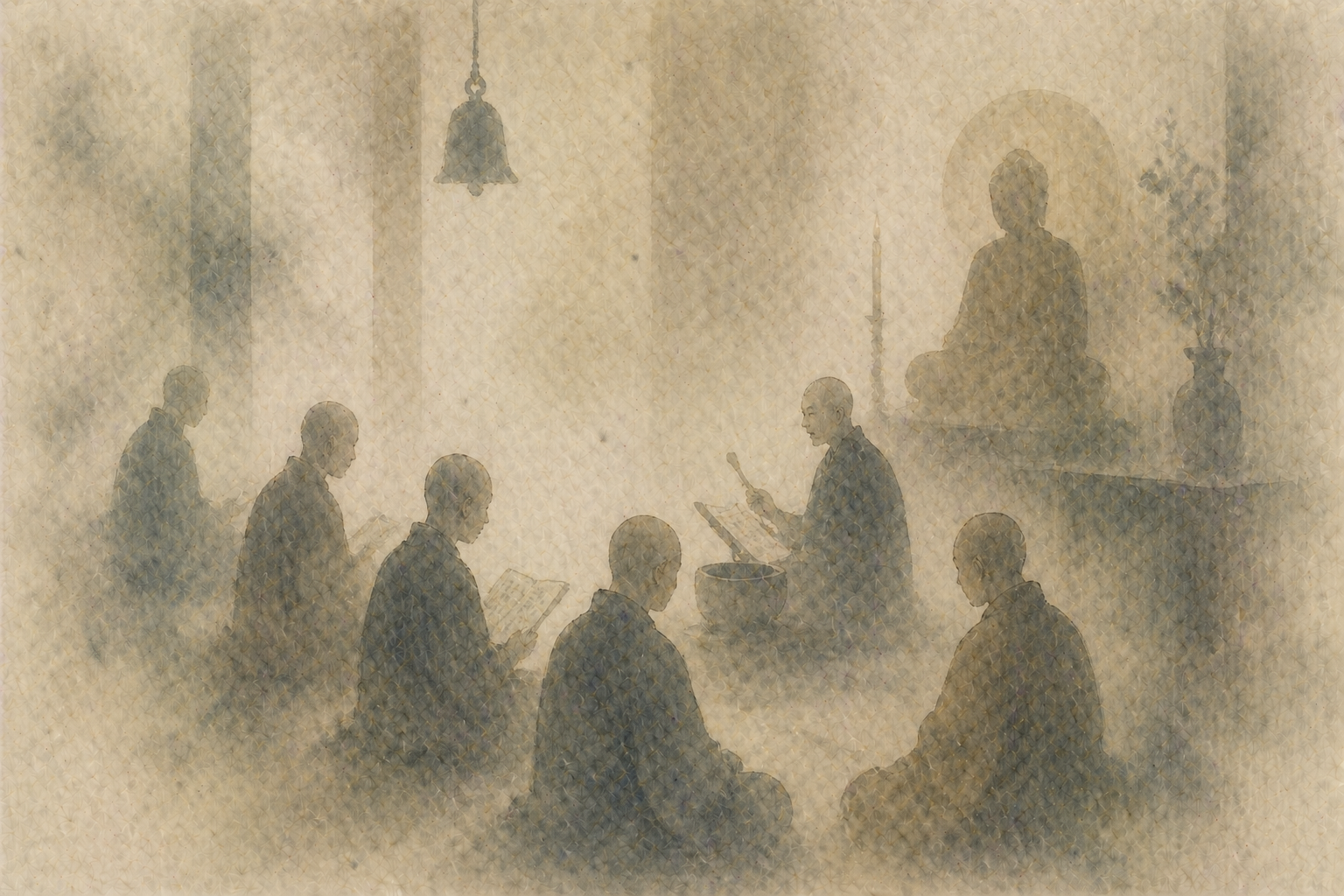
- Temple life often includes early morning chanting, prostrations, silent sitting, work practice, and simple meals.
- Seon emphasizes a clear, immediate seeing of experience, supported by discipline and everyday ethics.
- Lay participation is common through weekend visits, prayer halls, and seasonal ceremonies.
- Common misconceptions include “it’s only meditation” or “it’s only ritual”—in practice, it’s both.
- You can learn a lot by visiting respectfully: observe, follow cues, and keep your questions simple.
Introduction: What People Usually Get Wrong About Korean Buddhism
You’re probably trying to figure out what “Korean Buddhism” actually looks like on the ground: is it mainly Seon meditation, is it chanting and bows, or is it temple culture and etiquette that feels unfamiliar. The honest answer is that Korean Buddhism is easiest to understand as a lived rhythm—quiet attention, devotional forms, and practical training woven together—rather than a set of ideas you’re supposed to agree with. At Gassho, we focus on clear, practice-based explanations of Buddhist traditions without turning them into hype or trivia.
Korean Buddhism has deep historical roots, but you don’t need a timeline to start understanding it. What matters first is the feel of the tradition: a steady emphasis on waking up in the middle of ordinary life, supported by structured practice and a strong temple community.
Some people arrive through meditation and want to know what makes Seon distinct. Others arrive through travel—temple stays, mountain monasteries, lantern festivals—and want to know what the rituals mean. Many arrive through family heritage and want language for what they’ve seen since childhood. All of those entry points are valid, and they meet in the same place: training attention, softening self-centered habits, and learning to act with more clarity.
The Core Lens: Returning to What’s Direct Before the Mind Grabs It
A helpful way to understand Korean Buddhism is as a training in how you relate to experience moment by moment. Instead of treating thoughts as the final authority, the practice keeps pointing you back to what is immediate: sensations, feelings, perceptions, and the simple fact of awareness itself.
From this lens, suffering isn’t only about what happens to you; it’s also about how quickly the mind tightens around what happens. A sound becomes “annoying,” a comment becomes “disrespect,” a delay becomes “unacceptable.” Korean Buddhist practice repeatedly asks: can you notice that tightening early, before it turns into a story you can’t put down?
This isn’t presented as a belief system. It’s more like a method of checking: when you’re upset, where is the upset actually located—body, breath, thought, memory, expectation? When you’re calm, what supports that calm—simplicity, honesty, restraint, kindness? The tradition leans on forms (sitting, chanting, bows, temple schedules) not as decoration, but as reliable ways to return to that check.
Over time, the point is not to become blank or detached. The point is to meet life with fewer compulsive reactions and more accurate contact. In Korean Buddhism, clarity is not separate from conduct; how you speak, how you eat, how you treat people, and how you handle desire and anger are all part of the same training.
GASSHO
Ask and learn about Buddhism in daily life.
GASSHO is a Buddhist community app where you can learn Buddhist teachings and ask questions to the head priest of Kongosanmaiin Temple on Mount Koya.
How Seon Practice Shows Up in Everyday Experience
Imagine you’re reading a message that feels slightly critical. Before you even finish the sentence, your body tightens and your mind starts drafting a response. In a Seon-flavored approach, the first move is not “win the argument” or “be spiritual.” It’s simply noticing: tight chest, heat in the face, fast thoughts, a strong urge to defend.
That noticing creates a small gap. In that gap, you can return to something simple—breath, posture, the feeling of your feet on the floor—without forcing the emotion away. The emotion is allowed to be there, but it’s no longer driving the whole vehicle.
In temple settings, this same skill is trained through repetition. Chanting is not only “devotion”; it’s also a way to unify attention. Prostrations are not only “ritual”; they are a physical practice of lowering pride, releasing tension, and starting again. Silence is not a performance; it’s a container where you can hear your own mind more clearly.
In daily life, the practice often looks unremarkable. You pause before speaking. You notice the impulse to exaggerate. You feel the urge to scroll, snack, or shop to change your mood. You don’t shame yourself for having the urge, but you also don’t automatically obey it.
When you’re busy, the training is to keep returning to one task. Wash the dish and just wash the dish. Walk and just walk. Answer the email and just answer the email. Not as a productivity hack, but as a way to stop scattering your attention into ten imagined futures.
When you’re with other people, the practice becomes relational. You notice how quickly you label: “They’re rude,” “They’re incompetent,” “They don’t respect me.” Then you check what you actually know. Often you find a simpler truth: “I felt dismissed,” “I’m anxious,” “I want control.” That honesty is already a kind of freedom.
And when you do react—because everyone does—the practice is to return without drama. Apologize if needed. Make one clean correction. Begin again. Korean Buddhism tends to value this plain restarting: not a grand narrative of self-improvement, just the steady willingness to come back to what’s real.
Temple Life in Korea: Rhythm, Etiquette, and Community
To understand Korean Buddhism, it helps to picture the temple not as a museum but as a working place of practice. Many temples keep a daily rhythm that starts early: waking, chanting, bows, periods of quiet sitting, meals, and work practice. The schedule is a teacher in itself because it reduces decision fatigue and makes practice less dependent on mood.
Chanting services can feel unfamiliar if you come from a meditation-only background. But in Korean Buddhist temples, chanting often functions like a shared breath: it gathers the community into one tempo. Even if you don’t understand every word, you can feel how repetition steadies attention and softens the constant commentary of the mind.
Prostrations are also common. Some people interpret them as “worship,” while others experience them as a disciplined body practice. In reality, they can be both: a way to express respect and gratitude, and a way to train humility and endurance. The key is that the body participates, not just the intellect.
Temple etiquette is usually simple: follow the group, keep your voice low, dress modestly, and treat spaces and objects with care. If you’re visiting, you don’t need to be perfect. The most important thing is to be observant and not make your uncertainty everyone else’s problem.
Community matters. Korean Buddhism has strong lay participation through visits, offerings, volunteer work, and ceremonies. Even when someone’s personal practice is quiet and private, it’s often supported by a wider network of relationships and shared forms.
Common Misunderstandings About Korean Buddhism
One misunderstanding is that Korean Buddhism is “just Seon meditation.” Seon is central, but temple life also includes chanting, bows, memorial services, and devotional practices. For many practitioners, these aren’t separate compartments; they’re different ways of training attention and intention.
Another misunderstanding is the opposite: that it’s “mostly ritual” and therefore not serious practice. In many temples, ritual is treated as practice when it is done with care—posture, breath, timing, and sincerity. The external form is used to shape the internal state.
People also sometimes assume that Korean Buddhism is inaccessible unless you speak Korean or know the culture. Language helps, but the basics are learnable through observation and respectful participation. Most communities can tell the difference between a sincere beginner and someone treating the temple like a tourist attraction.
Finally, there’s a tendency to romanticize temple life as permanently peaceful. Temples are human communities with schedules, responsibilities, and personalities. The practice is not about escaping humanity; it’s about meeting it with more steadiness.
Why Korean Buddhism Still Feels Relevant in Modern Life
Modern life trains the mind to react quickly, judge constantly, and stay slightly dissatisfied. Korean Buddhism offers a counter-training: slow down enough to see what’s happening, then respond with more precision. That alone can change how you handle conflict, stress, and compulsive habits.
The tradition also respects structure. A simple daily rhythm—short chanting, a few bows, a period of sitting, mindful work—can support practice when motivation is low. You don’t have to wait until you feel inspired; you can rely on forms that carry you.
It’s also relational. Many people struggle not because they lack information, but because they feel isolated. Temple communities, even when you participate lightly, can provide a sense of shared direction: people trying to live with restraint, kindness, and clarity.
And it’s grounded. Korean Buddhism tends to bring practice back to basics: how you speak, how you eat, how you show up, how you repair harm. That focus can be refreshing in a world that often turns spirituality into identity.
Conclusion: A Practical Way to Meet Life More Directly
Korean Buddhism is best understood as a practical culture of training: Seon-style directness, supported by chanting, bows, community rhythm, and a strong sense of everyday discipline. If you’re drawn to it, you don’t need to adopt a new personality or collect exotic knowledge. Start by noticing how your mind grabs experience, and practice returning—again and again—to what’s actually happening.
If you can visit a temple, go with humility and attention. If you can’t, you can still practice the heart of it: simplify, observe, and respond with less reactivity. That’s where Korean Buddhism stops being a topic and starts being something you can live.
Ask a Buddhist priest
Have a question about Buddhism?
In the GASSHO app, you can ask questions about Buddhist teachings, daily concerns, and how to understand Buddhism in everyday life.
Frequently Asked Questions
- FAQ 1: What is Korean Buddhism in simple terms?
- FAQ 2: What does “Seon” mean in Korean Buddhism?
- FAQ 3: Is Korean Buddhism mostly meditation or mostly chanting?
- FAQ 4: What happens during a typical day at a Korean Buddhist temple?
- FAQ 5: Can laypeople practice Korean Buddhism without living in a temple?
- FAQ 6: What are prostrations in Korean Buddhism, and why do people do them?
- FAQ 7: Do you need to believe in specific doctrines to practice Korean Buddhism?
- FAQ 8: How is Korean Buddhism different from other East Asian Buddhist traditions?
- FAQ 9: What should a visitor wear and do at a Korean Buddhist temple?
- FAQ 10: Are Korean Buddhist temples open to foreigners and non-Buddhists?
- FAQ 11: What role do chanting and liturgy play in Korean Buddhism?
- FAQ 12: Is Korean Buddhism compatible with a secular lifestyle?
- FAQ 13: What is a temple stay in the context of Korean Buddhism?
- FAQ 14: What are common holidays or ceremonies in Korean Buddhism?
- FAQ 15: How can I start practicing Korean Buddhism at home?
FAQ 1: What is Korean Buddhism in simple terms?
Answer: Korean Buddhism is a Korean expression of Buddhist practice that combines Seon-style meditation emphasis with chanting, bowing, ethical living, and temple community life. It’s less about adopting a belief and more about training attention and conduct through consistent forms.
Takeaway: Think “practice culture,” not just a philosophy.
FAQ 2: What does “Seon” mean in Korean Buddhism?
Answer: Seon refers to a meditation-centered approach that prioritizes direct, immediate awareness over getting lost in concepts and mental stories. In Korean Buddhism, Seon practice is often supported by temple schedules and communal rituals that stabilize attention.
Takeaway: Seon points you back to direct experience.
FAQ 3: Is Korean Buddhism mostly meditation or mostly chanting?
Answer: It’s commonly both. Meditation is central in Seon-oriented settings, while chanting and bows are widely practiced as methods to gather the mind, express devotion, and build consistency. Different temples and communities may emphasize one more than the other.
Takeaway: Korean Buddhism often blends silent and devotional practices.
FAQ 4: What happens during a typical day at a Korean Buddhist temple?
Answer: A typical temple day may include early morning chanting, prostrations, periods of quiet sitting, communal meals, and work practice (cleaning, cooking, maintenance). The rhythm is designed to reduce distraction and make practice steady rather than mood-based.
Takeaway: Temple life is structured, simple, and practice-focused.
FAQ 5: Can laypeople practice Korean Buddhism without living in a temple?
Answer: Yes. Many lay practitioners participate through weekend visits, ceremonies, chanting services, volunteering, and home practice. The core is consistency: a small daily routine and ethical attention in ordinary relationships.
Takeaway: Korean Buddhism is not only for monastics.
FAQ 6: What are prostrations in Korean Buddhism, and why do people do them?
Answer: Prostrations are full bows performed as a devotional and training practice. People do them to express respect, cultivate humility, steady attention through repetition, and work with pride and restlessness in a physical, grounded way.
Takeaway: Prostrations are both body practice and heartfelt expression.
FAQ 7: Do you need to believe in specific doctrines to practice Korean Buddhism?
Answer: You don’t need to force belief. Many people begin by practicing—sitting, chanting, ethical reflection—and letting understanding grow from experience. Temples may teach traditional Buddhist views, but practice is often the entry point.
Takeaway: Start with practice and observation, not forced agreement.
FAQ 8: How is Korean Buddhism different from other East Asian Buddhist traditions?
Answer: Korean Buddhism has its own temple culture, liturgy, language, and historical development, with a strong Seon influence and a distinctive blend of meditation, chanting, and communal discipline. Similarities exist across East Asia, but the “feel” of practice and temple life in Korea is its own.
Takeaway: Shared roots, distinct Korean expression.
FAQ 9: What should a visitor wear and do at a Korean Buddhist temple?
Answer: Dress modestly, keep your voice low, follow the group’s cues, and avoid stepping in front of people who are bowing or praying. If you’re unsure, stand slightly behind others and mirror their pace respectfully.
Takeaway: Quiet observation and respect go a long way.
FAQ 10: Are Korean Buddhist temples open to foreigners and non-Buddhists?
Answer: Many are open to visitors, and some offer structured programs such as temple stays. Expectations vary by location, but sincere interest and respectful behavior are usually welcomed, even if you’re not Buddhist.
Takeaway: You can visit without “belonging,” if you’re respectful.
FAQ 11: What role do chanting and liturgy play in Korean Buddhism?
Answer: Chanting and liturgy help unify attention, support devotion and gratitude, and create a shared practice field in the community. They can also serve as a steady daily anchor when the mind feels scattered or emotionally reactive.
Takeaway: Chanting is a method of training, not just ceremony.
FAQ 12: Is Korean Buddhism compatible with a secular lifestyle?
Answer: Many people engage Korean Buddhist practices in a practical way—meditation, ethical reflection, mindful routines—without framing everything as religious belief. However, temples are religious spaces, so it helps to approach them with cultural and spiritual respect even if you’re secular.
Takeaway: You can practice practically while respecting the tradition’s religious context.
FAQ 13: What is a temple stay in the context of Korean Buddhism?
Answer: A temple stay is a short program where visitors experience Korean Buddhist temple rhythm—chanting, bows, meditation periods, communal meals, and quiet time—often with guidance on etiquette. It’s designed as an introduction to practice and temple culture, not a performance.
Takeaway: Temple stays let you learn Korean Buddhism by living its schedule briefly.
FAQ 14: What are common holidays or ceremonies in Korean Buddhism?
Answer: Many temples observe major Buddhist calendar events with lanterns, chanting services, offerings, and community gatherings. Specific dates and customs can vary, but ceremonies generally emphasize gratitude, remembrance, and renewing practice commitments.
Takeaway: Ceremonies are community practice, not just cultural spectacle.
FAQ 15: How can I start practicing Korean Buddhism at home?
Answer: Start small and consistent: set a short daily sitting period, add a simple chanting or recitation you can maintain, and include one concrete ethical intention (for example, speaking more carefully). If possible, connect with a Korean Buddhist temple or community for guidance and context.
Takeaway: Consistency and simplicity matter more than intensity.