



What Is Hanamatsuri? Buddha’s Birthday in Japanese Buddhism Explained
Quick Summary
- Hanamatsuri is the Japanese celebration of the Buddha’s birthday, commonly observed on April 8.
- The heart of the festival is a simple ritual: pouring sweet tea over a small statue of the baby Buddha.
- Flowers, a “flower hall” display, and gentle community gatherings express gratitude and care.
- Hanamatsuri is less about “believing” and more about remembering what kindness feels like in the body.
- You can observe it at a temple or at home with a small, respectful offering and intention.
- It’s normal to see different dates and styles depending on region and community.
- The point isn’t perfection; it’s a brief return to humility, warmth, and attention.
Introduction: Clearing Up What Hanamatsuri Actually Is
If “Hanamatsuri Buddha birthday” keeps giving you mixed signals—flowers, a baby statue, sweet tea, and an April date that doesn’t match what you’ve heard elsewhere—you’re not alone, and you’re not missing some secret rule. Hanamatsuri is straightforward once you stop treating it like a trivia question and start seeing it as a small, embodied reminder of gentleness in the middle of ordinary life. At Gassho, we focus on practical, lived Buddhism and careful cultural context rather than hype.
The Core Meaning of Hanamatsuri in Japanese Buddhism
Hanamatsuri, often translated as “Flower Festival,” is a Japanese observance of the Buddha’s birthday. The central lens is simple: instead of treating the Buddha as distant or untouchable, the celebration highlights birth—vulnerability, freshness, and the possibility of waking up in the middle of everyday conditions.
The most recognizable ritual is pouring sweet tea (often called amacha) over a small statue of the baby Buddha. You can read this as a symbolic “bathing,” but it also works as a practical lens: care is expressed through small actions, repeated with attention. The ritual doesn’t demand that you adopt a doctrine; it invites you to notice what happens inside you when you act with tenderness.
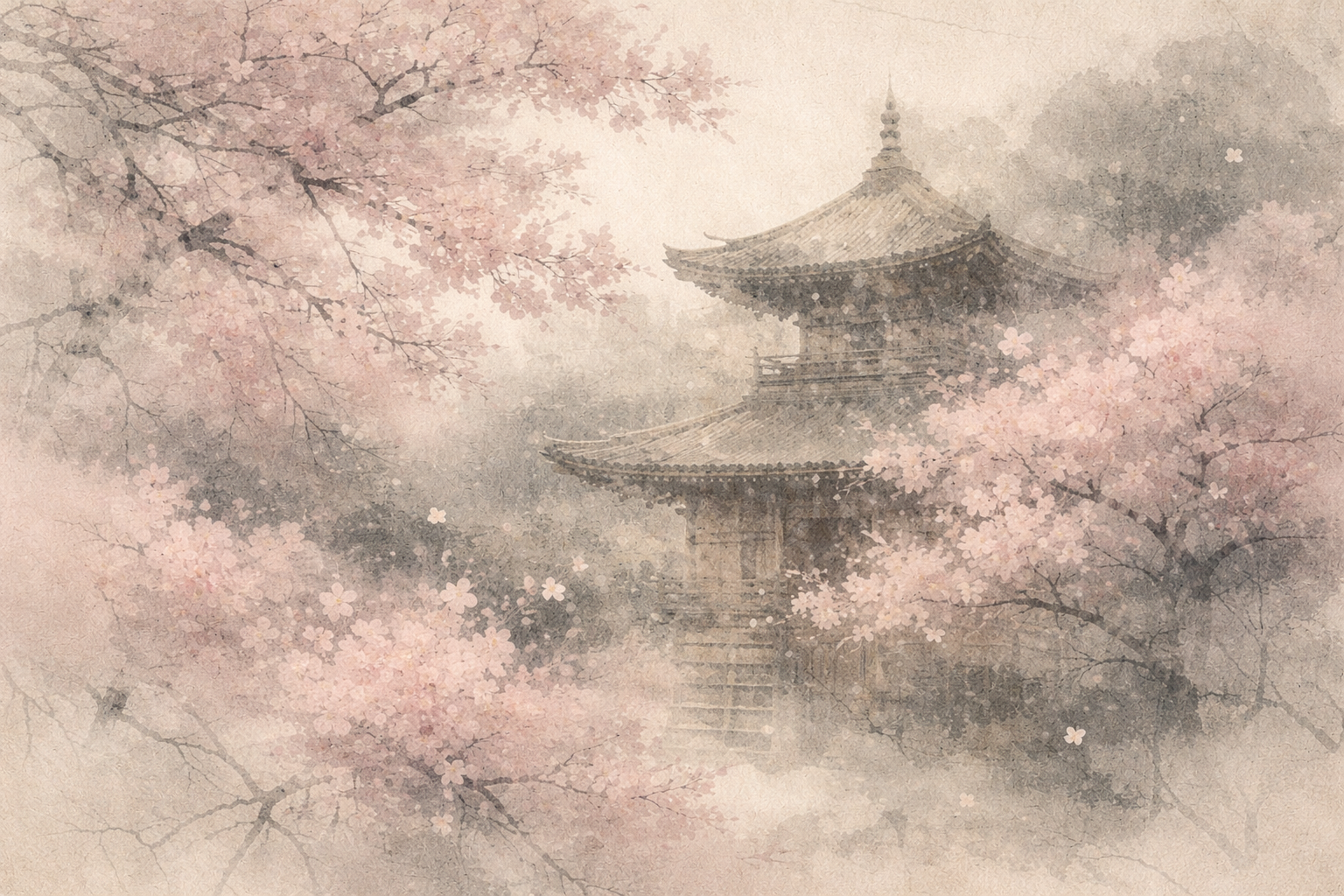
Flowers are not decoration in the shallow sense. They point to seasonality and impermanence—beauty that doesn’t need to be possessed. A flower display can be a quiet teacher: it’s vivid, it’s temporary, and it doesn’t argue with you.
Seen this way, Hanamatsuri is not a performance of “being spiritual.” It’s a brief, communal pause that says: remember what it’s like to meet life with warmth, and remember that awakening is not separate from the human world.
GASSHO
Ask and learn about Buddhism in daily life.
GASSHO is a Buddhist community app where you can learn Buddhist teachings and ask questions to the head priest of Kongosanmaiin Temple on Mount Koya.
How Hanamatsuri Feels When You’re Actually There
Most people don’t arrive at Hanamatsuri with a perfectly clear mind. They arrive with errands, social anxiety, family dynamics, or a phone buzzing in their pocket. That’s not a problem; it’s the raw material.
You step toward the flower display and notice the mind doing what it always does: comparing, judging, trying to “get it right.” The flowers don’t correct you. They just sit there, bright and temporary, and your attention naturally softens for a moment.
When it’s your turn to pour sweet tea over the small statue, the action is almost comically simple. And that simplicity is the point. You feel your hand steady, you feel the impulse to rush, and you see that you can slow down without any dramatic effort.
Sometimes a quiet tenderness appears—toward the ritual, toward the people waiting behind you, toward your own tiredness. It’s not a mystical experience; it’s a shift in tone. The body recognizes “care” as a real, physical mode.
You might also notice resistance: “This feels childish,” or “I don’t belong here,” or “I’m not religious.” Hanamatsuri doesn’t require you to win an argument with yourself. It gives you a small structure where you can notice resistance and still act respectfully.
Afterward, if sweet tea is offered, you taste something unfamiliar and slightly earthy-sweet. Taste is immediate; it pulls you out of abstraction. For a few seconds, you’re not theorizing about Buddhism—you’re simply present with what’s in your mouth and what’s in your chest.
Then you leave, and the day continues. The value is subtle: you’ve rehearsed a different way of moving—less clenched, less performative, more willing to show up with care even when you’re not “in the mood.”
Common Misunderstandings About Hanamatsuri
“It’s basically the same as Vesak everywhere.” Hanamatsuri is a Japanese Buddha’s birthday celebration with its own customs and typical date (often April 8). Other Buddhist cultures may celebrate the Buddha’s birth (and sometimes enlightenment and passing) on different days and in different ways.
“The baby Buddha statue means people worship a baby.” The statue is a symbol used for a specific ritual moment. It points to beginnings, innocence, and the possibility of awakening—not to a literal fixation on infancy.
“Pouring tea is superstition.” It can be treated superstitiously, but it doesn’t have to be. As a practice, it’s an embodied gesture of respect and care that trains attention through a simple act.
“Flowers are just for aesthetics.” Flowers are a direct reminder of seasonality and impermanence. They also set a mood: softening the mind without needing a lecture.
“If I don’t know the chants or etiquette, I shouldn’t go.” Many temples expect newcomers during festivals. Quiet observation, following the flow, and basic respect are usually enough.
Why Hanamatsuri Still Matters in Daily Life
Hanamatsuri matters because it gives you a non-dramatic way to practice reverence without turning it into self-importance. The ritual is small, and that smallness is protective: it keeps the focus on sincerity rather than spectacle.
It also offers a practical reset for how you relate to beginnings. Birth here isn’t a sentimental story; it’s a reminder that each moment is “new” enough to meet differently. You can notice irritation arise and still choose a softer response. You can feel rushed and still pour the tea slowly.
Flowers bring the teaching into your senses. You don’t have to agree with a concept to learn from a blossom that will fade. You simply see it, and something in you understands: this is precious because it won’t last.
Finally, Hanamatsuri is communal in a gentle way. Even if you attend alone, you’re participating in a shared human gesture: honoring wisdom by practicing kindness in public, not just in private.
Conclusion: A Flower Festival That Points Back to Your Own Heart
Hanamatsuri, the Buddha’s birthday in Japanese Buddhism, is easy to misunderstand if you approach it like a fact to memorize. It’s better understood as a brief, sensory practice: flowers that won’t last, sweet tea poured with care, and a reminder that tenderness is not separate from clarity. If you can show up for one small ritual with a steady hand and a quiet mind, you’ve already met the spirit of the day.
Ask a Buddhist priest
Have a question about Buddhism?
In the GASSHO app, you can ask questions about Buddhist teachings, daily concerns, and how to understand Buddhism in everyday life.
Frequently Asked Questions
- FAQ 1: What does “Hanamatsuri” mean in the context of the Buddha’s birthday?
- FAQ 2: When is Hanamatsuri (Buddha’s birthday) celebrated in Japan?
- FAQ 3: Why do people pour sweet tea during Hanamatsuri for the Buddha’s birthday?
- FAQ 4: What is amacha, and is it only used for Hanamatsuri Buddha birthday events?
- FAQ 5: What is the small baby Buddha statue used for on Hanamatsuri?
- FAQ 6: What is a “hanamido” in Hanamatsuri Buddha birthday celebrations?
- FAQ 7: Is Hanamatsuri the same holiday as Vesak (Buddha Day)?
- FAQ 8: How do Japanese temples typically celebrate Hanamatsuri for the Buddha’s birthday?
- FAQ 9: Can I celebrate Hanamatsuri (Buddha’s birthday) at home?
- FAQ 10: What should I wear or do if I visit a temple for Hanamatsuri Buddha birthday?
- FAQ 11: Why are flowers so central to Hanamatsuri as the Buddha’s birthday?
- FAQ 12: Is Hanamatsuri a public holiday in Japan for the Buddha’s birthday?
- FAQ 13: Are there regional differences in how Hanamatsuri Buddha birthday is celebrated?
- FAQ 14: What is the main purpose of Hanamatsuri as a Buddha’s birthday observance?
- FAQ 15: What does “Hanamatsuri Buddha birthday” refer to in search results?
FAQ 1: What does “Hanamatsuri” mean in the context of the Buddha’s birthday?
Answer: “Hanamatsuri” means “Flower Festival,” and in Japan it refers to the celebration of the Buddha’s birthday, commonly observed with flowers and a small bathing ritual for a baby Buddha statue.
Takeaway: Hanamatsuri is Japan’s flower-themed Buddha’s birthday celebration.
FAQ 2: When is Hanamatsuri (Buddha’s birthday) celebrated in Japan?
Answer: Many temples and communities in Japan observe Hanamatsuri on April 8, though some events may be held on nearby weekends for practical reasons.
Takeaway: April 8 is the most common date for Hanamatsuri in Japan.
FAQ 3: Why do people pour sweet tea during Hanamatsuri for the Buddha’s birthday?
Answer: A hallmark of Hanamatsuri is pouring sweet tea (often called amacha) over a small baby Buddha statue as a symbolic bathing gesture, expressing respect and care through a simple, mindful action.
Takeaway: The sweet-tea pouring is a central Hanamatsuri ritual of respect.
FAQ 4: What is amacha, and is it only used for Hanamatsuri Buddha birthday events?
Answer: Amacha is a naturally sweet herbal tea traditionally associated with Hanamatsuri; it’s commonly served or used in the bathing ritual at Buddha’s birthday observances, though it can also be enjoyed outside the festival.
Takeaway: Amacha is strongly linked to Hanamatsuri, especially for the bathing ritual.
FAQ 5: What is the small baby Buddha statue used for on Hanamatsuri?
Answer: The statue represents the newborn Buddha and is placed in a flower-decorated setting so visitors can pour sweet tea over it as part of the Buddha’s birthday observance.
Takeaway: The baby Buddha statue is the focus of Hanamatsuri’s signature ritual.
FAQ 6: What is a “hanamido” in Hanamatsuri Buddha birthday celebrations?
Answer: A hanamido is a small “flower hall” display—often a miniature pavilion decorated with flowers—where the baby Buddha statue is placed for the sweet-tea bathing ritual during Hanamatsuri.
Takeaway: The hanamido is the flower display that frames the Buddha’s birthday ritual.
FAQ 7: Is Hanamatsuri the same holiday as Vesak (Buddha Day)?
Answer: Both relate to honoring the Buddha, but Hanamatsuri is a Japanese Buddha’s birthday celebration typically held on April 8, while Vesak dates and customs vary widely across countries and may commemorate multiple events, depending on tradition.
Takeaway: Hanamatsuri and Vesak overlap in theme but differ in date and local customs.
FAQ 8: How do Japanese temples typically celebrate Hanamatsuri for the Buddha’s birthday?
Answer: Common elements include a flower-decorated hanamido, the baby Buddha statue, the sweet-tea pouring ritual, short services or chants, and community offerings such as amacha served to visitors.
Takeaway: Flowers, a baby Buddha statue, and sweet tea are typical temple features of Hanamatsuri.
FAQ 9: Can I celebrate Hanamatsuri (Buddha’s birthday) at home?
Answer: Yes. A simple home observance can include flowers, a moment of gratitude, and a respectful intention to practice kindness; some people also prepare or share sweet tea if it’s available to them.
Takeaway: Hanamatsuri can be observed at home with simple, respectful gestures.
FAQ 10: What should I wear or do if I visit a temple for Hanamatsuri Buddha birthday?
Answer: Wear modest, comfortable clothing, follow posted guidance, move quietly, and observe what others do during the sweet-tea pouring ritual; it’s usually fine to participate respectfully even if you’re new.
Takeaway: Simple respect and quiet attention are the best “etiquette” for Hanamatsuri.
FAQ 11: Why are flowers so central to Hanamatsuri as the Buddha’s birthday?
Answer: Flowers express the season and the festival’s name (“Flower Festival”), and they also naturally evoke impermanence—beauty that appears vividly and then fades—matching the reflective tone of Buddha’s birthday observances.
Takeaway: Flowers are both the symbol and the atmosphere of Hanamatsuri.
FAQ 12: Is Hanamatsuri a public holiday in Japan for the Buddha’s birthday?
Answer: Hanamatsuri is widely recognized as a Buddhist festival, but it is not generally a national public holiday in Japan; celebrations are typically organized by temples and local communities.
Takeaway: Hanamatsuri is important culturally and religiously, but usually not a national holiday.
FAQ 13: Are there regional differences in how Hanamatsuri Buddha birthday is celebrated?
Answer: Yes. While the flower display and sweet-tea bathing ritual are common, the scale of events, the exact schedule, and local customs can vary by temple and region.
Takeaway: Expect a shared core ritual with local variations.
FAQ 14: What is the main purpose of Hanamatsuri as a Buddha’s birthday observance?
Answer: The purpose is to honor the Buddha’s birth and to encourage a lived spirit of care, humility, and reflection—expressed through simple actions like offering flowers and pouring sweet tea with attention.
Takeaway: Hanamatsuri points to kindness and mindful respect, not just ceremony.
FAQ 15: What does “Hanamatsuri Buddha birthday” refer to in search results?
Answer: It typically refers to information about Japan’s Buddha’s birthday celebration (Hanamatsuri), including the April 8 date, the flower decorations, and the sweet-tea bathing ritual for the baby Buddha statue.
Takeaway: The phrase is a search shorthand for Japan’s Buddha’s birthday festival and its key customs.