



What Is Chuin? The Intermediate Period After Death in Japanese Buddhism
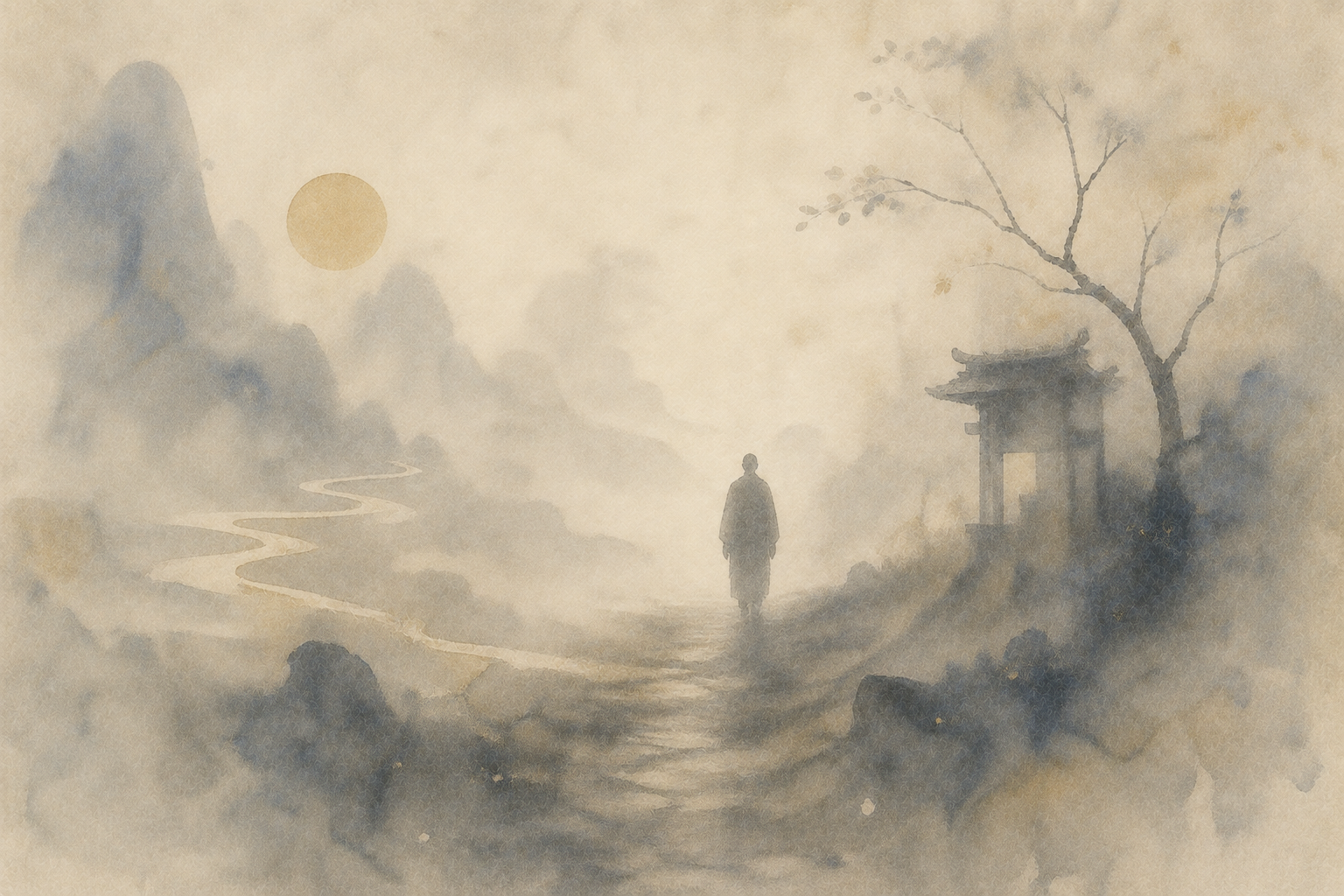
Quick Summary
- Chuin Buddhism refers to Japanese Buddhist talk about chūin (中陰): an “intermediate period” connected with death and transition.
- It’s less a single doctrine and more a practical lens for how people relate to dying, mourning, and remembrance.
- In Japan, chūin is often discussed alongside the idea of a 49-day span, shaping memorial services and family rituals.
- Many people use chūin language to hold uncertainty gently: “something is changing, and we don’t fully control it.”
- Chuin framing can support the living by giving structure to grief without forcing certainty about what happens after death.
- It’s commonly misunderstood as a fixed “place” or a guaranteed timeline; in practice, it functions more like a ritual and psychological container.
- You can engage it respectfully even if you’re unsure about metaphysics—by focusing on care, remembrance, and ethical living.
Introduction: Why “Chuin” Confuses So Many People
You keep seeing the word chūin (often written “chuin” in English) connected to Japanese Buddhism and death—sometimes described as a 49-day journey, sometimes as a limbo, sometimes as a set of memorial services—and the explanations don’t line up. That confusion is normal, because “Chuin Buddhism” is usually not a neat, single teaching; it’s a cluster of ideas and practices that people use to make sense of loss and transition without pretending death is simple. I write for Gassho, a Zen/Buddhism site focused on clear, practice-oriented explanations rather than sensational claims.
In everyday Japanese Buddhist culture, chūin language often shows up when families are arranging funerals, visiting graves, holding memorial services, or trying to speak carefully about what can’t be proven. It can sound like a firm map of the afterlife, but it often functions more like a compassionate framework: a way to slow down, pay respect, and let grief unfold with support.
This matters because death tends to trigger two extremes: either we demand certainty (“tell me exactly what happens”), or we shut down and avoid the topic entirely. Chuin framing offers a middle approach—structured, reverent, and human—without requiring you to force your mind into a belief you don’t actually hold.
A Practical Lens: What Chuin Points To
Chuin Buddhism, in plain terms, is the use of the “intermediate period” idea as a way to understand death as a transition rather than a clean on/off switch. The word chūin literally suggests “in-between,” and the point of that “in-between” is not to satisfy curiosity—it’s to soften the mind’s demand for final answers at the very moment life feels most fragile.
As a lens, chūin highlights how much of our experience is transitional even while we’re alive: endings, unfinished conversations, changing roles, shifting identities. When someone dies, those transitions become obvious and painful. Chuin language gives that pain a container: there is a period where things are not settled, where care is still offered, where the living can still act with intention.
In Japanese contexts, chūin is often associated with a 49-day span (seven weeks), which becomes a rhythm for memorial observances. Whether you take that timeline literally or symbolically, it functions as a humane pacing mechanism. It says: don’t rush; don’t pretend you’re “over it”; keep showing up for remembrance and responsibility.
Most importantly, chūin is not only about the deceased. It also describes the living person’s mind during grief: suspended between “they were here” and “they are gone,” between habit and reality, between memory and the next step. In that sense, Chuin Buddhism can be read as a compassionate description of what the heart already knows—transition takes time.
GASSHO
Ask and learn about Buddhism in daily life.
GASSHO is a Buddhist community app where you can learn Buddhist teachings and ask questions to the head priest of Kongosanmaiin Temple on Mount Koya.
How Chuin Shows Up in Ordinary Life
After a death, attention behaves strangely. You can be making tea and suddenly reach for an extra cup, as if the body remembers before the mind does. Chuin framing meets that moment without scolding it. It treats the mind’s “in-between” state as natural, not as a mistake you need to correct.
Grief also changes time. Some hours feel thick and slow; other days disappear. The idea of an intermediate period mirrors this lived reality: things are moving, but not in a straight line. You may notice yourself cycling through practical tasks, then being hit by a wave of feeling, then returning to tasks again. Chuin language can normalize that rhythm.
People often feel a pressure to say the “right” thing about what happens after death. In families, one person may want religious certainty, another may want scientific restraint, and another may want silence. Chuin talk can reduce conflict by allowing a respectful ambiguity: you can honor the dead and support the living without turning the funeral into a debate.
Memorial days—especially those spaced across weeks—create repeated chances to notice what’s happening inside you. You might observe how your mind tells stories: regret stories, blame stories, “if only” stories. The ritual structure associated with chūin can become a gentle interruption: you pause, offer respect, and let the story loosen a little.
Chuin also shows up as a shift in values. After loss, many people become more sensitive to what feels trivial and what feels essential. You might find yourself simplifying, speaking more honestly, or choosing kindness faster. Rather than treating this as a dramatic transformation, chūin framing simply recognizes that transition clarifies priorities.
Even years later, grief can reappear unexpectedly—at a song, a smell, a seasonal event. That doesn’t mean you “failed to move on.” It means relationship continues in memory and influence. Chuin language can help you hold that recurrence without panic: the mind still moves through “in-between” moments, and that’s part of being human.
Finally, chūin can be lived as an ethical prompt. When you remember that life is not guaranteed and endings arrive without permission, you may notice the impulse to postpone what matters: apologies, gratitude, care. The intermediate-period idea doesn’t need to be proven to be useful; it can simply remind you to act while you can.
Common Misunderstandings About Chuin Buddhism
Misunderstanding 1: “Chuin is a single, uniform doctrine in Japan.” In practice, “chuin” is used in different ways depending on family custom, temple culture, and personal interpretation. What stays consistent is the function: offering a respectful structure around death and mourning.
Misunderstanding 2: “Chuin is definitely a literal place you go after death.” Many people speak about chūin as if it were a concrete realm, while others treat it as symbolic language. In lived Japanese Buddhism, both approaches can coexist, especially in family settings where harmony matters more than philosophical precision.
Misunderstanding 3: “The 49 days are a strict countdown that guarantees outcomes.” The 49-day rhythm often functions like a compassionate calendar for grief and remembrance. It can be meaningful without being treated as a mechanical timer that forces certainty.
Misunderstanding 4: “If you don’t believe in chuin literally, you can’t participate.” Many people participate through respect: attending services, offering incense, supporting family, and reflecting on impermanence. Chuin Buddhism can be engaged as a practice of care, not a loyalty test for beliefs.
Misunderstanding 5: “Chuin is only about the dead.” The intermediate-period framing also describes the living mind in transition—how attention, identity, and relationship reorganize after loss. That’s one reason it remains relevant even for people who are unsure about afterlife claims.
Why Chuin Still Matters Today
Modern life often treats death as either a medical event to manage or a private tragedy to hide. Chuin Buddhism pushes back gently by making mourning communal and time-aware. It says: grief deserves rhythm, support, and repeated moments of respect—not just one ceremony and then silence.
It also helps families do something concrete when words fail. When you can’t fix what happened, you can still show up, offer a gesture, and keep a promise of remembrance. That kind of action can steady the mind, especially when emotions are unpredictable.
Chuin framing can reduce the pressure to “get over it.” Instead of treating grief as a problem to solve, it treats it as a relationship to carry with maturity. The intermediate period becomes a reminder that transition is real, and that patience is not passivity—it’s care over time.
Finally, chūin points back to how we live now. If everything is in motion, then kindness, honesty, and responsibility can’t be postponed forever. The most grounded way to honor the dead is often to live with fewer excuses and more presence.
Conclusion: Holding the In-Between With Respect
Chuin Buddhism is best understood as a humane way of holding the “in-between” that follows death—through time, ritual, remembrance, and a calmer relationship with uncertainty. You don’t have to force a literal interpretation to benefit from what chūin offers: a paced container for grief and a reminder to live with care while you can.
If you’re navigating loss right now, the most practical takeaway is simple: let transition take time, let support be repetitive, and let respect be something you do—not just something you feel.
Ask a Buddhist priest
Have a question about Buddhism?
In the GASSHO app, you can ask questions about Buddhist teachings, daily concerns, and how to understand Buddhism in everyday life.
Frequently Asked Questions
- FAQ 1: What does “Chuin Buddhism” mean in Japanese Buddhist contexts?
- FAQ 2: Is chūin the same as an afterlife “limbo” in Chuin Buddhism?
- FAQ 3: Why is Chuin Buddhism often linked to 49 days?
- FAQ 4: Does Chuin Buddhism teach that the deceased is still “near” during chūin?
- FAQ 5: Is Chuin Buddhism a separate sect or school?
- FAQ 6: What kinds of memorial services are associated with chūin in Japan?
- FAQ 7: Do you have to believe in chūin literally to participate in Chuin Buddhism practices?
- FAQ 8: How does Chuin Buddhism relate to grief for the living?
- FAQ 9: Is the 49-day period in Chuin Buddhism a strict rule?
- FAQ 10: What does the word chūin (中陰) literally mean?
- FAQ 11: How is Chuin Buddhism different from general Japanese funeral customs?
- FAQ 12: Does Chuin Buddhism say what the deceased experiences during chūin?
- FAQ 13: Why do some people call chūin a “transition” rather than a destination?
- FAQ 14: Can Chuin Buddhism be meaningful for non-religious family members?
- FAQ 15: What is a respectful way to talk about Chuin Buddhism if you’re unsure what you believe?
FAQ 1: What does “Chuin Buddhism” mean in Japanese Buddhist contexts?
Answer: “Chuin Buddhism” commonly refers to Japanese Buddhist ways of speaking about chūin (中陰), the “intermediate period” associated with death and transition, especially as it relates to mourning customs and memorial timing.
Takeaway: Chuin is a practical framework around death and remembrance, not just a theory.
FAQ 2: Is chūin the same as an afterlife “limbo” in Chuin Buddhism?
Answer: It’s sometimes described that way, but in many real-world Japanese settings chūin language functions more as a respectful “in-between” framing than as a precise claim about a specific place.
Takeaway: Chuin is often used to hold uncertainty gently rather than to define a map.
FAQ 3: Why is Chuin Buddhism often linked to 49 days?
Answer: Chūin is frequently associated with a 49-day rhythm (seven weeks), which shapes memorial observances and gives families a structured period for mourning and remembrance.
Takeaway: The 49-day connection is as much about ritual pacing as it is about belief.
FAQ 4: Does Chuin Buddhism teach that the deceased is still “near” during chūin?
Answer: Some people speak that way devotionally, while others treat it as symbolic language for the continuing bond of memory and care; Japanese usage can include both without forcing a single interpretation.
Takeaway: “Nearness” in chūin talk can be literal for some and relational for others.
FAQ 5: Is Chuin Buddhism a separate sect or school?
Answer: Not usually. “Chuin Buddhism” is more a keyword phrase pointing to the chūin concept and related Japanese Buddhist customs than a distinct institutional tradition.
Takeaway: Think “topic and practices,” not “a standalone denomination.”
FAQ 6: What kinds of memorial services are associated with chūin in Japan?
Answer: Families often observe memorial moments across the weeks after death, with particular attention given to the 7th day and the 49th day, though exact timing varies by household and temple custom.
Takeaway: Chuin-related services create repeated chances to grieve and show respect.
FAQ 7: Do you have to believe in chūin literally to participate in Chuin Buddhism practices?
Answer: Many people participate through respect and family support—attending services, offering prayers, and keeping memorial dates—without committing to a literal interpretation of what happens after death.
Takeaway: Participation can be grounded in care, even with open questions.
FAQ 8: How does Chuin Buddhism relate to grief for the living?
Answer: Chūin can describe the living person’s experience of being “in-between” old routines and a new reality, giving grief a time container and a socially supported rhythm.
Takeaway: Chuin is also about the mind of the bereaved, not only the deceased.
FAQ 9: Is the 49-day period in Chuin Buddhism a strict rule?
Answer: It’s widely recognized, but how strictly it’s followed varies; for many families it functions as a meaningful guideline for remembrance rather than an inflexible requirement.
Takeaway: The spirit is continuity of care, not perfect scheduling.
FAQ 10: What does the word chūin (中陰) literally mean?
Answer: The term suggests an “in-between” or “intermediate” state; in Chuin Buddhism discussions it points to a transitional period connected with death and the settling of change.
Takeaway: The core meaning is “in-between,” which is why it resonates in mourning.
FAQ 11: How is Chuin Buddhism different from general Japanese funeral customs?
Answer: Chuin Buddhism specifically highlights the “intermediate period” framing that often underlies the timing and meaning of post-funeral observances, rather than focusing only on the funeral event itself.
Takeaway: Chuin emphasizes the weeks after death as an intentional period of care.
FAQ 12: Does Chuin Buddhism say what the deceased experiences during chūin?
Answer: Different sources and communities describe it differently, and many everyday explanations remain intentionally modest; in practice, chūin talk often prioritizes how the living should act—respectfully and steadily—over detailed descriptions.
Takeaway: Chuin is frequently more about guiding conduct than satisfying curiosity.
FAQ 13: Why do some people call chūin a “transition” rather than a destination?
Answer: Because the emphasis is on change unfolding over time—relationships, identity, and mourning—rather than on arriving at a fixed endpoint that can be described with certainty.
Takeaway: “Transition” captures the lived function of chuin language.
FAQ 14: Can Chuin Buddhism be meaningful for non-religious family members?
Answer: Yes. Even without religious certainty, the chūin framework can offer a respectful schedule for remembrance, a shared language for loss, and a way to support relatives through repeated acts of care.
Takeaway: Chuin can be approached as a culture of remembrance, not only a belief claim.
FAQ 15: What is a respectful way to talk about Chuin Buddhism if you’re unsure what you believe?
Answer: You can speak in terms of intention and respect—“We’re observing the chūin period,” “We’re keeping the memorial days,” or “We’re supporting the family”—without making strong claims about what is or isn’t happening after death.
Takeaway: In chuin conversations, sincerity and care matter more than certainty.