



What Is a Meditation Retreat? A Beginner-Friendly Introduction
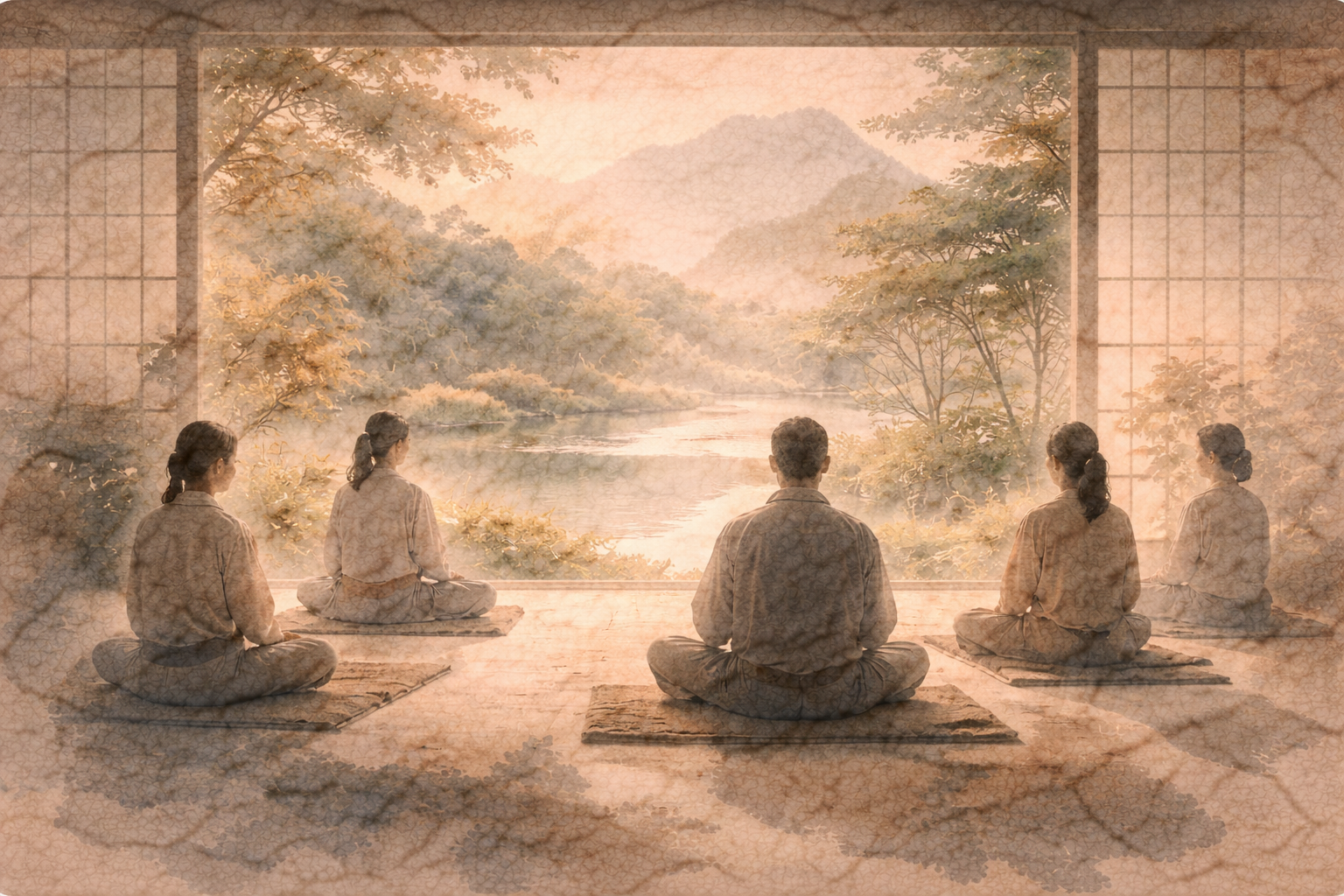
Quick Summary
- A meditation retreat is a structured period of practice away from normal routines, designed to support steady attention and simple living.
- Most retreats use a daily schedule of sitting, walking, and quiet time, with clear guidelines that reduce distractions.
- “Silence” usually means limiting casual conversation so you can notice your mind more clearly, not forcing yourself to be tense.
- Retreats can be a few hours, a weekend, or longer; beginners often do best with shorter formats first.
- The point isn’t to “empty your mind,” but to relate differently to thoughts, emotions, and sensations as they arise.
- Expect ordinary experiences: restlessness, boredom, calm, irritation, relief—often all in the same day.
- A good retreat is supportive, transparent about rules and costs, and encourages pacing, rest, and asking for help when needed.
Introduction
If “meditation retreat” sounds like something only for serious practitioners—or like a mysterious, silent ordeal—you’re not alone. Most people are simply trying to figure out what actually happens on retreat, what it’s for, and whether it’s worth stepping away from work, family, and screens to do something as simple as sitting and paying attention. At Gassho, we focus on practical, beginner-friendly explanations of meditation and retreat life.
A meditation retreat is best understood as a temporary container: you simplify your environment, follow a schedule, and practice in a way that’s hard to maintain in everyday life. The “retreat” part isn’t about escaping reality; it’s about reducing inputs so you can see your habits of attention more clearly.
That clarity comes from repetition and consistency. When you sit at the same times each day, eat simply, and limit stimulation, the mind has fewer places to hide. What you notice isn’t exotic—it’s the familiar patterns of planning, judging, remembering, and resisting, seen up close.
For beginners, the most helpful shift is to stop thinking of retreat as a performance. You’re not there to “win” at meditation. You’re there to practice returning—again and again—to what’s happening now, with a little more honesty than usual.
A Clear Way to Understand What a Retreat Is
As a lens, a meditation retreat is a deliberate change in conditions. In daily life, attention is constantly pulled by messages, tasks, conversations, and background noise. On retreat, many of those pulls are removed or reduced, so you can observe how attention behaves when it isn’t being continually redirected.
The structure matters. A retreat typically provides a schedule (for example: sitting meditation, walking meditation, meals, rest), a quiet environment, and guidelines that keep things simple. This isn’t meant to be rigid for its own sake; it’s meant to make practice easier by reducing decision fatigue and social pressure.
Silence, when included, is also a condition—not a moral rule. Limiting conversation reduces the tendency to perform, explain yourself, or manage other people’s impressions. With fewer social cues to track, you can notice subtler reactions: the urge to fix discomfort, the impulse to distract yourself, the stories that appear when nothing “important” is happening.
Seen this way, a retreat isn’t a belief system and it doesn’t require adopting a new identity. It’s a practical experiment: if you give attention a stable place to rest, what becomes easier to see? And if you see it, can you relate to it with a bit more steadiness?
GASSHO
Ask and learn about Buddhism in daily life.
GASSHO is a Buddhist community app where you can learn Buddhist teachings and ask questions to the head priest of Kongosanmaiin Temple on Mount Koya.
What It Feels Like When You Actually Do One
At first, the most noticeable experience is often the absence of your usual inputs. Without constant checking, talking, and switching tasks, the mind may feel louder, not quieter. Thoughts that were previously covered by busyness can become more obvious.
During a sitting period, you might notice how quickly attention leaves the breath or body and goes into planning. You return, then drift again. The practice is not the moment of perfect focus; it’s the repeated noticing and returning, without adding extra commentary about how well you’re doing.
Walking meditation can reveal different patterns. Some people discover they rush even when there’s nowhere to go. Others notice they mentally rehearse conversations or replay memories as soon as the body starts moving. The simple act of walking becomes a mirror for urgency and habit.
Meals on retreat are often surprisingly instructive. Eating in a quieter setting can make you aware of speed, preference, and restlessness. You may notice the impulse to reach for entertainment, or the subtle dissatisfaction that appears even when the food is fine.
Emotions can show up in plain ways: irritation at a sound, boredom during a long sit, tenderness when you finally slow down, anxiety when you realize how much you rely on distraction. None of this is a sign you’re doing it wrong; it’s what becomes visible when you stop constantly moving away from experience.
Rest periods can be unexpectedly challenging too. When the schedule gives you free time, the mind may scramble to fill it. You might feel an urge to “make the retreat productive,” or to solve your life in one afternoon. Noticing that urge—without immediately obeying it—is part of the practice.
Over the course of a retreat, you may also notice small, ordinary shifts: a little more space before reacting, a clearer sense of bodily tension, a more direct awareness of thought as thought. These are not trophies; they’re simply what can happen when attention is given consistent conditions.
Common Misunderstandings Beginners Bring to Retreat
Misunderstanding: A retreat is about having a special experience. Many people arrive hoping for a dramatic breakthrough or a permanent calm. Retreats can be meaningful, but they’re usually made of very normal moments: discomfort, repetition, and learning how you relate to those things.
Misunderstanding: Silence means suppressing yourself. Silence is typically a practical guideline to reduce social stimulation. It doesn’t mean you can’t ask for help, clarify instructions, or communicate important needs. Healthy retreats make room for necessary communication.
Misunderstanding: If my mind is busy, I’m failing. A busy mind is not a moral problem. On retreat, you’re simply seeing the mind’s momentum more clearly. The practice is noticing, returning, and softening the extra struggle you add on top.
Misunderstanding: Retreat is an escape from life. Stepping away can look like avoidance, but the intention is different: you reduce distractions so you can meet experience more directly. Ideally, you return home with a more workable relationship to stress, not a fantasy of living elsewhere.
Misunderstanding: Longer is always better. For many beginners, a weekend retreat is more skillful than forcing a long one. The best duration is the one you can engage with steadily, without turning it into an endurance contest.
Why Retreat Practice Can Change Your Everyday Life
A meditation retreat matters because it shows you, in a concentrated way, how your attention is trained. In daily life, you may not notice how often you tighten against discomfort or chase reassurance. On retreat, those movements become easier to see because there’s less noise around them.
That seeing can translate into small, practical changes at home: pausing before replying to a tense message, noticing when you’re stress-scrolling, feeling your shoulders rise during a meeting, or recognizing the moment you start narrating a story about someone else’s intentions.
Retreats also teach you what supports practice. You learn that environment, schedule, and simplicity aren’t luxuries—they’re conditions that shape the mind. Even if you never go on another retreat, you can bring pieces of that container into daily life: a consistent time, fewer inputs, and a clearer boundary around practice.
Most importantly, retreat can normalize the idea that you don’t have to obey every thought. You still think, plan, and remember—but you may become less compelled to treat each mental event as an emergency. That shift is subtle, but it’s often what people mean when they say retreat helped them.
Conclusion
So, what is a meditation retreat? It’s a structured period of simplified living designed to support sustained meditation practice—usually through a schedule, a quiet setting, and fewer distractions. The goal isn’t to manufacture a perfect mind; it’s to see your patterns clearly and practice returning to the present without so much extra struggle.
If you’re new, aim for a retreat that’s transparent about expectations, welcoming to beginners, and realistic about what you might experience. A good retreat doesn’t demand that you become someone else—it helps you meet what’s already here with steadier attention.
Ask a Buddhist priest
Have a question about Buddhism?
In the GASSHO app, you can ask questions about Buddhist teachings, daily concerns, and how to understand Buddhism in everyday life.
Frequently Asked Questions
- FAQ 1: What is a meditation retreat in simple terms?
- FAQ 2: What do you actually do all day on a meditation retreat?
- FAQ 3: Do you have to stay silent on a meditation retreat?
- FAQ 4: How long is a typical meditation retreat?
- FAQ 5: What is the purpose of a meditation retreat?
- FAQ 6: Are meditation retreats religious?
- FAQ 7: Can beginners go on a meditation retreat?
- FAQ 8: What should I expect emotionally on a meditation retreat?
- FAQ 9: Is a meditation retreat the same as a vacation?
- FAQ 10: What does “guided” mean in a meditation retreat?
- FAQ 11: What is a silent meditation retreat and why do people do it?
- FAQ 12: How do I know if a meditation retreat is reputable?
- FAQ 13: What should I bring to a meditation retreat?
- FAQ 14: What if I can’t sit still for long periods on a meditation retreat?
- FAQ 15: What happens after a meditation retreat ends?
FAQ 1: What is a meditation retreat in simple terms?
Answer: A meditation retreat is a set period of time—often a day, weekend, or longer—where you follow a schedule focused on meditation, quiet, and simple routines in a supportive environment.
Takeaway: A retreat is structured time away from normal distractions to practice steadily.
FAQ 2: What do you actually do all day on a meditation retreat?
Answer: Most retreats rotate through sitting meditation, walking meditation, meals, short breaks, and sometimes guided instructions or brief check-ins, all arranged in a consistent daily schedule.
Takeaway: Expect repetition and routine—practice is the main activity.
FAQ 3: Do you have to stay silent on a meditation retreat?
Answer: Many retreats include periods of silence to reduce distraction, but policies vary. Even on silent retreats, you can usually ask practical questions and communicate important needs.
Takeaway: Silence is common, but it’s typically a guideline with exceptions for safety and logistics.
FAQ 4: How long is a typical meditation retreat?
Answer: Retreats range from a few hours to a weekend to a week or more. Beginner-friendly options are often one-day or weekend retreats because they’re easier to integrate and less overwhelming.
Takeaway: There’s no single standard length; start with what feels manageable.
FAQ 5: What is the purpose of a meditation retreat?
Answer: The purpose is to create conditions—time, simplicity, and fewer distractions—that make it easier to observe the mind and practice returning to present-moment experience consistently.
Takeaway: Retreats support continuity of practice more than “special experiences.”
FAQ 6: Are meditation retreats religious?
Answer: Some retreats are offered in religious settings and may include devotional elements, while others are secular and focus on meditation as a mental training. The retreat description should clarify the tone and expectations.
Takeaway: Retreats can be religious or secular—check the format before you commit.
FAQ 7: Can beginners go on a meditation retreat?
Answer: Yes, many retreats are designed for beginners, especially day-long or weekend formats with clear guidance. It helps to choose a retreat that explicitly welcomes first-timers and explains the schedule and rules upfront.
Takeaway: Beginners can attend—pick a retreat built for beginners.
FAQ 8: What should I expect emotionally on a meditation retreat?
Answer: You might experience restlessness, boredom, calm, irritation, or tenderness—often in ordinary, shifting waves. With fewer distractions, emotions can feel more noticeable, even if nothing “big” is happening.
Takeaway: A wide range of normal emotions is common when you slow down.
FAQ 9: Is a meditation retreat the same as a vacation?
Answer: Not usually. A vacation is often about entertainment and freedom of choice, while a retreat is about practice and structure, with a schedule that supports sustained attention.
Takeaway: Retreats are restorative for many people, but they’re not designed as leisure trips.
FAQ 10: What does “guided” mean in a meditation retreat?
Answer: A guided retreat typically includes spoken meditation instructions, short talks, or regular reminders about what to do during practice periods, rather than leaving you to figure everything out alone.
Takeaway: Guided retreats provide more structure and are often easier for first-timers.
FAQ 11: What is a silent meditation retreat and why do people do it?
Answer: A silent retreat limits casual conversation and external stimulation so participants can observe thoughts and reactions more clearly. People do it to support deeper continuity of attention and reduce social distraction.
Takeaway: Silence is used to simplify the environment and make inner patterns easier to notice.
FAQ 12: How do I know if a meditation retreat is reputable?
Answer: Look for clear information about schedule, guidelines, costs, accommodations, and support; reasonable boundaries; and a culture that encourages asking questions and honoring health needs. Avoid retreats that pressure you, hide details, or discourage seeking help.
Takeaway: Transparency and participant support are key signs of a healthy retreat.
FAQ 13: What should I bring to a meditation retreat?
Answer: Bring comfortable clothing, basic toiletries, any medications, a water bottle if recommended, and layers for changing temperatures. Many retreats also suggest a notebook for brief reflections, though some ask you to limit writing during silent periods.
Takeaway: Pack for comfort and simplicity, and follow the retreat’s packing list.
FAQ 14: What if I can’t sit still for long periods on a meditation retreat?
Answer: It’s common to struggle with stillness at first. Many retreats include walking meditation and allow posture adjustments; you can also speak with staff about options like standing, using a chair, or taking mindful breaks when appropriate.
Takeaway: Retreat practice can be adapted—discomfort doesn’t have to become a battle.
FAQ 15: What happens after a meditation retreat ends?
Answer: Many people feel sensitive to noise and stimulation for a day or two. It helps to re-enter gradually, keep a simple practice at home, and reflect on what supported you—like schedule, reduced inputs, and consistent practice periods.
Takeaway: The retreat ends, but you can carry its helpful conditions into daily life in small ways.