



What Actually Happens When You Chant in Buddhism
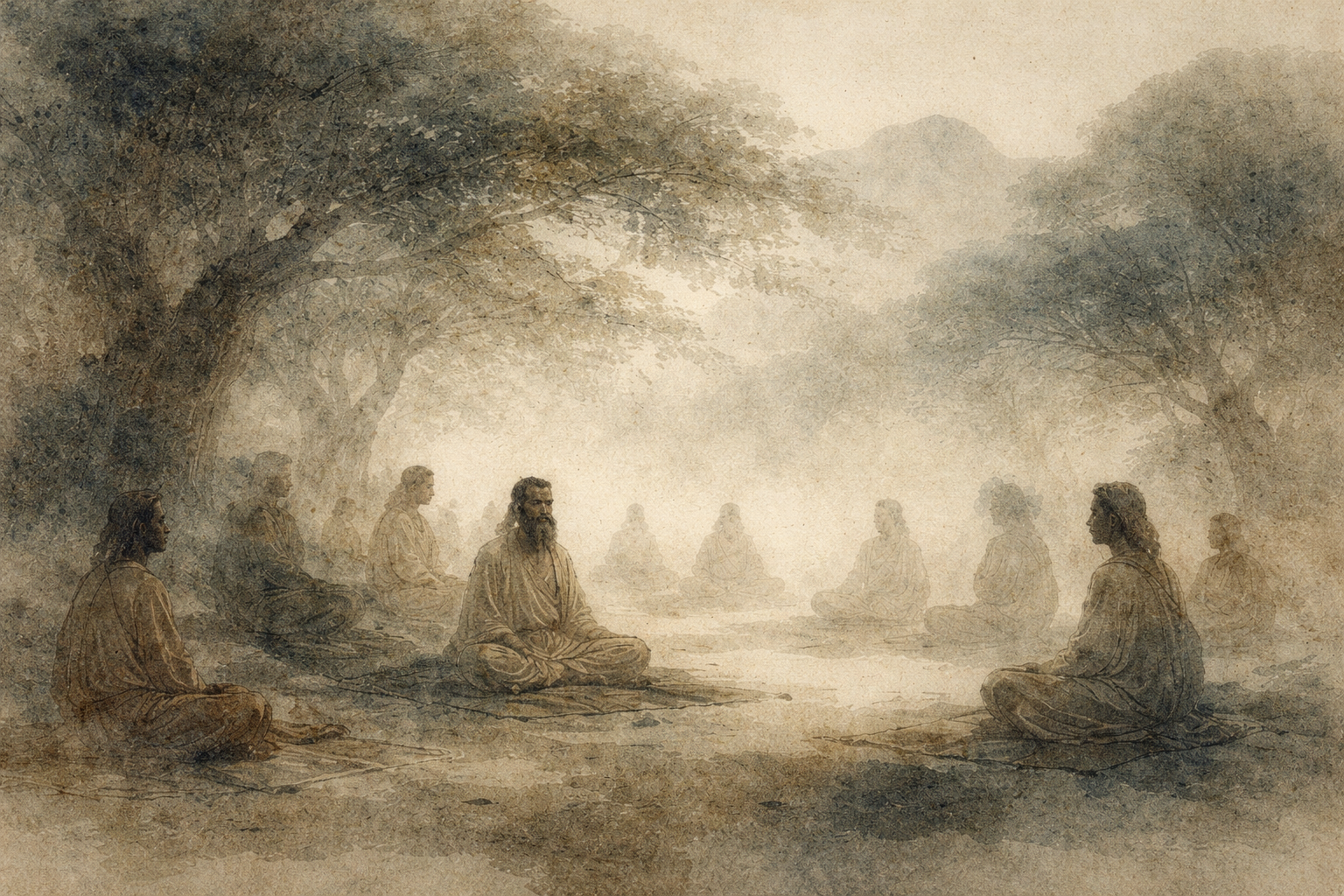
What Actually Happens When You Chant in Buddhism
Quick Summary
- Chanting gives the mind a simple, repeatable object, which steadies attention and reduces mental scatter.
- Sound, rhythm, and breath synchronize, often shifting the nervous system toward calm and steadier energy.
- Words and intention shape what you notice: less rumination, more clarity about what’s happening right now.
- Chanting can soften self-centered thinking by rehearsing values like compassion, gratitude, and restraint.
- Group chanting tends to amplify focus through shared timing, making practice feel easier and more stable.
- “Something happening” is often ordinary: attention returns, emotions settle, and habits become more visible.
- If it feels awkward or “nothing happens,” that can still be the practice working: you’re seeing your mind plainly.
Introduction
You can chant in a Buddhist setting and still be unsure what it’s supposed to do: Are you praying, meditating, self-hypnotizing, or just repeating sounds because everyone else is? The honest answer is that chanting is a practical training tool—less about forcing a special state and more about shaping attention, speech, and intention in a way you can actually feel in your body and choices. At Gassho, we focus on grounded Buddhist practice explained in plain language.
When people ask “what happens when you chant in Buddhism,” they often mean two things at once: what changes internally (mind, emotions, attention), and what the chanting is “doing” spiritually. You don’t have to pick a dramatic explanation to benefit; you can watch what chanting does to your breathing, your reactivity, and the stories you keep telling yourself.
Chanting also has a social and ethical dimension. It trains you to speak deliberately, to keep pace with others, and to return to a shared text or phrase instead of improvising from your moods. That may sound small, but small repetitions are exactly how habits are built.
A Clear Lens for Understanding Buddhist Chanting
A useful way to understand chanting in Buddhism is to treat it as a method of collecting the mind. The chant becomes a stable reference point—like a handrail—so attention has somewhere to return when it drifts into planning, replaying conversations, or worrying. What “happens” is often the simple act of returning, again and again, to something you can hear and feel.
Chanting also trains speech. In daily life, speech easily becomes automatic: we vent, exaggerate, perform, or defend. Chanting is speech with constraints—set words, a steady pace, a clear beginning and end. Those constraints can reveal how quickly the mind wants to rush, resist, or check out, and they offer a gentle way to practice steadiness.
Another lens is intention. Even when you don’t fully understand every line, you can chant with a simple aim: to cultivate clarity, kindness, and restraint. The words act like a repeated reminder of what you’re choosing to value. Over time, repeating a value is not nothing; it’s rehearsal, and rehearsal changes what comes to mind first when life gets tight.
Finally, chanting is embodied. It’s not just “thinking the words.” Breath, posture, vibration in the chest and throat, and the timing of syllables all matter. What happens is partly physiological: the body gets a rhythm, and the mind often follows the body’s lead.
What You May Notice While Chanting
At first, you may notice how busy your mind is. The chant is simple, but the mind keeps offering commentary: “Am I doing it right?” “This is boring.” “I sound weird.” That’s not a failure; it’s a clear view of the mind’s habit of narrating everything.
You may also notice your breathing change. Many people naturally lengthen the exhale to fit the phrase, or they settle into a steadier rhythm. When breath becomes more regular, the body often feels less keyed up, even if your thoughts are still noisy.
Attention tends to move from scattered to gathered in small increments. It’s not usually a sudden “click.” It’s more like realizing you drifted, then coming back to the sound, then drifting again, then coming back. That repeated return is the training.
Emotions can show up more plainly. Chanting can soften agitation, but it can also bring forward sadness, irritation, or tenderness that was already there. Because the chant gives you something steady to do, you can feel the emotion without immediately acting it out.
The meaning of the words may land differently from day to day. Sometimes a line feels like background noise; other times it feels pointed, like it’s describing your exact habit in the moment. What’s happening isn’t magic so much as timing: your life conditions what you hear.
If you chant with others, you may notice how quickly you synchronize. Matching pace and tone can reduce self-consciousness because you’re not performing alone. The group rhythm can carry you when your own energy is low, and it can also reveal your impulse to lead, lag, or resist being guided.
After chanting, the most common “result” is subtle: a slightly cleaner mind, a bit more space before reacting, and a clearer sense of what you were just thinking. It may not feel dramatic, but it’s often enough to change the next conversation you have.
Common Misunderstandings About Chanting
Misunderstanding: Chanting is only prayer for external help. Chanting can include devotional elements, but what happens in practice is often internal: attention stabilizes, intention clarifies, and reactive patterns become easier to see. Even if you hold a devotional view, the training effect still matters.
Misunderstanding: If you don’t feel bliss, it isn’t working. Many sessions feel ordinary. Sometimes you feel calm; sometimes you feel restless. What matters is whether you can return to the chant and notice what pulls you away. The “working” is the noticing and returning.
Misunderstanding: You must understand every word for chanting to be meaningful. Understanding helps, but it’s not the only mechanism. Rhythm, breath, and repetition train the mind-body system. Over time, you can learn the meaning gradually without waiting to begin.
Misunderstanding: Chanting is mindless repetition. It can become mechanical, but it doesn’t have to. You can chant while listening closely, feeling the breath, and noticing intention. The same words can be rote or alive depending on how you meet them.
Misunderstanding: Chanting should suppress thoughts and emotions. Chanting isn’t about forcing silence. Often what happens is that thoughts and emotions become more visible against the steady background of sound. Visibility is useful; it gives you choice.
How Chanting Can Support Everyday Life
Chanting matters because it trains a skill you need everywhere: returning. Returning to what you’re doing, returning to what you value, returning to the present moment when you’ve been pulled into a story. The chant is a low-stakes place to practice that return so it’s available in higher-stakes moments.
It also reshapes how you relate to stress. When you chant, you practice staying with a steady rhythm even when the mind complains. That same capacity helps when you’re stuck in traffic, dealing with a tense email, or trying not to snap at someone you love.
Chanting can support ethical speech in a very practical way. You get used to speaking more slowly, listening more carefully, and noticing the impulse to rush or dominate. Over time, that can translate into fewer reactive words and more deliberate ones.
Finally, chanting can become a small ritual that marks transitions: beginning the day, ending work, or resetting after conflict. What happens then is not mystical—your nervous system learns a cue for “settle and return,” and that cue becomes reliable through repetition.
Conclusion
When you chant in Buddhism, what actually happens is usually simple and observable: attention gathers around sound and breath, the body finds rhythm, and the mind’s habits become easier to notice without immediately obeying them. Sometimes you feel calmer; sometimes you just see your restlessness more clearly. Either way, chanting is doing its job when it helps you return—again and again—to what you’re saying, what you’re doing, and what you intend.
If you want to test it for yourself, keep it modest: choose a short chant, chant for a few minutes, and pay attention to what changes in your breathing, your inner commentary, and the space between impulse and action afterward. The most convincing explanation is the one you can verify in your own experience.
Frequently Asked Questions
- FAQ 1: What happens in your mind when you chant in Buddhism?
- FAQ 2: What happens in your body when you chant in Buddhism?
- FAQ 3: What happens if you chant in Buddhism but don’t believe anything spiritual?
- FAQ 4: What happens when you chant in Buddhism and your mind keeps wandering?
- FAQ 5: What happens when you chant in Buddhism in a group versus alone?
- FAQ 6: What happens when you chant in Buddhism if you don’t understand the language?
- FAQ 7: What happens when you chant in Buddhism—are you praying or meditating?
- FAQ 8: What happens when you chant in Buddhism and feel emotional or start crying?
- FAQ 9: What happens when you chant in Buddhism and feel nothing at all?
- FAQ 10: What happens when you chant in Buddhism—does it change karma?
- FAQ 11: What happens when you chant in Buddhism—does it bring good luck or protection?
- FAQ 12: What happens when you chant in Buddhism silently in your head?
- FAQ 13: What happens when you chant in Buddhism too fast or too slow?
- FAQ 14: What happens when you chant in Buddhism every day for a few minutes?
- FAQ 15: What happens when you chant in Buddhism with imperfect pronunciation?
FAQ 1: What happens in your mind when you chant in Buddhism?
Answer: The chant gives attention a steady object (sound, rhythm, words), so the mind tends to wander less or, when it wanders, it becomes easier to notice and return. You often become more aware of inner commentary and reactivity because the repetition makes distractions stand out.
Takeaway: Chanting mainly trains noticing and returning, not forcing a blank mind.
FAQ 2: What happens in your body when you chant in Buddhism?
Answer: Breath and voice start to coordinate, which can steady heart rate and muscle tension for many people. You may feel vibration in the chest, throat, and face, and a more regular breathing pattern as you match phrases to exhalations.
Takeaway: Chanting is embodied—breath and sound often settle the system.
FAQ 3: What happens if you chant in Buddhism but don’t believe anything spiritual?
Answer: You can still experience the practical effects: steadier attention, less rumination, and clearer awareness of thoughts and emotions. Many benefits come from repetition, rhythm, and intention rather than from holding a particular belief.
Takeaway: Chanting can function as a mental training even without metaphysical assumptions.
FAQ 4: What happens when you chant in Buddhism and your mind keeps wandering?
Answer: Wandering is part of what you learn to see. Each time you notice you drifted and gently return to the chant, you’re strengthening the habit of coming back without self-criticism.
Takeaway: The “return” is the practice; wandering doesn’t cancel it.
FAQ 5: What happens when you chant in Buddhism in a group versus alone?
Answer: In a group, shared timing and sound often make it easier to stay with the chant and less likely to feel self-conscious. Alone, you may notice your own pace, resistance, or drifting more clearly because there’s no external rhythm carrying you.
Takeaway: Group chanting supports stability; solo chanting highlights personal habits.
FAQ 6: What happens when you chant in Buddhism if you don’t understand the language?
Answer: You can still benefit from the rhythm, breath regulation, and focused repetition. Over time, you can learn translations or summaries, but understanding isn’t the only way chanting works on attention and intention.
Takeaway: Meaning helps, but rhythm and repetition can still train the mind.
FAQ 7: What happens when you chant in Buddhism—are you praying or meditating?
Answer: Often it’s both in a practical sense: you’re repeating words that express intention (prayer-like) while also using sound and repetition to stabilize attention (meditation-like). What it “is” depends on how you relate to the words and what you’re training in that moment.
Takeaway: Chanting can be devotional, meditative, or both depending on intention.
FAQ 8: What happens when you chant in Buddhism and feel emotional or start crying?
Answer: Chanting can lower defenses and make emotions more noticeable because you’re less distracted by constant mental activity. The steady structure of the chant can help you feel emotion without immediately acting it out or explaining it away.
Takeaway: Strong feelings can be a normal result of steadier attention, not a problem.
FAQ 9: What happens when you chant in Buddhism and feel nothing at all?
Answer: “Nothing” often means the effects are subtle: a small reduction in mental noise, a slight shift in breathing, or a clearer view of boredom and impatience. Noticing neutrality or dullness is still noticing, and that’s part of the training.
Takeaway: Lack of fireworks doesn’t mean chanting isn’t doing anything.
FAQ 10: What happens when you chant in Buddhism—does it change karma?
Answer: In a grounded sense, chanting can influence future actions by shaping intention, attention, and speech habits—what you rehearse tends to show up later in how you respond. Many Buddhists also speak of karmic effects more broadly, but you can verify the behavioral side directly: chanting can make you more likely to pause, choose words carefully, and act with restraint.
Takeaway: Chanting can change what you do next, and that’s a real karmic direction.
FAQ 11: What happens when you chant in Buddhism—does it bring good luck or protection?
Answer: Some people interpret chanting as protective, but the most observable “protection” is psychological: less impulsive speech, steadier attention, and a calmer baseline that reduces avoidable mistakes. When you’re less reactive, you often create fewer conflicts and handle difficulties more cleanly.
Takeaway: The clearest protection is reduced reactivity and better choices.
FAQ 12: What happens when you chant in Buddhism silently in your head?
Answer: Silent chanting can still collect attention through repetition, but it may be easier to drift into daydreaming because there’s less sensory feedback. If you chant silently, it helps to stay close to the felt sense of the words and keep a steady pace.
Takeaway: Silent chanting works, but clear pacing and attentiveness matter more.
FAQ 13: What happens when you chant in Buddhism too fast or too slow?
Answer: Speed changes the experience: too fast can create strain and blur attention; too slow can invite spacing out. A moderate pace usually supports steady breathing and clearer listening, which makes it easier to notice distraction and return.
Takeaway: A steady, sustainable pace tends to produce the clearest effects.
FAQ 14: What happens when you chant in Buddhism every day for a few minutes?
Answer: Daily chanting often builds familiarity with returning to a single object, which can carry into daily stress moments as a learned “reset.” You may also notice changes in speech habits—slower responses, fewer impulsive words—because you’re rehearsing deliberate speech regularly.
Takeaway: Consistency tends to make chanting a reliable reset and a speech-training practice.
FAQ 15: What happens when you chant in Buddhism with imperfect pronunciation?
Answer: Imperfect pronunciation is common, especially at the beginning. What matters most is steady attention, sincere intention, and willingness to keep listening and adjusting over time; anxiety about perfection often creates more distraction than the mispronunciation itself.
Takeaway: Chanting “well” is more about presence and steadiness than flawless sounds.