



What Does Gassho Mean? Why We Put Our Hands Together
Quick Summary
- Gassho means “palms together,” a simple gesture used to express respect, gratitude, and presence.
- Putting hands together is less about “being religious” and more about aligning body and attention in one clear action.
- The gesture can function as a pause button for reactivity—one breath of space before speaking or acting.
- Gassho can be offered to people, moments, or even difficulties—without forcing positivity.
- There’s no single “correct” feeling; sincerity matters more than performance.
- You can use gassho in daily life: greeting, apologizing, thanking, beginning a meal, or starting a quiet moment.
- Small details help: gentle pressure, relaxed shoulders, and a brief bow if appropriate.
Introduction
If you’ve seen people place their palms together and bow, it can feel unclear what you’re supposed to be doing: praying, signaling devotion, copying a ritual, or just being polite. The truth is simpler and more practical—gassho is a physical way to collect yourself, acknowledge what’s in front of you, and meet it with respect instead of autopilot. At Gassho, we focus on the lived meaning of Buddhist gestures in plain language and everyday life.
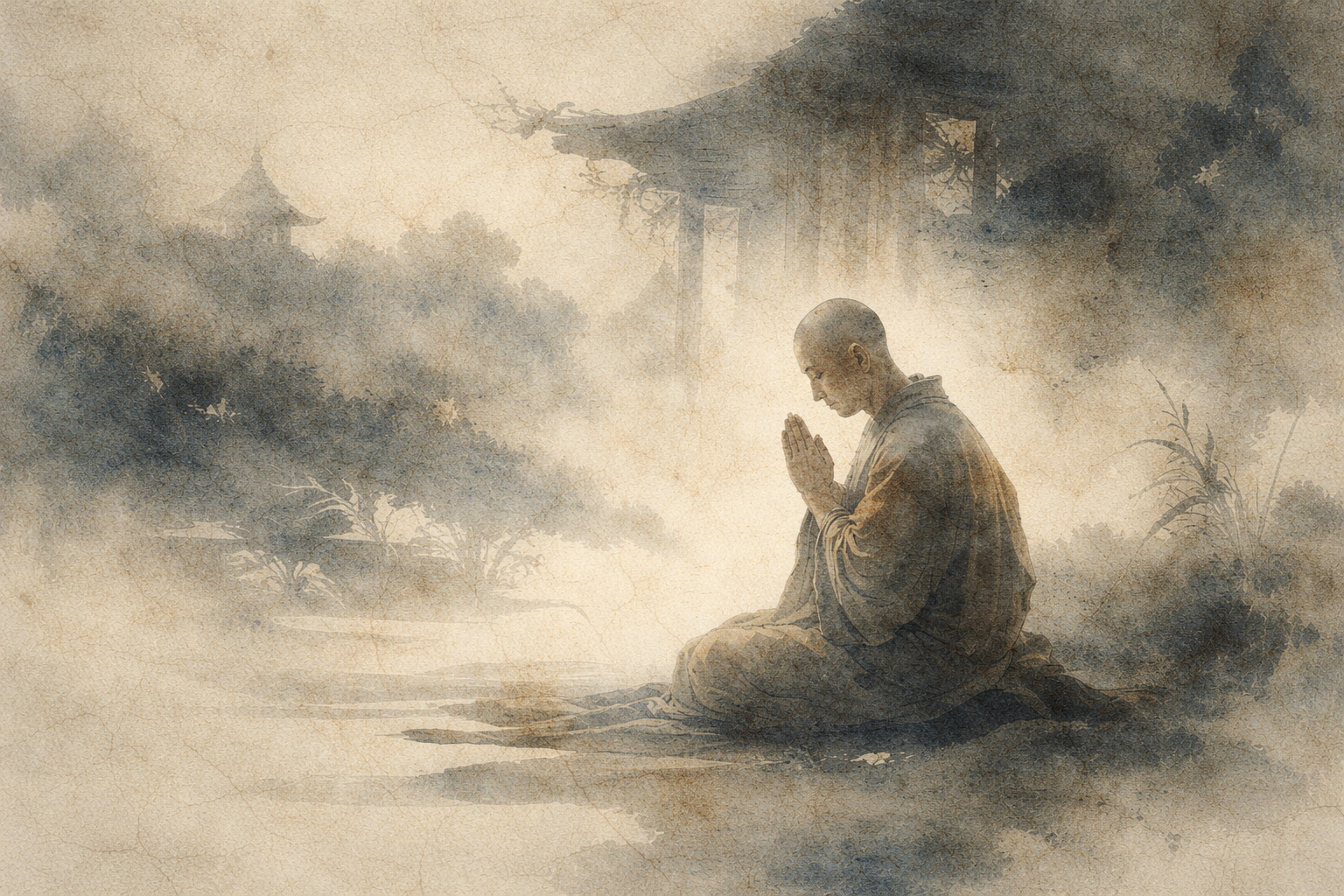
The word gassho is commonly used to describe the gesture of bringing the palms together in front of the chest, fingers pointing upward, often accompanied by a slight bow. You’ll see it in temples and meditation halls, but also in ordinary moments: greeting someone, saying thank you, or marking the start and end of a practice.
What makes gassho worth understanding is that it’s not just symbolic. It changes your posture, your breathing, and the tone of your attention. In one small movement, it becomes harder to stay scattered, defensive, or careless—at least for a moment.
A Clear Lens for Understanding Gassho
A useful way to understand gassho is to treat it as a gesture of alignment. When your hands come together, you’re not adding something mystical to the moment—you’re simplifying it. Two hands become one shape; divided attention becomes a single point of contact. The body gives the mind a cue: “Be here.”
Gassho also works as a relational gesture. It acknowledges that you are not the only center of the room. Whether you offer it to a person, a meal, a task, or a difficult conversation, it quietly says: “I recognize this matters.” That recognition can be respectful without being dramatic.
Another helpful lens is to see gassho as nonverbal ethics. It’s a way of practicing restraint and care before words arrive. You’re not promising perfection; you’re choosing a cleaner starting point. In that sense, gassho isn’t a belief you adopt—it’s a small action that shapes how experience unfolds.
Finally, gassho can be understood as embodied humility. Not humiliation, not self-erasure—just the willingness to soften the “me first” posture that sneaks into ordinary life. Hands together, shoulders relaxed, gaze lowered slightly: the body demonstrates a quieter stance, and the mind often follows.
GASSHO
Ask and learn about Buddhism in daily life.
GASSHO is a Buddhist community app where you can learn Buddhist teachings and ask questions to the head priest of Kongosanmaiin Temple on Mount Koya.
How Gassho Shows Up in Ordinary Moments
You’re about to speak, and you can feel the heat of a reaction building—defensiveness, impatience, the urge to win. Bringing the hands together for one breath doesn’t erase the feeling, but it can interrupt the momentum. The body pauses; the mind notices the pause.
Sometimes gassho reveals how scattered you are. You put your palms together and immediately feel the shoulders tense, the jaw tighten, the breath sit high in the chest. That’s not a failure; it’s information. The gesture becomes a quick mirror: “This is what I’m carrying right now.”
In a quieter setting, gassho can gather attention without forcing it. The touch of palm to palm is simple and specific. Instead of trying to “clear your mind,” you give it a single, physical point to rest on. The mind may still wander, but it has something steady to return to.
In social situations, gassho can change the tone of an interaction. When offered naturally, it communicates respect without needing extra words. It can also reduce performative friendliness; you don’t have to manufacture a mood. You just acknowledge the person in front of you.
Gassho can also be used privately, when no one is watching. Before opening your laptop, before eating, before stepping into a difficult task—hands together for a breath can mark a clean beginning. It’s a way of saying, “I’m starting now,” rather than dragging the last hour into the next one.
And sometimes gassho meets discomfort directly. You might place your hands together when you feel grief, uncertainty, or regret—not to make it go away, but to stop fighting the fact that it’s here. The gesture doesn’t solve the problem; it changes the relationship to the problem.
Over time, you may notice something subtle: gassho isn’t mainly about the hands. It’s about the moment of choosing—choosing to respond rather than react, choosing to show respect rather than rush, choosing to be present rather than elsewhere.
Common Misunderstandings About Putting Hands Together
Misunderstanding: “Gassho is only prayer.” It can be prayerful for some people, but it can also be a neutral gesture of respect, gratitude, or attention. The same physical action can carry different intentions, and you don’t have to force an intention you don’t feel.
Misunderstanding: “If I don’t feel reverent, it’s fake.” Gassho isn’t a demand for a special emotion. Often it’s the opposite: a way to be honest about your current state while still acting with care. Sincerity can look quiet and ordinary.
Misunderstanding: “There’s one correct hand position.” Details matter less than ease and respect. Generally, palms meet gently, fingers point upward, hands rest around the chest area, and shoulders stay relaxed. If you’re tense or straining, the gesture is working against its purpose.
Misunderstanding: “It’s a performance for others.” It can become performative, like any social signal. But at its best, gassho is something you do to steady your own attention and to acknowledge what’s in front of you. Even when done publicly, it can remain inwardly simple.
Misunderstanding: “It’s cultural appropriation to ever do it.” Context matters. Using gassho as a respectful gesture in a setting where it’s appropriate—and without mocking, branding, or treating it as a costume—is different from using it as an aesthetic prop. When in doubt, be modest, learn the context, and follow the lead of the space you’re in.
Why This Gesture Matters in Daily Life
Modern life trains speed: quick opinions, quick replies, quick judgments. Gassho is a tiny counter-training. It inserts a fraction of a second where you can feel your breath and choose your next move. That fraction of a second is often where better decisions live.
It also supports gratitude without sentimentality. Hands together before a meal, for example, doesn’t require a speech or a perfect mood. It’s a simple acknowledgment: this food came from many conditions, and I’m receiving it now.
In relationships, gassho can soften the habit of treating people as obstacles or tools. Even if you don’t do the gesture outwardly, remembering its meaning can shift your posture: less bracing, more listening, more willingness to meet what’s actually being said.
And when life is messy, gassho can be a way to stay human. It doesn’t fix grief, conflict, or uncertainty. But it can keep you connected to a basic intention: to respond with respect, to act with care, and to not abandon the present moment.
Conclusion
Gassho means putting the palms together, but its real function is putting your attention together. It’s a small, practical gesture that can express respect, gratitude, apology, or simple presence—without requiring you to adopt a new identity or perform a mood. If you want to try it, start modestly: one breath, relaxed shoulders, gentle palms, and a clear intention to meet the moment as it is.
Ask a Buddhist priest
Have a question about Buddhism?
In the GASSHO app, you can ask questions about Buddhist teachings, daily concerns, and how to understand Buddhism in everyday life.
Frequently Asked Questions
- FAQ 1: What does “gassho” mean literally?
- FAQ 2: Why do people put their hands together in gassho?
- FAQ 3: Is gassho the same thing as praying?
- FAQ 4: What is the purpose of gassho in Buddhist practice?
- FAQ 5: Where should my hands be placed when doing gassho?
- FAQ 6: Do I need to bow when I do gassho?
- FAQ 7: What does gassho communicate to other people?
- FAQ 8: Can I do gassho if I’m not Buddhist?
- FAQ 9: Is gassho a greeting like “hello”?
- FAQ 10: What should I focus on internally when doing gassho?
- FAQ 11: Does gassho have to feel reverent to be “real”?
- FAQ 12: Why does gassho sometimes make me feel calmer?
- FAQ 13: Is it disrespectful to do gassho incorrectly?
- FAQ 14: When is a good time to use gassho in daily life?
- FAQ 15: What is the simplest way to practice gassho without overthinking it?
FAQ 1: What does “gassho” mean literally?
Answer: “Gassho” literally refers to bringing the palms together, typically in front of the chest, with fingers pointing upward.
Takeaway: Gassho is a straightforward “palms together” gesture.
FAQ 2: Why do people put their hands together in gassho?
Answer: People use gassho to express respect, gratitude, and presence, and to briefly collect attention before speaking, bowing, or beginning an activity.
Takeaway: Hands together is both a social signal and an attention cue.
FAQ 3: Is gassho the same thing as praying?
Answer: Not necessarily. Gassho can be prayerful, but it can also be a nonverbal sign of respect or thanks without any theistic meaning.
Takeaway: Gassho can be spiritual, but it doesn’t have to be “prayer.”
FAQ 4: What is the purpose of gassho in Buddhist practice?
Answer: In practice settings, gassho often marks respect (for the moment, the space, or others) and helps unify posture and attention so actions begin from a calmer place.
Takeaway: Gassho supports respect and steadiness, not just symbolism.
FAQ 5: Where should my hands be placed when doing gassho?
Answer: Commonly, palms meet gently around chest level, fingers pointing upward, thumbs lightly touching, with shoulders relaxed and elbows not forced outward.
Takeaway: Aim for a natural, relaxed “palms together” at the chest.
FAQ 6: Do I need to bow when I do gassho?
Answer: A bow often accompanies gassho, but it’s not mandatory. In many situations, hands together alone is enough; follow the context and keep it simple.
Takeaway: Bowing is optional; appropriateness matters more than rules.
FAQ 7: What does gassho communicate to other people?
Answer: It commonly communicates respect, gratitude, apology, or a sincere greeting. The exact meaning depends on timing, facial expression, and the situation.
Takeaway: Gassho is a flexible, respectful nonverbal message.
FAQ 8: Can I do gassho if I’m not Buddhist?
Answer: Yes, if you do it respectfully and in an appropriate context. Treat it as a gesture of respect and presence, not as a costume or a joke.
Takeaway: You don’t need a label—just sincerity and context awareness.
FAQ 9: Is gassho a greeting like “hello”?
Answer: It can function as a greeting, especially in practice communities, but it also appears in thanks, apologies, and transitions (beginning or ending something).
Takeaway: Gassho can be a greeting, but it’s broader than “hello.”
FAQ 10: What should I focus on internally when doing gassho?
Answer: Keep it simple: feel the contact of the palms, soften the shoulders, notice one breath, and let the gesture mark a clean moment of attention.
Takeaway: Use gassho as a one-breath reset into presence.
FAQ 11: Does gassho have to feel reverent to be “real”?
Answer: No. It can be sincere even when you feel distracted, tired, or unsure. The point is to show up honestly and respectfully, not to manufacture emotion.
Takeaway: Sincerity matters more than a special feeling.
FAQ 12: Why does gassho sometimes make me feel calmer?
Answer: The gesture naturally stabilizes posture and gives attention a single physical point (palms touching), which can reduce mental scatter and slow reactivity for a moment.
Takeaway: Gassho calms by simplifying body and attention.
FAQ 13: Is it disrespectful to do gassho incorrectly?
Answer: Minor variations are normal. Disrespect is more about attitude—mocking, exaggerating, or using it as a prop—than about perfect hand placement.
Takeaway: Respectful intention outweighs technical perfection.
FAQ 14: When is a good time to use gassho in daily life?
Answer: Common times include greeting someone, saying thank you, apologizing, beginning a meal, starting work, or pausing before a difficult conversation.
Takeaway: Use gassho as a simple marker of respect and reset.
FAQ 15: What is the simplest way to practice gassho without overthinking it?
Answer: Bring palms together gently at the chest, relax the shoulders, take one natural breath, and let that breath be your full attention—then continue with what you’re doing.
Takeaway: One relaxed breath in gassho is enough.