



What a Buddha Stands For
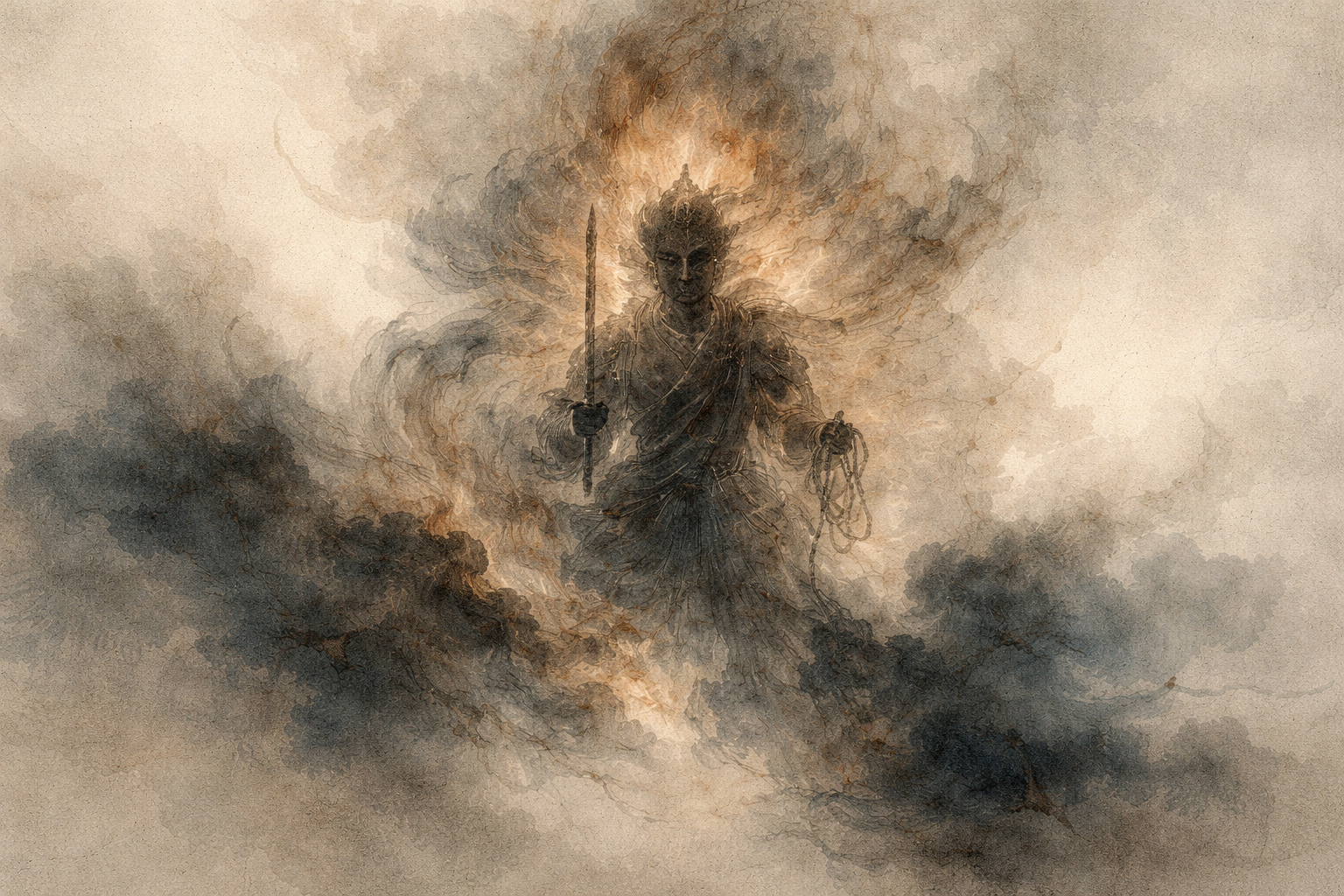
Quick Summary
- A Buddha often represents awakened awareness: the capacity to see clearly without being pushed around by habit.
- In many homes and temples, a Buddha image functions less as a “god” and more as a reminder of steadiness, compassion, and restraint.
- The calm posture and soft gaze point to a mind that isn’t fighting experience, even when life is loud.
- A Buddha can represent what is possible in ordinary life: meeting work, relationships, and fatigue without adding extra suffering.
- Different Buddha statues emphasize different qualities, but the core message is usually inner clarity expressed outwardly.
- Misunderstandings are common: people may confuse symbolism with worship, or perfection with numbness.
- The most practical meaning is personal: what the image calls you back to when you’re reactive, rushed, or scattered.
Introduction
You see a Buddha statue and the question lands fast: is this a religious idol, a decoration, or something meant to point at your own mind? Most confusion comes from taking the image too literally—either as a supernatural being who fixes life, or as a vague “peace symbol” that doesn’t touch real stress. This explanation is written for Gassho, a Zen/Buddhism site focused on clear, everyday language.
When people ask “what does a buddha represent,” they’re usually trying to locate the image in their own life: what it asks of them, what it reflects back, and why it feels different from other spiritual symbols. The answer becomes simpler when it’s treated as a lens for experience rather than a statement you must believe.
The Buddha as a Mirror for Clear Seeing
A Buddha can be understood as a representation of awakened awareness: the human capacity to notice what is happening without immediately tightening around it. It’s less about adopting a new identity and more about recognizing a different relationship to thoughts, emotions, and pressure.
In ordinary terms, the image points to clarity that doesn’t depend on perfect conditions. At work, clarity looks like reading an email twice before reacting. In a relationship, it looks like hearing the tone underneath the words. In fatigue, it looks like admitting “I’m depleted” without turning that into self-judgment.
The calm posture often seen in Buddha images can be read as a symbol of steadiness: not frozen, not performative, just settled. It suggests a mind that can hold discomfort, praise, boredom, and uncertainty without being yanked into extremes.
Compassion is also implied, but not as sentimentality. More like the willingness to meet experience—your own and others’—without adding cruelty. In daily life that can be as small as not replaying a mistake for the tenth time, or not using someone’s weakness as leverage in an argument.
How the Symbol Shows Up in Ordinary Moments
In a tense moment, the Buddha represents the possibility of a small pause. Not a dramatic pause that changes everything, just the brief gap where you notice you’re about to send the sharp message, raise your voice, or shut down. The symbol points to that gap as something real.
When the mind is busy, the Buddha image can function like a quiet reference point. You might still feel rushed, but you also notice the rushing. That noticing is not a trophy; it’s simply a different angle on the same moment, like stepping half a pace back from the edge of a crowd.
In relationships, what a buddha represents can look like not feeding the second arrow: the extra story layered on top of what was said. Someone forgets to reply. The first fact is simple. The second layer—“they don’t respect me,” “I’m always ignored”—arrives quickly. The symbol points to the possibility of seeing the layering as it happens.
In the middle of work, it can show up as a shift from compulsive fixing to careful attention. You still solve problems, but you notice the difference between responding and thrashing. Even a few breaths of steadiness can change how the next sentence is written, how the next meeting is entered, how the next decision is made.
In fatigue, the Buddha can represent dignity without drama. Tiredness often comes with a harsh inner voice: “You should be better.” The symbol points to a mind that can acknowledge limits plainly. Not indulging, not punishing—just seeing what is true right now.
In silence—waiting in a line, sitting in a car, standing at the sink—the Buddha represents a kind of non-avoidance. The mind often tries to fill space with scrolling, planning, rehearsing. The symbol quietly suggests that nothing needs to be added for the moment to be complete.
Even when you feel reactive, the Buddha image can represent the difference between being inside the reaction and being aware of it. Anger still burns, worry still loops, sadness still aches. But there can also be a simple recognition: “This is anger,” “This is worry,” “This is sadness.” The symbol points to that recognition as a human capacity available in the middle of life, not outside it.
Misreadings That Naturally Happen
One common misunderstanding is that a Buddha represents a distant figure who grants favors if approached correctly. That interpretation can happen easily because many cultures use sacred images that way. But for many people, the Buddha image functions more like a reminder than a negotiator: it points back to the quality of mind present right now.
Another misunderstanding is to treat the Buddha as a symbol of constant calm, as if awakening means never feeling irritation, grief, or doubt. In daily life, that expectation can create a subtle pressure to perform serenity. The symbol is often closer to steadiness than to numbness: feelings arise, and they are known.
Some people also reduce the Buddha to décor—an aesthetic of “peace” that stays on the shelf while life stays frantic. That’s understandable; modern life trains the mind to skim surfaces. But the image can be allowed to mean something more intimate: a prompt to notice what is happening before the next automatic move.
Finally, it’s easy to assume the symbol is only for “spiritual” moments and not for emails, bills, parenting, or conflict. Yet the representation is often most relevant precisely there, where habits are strongest and where a small shift in attention changes the tone of an entire day.
Why This Symbol Matters in Daily Life
A Buddha represents a different center of gravity. When the day pulls toward speed and friction, the image quietly suggests that awareness can be steady even if circumstances are not. That suggestion can soften how stress is carried, without needing to fix the schedule first.
In a home, a Buddha statue can become a simple cue: not a command, just a reminder that the mind has options. The option might be as small as speaking one notch more gently, or letting a thought pass without building a case around it.
In public spaces, the symbol can also point to shared humanity. Everyone is managing something—pressure, longing, loss, ambition. A Buddha image can represent the possibility of meeting that shared condition with a little less hardness.
Over time, the meaning tends to become less conceptual. It stops being “what does this statue mean?” and becomes “what does this moment ask for?” Not in a moralistic way, but in the quiet sense of noticing what reduces harm and what increases it.
Conclusion
A Buddha represents wakefulness in the middle of things. Not an escape from life, and not a decoration placed above it. The meaning is verified in small moments: the next breath, the next word, the next ordinary choice noticed as it happens.
Frequently Asked Questions
- FAQ 1: What does a buddha represent in Buddhism?
- FAQ 2: Does a buddha represent a god?
- FAQ 3: What does a buddha statue represent in a home?
- FAQ 4: What does the seated posture of a buddha represent?
- FAQ 5: What does a laughing buddha represent compared to a meditating buddha?
- FAQ 6: What does a buddha represent spiritually without being religious?
- FAQ 7: What does a buddha represent as a symbol of peace?
- FAQ 8: What does a buddha represent in terms of compassion?
- FAQ 9: What does a buddha represent in terms of wisdom?
- FAQ 10: What does a buddha represent when you’re stressed or anxious?
- FAQ 11: What does a buddha represent in art and iconography?
- FAQ 12: What does a buddha represent if you don’t meditate?
- FAQ 13: What does a buddha represent across different cultures?
- FAQ 14: What does a buddha represent, and is it disrespectful to own a statue?
- FAQ 15: What does a buddha represent at the moment of death?
FAQ 1: What does a buddha represent in Buddhism?
Answer: A buddha represents awakened awareness—clear seeing that is not dominated by craving, aversion, or confusion. Practically, it points to the possibility of meeting thoughts and emotions without automatically turning them into suffering.
Takeaway: A buddha is less a person to believe in and more a symbol of wakefulness you can recognize in experience.
FAQ 2: Does a buddha represent a god?
Answer: In many Buddhist contexts, a buddha is not framed as a creator god. The image typically represents a human capacity for awakening and the qualities that express it—clarity, compassion, and steadiness.
Takeaway: The symbol usually points to realization rather than divine authority.
FAQ 3: What does a buddha statue represent in a home?
Answer: In a home, a buddha statue often represents a reminder: to slow down, to speak carefully, and to return to what is happening now. For many people it functions like a visual cue for calm attention rather than an object that “does” something on its own.
Takeaway: At home, the Buddha image commonly serves as a steadying reference point.
FAQ 4: What does the seated posture of a buddha represent?
Answer: The seated posture often represents stability and composure—being present without collapsing or bracing. Symbolically, it suggests a mind that can stay with experience, even when the experience is uncomfortable or uncertain.
Takeaway: The posture points to steadiness, not stiffness.
FAQ 5: What does a laughing buddha represent compared to a meditating buddha?
Answer: A “laughing buddha” figure is often used in popular culture to represent good fortune, ease, and abundance, while a meditating buddha image more commonly represents inner stillness and clear awareness. They can overlap in meaning, but they tend to emphasize different moods and values.
Takeaway: Different Buddha images highlight different qualities, even when people use the same word “Buddha.”
FAQ 6: What does a buddha represent spiritually without being religious?
Answer: Spiritually, a buddha can represent the possibility of living with less reactivity and more clarity—without requiring belief in anything supernatural. Many people relate to it as a symbol of attention, ethics in daily speech, and a calmer relationship to the mind.
Takeaway: The symbol can be meaningful as a human ideal, even outside formal religion.
FAQ 7: What does a buddha represent as a symbol of peace?
Answer: As a peace symbol, a buddha often represents inner non-aggression: not escalating conflict inside yourself or with others. It suggests peace as something grounded in awareness and restraint, not just a pleasant mood.
Takeaway: Peace here means less inner warfare, not a perfect life.
FAQ 8: What does a buddha represent in terms of compassion?
Answer: In terms of compassion, a buddha represents meeting suffering without contempt—your own suffering included. It points to a way of responding that reduces harm: fewer cutting words, less self-punishment, and more willingness to understand what’s driving behavior.
Takeaway: Compassion is represented as a practical softness that changes how harm is handled.
FAQ 9: What does a buddha represent in terms of wisdom?
Answer: Wisdom, in this context, is often represented as seeing clearly what is happening and what your mind is adding. It’s the difference between the raw moment and the extra story that fuels anxiety, resentment, or pride.
Takeaway: The wisdom symbol points to clarity about experience, not cleverness.
FAQ 10: What does a buddha represent when you’re stressed or anxious?
Answer: When stressed or anxious, a buddha can represent the possibility of noticing stress as stress—without immediately obeying it. The symbol points to a small inner space where urgency can be felt without becoming the only voice in the room.
Takeaway: In stress, the Buddha image often stands for a pause that makes room for choice.
FAQ 11: What does a buddha represent in art and iconography?
Answer: In art, a buddha commonly represents idealized qualities of awakening—serenity, balance, and attentive presence—expressed through posture, facial expression, and hand gestures. These visual cues are meant to communicate inner qualities rather than biography alone.
Takeaway: Iconography is often a visual language for states of mind.
FAQ 12: What does a buddha represent if you don’t meditate?
Answer: Even without meditation, a buddha can represent values you can recognize in daily life: patience in conversation, honesty about your motives, and the ability to cool down before acting. Many people relate to the symbol as a reminder to be less reactive and more humane.
Takeaway: The representation can be relevant as a daily-life reminder, not a meditation badge.
FAQ 13: What does a buddha represent across different cultures?
Answer: Across cultures, a buddha may represent awakening in a core sense, while local aesthetics and customs shape how that meaning is expressed—through different artistic styles, gestures, and associated stories. The symbol can carry both universal themes (clarity, compassion) and local cultural layers.
Takeaway: The core meaning often stays recognizable, even as the cultural expression changes.
FAQ 14: What does a buddha represent, and is it disrespectful to own a statue?
Answer: A buddha represents awakened qualities, and many people keep a statue as a respectful reminder of those qualities. Disrespect usually isn’t about ownership itself, but about treating the image carelessly or as a joke; simple consideration and context tend to matter most.
Takeaway: The symbol is generally approached as a reminder worthy of basic respect.
FAQ 15: What does a buddha represent at the moment of death?
Answer: At the moment of death, a buddha may represent composure and trust in awareness—an image that points to meeting the unknown without panic or grasping. For many, it serves as a quiet reminder of dignity and letting go, rather than a guarantee of outcomes.
Takeaway: In death-related reflection, the Buddha image often stands for steadiness and release.