



What Do People Go to Koyasan to Experience?
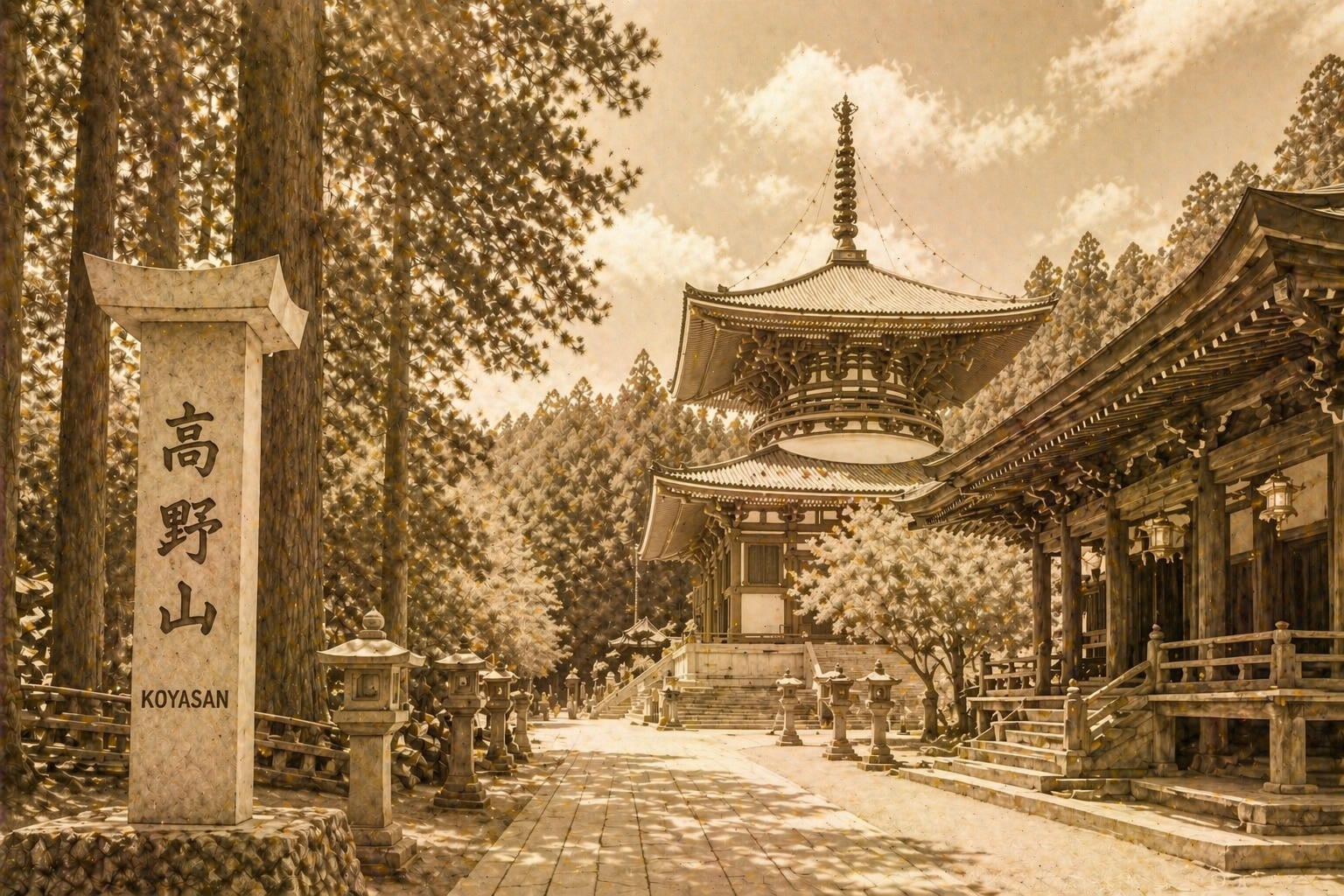
Quick Summary
- People go to Koyasan to experience a quieter mind through simple routines, not big “spiritual fireworks.”
- Many come for temple stays that make everyday actions—waking, eating, walking—feel more deliberate.
- The mountain setting offers a rare mix of forest stillness, cool air, and unhurried time.
- Visitors often seek a felt sense of reverence: incense, chanting, and spaces designed for attention.
- A major draw is encountering Japanese views of impermanence through cemeteries, memorials, and quiet reflection.
- Food, lodging, and etiquette can become part of the experience: simplicity, restraint, and care.
- Most leave with something practical: a calmer pace they can bring back to ordinary life.
Introduction
If you’re trying to figure out what people actually go to Koyasan to experience, the confusing part is that it’s not one “attraction” you can summarize in a sentence—it’s a mood, a rhythm, and a kind of attention that the place quietly trains in you. At Gassho, we focus on how contemplative places shape real, lived experience rather than selling a fantasy.
Koyasan (Mount Kōya) is often described with words like sacred, historic, or spiritual, but those labels can feel vague until you’re there. What tends to stand out is how the environment reduces noise—literal noise and mental noise—so you can notice what your mind does when it isn’t constantly being fed new stimulation.
Some visitors arrive with clear intentions: a temple stay, morning services, a walk through cedar forests, time at Okunoin. Others come with a simple wish to slow down. Either way, Koyasan tends to meet you at the level of your attention: what you’re willing to see, feel, and stop rushing past.
A Simple Lens for Understanding Koyasan
A helpful way to understand what people go to Koyasan to experience is to treat it as a place that changes your relationship with time. Not by forcing you to “believe” anything, but by surrounding you with cues that invite slower perception: long paths, quiet halls, repetitive sounds, and routines that don’t care about your productivity.
In everyday life, attention is constantly pulled outward—notifications, schedules, errands, social roles. Koyasan gently reverses that direction. The setting encourages attention to settle inward and downward: into breath, footsteps, temperature, hunger, fatigue, gratitude, and the small emotional reactions that usually get covered up by busyness.
This is why many people describe Koyasan as “peaceful” even when they’re not doing anything special. The peace isn’t a prize you earn; it’s what can appear when fewer things are demanding your mind at once. The place functions like a mirror: you notice what you carry, because there’s less to distract you from it.
Seen this way, the core experience isn’t about collecting sacred sites. It’s about being placed in conditions where ordinary actions—washing your hands, removing shoes, eating quietly, walking under trees—become a training in presence.
GASSHO
Ask and learn about Buddhism in daily life.
GASSHO is a Buddhist community app where you can learn Buddhist teachings and ask questions to the head priest of Kongosanmaiin Temple on Mount Koya.
What the Experience Feels Like in Real Time
For many visitors, the first noticeable shift is how quickly the mind tries to fill silence. You might catch yourself planning, narrating, or reaching for your phone—then realizing there’s nothing urgent to respond to. That moment of noticing is part of the experience people come for, even if they don’t name it that way.
Walking through Koyasan often becomes a practice in unhurried movement. When the path is long and the air is cool, you naturally start paying attention to your pace. You may notice impatience arise (“Are we there yet?”) and then soften as the body settles into a steadier rhythm.
In temple spaces, the atmosphere tends to narrow your focus. Incense, wooden floors, low light, and chanting can make the mind less scattered. You might observe how quickly you judge what’s happening—interesting, boring, unfamiliar, moving—and how those judgments change when you simply keep watching.
Meals and lodging can bring up a different kind of awareness. Simple food, quiet dining, and clear etiquette highlight habits you may not notice at home: rushing, multitasking, needing entertainment, or feeling awkward in silence. The experience isn’t about “doing it right”; it’s about seeing your patterns without immediately defending them.
Many people go to Koyasan to experience a direct encounter with impermanence. In places associated with memorials and graves, the mind often becomes more honest. You may feel tenderness, grief, gratitude, or a strange neutrality—then notice how quickly the mind tries to turn those feelings into a story.
Even small sensory details can become surprisingly vivid: the sound of wind in cedars, the weight of damp air, the texture of stone steps, the way dusk changes the color of the forest. When attention is less fragmented, the world feels less “background,” and more like something you’re actually inside.
By the end of a day, what many people report is not a dramatic transformation but a quieter baseline. Thoughts still appear, emotions still move, but there’s often a little more space around them—enough to choose a response rather than being pushed by momentum.
Common Misunderstandings Visitors Bring
One common misunderstanding is expecting Koyasan to deliver a guaranteed “spiritual experience” on schedule. In reality, the place offers conditions—silence, ritual, nature, simplicity—but your mind may still be restless, skeptical, or distracted. That doesn’t mean you failed; it means you met yourself honestly.
Another misunderstanding is treating the visit like a checklist: see the famous spots, take the photos, move on. There’s nothing wrong with sightseeing, but people who feel most satisfied often give themselves time to linger. Koyasan tends to reward slowness more than efficiency.
Some visitors assume they must understand every chant, symbol, or custom for the trip to “count.” But the experience many people come for is simpler: learning how to be respectful, quiet, and receptive in a place designed for contemplation. Understanding can deepen later; presence is available immediately.
Finally, it’s easy to romanticize Koyasan as an escape from life. A more grounded view is that it’s a temporary change of environment that reveals how you relate to life. The point isn’t to stay on the mountain forever; it’s to see what you can carry back down.
Why People Find Koyasan Worth Bringing Into Daily Life
What people go to Koyasan to experience often becomes useful precisely because it’s ordinary: waking up without rushing, eating without distraction, walking without needing to optimize the route. These are small skills, but they change how stress accumulates.
Koyasan also offers a lived lesson in reverence without drama. When you repeatedly bow, remove shoes, lower your voice, and move carefully through shared spaces, you practice respect as a bodily habit. Back home, that can translate into more patience with people, more care with your surroundings, and fewer impulsive reactions.
Many visitors leave with a clearer sense of what “enough” feels like. Not as a moral rule, but as a felt experience: enough noise, enough consumption, enough speed. That sense of enough can guide choices long after the trip—how you schedule your days, how you use your phone, how you rest.
And for those who touched grief or gratitude while there, Koyasan can normalize reflection on mortality in a gentle way. That reflection doesn’t have to be heavy; it can make everyday moments more vivid and relationships less taken for granted.
Conclusion
People go to Koyasan to experience a different quality of attention: quieter, less performative, less rushed. The mountain doesn’t demand that you adopt a new identity or chase a peak moment; it simply offers conditions where you can notice your mind, soften your pace, and feel what simplicity does to the heart.
If you plan your visit around time—time to walk, time to sit, time to be silent—you’ll likely understand the appeal quickly. Koyasan is less about what you “see” and more about what you finally stop missing.
Ask a Buddhist priest
Have a question about Buddhism?
In the GASSHO app, you can ask questions about Buddhist teachings, daily concerns, and how to understand Buddhism in everyday life.
Frequently Asked Questions
- FAQ 1: What do people go to Koyasan to experience, in the simplest terms?
- FAQ 2: Do people go to Koyasan mainly for temples or for nature?
- FAQ 3: What kind of “spiritual experience” do people expect at Koyasan?
- FAQ 4: Is staying overnight part of what people go to Koyasan to experience?
- FAQ 5: What do people go to Koyasan to experience at morning services?
- FAQ 6: Do people go to Koyasan to experience Japanese views of impermanence?
- FAQ 7: What do people go to Koyasan to experience at Okunoin?
- FAQ 8: Is Koyasan more about learning or about feeling?
- FAQ 9: What do people go to Koyasan to experience if they are not religious?
- FAQ 10: Do people go to Koyasan to experience silence, and is it actually silent?
- FAQ 11: What do people go to Koyasan to experience through food and meals?
- FAQ 12: Do people go to Koyasan to experience a break from technology and busy schedules?
- FAQ 13: What do people go to Koyasan to experience emotionally?
- FAQ 14: Do people go to Koyasan to experience culture and history as well as contemplation?
- FAQ 15: What do people go to Koyasan to experience that they can bring back home?
FAQ 1: What do people go to Koyasan to experience, in the simplest terms?
Answer: Most people go to experience quiet—quiet surroundings, quiet routines, and the way that quiet changes their attention and mood.
Takeaway: Koyasan is often about a calmer pace more than a single “must-see.”
FAQ 2: Do people go to Koyasan mainly for temples or for nature?
Answer: Usually for the combination: temple spaces create a contemplative atmosphere, and the mountain forest supports that same inward, unhurried feeling.
Takeaway: The experience is the blend of built ritual spaces and natural stillness.
FAQ 3: What kind of “spiritual experience” do people expect at Koyasan?
Answer: Many expect something dramatic, but what people often actually experience is subtle: steadier attention, softened reactivity, and a sense of reverence created by sound, scent, and routine.
Takeaway: The most common experience is quiet clarity, not spectacle.
FAQ 4: Is staying overnight part of what people go to Koyasan to experience?
Answer: Yes. An overnight stay often deepens the experience because mornings and evenings are when the mountain feels most still and routines feel most immersive.
Takeaway: If you can, staying overnight helps you feel Koyasan’s rhythm.
FAQ 5: What do people go to Koyasan to experience at morning services?
Answer: People often go to experience the atmosphere of chanting, incense, and early-hour quiet, which naturally gathers attention and reduces mental chatter.
Takeaway: Morning services are less about understanding words and more about feeling the tone.
FAQ 6: Do people go to Koyasan to experience Japanese views of impermanence?
Answer: Many do, especially through time spent in memorial spaces and cemeteries, where reflection on life and death becomes more direct and less abstract.
Takeaway: Koyasan often makes impermanence feel real, not philosophical.
FAQ 7: What do people go to Koyasan to experience at Okunoin?
Answer: People commonly go to experience a deep, hushed atmosphere—long forest paths, lantern-lit areas, and a sense of respect that naturally slows the mind.
Takeaway: Okunoin is often experienced as quiet reverence rather than a “tour stop.”
FAQ 8: Is Koyasan more about learning or about feeling?
Answer: For many visitors, it’s primarily felt: the body responds to silence, routine, and environment before the intellect catches up with explanations.
Takeaway: You don’t need deep background knowledge to have a meaningful experience.
FAQ 9: What do people go to Koyasan to experience if they are not religious?
Answer: Non-religious visitors often go to experience calm, beauty, and a structured simplicity—an environment that supports reflection without requiring belief.
Takeaway: Koyasan can be contemplative even for secular travelers.
FAQ 10: Do people go to Koyasan to experience silence, and is it actually silent?
Answer: Yes, many go specifically for silence, though it’s not absolute—there are other visitors, bells, footsteps, and wind. The key is reduced noise and fewer demands on attention.
Takeaway: The “silence” is a quieter mental environment, not total soundlessness.
FAQ 11: What do people go to Koyasan to experience through food and meals?
Answer: People often experience simplicity and mindfulness around eating: fewer distractions, more appreciation of small flavors, and a calmer pace at the table.
Takeaway: Meals can become part of the practice of slowing down.
FAQ 12: Do people go to Koyasan to experience a break from technology and busy schedules?
Answer: Many do. Even if you keep your phone, the environment makes constant checking feel less rewarding, which can reset your sense of urgency.
Takeaway: Koyasan often supports a natural “digital downshift.”
FAQ 13: What do people go to Koyasan to experience emotionally?
Answer: Common emotional experiences include relief, tenderness, quiet gratitude, and sometimes unexpected sadness—often because the mind has space to feel what it usually postpones.
Takeaway: Emotional honesty is a frequent, normal part of the visit.
FAQ 14: Do people go to Koyasan to experience culture and history as well as contemplation?
Answer: Yes. Many visitors experience contemplation through cultural forms—architecture, etiquette, ritual sounds, and preserved spaces that encourage careful attention.
Takeaway: Culture and contemplation often arrive together at Koyasan.
FAQ 15: What do people go to Koyasan to experience that they can bring back home?
Answer: People often bring back a felt memory of slower pacing—walking more deliberately, eating with fewer distractions, and noticing thoughts without immediately reacting.
Takeaway: The most lasting experience is a practical shift in attention and pace.