



What Digital Restlessness Has in Common With Craving
Quick Summary
- Digital restlessness and craving share the same engine: a felt sense that “this moment isn’t enough.”
- Both run on anticipation more than satisfaction, so relief is brief and the urge returns quickly.
- The common pattern is grasping at stimulation to manage discomfort, boredom, uncertainty, or loneliness.
- They narrow attention, making it harder to stay with one task, one conversation, or one emotion.
- Seeing the urge clearly (without judging it) creates space to choose a different response.
- Small “micro-pauses” interrupt the loop more effectively than big, dramatic detox plans.
- The goal isn’t to hate technology or desire—it’s to relate to wanting with more honesty and ease.
Introduction
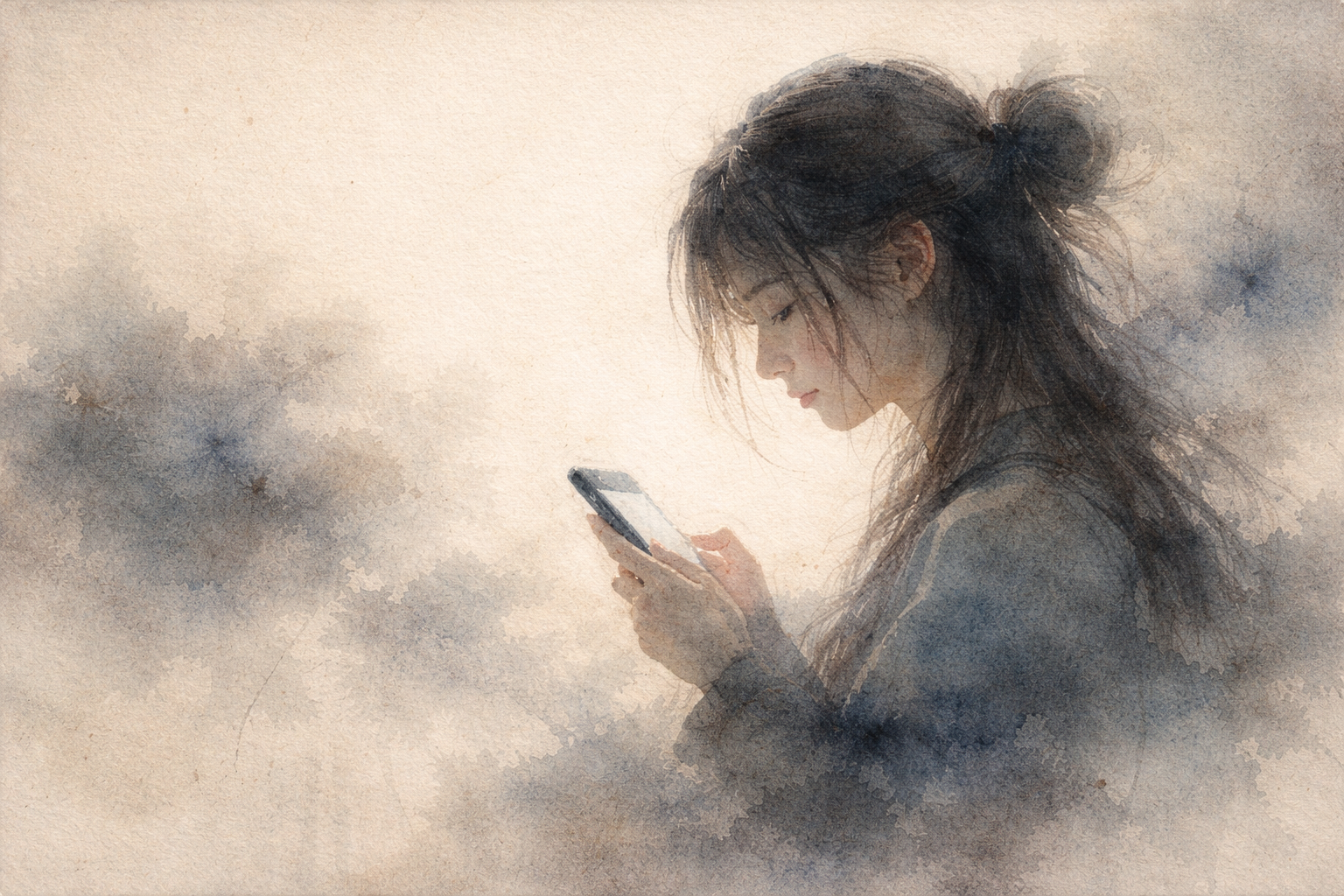
You pick up your phone for a second, and somehow you’re ten minutes deep—refreshing, switching apps, chasing a feeling you can’t quite name, then putting it down with a faint sense of being unsatisfied. That “itch” isn’t just a bad habit or weak willpower; it’s the same basic movement as craving: the mind reaching outward to fix an inward discomfort. At Gassho, we write about everyday Buddhist psychology in plain language, grounded in lived experience rather than theory.
When people talk about craving, it can sound dramatic—like addiction, greed, or extreme desire. Digital restlessness can seem smaller and more normal: checking messages, scanning headlines, tapping through short videos. But the similarity is not in the object (a phone versus something else); it’s in the inner mechanism: a quick tightening around “I need something else right now.”
Once you start noticing that mechanism, the situation becomes less mysterious. You can recognize the moment the urge forms, how it recruits a story (“just one more check”), and how it promises relief. That recognition doesn’t require you to become anti-tech or to force yourself into rigid rules. It simply gives you a clearer choice point.
A Clear Lens: The Shared Mechanics of Wanting
A helpful way to understand what digital restlessness has in common with craving is to treat both as a process rather than a moral problem. The process often begins with a subtle discomfort: boredom, uncertainty, social tension, fatigue, or the vague pressure of “I should be doing something.” The mind then looks for an object that seems like it will change the feeling quickly.
Craving isn’t only about pleasure; it’s also about control. It tries to manage experience by grabbing something predictable: a new post, a new message, a new piece of information, a new hit of novelty. Digital environments are especially good at offering endless “next” options, so the mind’s grasping movement gets reinforced again and again.
Another shared feature is that the promise is stronger than the payoff. The anticipation of relief—“this will settle me”—creates momentum. But the relief is usually brief, because the underlying discomfort wasn’t actually met; it was covered over. So the system resets quickly, and the urge returns with a slightly sharper edge.
Seen this way, the point isn’t to eliminate desire or to shame yourself for checking your phone. The point is to recognize the grasping reflex as it happens, and to notice what it’s trying to do for you. That recognition is already a loosening.
GASSHO
Ask and learn about Buddhism in daily life.
GASSHO is a Buddhist community app where you can learn Buddhist teachings and ask questions to the head priest of Kongosanmaiin Temple on Mount Koya.
How the Loop Feels in Ordinary Moments
Digital restlessness often shows up as a tiny inability to stay. You open a tab, then another, then another, not because you truly decided to, but because attention keeps slipping toward the next stimulus. The body may feel slightly forward-leaning, the breath a bit shallow, the mind scanning for something that “clicks.”
Craving has a similar signature: a sense of incompleteness paired with urgency. It can feel like “I’ll be okay once I see what’s new,” or “I can’t relax until I check.” The content varies, but the inner posture is consistent—experience is treated as insufficient, and the next thing is treated as the solution.
In a quiet moment—waiting for water to boil, standing in line, sitting down at your desk—there can be a brief encounter with raw feeling: boredom, loneliness, uncertainty, or simple tiredness. The phone offers a fast exit. The craving isn’t necessarily for the phone; it’s for not having to feel what’s here.
Sometimes the loop is social rather than informational. You check for replies, likes, or read receipts. The mind tries to settle a question: “Am I included? Am I okay? Did I miss something?” That’s still craving in the sense of reaching for reassurance as a way to stabilize the self-image.
Other times it’s productivity-flavored. You bounce between tools, notes, and messages, telling yourself you’re being efficient. But underneath, there’s a subtle avoidance of the one task that requires sustained attention and the discomfort of not knowing the outcome yet. The restlessness is a way to keep moving so you don’t have to meet uncertainty directly.
What’s striking is how quickly the mind forgets the original intention. You pick up the phone to check one thing, then you’re pulled by suggestions, notifications, and the simple availability of more. Craving works the same way: it narrows the field of attention until the next hit feels like the only reasonable option.
When you do notice it, the most useful moment is often right before the action. There’s a tiny gap where you can feel the urge as sensation—tightness, heat, buzzing, impatience—without immediately obeying it. Even a two-breath pause can reveal: “This is craving energy. It’s not a command.”
Common Misreadings That Keep the Pattern Going
One misunderstanding is thinking the problem is the phone itself. Devices and apps can amplify restlessness, but the deeper issue is the learned reflex to escape discomfort through stimulation. If you only fight the object, the same craving will simply migrate to something else—news, food, shopping, overworking, or constant planning.
Another misunderstanding is treating craving as a personal flaw. When you frame it as “I’m weak,” you add shame on top of restlessness. Shame is also uncomfortable, which then increases the urge to distract yourself. A more workable frame is: “This is a human nervous system seeking relief in a high-stimulation environment.”
It’s also easy to assume that the answer is total suppression: never check, never want, never enjoy. But suppression often makes craving louder, because it turns wanting into a forbidden object. A calmer approach is to practice seeing the urge clearly, letting it crest and pass sometimes, and choosing consciously other times.
Finally, many people miss the role of the body. Digital restlessness can look like a mental issue, but it’s often a physiological state: fatigue, stress, and overstimulation. When the body is dysregulated, the mind reaches for quick dopamine and novelty. Addressing sleep, movement, and pauses isn’t “self-help fluff”; it changes the conditions that feed craving.
Why This Connection Changes Your Day
When you see digital restlessness as a form of craving, you stop negotiating with the content. The question shifts from “What should I check?” to “What am I trying not to feel right now?” That shift is practical: it helps you meet the real need instead of endlessly feeding the substitute.
This matters for attention. Craving fragments the mind into “next, next, next,” which makes deep work, reading, and listening feel unusually hard. Not because you’re incapable, but because the nervous system has been trained to expect frequent reward. Recognizing the craving loop lets you rebuild steadiness in small, realistic steps.
This also matters for relationships. Digital restlessness can show up as partial presence—half listening, half scanning. When you notice the craving impulse mid-conversation, you can name it internally (“urge to check”), soften the body, and return to the person in front of you. That return is a form of care.
And it matters for self-trust. Each time you notice an urge and choose deliberately—whether you check or not—you strengthen the sense that you’re not being dragged around by impulses. The aim isn’t rigid control; it’s a more honest, less compulsive relationship with wanting.
If you want a simple experiment, try this: the next time you reach for your phone, pause for two breaths and ask, “What do I think this will give me?” Then check whether it actually delivers. That gentle reality-check is often enough to loosen the spell.
Conclusion
What digital restlessness has in common with craving is the same inner move: a quick reach for “something else” to manage what’s happening now. The object changes—notifications, feeds, messages—but the pattern stays recognizable: anticipation, grasping, brief relief, and return.
When you learn to spot the pattern in real time, you don’t need to demonize technology or yourself. You can meet the underlying discomfort with more direct care: a pause, a breath, a clearer intention, a moment of honest feeling. That’s where freedom starts to look ordinary and doable.
Ask a Buddhist priest
Have a question about Buddhism?
In the GASSHO app, you can ask questions about Buddhist teachings, daily concerns, and how to understand Buddhism in everyday life.
Frequently Asked Questions
- FAQ 1: What does digital restlessness have in common with craving, in plain terms?
- FAQ 2: Is digital restlessness basically the same thing as craving?
- FAQ 3: Why does checking my phone feel urgent in the same way craving feels urgent?
- FAQ 4: What emotions are digital restlessness and craving often trying to avoid?
- FAQ 5: How can I tell the difference between a practical check and craving-driven digital restlessness?
- FAQ 6: What is the “brief relief” effect that digital restlessness shares with craving?
- FAQ 7: Does digital restlessness always mean I’m craving pleasure?
- FAQ 8: What bodily signs show that digital restlessness is acting like craving?
- FAQ 9: Why does digital restlessness keep returning even after I get new information?
- FAQ 10: How is “doomscrolling” related to what digital restlessness has in common with craving?
- FAQ 11: What’s a simple way to interrupt digital restlessness as craving in the moment?
- FAQ 12: Is it craving if I’m checking messages because I’m lonely?
- FAQ 13: What does “grasping” mean when talking about digital restlessness and craving?
- FAQ 14: Can I enjoy digital content without feeding the same craving that drives digital restlessness?
- FAQ 15: What is the most important insight about what digital restlessness has in common with craving?
FAQ 1: What does digital restlessness have in common with craving, in plain terms?
Answer: Both are the mind’s reflex to reach for “something else” because the present moment feels slightly uncomfortable, incomplete, or uncertain. The shared mechanism is grasping for quick relief through stimulation, reassurance, or novelty.
Takeaway: The similarity is the inner urge to escape discomfort, not the specific screen activity.
FAQ 2: Is digital restlessness basically the same thing as craving?
Answer: Digital restlessness is often a modern expression of craving: the same wanting-energy, amplified by endless content and easy access. They’re not identical in every case, but they commonly share the same cycle of urge, action, brief relief, and renewed urge.
Takeaway: Digital restlessness frequently runs on the same craving loop.
FAQ 3: Why does checking my phone feel urgent in the same way craving feels urgent?
Answer: Urgency comes from the belief that relief is just one action away: “If I check, I’ll feel better.” That belief tightens attention and makes the urge feel time-sensitive, even when nothing truly requires immediate action.
Takeaway: Urgency is part of the craving promise, not proof that checking is necessary.
FAQ 4: What emotions are digital restlessness and craving often trying to avoid?
Answer: Common targets include boredom, loneliness, anxiety, uncertainty, self-doubt, and the discomfort of starting or finishing a task. The screen becomes a fast way to cover those feelings with input.
Takeaway: The urge often points to an unmet feeling, not a real need for more content.
FAQ 5: How can I tell the difference between a practical check and craving-driven digital restlessness?
Answer: A practical check is specific and bounded (one purpose, short duration). Craving-driven restlessness feels vague, repetitive, and hard to satisfy, often followed by “Why am I still scrolling?” or a sense of scattered attention.
Takeaway: Clear intention usually signals usefulness; vagueness and compulsion often signal craving.
FAQ 6: What is the “brief relief” effect that digital restlessness shares with craving?
Answer: Both can deliver a short drop in tension—like a small exhale—because attention shifts away from discomfort. But the underlying condition remains, so the mind quickly seeks another hit of novelty or reassurance.
Takeaway: If relief fades fast, you’re likely seeing the craving cycle at work.
FAQ 7: Does digital restlessness always mean I’m craving pleasure?
Answer: Not always. Often it’s craving for certainty, connection, validation, or control—states that feel stabilizing. Pleasure can be part of it, but the deeper pull is frequently “make this feeling go away.”
Takeaway: Craving isn’t only about pleasure; it’s also about managing inner discomfort.
FAQ 8: What bodily signs show that digital restlessness is acting like craving?
Answer: People often notice leaning forward, tight jaw, shallow breathing, restless hands, and a “buzzing” impatience. These cues reflect activation in the nervous system that pushes for quick resolution through checking or scrolling.
Takeaway: The body often reveals craving before the mind admits it.
FAQ 9: Why does digital restlessness keep returning even after I get new information?
Answer: Because the loop isn’t primarily about information; it’s about regulating feeling. New information provides novelty, but it rarely addresses the underlying unease, so the mind looks for another update to recreate the momentary relief.
Takeaway: The return of the urge suggests the need is emotional, not informational.
FAQ 10: How is “doomscrolling” related to what digital restlessness has in common with craving?
Answer: Doomscrolling can be craving in a tense form: the mind seeks certainty and control by consuming more updates, even when the content increases anxiety. The grasping continues because “maybe the next piece will settle me.”
Takeaway: Even stressful scrolling can be craving for certainty and closure.
FAQ 11: What’s a simple way to interrupt digital restlessness as craving in the moment?
Answer: Pause for two breaths before unlocking or switching apps, and silently label what’s happening: “wanting” or “urge.” Then ask one question: “What am I hoping this will fix?” Decide from there, not from momentum.
Takeaway: A tiny pause plus honest naming can break the automatic craving response.
FAQ 12: Is it craving if I’m checking messages because I’m lonely?
Answer: It can be. The shared element is reaching for a quick external solution to an internal ache. The loneliness itself is valid; the craving pattern appears when checking becomes repetitive, urgent, and unable to truly satisfy the need for real connection.
Takeaway: Loneliness is real; craving shows up when checking becomes the main way you try to soothe it.
FAQ 13: What does “grasping” mean when talking about digital restlessness and craving?
Answer: Grasping is the mental tightening that treats an object (a notification, a feed, a new post) as necessary for relief or completeness. It’s less about the object and more about the clinging attitude: “I need this now.”
Takeaway: Grasping is the clinging posture behind the scroll.
FAQ 14: Can I enjoy digital content without feeding the same craving that drives digital restlessness?
Answer: Yes. The difference is mindfulness and boundaries: choosing intentionally, staying aware of your body and mood, and stopping when satisfaction is present. Craving tends to feel compelled and unsatisfied; enjoyment tends to feel chosen and complete enough.
Takeaway: Intentional use supports enjoyment; compulsive use strengthens craving.
FAQ 15: What is the most important insight about what digital restlessness has in common with craving?
Answer: Both are attempts to regulate discomfort by reaching outward, and both become less powerful when you can feel the urge directly without immediately acting on it. The key insight is that the urge is a passing experience, not an order you must follow.
Takeaway: When you can stay with the urge for a moment, you regain choice.