



What Buddhism Teaches About Not Being Hurt by Every Situation
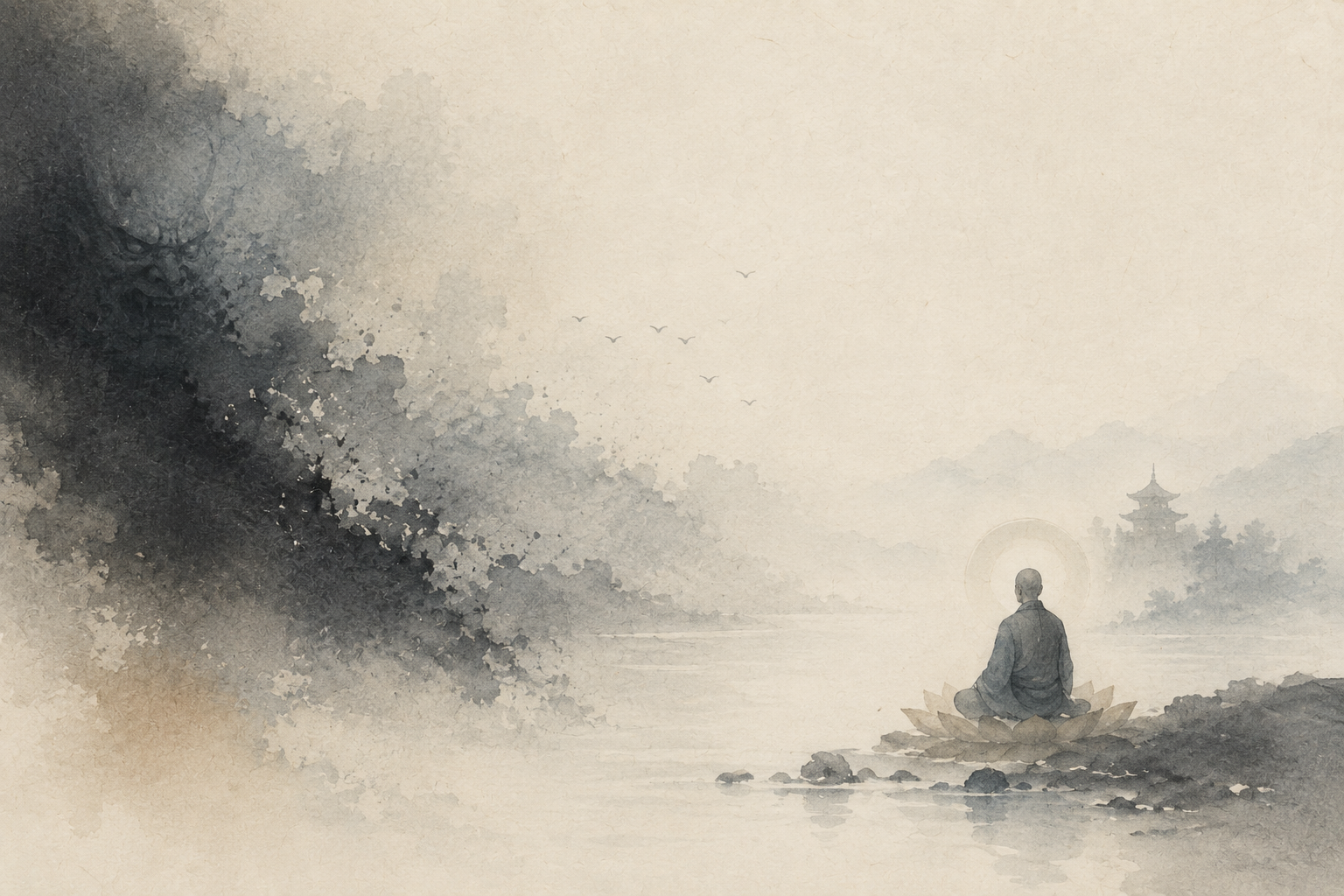
Quick Summary
- Buddhism doesn’t promise a life without pain; it points to how extra suffering gets added on top.
- Not being “hurt by every situation” often means changing your relationship to feelings, not eliminating them.
- Much of what stings comes from clinging: to control, to being right, to being liked, to a fixed self-image.
- When you can name what’s happening (“tightness,” “heat,” “story”), reactions lose some authority.
- Wise boundaries and clear speech are part of practice; acceptance is not passivity.
- Compassion includes yourself: you can be tender without being fragile.
- Small, repeatable habits—pause, breathe, feel, choose—matter more than big insights.
Introduction
Getting hurt by every situation is exhausting because it feels like you’re living without emotional skin: a comment lands like an insult, a delay feels like disrespect, a neutral look reads as rejection, and your mind treats each moment as evidence that something is wrong with you or the world. At Gassho, we write about Buddhist practice in plain language for real life, with an emphasis on what you can actually do when emotions hit.
Buddhism doesn’t ask you to become numb or “above it all.” It offers a practical way to see how pain happens, how the mind amplifies it, and how to respond without making the moment your enemy.
A Buddhist Lens on Why Things Hurt So Much
A helpful Buddhist lens is this: there’s the raw experience of life (pleasant, unpleasant, neutral), and then there’s what the mind adds—interpretation, resistance, blame, rumination, and identity. The added layer is often what makes a small sting become a lasting wound.
In this view, “not being hurt by every situation” doesn’t mean you stop feeling. It means you learn to recognize the difference between immediate sensation and the story that says, “This shouldn’t be happening,” “They shouldn’t be like that,” or “This proves I’m not okay.” When the story relaxes, the feeling can move through more naturally.
Another key idea is clinging: the mind grabs for certainty, control, approval, comfort, and a stable self-image. When reality doesn’t cooperate, the grab turns into tension. The tension is what makes ordinary friction feel personal and threatening.
So the Buddhist approach is less about winning against life and more about seeing clearly: what is actually happening right now, what I’m adding, and what response reduces harm. It’s a training in relationship—relationship to thoughts, feelings, and situations—rather than a belief you’re supposed to adopt.
GASSHO
Ask and learn about Buddhism in daily life.
GASSHO is a Buddhist community app where you can learn Buddhist teachings and ask questions to the head priest of Kongosanmaiin Temple on Mount Koya.
What It Looks Like in Everyday Moments
Someone speaks sharply to you. The first moment is simple: sound, tone, a jolt in the body. Then the mind often rushes in with a verdict: “They disrespected me,” “I’m being attacked,” “I need to defend myself.” Buddhism encourages noticing that second wave as a process, not a fact.
You might feel the body tighten—jaw, throat, chest, belly. Instead of immediately arguing with the feeling or obeying it, you can name it quietly: “tight,” “hot,” “contracting.” Naming is not a trick; it’s a way of stepping out of fusion, where emotion and identity become the same thing.
Then you notice the storyline. Maybe it’s a familiar one: “I’m always overlooked,” “People don’t care,” “I have to prove myself.” Buddhism treats these as conditioned patterns—habits built from repetition—not as your essence. Seeing “this is the old story” can be enough to reduce its grip.
In a stressful situation—traffic, a late reply, a messy house—the mind often frames discomfort as a moral problem: “This shouldn’t be happening.” The practice is to feel the unpleasantness without turning it into a courtroom. Unpleasant is allowed to be unpleasant; it doesn’t have to become a personal insult.
When you’re sensitive, you may scan for signs of rejection: a short message, a delayed invitation, a coworker’s distracted face. Buddhism invites a gentle check: “What do I actually know?” and “What am I imagining?” This isn’t self-gaslighting; it’s refusing to treat imagination as evidence.
Sometimes the most important moment is the pause before you speak. You can feel the urge to fire back, explain yourself, or shut down. That urge is not wrong; it’s protective energy. The practice is to let the energy be there and still choose a response that won’t create more regret.
Over time, you may notice a shift from “I must not feel hurt” to “Hurt is here, and I can care for it without building a whole identity around it.” The situation may still be difficult, but it stops defining you. That’s a different kind of strength: not hardening, but stabilizing.
Misunderstandings That Make People Feel Worse
One common misunderstanding is thinking Buddhism teaches you to suppress emotions. Suppression often looks calm on the outside but creates pressure inside. The Buddhist direction is closer to honest contact: feel what’s there, clearly, without feeding it with extra story.
Another misunderstanding is using “acceptance” to tolerate harm. Not being hurt by every situation is not the same as staying in unhealthy dynamics. Buddhism supports wise action: setting boundaries, leaving, speaking firmly, and protecting what needs protection—without hatred being the fuel.
People also confuse non-attachment with not caring. Non-attachment points to not clinging—especially to outcomes and identity—not to becoming indifferent. You can care deeply and still recognize that you can’t control everything, and that your worth isn’t decided by each moment.
Finally, there’s the trap of turning practice into self-criticism: “If I were better at this, I wouldn’t be hurt.” That adds a second wound. Buddhism is practical: notice what happened, learn what triggers you, and try again—without making your sensitivity into a moral failure.
Why This Teaching Changes Daily Life
When you stop being hurt by every situation, you gain time and energy back. Less mental replay means more presence for work, relationships, and rest. You don’t have to spend the whole day recovering from a five-second interaction.
It also improves communication. If you can feel the sting without instantly defending, you can ask better questions, clarify intent, and speak about impact without turning the conversation into a battle. That’s not just “being spiritual”—it’s emotional skill.
This approach supports healthier boundaries. When you’re not reacting from panic, you can choose what you will and won’t accept. Boundaries set from clarity tend to be simpler, steadier, and less punishing.
Most importantly, it changes your relationship with yourself. Instead of treating hurt as proof that you’re weak, you start treating it as a signal: something matters, something touched a tender place, something needs attention. That shift alone can make life feel less hostile.
Conclusion
What Buddhism teaches about not being hurt by every situation is not a promise of invulnerability—it’s a method for reducing the extra suffering created by clinging, resistance, and self-focused stories. You still feel what you feel, but you learn to meet it with awareness, kindness, and choice.
If you want a simple starting point, try this in the next difficult moment: notice the body, name the feeling, identify the story, and choose the smallest response that reduces harm. That’s the practice, right where you are.
Ask a Buddhist priest
Have a question about Buddhism?
In the GASSHO app, you can ask questions about Buddhist teachings, daily concerns, and how to understand Buddhism in everyday life.
Frequently Asked Questions
- FAQ 1: What does Buddhism teach about not being hurt by every situation?
- FAQ 2: Is “not being hurt” the same as being emotionally detached in Buddhism?
- FAQ 3: Why do small things hurt so much according to Buddhism?
- FAQ 4: How does Buddhism explain taking things personally?
- FAQ 5: What is a Buddhist way to handle criticism without being hurt?
- FAQ 6: Does Buddhism say my feelings are “just illusions” so I shouldn’t be hurt?
- FAQ 7: How can mindfulness help me not be hurt by every situation?
- FAQ 8: What does Buddhism say about boundaries if I’m easily hurt?
- FAQ 9: How do I stop replaying hurtful moments in my head using Buddhist teachings?
- FAQ 10: Is compassion part of not being hurt by every situation in Buddhism?
- FAQ 11: What does Buddhism teach about not needing everyone’s approval?
- FAQ 12: How can I tell the difference between healthy sensitivity and being hurt by everything?
- FAQ 13: Does Buddhism teach that I should accept mistreatment so I won’t be hurt?
- FAQ 14: What is a simple Buddhist practice I can use in the moment I feel hurt?
- FAQ 15: How long does it take to stop being hurt by every situation with Buddhist practice?
FAQ 1: What does Buddhism teach about not being hurt by every situation?
Answer: Buddhism teaches that pain is part of life, but much of our suffering comes from what the mind adds—resistance, rumination, and identity-based stories. By noticing sensations and thoughts as changing events, you can respond wisely instead of being swept away by every trigger.
Takeaway: The goal is not numbness; it’s reducing the extra suffering layered on top of pain.
FAQ 2: Is “not being hurt” the same as being emotionally detached in Buddhism?
Answer: Not exactly. Buddhism points to non-clinging, not emotional shutdown. You can feel sadness, disappointment, or embarrassment and still not build a rigid story like “This ruins everything” or “This proves I’m unworthy.”
Takeaway: Non-clinging means feelings can arise without running your whole life.
FAQ 3: Why do small things hurt so much according to Buddhism?
Answer: Small events often hook into bigger patterns: craving for approval, fear of rejection, or the need to control outcomes. Buddhism describes how clinging turns ordinary discomfort into personal threat, making minor situations feel major.
Takeaway: The sting is often less about the event and more about what it touches in you.
FAQ 4: How does Buddhism explain taking things personally?
Answer: Taking things personally is often the mind building a “me” story: “They did this to me,” “I’m being judged,” “I’m not respected.” Buddhism encourages seeing these as thoughts and interpretations, not as the full reality of the moment.
Takeaway: When the “me” story softens, situations feel less like attacks.
FAQ 5: What is a Buddhist way to handle criticism without being hurt?
Answer: First, notice the body reaction and the urge to defend. Then separate content from tone: is there anything useful in the feedback? If yes, take what helps; if no, let it pass without turning it into a verdict on your worth.
Takeaway: You can learn from criticism without letting it define you.
FAQ 6: Does Buddhism say my feelings are “just illusions” so I shouldn’t be hurt?
Answer: Buddhism doesn’t require you to dismiss feelings as unreal. It emphasizes that feelings are real experiences but impermanent and conditioned. Treating them as passing events helps you avoid making them permanent identities.
Takeaway: Feelings are valid, but they don’t have to become your whole story.
FAQ 7: How can mindfulness help me not be hurt by every situation?
Answer: Mindfulness helps you catch the moment between trigger and reaction. You notice sensation, emotion, and thought as they arise, which creates space to choose a response rather than automatically escalating the pain through rumination or harsh speech.
Takeaway: Awareness creates options, and options reduce suffering.
FAQ 8: What does Buddhism say about boundaries if I’m easily hurt?
Answer: Buddhism supports reducing harm. Boundaries can be an expression of wisdom and compassion, not anger. The key is setting them from clarity—what protects your well-being—rather than from the impulse to punish or prove something.
Takeaway: You can be kind and still be firm.
FAQ 9: How do I stop replaying hurtful moments in my head using Buddhist teachings?
Answer: Notice replay as a mental event, then return to direct experience: breath, body sensations, sounds. You can also label the process (“replaying,” “planning,” “arguing”) and gently come back, without trying to win the argument in your mind.
Takeaway: Rumination weakens when you stop feeding it attention and certainty.
FAQ 10: Is compassion part of not being hurt by every situation in Buddhism?
Answer: Yes. Compassion softens the sense of threat—toward yourself when you’re hurting, and toward others when they’re reactive. This doesn’t excuse harmful behavior; it reduces the hatred and self-blame that keep pain stuck.
Takeaway: Compassion helps pain move instead of hardening into resentment.
FAQ 11: What does Buddhism teach about not needing everyone’s approval?
Answer: Buddhism points out that approval is unstable and uncontrollable, so building your peace on it creates constant anxiety. By noticing the craving for validation as a passing urge, you can act from values and clarity rather than from fear of disapproval.
Takeaway: When approval stops being your foundation, situations lose their power to wound you.
FAQ 12: How can I tell the difference between healthy sensitivity and being hurt by everything?
Answer: Healthy sensitivity notices impact and responds appropriately. Being hurt by everything often includes rapid interpretation (“This means I’m unsafe”), strong identity conclusions (“I’m not enough”), and prolonged rumination. Buddhism helps by separating sensation from story and choosing proportionate action.
Takeaway: Sensitivity becomes steadier when it’s guided by awareness rather than assumption.
FAQ 13: Does Buddhism teach that I should accept mistreatment so I won’t be hurt?
Answer: No. Acceptance in Buddhism means seeing clearly what is happening without denial, so you can respond wisely. That response may include saying no, leaving, seeking support, or protecting yourself—without adding hatred as a second injury.
Takeaway: Clear seeing supports self-protection; it doesn’t demand endurance of harm.
FAQ 14: What is a simple Buddhist practice I can use in the moment I feel hurt?
Answer: Try a short sequence: pause, feel the body, name the emotion, notice the story, then choose one small wise action (breathe, ask a clarifying question, take a break, or speak calmly). The point is to interrupt automatic escalation.
Takeaway: A brief pause can prevent a small hurt from becoming a long conflict.
FAQ 15: How long does it take to stop being hurt by every situation with Buddhist practice?
Answer: Buddhism frames this as ongoing training rather than a finish line. You may notice changes in specific moments—less rumination, quicker recovery, kinder self-talk—without needing to become perfectly unshakable. Consistency matters more than dramatic breakthroughs.
Takeaway: Look for small reductions in reactivity and faster return to balance.