



Victory Banner Symbol in Buddhism: Meaning and Inner Victory Explained
Quick Summary
- The victory banner symbol in Buddhism points to inner victory over confusion, reactivity, and harmful habits—not victory over other people.
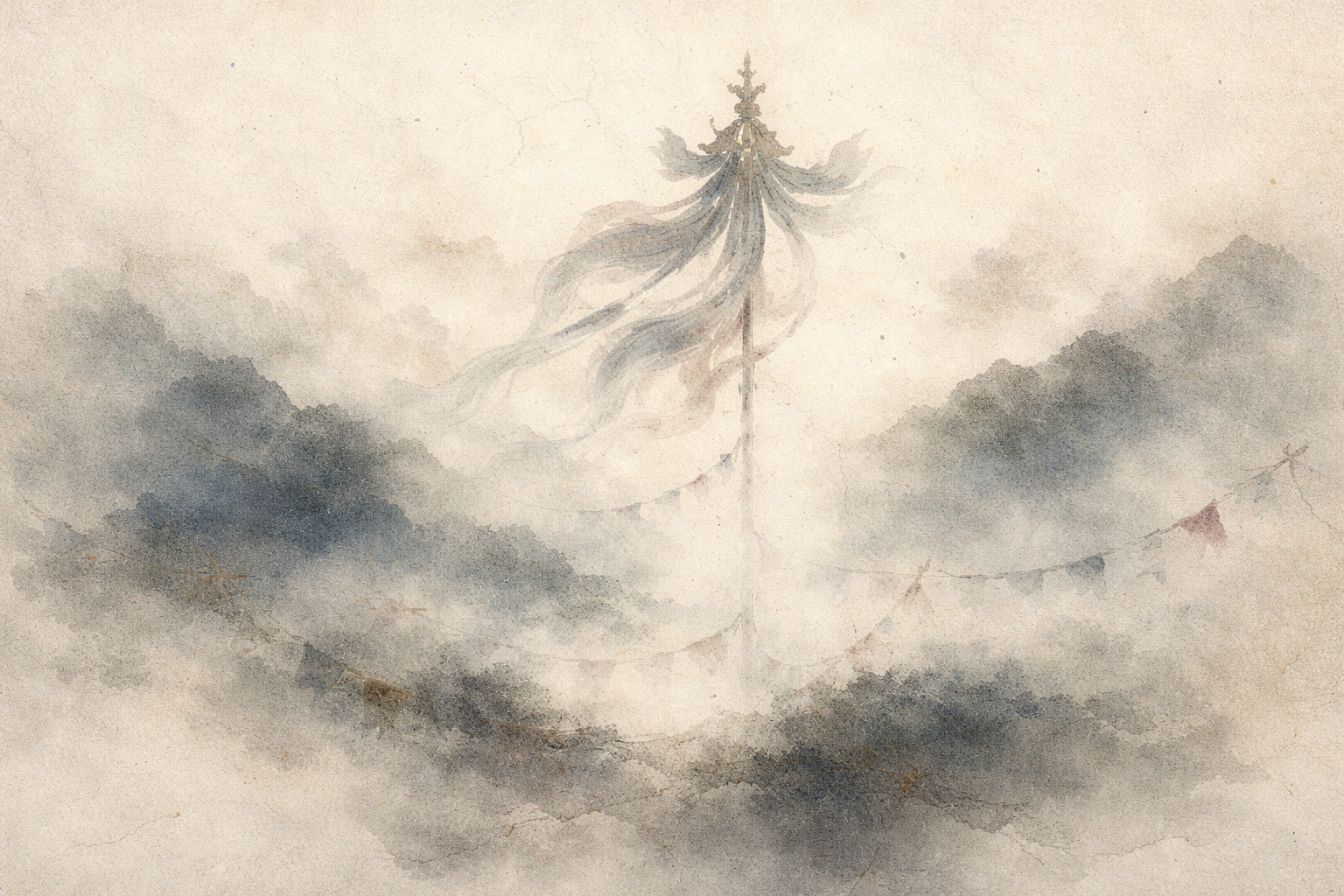
- It’s traditionally shown as a banner or standard, often richly decorated, representing the triumph of clarity and compassion.
- The symbol is commonly associated with overcoming obstacles such as fear, pride, anger, and discouragement.
- In art and ritual, it can function as a reminder: “Let wisdom lead; let the heart stay steady.”
- It’s easy to misread it as a militant emblem; in Buddhist context, it’s primarily psychological and ethical.
- You can relate to it in daily life as a cue to pause, notice, and choose a cleaner response.
- When used respectfully, it supports practice by reinforcing intention rather than promising magical protection.
Introduction
If “the victory banner symbol in Buddhism” sounds like it’s celebrating conquest, you’re not alone—and that misunderstanding can make the symbol feel off-putting or even contradictory. In Buddhist imagery, the “victory” is not about defeating rivals; it’s about defeating the inner patterns that keep suffering on repeat, and that’s a far more practical message than it first appears. At Gassho, we focus on Buddhist symbols as tools for clear seeing in everyday life.
The victory banner is often grouped among auspicious symbols, but its real value is how directly it speaks to the moment you’re tempted to react: the instant before you send the sharp message, the second you start rehearsing resentment, the familiar slide into self-judgment. It’s a visual shorthand for a simple question: “What would it look like to let wisdom win right now?”
A Clear Lens for Understanding the Victory Banner
The victory banner symbol in Buddhism can be understood as a lens for reading your own mind: it highlights the possibility of winning freedom from the forces that pull you into automatic suffering. “Victory” here is not a trophy; it’s the quiet, repeatable capacity to see what’s happening and not be pushed around by it.
As a symbol, a banner is meant to be visible from a distance. That matters. It suggests that clarity should be easy to recognize—something you can return to even when you feel far from your best self. The banner “stands” for steadiness: a reminder that you can orient toward what is wholesome, even if the mind is noisy.
In this view, the “enemy” is not a person. It’s confusion, compulsive grasping, and the reflex to turn discomfort into blame—either outward or inward. The victory banner points to the end of that reflex, not through suppression, but through understanding and a more honest relationship with experience.
Seen this way, the symbol is less about belief and more about training attention. It asks you to notice what leads to contraction and what leads to release, what hardens the heart and what softens it, what multiplies suffering and what reduces it.
GASSHO
Ask and learn about Buddhism in daily life.
GASSHO is a Buddhist community app where you can learn Buddhist teachings and ask questions to the head priest of Kongosanmaiin Temple on Mount Koya.
How the Victory Banner Shows Up in Ordinary Moments
You feel a surge of irritation in a conversation. The body tightens, the mind drafts a cutting reply, and the story forms quickly: “They’re wrong; I’m right.” The victory banner, as a lived symbol, is the pause that notices the surge before it becomes speech.
Sometimes the “battlefield” is subtler: you’re scrolling, comparing, and slowly losing your own center. The banner points to the moment you recognize the drift—when you see that attention has been captured—and you gently take it back without drama.
Other times it’s self-talk. A mistake happens and the mind goes straight to harshness: “I always do this.” The victory banner’s message isn’t forced positivity; it’s accuracy. You notice the exaggeration, feel the sting, and choose language that is firm but not cruel.
In stress, the mind often wants certainty immediately. It grabs for quick conclusions, quick fixes, quick blame. The victory banner can be felt as the willingness to stay with “not knowing yet” long enough for a wiser response to appear.
When fear shows up, it can masquerade as control. You plan, you tighten, you push. The banner’s “victory” is the small internal shift from control to care: you still act, but you act without panic driving the wheel.
Even in pleasant moments, there’s a lesson. You get praise, and the mind inflates; you get comfort, and the mind clings. The victory banner points to enjoying what’s good without turning it into a demand that it must last.
Across these situations, the symbol functions like a compass: not “be perfect,” but “return to what reduces harm.” The victory is often quiet, private, and almost unremarkable—yet it changes the tone of a day.
Common Misreadings of the Victory Banner
One common misunderstanding is taking the victory banner symbol in Buddhism as a sign of domination or religious triumphalism. Because banners are used in warfare and politics, the image can feel aggressive. In Buddhist symbolism, though, the emphasis is internal: overcoming ignorance and unhelpful mental habits.
Another misreading is treating it like a charm that guarantees protection or success. Symbols can be powerful, but their power is often psychological: they shape intention, attention, and memory. The victory banner is most meaningful when it reminds you to practice—especially when you don’t feel like it.
Some people also assume “victory” means suppressing emotions. That tends to backfire. The banner’s message is closer to: feel what you feel, but don’t let it automatically dictate your next move. Clarity isn’t numbness; it’s responsiveness without being hijacked.
Finally, it’s easy to turn the symbol into a new identity: “I’m the kind of person who has conquered my anger.” That’s just pride wearing spiritual clothing. The victory banner points away from self-congratulation and toward ongoing honesty—again and again.
Why the Victory Banner Still Matters in Daily Life
The victory banner symbol in Buddhism matters because most suffering is not created by one huge event—it’s created by small, repeated reactions. A symbol that keeps pointing you back to choice is practical. It helps you remember that you can interrupt the chain: sensation, story, impulse, action, regret.
It also reframes “winning.” In modern life, winning often means outperforming someone else, proving a point, or staying on top. The victory banner suggests a different win: fewer unnecessary conflicts, less self-sabotage, more patience with what’s hard, and more courage to do what’s right even when it’s inconvenient.
When you keep this symbol close—on a page, in a temple, in art, or simply in memory—it can act like a gentle accountability partner. Not moralistic, not shaming: just a steady reminder that your next response can be cleaner than your last.
And because the banner is a public sign, it also hints at something relational: inner victory tends to show up as outer kindness. When reactivity loosens, other people feel it. Conversations soften. Apologies come sooner. Listening becomes possible.
Conclusion
The victory banner symbol in Buddhism is best understood as a calm emblem of inner triumph: the steady overcoming of confusion, reactivity, and harmful patterns through clear seeing and ethical intention. If the word “victory” initially feels too sharp, let the symbol correct that impression—its message is not conquest, but freedom.
When you meet the banner in art or practice, you can treat it as a simple prompt: notice what’s happening, name the impulse, and choose the response that reduces harm. That is a victory worth celebrating—quietly, repeatedly, and without needing anyone else to lose.
Ask a Buddhist priest
Have a question about Buddhism?
In the GASSHO app, you can ask questions about Buddhist teachings, daily concerns, and how to understand Buddhism in everyday life.
Frequently Asked Questions
- FAQ 1: What is the victory banner symbol in Buddhism?
- FAQ 2: Why is it called a “victory” banner in Buddhism?
- FAQ 3: Is the victory banner symbol in Buddhism one of the Eight Auspicious Symbols?
- FAQ 4: What does the victory banner symbolize psychologically?
- FAQ 5: Does the victory banner symbol in Buddhism mean Buddhism is “against” something?
- FAQ 6: How is the victory banner symbol in Buddhism typically depicted?
- FAQ 7: Is the victory banner symbol in Buddhism associated with protection?
- FAQ 8: What are “obstacles” that the victory banner symbol in Buddhism refers to?
- FAQ 9: How can I relate to the victory banner symbol in Buddhism without being religious?
- FAQ 10: Is the victory banner symbol in Buddhism about suppressing emotions?
- FAQ 11: Where might I see the victory banner symbol in Buddhist settings?
- FAQ 12: What is the difference between the victory banner symbol in Buddhism and a military banner?
- FAQ 13: Can the victory banner symbol in Buddhism be used as a personal reminder at home?
- FAQ 14: Does the victory banner symbol in Buddhism imply perfection or constant calm?
- FAQ 15: What is a simple way to contemplate the victory banner symbol in Buddhism?
FAQ 1: What is the victory banner symbol in Buddhism?
Answer: The victory banner symbol in Buddhism represents the triumph of wisdom and clarity over ignorance, inner obstacles, and reactive habits that create suffering.
Takeaway: It points to inner freedom, not defeating others.
FAQ 2: Why is it called a “victory” banner in Buddhism?
Answer: It’s called “victory” because it symbolizes winning over the causes of suffering—confusion, harmful impulses, and unskillful actions—rather than winning a conflict with another person.
Takeaway: “Victory” is framed as overcoming what harms the mind and heart.
FAQ 3: Is the victory banner symbol in Buddhism one of the Eight Auspicious Symbols?
Answer: Yes. The victory banner is commonly included among the Eight Auspicious Symbols, where it signifies the victory of insight and wholesome qualities over obstacles.
Takeaway: It’s traditionally grouped with other symbols that point to awakening qualities.
FAQ 4: What does the victory banner symbolize psychologically?
Answer: Psychologically, it can be read as the capacity to pause, see clearly, and choose a response that reduces harm—especially when anger, fear, craving, or pride are pulling you toward automatic reactions.
Takeaway: The banner can function as a cue for self-regulation and clarity.
FAQ 5: Does the victory banner symbol in Buddhism mean Buddhism is “against” something?
Answer: Not in a combative sense. The “opponent” is understood as ignorance and the inner patterns that perpetuate suffering, not other religions or groups of people.
Takeaway: It’s an inward-facing symbol of transformation, not hostility.
FAQ 6: How is the victory banner symbol in Buddhism typically depicted?
Answer: It’s often shown as an ornate banner or standard, sometimes with layered fabric, finials, and decorative elements, designed to look elevated and visible—like a sign of uplifted qualities.
Takeaway: Its form emphasizes “rising above” inner confusion.
FAQ 7: Is the victory banner symbol in Buddhism associated with protection?
Answer: It can be associated with protection in the sense of guarding the mind from being overtaken by destructive states, but it’s best understood as supporting mindful intention rather than guaranteeing supernatural safety.
Takeaway: Think “protecting clarity,” not “magical shield.”
FAQ 8: What are “obstacles” that the victory banner symbol in Buddhism refers to?
Answer: “Obstacles” commonly means inner hindrances like anger, greed, jealousy, laziness, restlessness, doubt, and the tendency to cling to rigid views—anything that clouds perception and leads to harm.
Takeaway: The banner points to overcoming what blocks wise action.
FAQ 9: How can I relate to the victory banner symbol in Buddhism without being religious?
Answer: You can treat it as a universal reminder: notice reactivity, return to steadiness, and choose the response that reduces suffering for yourself and others—no formal belief required.
Takeaway: It works as a practical symbol of inner resilience.
FAQ 10: Is the victory banner symbol in Buddhism about suppressing emotions?
Answer: No. It’s more aligned with recognizing emotions clearly and not being compelled by them. The “victory” is responsiveness with awareness, not pushing feelings away.
Takeaway: The banner suggests clarity with emotion, not emotionlessness.
FAQ 11: Where might I see the victory banner symbol in Buddhist settings?
Answer: You may see it in temple art, ritual objects, paintings, carvings, textiles, or iconographic sets featuring auspicious symbols, where it serves as a visual reminder of inner triumph over confusion.
Takeaway: It commonly appears as part of a broader symbolic “language.”
FAQ 12: What is the difference between the victory banner symbol in Buddhism and a military banner?
Answer: A military banner celebrates external conquest and group dominance, while the Buddhist victory banner emphasizes inner conquest of ignorance and harmful impulses, ideally leading to less conflict and more compassion.
Takeaway: Same visual metaphor, very different target.
FAQ 13: Can the victory banner symbol in Buddhism be used as a personal reminder at home?
Answer: Yes, if used respectfully. Placing the symbol where you’ll notice it can serve as a prompt to return to patience, honesty, and non-harm—especially during stressful routines.
Takeaway: Its value is in the intention it helps you remember.
FAQ 14: Does the victory banner symbol in Buddhism imply perfection or constant calm?
Answer: No. It points to the possibility of returning to clarity repeatedly, even after getting swept up. The “victory” is the willingness to come back, not never being challenged.
Takeaway: It’s about returning, not being flawless.
FAQ 15: What is a simple way to contemplate the victory banner symbol in Buddhism?
Answer: When you notice the symbol (or remember it), ask: “What inner habit is trying to take over right now?” Then choose one small action that supports clarity—pause before speaking, soften the body, or tell the truth without aggression.
Takeaway: Use the banner as a prompt for one wise next step.