



Types of Meditation: A Practical Guide to Choosing the Best

Quick Summary
If you are exploring the types of meditation, it is easy to feel overwhelmed by how many options exist. This guide explains the most common types of meditation in a clear, practical way, helping you understand how different meditation styles work and how to choose the right one for your life. Rather than listing techniques at random, this article focuses on purpose, experience, and real-world use.
- Purpose-based overview: Understand types of meditation based on what they help with, such as stress, sleep, focus, or emotional balance.
- Buddhist foundations explained: Learn how many modern meditation practices originate from Buddhist psychology and contemplative traditions.
- Beginner-friendly guidance: Discover which types of meditation are suitable for beginners and which may require more guidance.
- Science and tradition combined: See how ancient practices align with modern psychology and neuroscience.
- Practical choice framework: Leave knowing how to choose a meditation practice that fits your current needs.
Introduction
Many people try meditation once or twice and quietly decide it is “not for them.” The problem is rarely meditation itself. More often, it is the type of meditation that does not match the person’s needs, expectations, or stage of life.
The term types of meditation suggests variety, but it also hides something important: meditation was never meant to be one single technique. Across history, cultures developed different meditation practices to address different human struggles—restlessness, fear, suffering, distraction, and the search for meaning.
In Western countries, meditation is often introduced through a single lens, such as mindfulness for stress. But when people explore the broader types of meditation, they often discover that what failed before now makes sense. Understanding these differences is the first step toward building a sustainable practice.
Why There Are So Many Types of Meditation
Meditation did not begin as a wellness trend. It developed over thousands of years as a response to very human questions: Why do we suffer? How do we relate to our thoughts? Can the mind be trained, just like the body?
Many of the meditation styles practiced today trace back to Buddhist traditions. In early Buddhism, meditation was not about escaping reality or forcing calm. It was a method of understanding the mind directly—observing how thoughts, emotions, and sensations arise and pass away. Over time, different schools emphasized different aspects of this investigation.
For example, some practices focused on concentration and stability, while others emphasized insight into impermanence, dissatisfaction, and non-self. These were not competing systems. They were complementary tools designed for different mental conditions.
As meditation spread beyond Asia, it intersected with psychology, neuroscience, and modern healthcare. Practices were adapted, simplified, and sometimes renamed. Mindfulness meditation, now widely used in stress reduction programs, is rooted in Buddhist insight practices but taught in a secular way. This blending of ancient wisdom and modern science explains why there are so many types of meditation today.
Understanding this history helps clarify an important point: different meditation types exist because human minds struggle in different ways.
Meditation for Stress and Anxiety

Stress and anxiety are among the most common reasons people explore meditation today. However, not all types of meditation are equally helpful in these situations.
Mindfulness meditation is often recommended because it trains the ability to notice thoughts and bodily sensations without reacting immediately. From a Buddhist psychology perspective, this practice helps loosen identification with anxious thoughts. Instead of thinking “I am anxious,” practitioners learn to observe that “anxiety is present.”
This perspective is not limited to Buddhism. In modern psychology and healthcare, mindfulness is widely introduced as an approach for managing stress and anxiety. The American Psychological Association explains mindfulness as a practice that can reduce emotional reactivity and support psychological well-being.
Breath-focused meditation and body scan practices also play an important role. By directing attention away from constant mental activity and back to physical experience, these practices can help calm an overactivated nervous system. The National Center for Complementary and Integrative Health describes these methods as common meditation approaches used for stress reduction.
At the same time, it is important to acknowledge limits. For some people, especially those experiencing intense anxiety, silent observation can initially feel uncomfortable. Buddhist traditions recognized this and often paired mindfulness with grounding or compassion-based practices. Meditation is not about enduring distress, but about developing awareness in a way that fits one’s condition.
Meditation for Sleep and Deep Rest
Sleep-related meditation is often misunderstood. Traditional Buddhist meditation was not designed as a sleep aid, yet its underlying principles strongly influenced many modern practices focused on rest and relaxation.
Practices commonly used before sleep include guided meditation, visualization, and yoga nidra. These approaches do not aim to sharpen awareness, but rather to gently release mental tension and allow the body to settle naturally. From a traditional perspective, such practices are considered supportive rather than insight-oriented meditation.
Buddhist teachings emphasize balance. When the mind is exhausted, clarity does not arise from effort but from rest. This view aligns with modern sleep science. Medical resources such as the Mayo Clinic explain that relaxation- and breathing-based meditation practices are often introduced as part of healthy sleep routines.
It is also worth noting that seated meditation late at night is not always ideal for beginners. Choosing the right type of meditation for sleep means respecting the body’s natural rhythms rather than forcing discipline.
Meditation for Focus, Productivity, and Mental Clarity
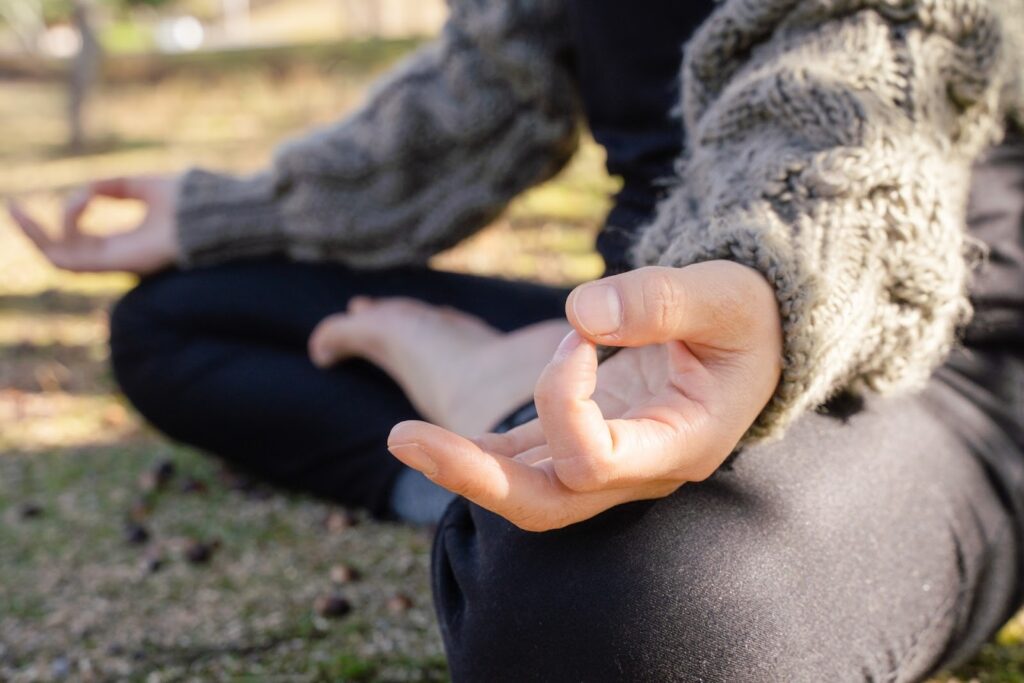
Focused attention meditation trains the mind to stay with a chosen object, such as the breath, a sound, or a repeated phrase. In Buddhist traditions, this form of practice develops mental stability, which supports deeper insight later on.
Counting the breath or silently repeating a mantra can improve attention span and reduce mental fragmentation. These practices are especially useful for people who feel scattered or mentally fatigued.
A common misconception is that losing focus means failure. In Buddhist training, distraction is expected. Each return to the object of focus is considered the practice itself. Over time, this builds patience and resilience, not perfection.
Modern productivity culture often treats focus as a tool for output. Meditation reframes focus as a relationship with attention—one that is flexible, curious, and sustainable.
Meditation for Emotional Balance and Self-Compassion
Working with emotions is central to Buddhist philosophy. Rather than suppressing emotions, many Buddhist meditation practices encourage acknowledging and observing emotional experience with care.
Loving-kindness and compassion meditation cultivate a deliberate attitude of goodwill toward oneself and others. These practices can be especially helpful for people struggling with self-criticism, emotional numbness, or relational stress.
This perspective closely overlaps with modern psychology. Approaching difficult emotions with kindness rather than judgment is widely discussed as a factor that supports emotional regulation and resilience. TheAmerican Psychological Association describes mindfulness and self-compassion as practices related to psychological well-being.
Similarly, the National Center for Complementary and Integrative Health introduces compassion- and awareness-based meditation practices as approaches associated with emotional well-being.
That said, compassion practices do not always feel comfortable at first. Resistance or skepticism can arise. This does not mean the practice is incorrect. It often indicates that long-held emotional patterns are being touched. Buddhist teachings traditionally advise approaching these practices gently, without forcing emotional change.
Meditation for Spiritual Exploration (Without the Woo)

Spiritual meditation does not have to mean belief in the supernatural. In Buddhism, spiritual practice often refers to investigating the nature of experience itself.
Zen meditation, open awareness practices, and insight-based meditation encourage observing thoughts, sensations, and perceptions without clinging. The goal is not to achieve special states but to see reality more clearly.
These practices are often misunderstood as advanced or inaccessible. In reality, they can be simple but demanding. They require patience and guidance, especially for beginners. Buddhist traditions emphasize ethical grounding and daily life awareness alongside formal practice.
For modern practitioners, spiritual meditation can mean cultivating clarity, humility, and a deeper understanding of the mind—without adopting religious identity.
Common Myths About Types of Meditation
Many people abandon meditation because of unrealistic expectations.
One common myth is that meditation means stopping thoughts. In Buddhist teachings, thoughts are not the problem; unconscious identification with them is. Another misconception is that meditation must always feel calming. Some practices reveal restlessness before they reduce it.
There is also the belief that one must choose a single type of meditation and commit forever. Historically, practitioners adapted practices based on life stage, health, and circumstances. Flexibility was considered wisdom, not inconsistency.
Understanding these myths can prevent unnecessary frustration and help meditation become a supportive part of life rather than another source of pressure.
How to Choose the Right Type of Meditation for You
Choosing among the types of meditation is less about identity and more about context.
Start by asking what you need right now. Is your primary challenge stress, fatigue, emotional difficulty, or lack of focus? Different practices support different needs. A person overwhelmed by anxiety may benefit from grounding practices before attempting insight meditation.
It is also important to consider personality and lifestyle. Some people thrive with structure; others need flexibility. Buddhist traditions offer a wide range of approaches precisely because human minds are diverse.
Finally, remember that meditation evolves. What supports you today may change in a year. In this sense, meditation is not a fixed technique but an ongoing relationship with awareness.
Conclusion

The wide range of meditation styles is not a problem to solve but a resource to draw from. Understanding the types of meditation allows you to meet your own experience with honesty rather than forcing yourself into a method that does not fit.
Buddhist traditions remind us that meditation is ultimately about understanding the mind as it is. Modern tools and apps can support this process by making different practices accessible and approachable in daily life. When meditation becomes adaptable and grounded, it stops feeling like a task and starts feeling like a skill.
Frequently Asked Questions
FAQ 1: What are the main types of meditation?
Answer: The main types of meditation can be broadly grouped by their purpose rather than by rigid labels. Common categories include mindfulness meditation for awareness and stress management, focused attention meditation for concentration, loving-kindness and compassion meditation for emotional balance, guided and visualization practices for relaxation and sleep, and insight-based meditation for understanding the nature of thoughts and experience. While these types may appear distinct, many overlap in practice. Historically, especially within Buddhist traditions, meditation methods were adapted to address different mental states rather than treated as fixed techniques. Understanding this helps beginners avoid the assumption that there is a single “correct” way to meditate.
Real Results: Research summaries provided by the National Center for Complementary and Integrative Health explain that different meditation approaches can influence stress response, attention, and emotional regulation in distinct but overlapping ways, depending on both technique and individual context.
Takeaway: Different types of meditation exist because the mind has different needs at different times.
FAQ 2: How many types of meditation come from Buddhism?
Answer: A large number of meditation practices commonly taught today originate from Buddhist traditions, even when they are presented in secular language. Mindfulness meditation, insight-based practices, loving-kindness meditation, compassion practices, and several forms of concentration meditation all have roots in early Buddhist teachings. Traditionally, these practices were not treated as isolated systems but as complementary methods designed to reduce suffering and develop mental clarity. As meditation entered Western psychology and healthcare, many of these Buddhist-derived practices were adapted, simplified, and renamed, which can make their shared origins less visible to modern practitioners.
Real Results: Educational materials from the American Psychological Association explain that many mindfulness-based interventions used in clinical and wellness settings are adaptations of Buddhist contemplative practices, reframed to fit non-religious contexts.
Takeaway: Many modern meditation techniques trace back to Buddhist psychology, even when they appear fully secular.
FAQ 3: Is mindfulness meditation a Buddhist practice?
Answer: Mindfulness meditation originates in Buddhist teachings but is not limited to religious practice. In its traditional context, mindfulness refers to clear, non-judgmental awareness of present-moment experience, including thoughts, emotions, and bodily sensations. In modern settings, mindfulness meditation is often taught without religious doctrine and used as a practical mental skill for stress reduction, emotional regulation, and improved focus. This secular adaptation retains the core attentional training while making the practice accessible to people of all belief systems.
Real Results: According to the Mayo Clinic’s mental health resources, mindfulness-based practices are widely used in healthcare settings to support stress management and emotional well-being, regardless of religious background.
Takeaway: Mindfulness meditation is rooted in Buddhism but functions today as a universal mental skill rather than a religious requirement.
FAQ 4: Which types of meditation are best for beginners?
Answer: For beginners, the best types of meditation are those that emphasize simplicity, guidance, and short practice durations. Mindfulness meditation, guided meditation, and basic breath-focused practices are commonly recommended because they do not require complex techniques or philosophical understanding. From a traditional Buddhist perspective, beginners were often encouraged to start with simple awareness of breathing to develop familiarity with attention before moving into more advanced insight practices. Starting with approachable methods helps prevent frustration and supports consistency, which is more important than technique in the early stages.
Real Results: Guidance from the National Center for Complementary and Integrative Health indicates that beginner-friendly meditation practices, especially mindfulness-based approaches, are commonly used in introductory wellness and healthcare programs due to their accessibility and low risk.
Takeaway: Beginners benefit most from simple, guided meditation practices that prioritize consistency over complexity.
FAQ 5: Can I practice more than one type of meditation?
Answer: Practicing more than one type of meditation is not only acceptable but historically common. In Buddhist traditions, practitioners often combined concentration, mindfulness, and compassion practices depending on their mental state and life circumstances. Modern meditation teaching sometimes suggests choosing a single method, but this is a simplification rather than a rule. Alternating practices can help address different needs, such as using mindfulness for daily awareness and guided meditation for rest. The key is clarity of intention rather than strict adherence to one style.
Real Results: Educational resources from the American Psychological Association describe mindfulness and compassion practices as complementary skills that can be developed together, depending on personal goals and context.
Takeaway: Meditation practices are tools, and using more than one can support balance and adaptability.
FAQ 6: Are some types of meditation more scientific than others?
Answer: Some types of meditation have been studied more extensively than others, particularly mindfulness-based practices used in healthcare and psychology. This does not mean that other meditation types are ineffective, but rather that research has focused on practices that are easier to standardize and teach in clinical settings. Many meditation techniques rooted in Buddhism emphasize subjective insight, which can be harder to measure using conventional scientific methods. Scientific validation often reflects research trends rather than the full range of meditative experience.
Real Results: The Mayo Clinic explains that mindfulness and related meditation practices are among the most researched due to their integration into stress reduction and mental health programs.
Takeaway: Scientific attention varies by meditation type, but lack of research does not equal lack of value.
FAQ 7: What is the difference between mindfulness and insight meditation
Answer: Mindfulness meditation focuses on maintaining present-moment awareness of thoughts, sensations, and emotions, while insight meditation places greater emphasis on understanding the nature of experience itself. In Buddhist traditions, mindfulness serves as a foundation that supports insight into impermanence, dissatisfaction, and non-identification with thoughts. Modern mindfulness practice often stops at awareness, whereas insight meditation encourages deeper inquiry. Both are closely related, and mindfulness is typically considered a prerequisite for insight rather than a separate path.
Real Results: Educational overviews provided by the National Center for Complementary and Integrative Health describe mindfulness as a core component of traditional contemplative practices that support greater self-awareness and emotional regulation.
Takeaway: Mindfulness builds awareness, while insight meditation deepens understanding of how the mind works.
FAQ 8: Is meditation religious if it comes from Buddhism?
Answer: Meditation practices that originate from Buddhism are not inherently religious when taught without doctrine or ritual. In traditional contexts, meditation was part of a broader ethical and philosophical system, but the techniques themselves focus on training attention and awareness. Modern secular meditation retains these mental skills while removing religious frameworks, making the practice accessible regardless of belief. This distinction allows meditation to function as a psychological and experiential practice rather than a religious commitment.
Real Results: The American Psychological Association notes that mindfulness-based practices are widely used in secular healthcare and educational settings without religious instruction.
Takeaway: Meditation techniques can be Buddhist in origin without requiring religious belief.
FAQ 9: Which types of meditation help with emotional regulation?
Answer: Meditation practices that focus on awareness and compassion are particularly effective for emotional regulation. Mindfulness meditation helps individuals notice emotional patterns without reacting automatically, while loving-kindness and compassion meditation cultivate a more supportive internal response to difficult feelings. In Buddhist psychology, these practices reduce emotional reactivity by changing the relationship to emotions rather than suppressing them. Over time, this can lead to greater emotional stability and resilience.
Real Results: Mental health resources from the Mayo Clinic explain that mindfulness-based practices are commonly used to support emotional balance and stress management in clinical settings.
Takeaway: Emotional balance comes from awareness and kindness toward experience, not control.
FAQ 10: Are there types of meditation that are not suitable for everyone?
Answer: Not all types of meditation are equally suitable for every individual or situation. Silent, insight-based practices may be challenging for people experiencing high levels of anxiety or emotional distress, especially without guidance. Buddhist traditions historically emphasized teacher-student relationships to ensure practices were adapted appropriately. Modern practitioners should consider personal mental health, comfort level, and support when choosing meditation types, rather than assuming all practices are universally beneficial.
Real Results: The National Center for Complementary and Integrative Health advises that individuals with mental health concerns should approach meditation gradually and with appropriate guidance.
Takeaway: Choosing the right meditation type means respecting individual needs and limits.
FAQ 11: How long should I practice each type of meditation?
Answer: The appropriate length of meditation depends more on consistency than on duration. For beginners, short sessions of five to ten minutes are often more effective than longer sessions that feel overwhelming. In Buddhist practice, duration was traditionally increased gradually as familiarity and stability developed. Different meditation types may also call for different lengths, with guided or relaxation practices often used for longer sessions and focused awareness practiced in shorter intervals.
Real Results: Health guidance from the Mayo Clinic suggests that even brief, regular meditation sessions can provide meaningful benefits when practiced consistently.
Takeaway: Short, regular practice matters more than long, infrequent sessions.
FAQ 12: Can meditation replace therapy or medical treatment?
Answer: Meditation should not be viewed as a replacement for therapy or medical treatment. While many types of meditation support mental well-being, they are best understood as complementary practices. Buddhist traditions emphasized personal insight alongside ethical conduct and community support, not isolation. In modern contexts, meditation is most effective when integrated with appropriate professional care rather than used as a substitute.
Real Results: The American Psychological Association emphasizes that mindfulness and meditation are often used alongside, not instead of, evidence-based mental health treatments.
Takeaway: Meditation supports well-being but works best alongside professional care.
FAQ 13: What is loving-kindness meditation in Buddhism?
Answer: Loving-kindness meditation, often referred to as metta meditation, is a traditional Buddhist practice focused on cultivating goodwill toward oneself and others. Rather than forcing positive emotions, the practice gently develops an attitude of care and non-harm. In Buddhist psychology, this practice helps counteract hostility and self-criticism, supporting emotional balance and ethical awareness. Modern adaptations preserve these intentions while using inclusive language.
Real Results: Educational resources from the National Center for Complementary and Integrative Health describe loving-kindness meditation as a practice associated with emotional well-being and stress reduction.
Takeaway: Loving-kindness meditation trains the heart as much as the mind.
FAQ 14: What is Zen meditation, and how is it different?
Answer: Zen meditation emphasizes direct experience and simplicity, often involving seated awareness without a specific object of focus. Rooted in Buddhist traditions, Zen practice encourages observing thoughts and sensations as they arise without attachment. Unlike guided or goal-oriented practices, Zen meditation can feel minimal and challenging, especially for beginners. Its purpose is not relaxation but clarity and presence.
Real Results: General mental health resources from the Mayo Clinic note that mindfulness and awareness-based practices, including Zen-influenced methods, are associated with improved attention and emotional regulation.
Takeaway: Zen meditation values direct awareness over technique or explanation.
FAQ 15: Do different cultures practice different types of meditation?
Answer: Different cultures have developed distinct meditation practices based on historical, philosophical, and social contexts. Buddhist cultures emphasized insight and ethical awareness, while other traditions focused on mantra repetition or visualization. Despite these differences, many practices share common elements such as attention training and self-observation. Modern meditation often blends these cultural influences into accessible formats.
Real Results: Overviews from the National Center for Complementary and Integrative Health describe meditation as a family of practices with roots across multiple cultural traditions.
Takeaway: Cultural diversity shaped meditation, but shared human needs unite it.
FAQ 16: Is guided meditation less effective than silent meditation?
Answer: Guided meditation is not inherently less effective than silent meditation. It serves different purposes, especially for beginners or those seeking relaxation and structure. In traditional settings, verbal guidance from a teacher was common, particularly at early stages. Effectiveness depends on the practitioner’s needs, not the presence or absence of guidance.
Real Results: Health education materials from the Mayo Clinic recognize guided meditation as a useful approach for stress management and relaxation.
Takeaway: Guidance is a support tool, not a weakness.
FAQ 17: Can meditation change how the brain works?
Answer: Meditation influences attention, emotional regulation, and stress response by training awareness and mental habits over time. Buddhist traditions described this as mental cultivation, long before neuroscience existed. Modern research explores these effects using brain imaging, though interpretations should remain cautious. Changes develop gradually through consistent practice rather than quick results.
Real Results: The National Center for Complementary and Integrative Health summarizes research suggesting meditation practices are associated with changes in brain regions related to attention and emotion.
Takeaway: Meditation trains mental habits, which can influence brain function over time.
FAQ 18: How do I know if a meditation type is working for me?
Answer: A meditation practice is working if it supports greater awareness, stability, or clarity over time, even if sessions feel challenging. Buddhist teachings caution against judging practice by short-term feelings of calm. Subtle changes in reactivity, patience, or self-understanding are often more meaningful indicators than immediate relaxation.
Real Results: Psychological education resources from the American Psychological Association emphasize long-term patterns of emotional regulation rather than immediate outcomes when evaluating mindfulness practices.
Takeaway: Progress in meditation is often quiet and gradual.
FAQ 19: Can meditation types change as my life changes?
Answer: Meditation practices are not fixed identities and can change as life circumstances evolve. Traditional Buddhist practice encouraged adaptability, adjusting methods based on age, health, and responsibilities. Modern practitioners can benefit from the same flexibility, using different meditation types during periods of stress, rest, or inquiry.
Real Results: Guidance from the National Center for Complementary and Integrative Health acknowledges that individuals may use different meditation approaches at different times depending on their needs.
Takeaway: Flexibility in practice reflects wisdom, not inconsistency.
FAQ 20: Is it normal to feel confused by the many types of meditation?
Answer: Feeling confused is a common and natural response when first encountering the wide range of meditation practices. Historically, practitioners relied on teachers and communities to navigate these options. In modern contexts, the abundance of information can feel overwhelming, but confusion often signals curiosity rather than failure. Taking time to explore gradually helps build confidence and understanding.
Real Results: Educational mental health resources from the Mayo Clinic describe confusion and uncertainty as normal early experiences when learning mindfulness and meditation practices.
Takeaway: Confusion is often the first step toward clarity in meditation.
Related Articles
- Harvard Health Publishing – Can mindfulness change your brain?
Summarizes research suggesting that regular mindfulness practice is associated with changes in brain areas related to attention, emotion regulation, and stress response. - American Psychological Association – Mindfulness meditation: A research-proven way to reduce stress
Explains how mindfulness meditation is used in psychology and healthcare, with research-based discussion of stress reduction and emotional regulation. - National Center for Complementary and Integrative Health – Meditation: In Depth
Provides an evidence-based overview of different meditation types, their potential benefits, risks, and current scientific understanding. - Start Your Day Calm with Wake-Up Meditation
Introduces the benefits of meditating in the quiet of the morning and offers simple techniques you can even practice while still in bed. - What Is Gassho? The Meaning and Practice of a Timeless Gesture
An article that explores the historical origins of Gassho, its symbolic meaning within Japanese culture, and practical ways to integrate the gesture into everyday life.