



The Meditation Mudra Explained: Meaning and Symbolism
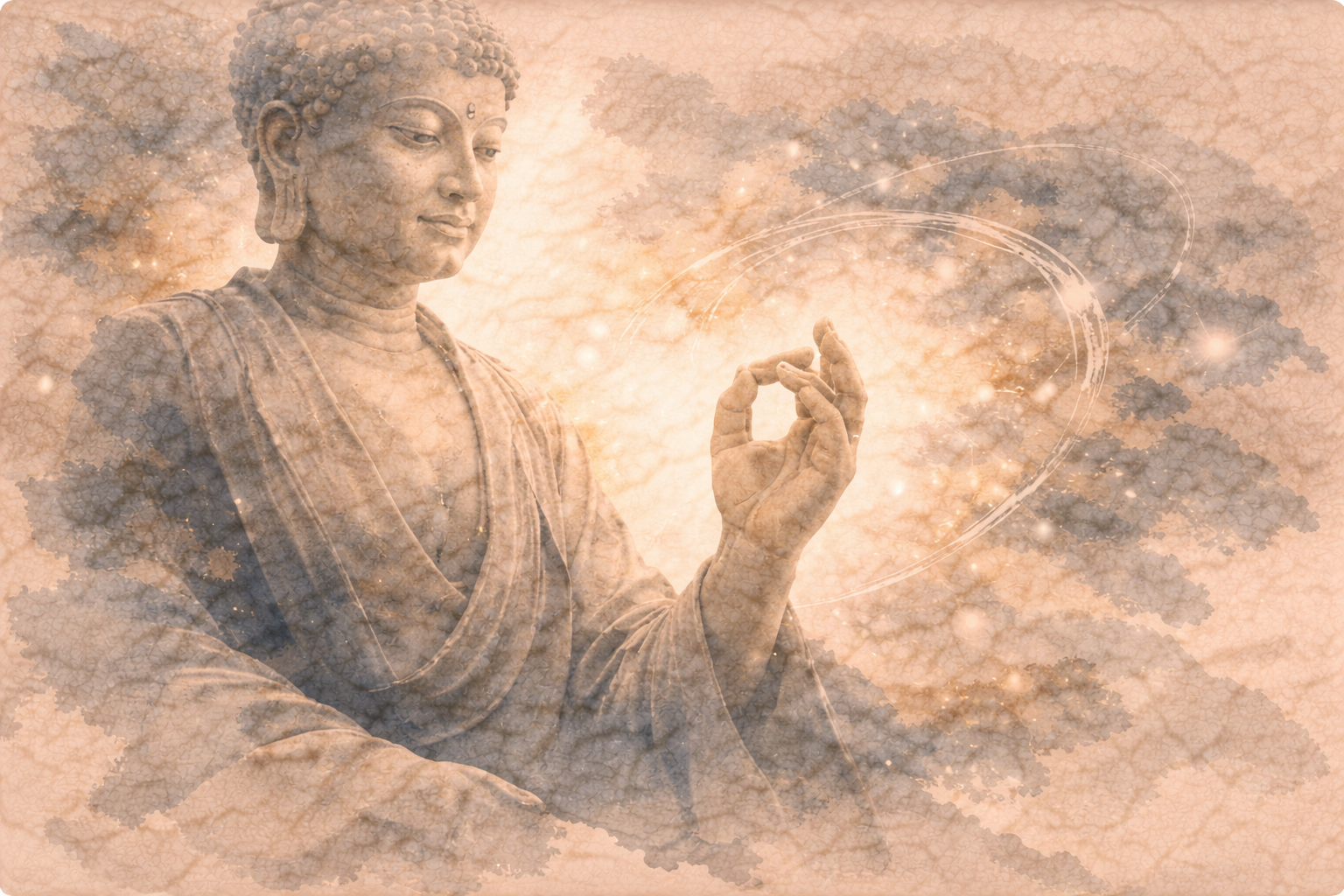
Quick Summary
- The meditation mudra is a simple hand position that supports steadiness, not a magical gesture.
- Its basic form: hands rest in the lap, one palm cradling the other, thumbs lightly touching.
- Symbolically, it suggests balance: effort and ease, clarity and softness, body and mind.
- Practically, it reduces fidgeting and gives attention a quiet “home base.”
- Thumbs are a useful feedback signal: tension lifts them; dullness collapses them.
- Small adjustments matter more than perfect form: comfort, symmetry, and relaxed shoulders.
- The point is to embody stability and openness while you sit, breath by breath.
Introduction
You’ve probably seen the meditation mudra in photos—hands folded neatly, thumbs touching—and still felt unsure: Is there a “correct” way, what does it mean, and why does it matter if your hands are just sitting there anyway? The confusion is understandable because the mudra looks ceremonial, but its real value is practical: it quietly shapes posture, attention, and mood without you having to think about it. At Gassho, we focus on simple, grounded meditation guidance you can actually use.
This is the meditation mudra explained in plain language: what it is, what it symbolizes, and how to work with it so it supports your sitting rather than becoming another thing to get “right.”
A Clear Lens for Understanding the Meditation Mudra
The meditation mudra is best understood as a physical cue that expresses a mental attitude. Instead of treating it as a belief or a badge, you can treat it like a gentle steering wheel: a small shape in the body that helps the mind settle into a stable, receptive mode.
In its most common form, the hands rest in the lap. One hand cradles the other (often left hand on top, palms up), and the thumbs meet lightly to form an oval. The shape is simple, but it creates a clear “container” in the lower abdomen area, encouraging the upper body to be upright without stiffness.
Symbolically, the mudra points to balance and wholeness. Two hands become one shape; the thumbs meet without pressing; the gesture is composed but not rigid. You can read it as a quiet reminder that meditation is not about forcing the mind into silence, but about holding experience steadily—thoughts, sensations, and emotions included.
Practically, the mudra reduces unnecessary movement. When the hands have a clear place to rest, the shoulders soften, the chest can open naturally, and attention has one less reason to scatter. The meaning and the function are not separate: the symbolism is embodied in the way the posture feels.
GASSHO
Ask and learn about Buddhism in daily life.
GASSHO is a Buddhist community app where you can learn Buddhist teachings and ask questions to the head priest of Kongosanmaiin Temple on Mount Koya.
How the Mudra Shows Up in Real Sitting
When you first place your hands in the meditation mudra, you may notice how quickly the body wants to “do something” with them. Fingers twitch, thumbs press, wrists angle awkwardly. This is useful information: it shows how the nervous system looks for control or stimulation when things get quiet.
As you let the hands be still, attention often becomes more continuous. Not because the mudra is a trick, but because it removes one small source of decision-making. The hands are not searching for a new position every minute, so the mind has fewer micro-distractions to manage.
The thumbs are especially revealing. If you find your thumbs pushing hard together, it can reflect subtle striving—trying to “make meditation happen.” If the thumbs separate or droop, it can reflect fading alertness. Neither is a failure; it’s simply feedback you can notice and respond to with a small adjustment.
You might also notice the mudra affecting the shoulders and neck. When the hands are supported by the lap, the shoulders often drop a few millimeters on their own. When the hands are held up without support, the shoulders tend to tighten. That tiny difference can change the whole tone of a sit.
Emotionally, the mudra can feel containing. On restless days, the oval shape can make the body feel “gathered,” as if attention has a place to return to. On heavy or dull days, the same shape can feel like a gentle prompt to sit upright and stay present.
In ordinary moments—an itch, a worry, a plan for later—the mudra gives you a steady reference point. You can notice the urge to fidget, feel it as sensation, and let it pass without immediately acting it out. The hands become a quiet training ground for not reacting automatically.
Over time, many people find the mudra becomes less “a thing you do” and more “where the hands naturally go” when sitting. The benefit isn’t mystical; it’s the cumulative effect of a consistent, calm posture that makes it easier to meet each moment without extra friction.
Common Misunderstandings That Create Unnecessary Tension
Mistake 1: Treating the mudra like a test. If you’re constantly checking whether it’s perfect, the mudra becomes another form of restlessness. A better approach is “stable and relaxed,” then leave it alone unless something is clearly uncomfortable.
Mistake 2: Pressing the thumbs together. The thumbs touching is often described, but “touching” doesn’t mean “pushing.” A light contact is enough—think of it as resting, not clamping.
Mistake 3: Forcing symmetry. Bodies aren’t perfectly symmetrical. If one wrist is tighter or one shoulder sits higher, aim for ease first. The mudra should support the spine, not create strain in the hands or forearms.
Mistake 4: Holding the hands too high. When the hands float above the lap, the shoulders often tense. Let the lap support the weight of the hands so the upper body can be upright without bracing.
Mistake 5: Assuming the mudra “causes” calm. The mudra supports conditions for steadiness, but it doesn’t replace practice. If the mind is busy, the mudra won’t erase that; it simply helps you relate to busyness with a bit more stability.
Why This Hand Position Matters Beyond Symbolism
The meditation mudra matters because it links intention to the body in a way that’s immediate and repeatable. You don’t have to think your way into a calmer state; you can place the hands, feel the posture settle, and let that physical steadiness support mental steadiness.
It also trains a subtle kind of honesty. The thumbs show you when you’re pushing, spacing out, or trying to control the experience. That feedback is gentle, nonverbal, and available at any moment—no analysis required.
Finally, the mudra is a small practice of non-grasping. The hands are together, but not grabbing. They’re connected, but not tense. That embodied message can carry into daily life: meeting situations with composure, responding without clenching, and staying present without needing everything to go your way.
Conclusion
The meditation mudra explained simply is this: a stable, relaxed way to place the hands that expresses balance and supports attention. If you keep it comfortable, lightly connected, and supported by the lap, it becomes less of a “technique” and more of a quiet ally—helping you sit upright, notice clearly, and let experience come and go without so much interference.
Ask a Buddhist priest
Have a question about Buddhism?
In the GASSHO app, you can ask questions about Buddhist teachings, daily concerns, and how to understand Buddhism in everyday life.
Frequently Asked Questions
- FAQ 1: What is the meditation mudra, explained in simple terms?
- FAQ 2: Why do the thumbs touch in the meditation mudra?
- FAQ 3: What does the meditation mudra symbolize?
- FAQ 4: Which hand goes on top in the meditation mudra?
- FAQ 5: Where should the hands rest when forming the meditation mudra?
- FAQ 6: Should I press my thumbs together in the meditation mudra?
- FAQ 7: What if my thumbs keep separating during the meditation mudra?
- FAQ 8: Is the meditation mudra required for meditation to “work”?
- FAQ 9: How tight or relaxed should the fingers be in the meditation mudra?
- FAQ 10: What is the “oval” shape in the meditation mudra supposed to do?
- FAQ 11: Can the meditation mudra help with restlessness?
- FAQ 12: What if the meditation mudra makes my wrists or shoulders hurt?
- FAQ 13: Is the meditation mudra mainly symbolic or mainly practical?
- FAQ 14: How do I know if I’m doing the meditation mudra correctly?
- FAQ 15: Can I use the meditation mudra outside formal sitting practice?
FAQ 1: What is the meditation mudra, explained in simple terms?
Answer: The meditation mudra is a resting hand position used during seated meditation: the hands lie in the lap, one palm gently holding the other, with the thumbs lightly touching. It’s meant to support stillness and an upright, relaxed posture.
Takeaway: It’s a practical hand placement that encourages steadiness.
FAQ 2: Why do the thumbs touch in the meditation mudra?
Answer: Lightly touching the thumbs creates a simple “closed” shape that helps the hands stay still and provides feedback: pressing often signals tension or striving, while separating can signal dullness or drifting attention.
Takeaway: Thumb contact is gentle structure and real-time feedback.
FAQ 3: What does the meditation mudra symbolize?
Answer: It commonly symbolizes balance and unity: two hands forming one stable shape, with contact that is connected but not forceful. Many people also experience it as a gesture of composure and receptivity.
Takeaway: The symbolism points to steadiness without grasping.
FAQ 4: Which hand goes on top in the meditation mudra?
Answer: A common form places the left hand on top of the right, palms up, but variations exist. If one arrangement causes wrist or shoulder strain, switch hands and choose the option that feels more stable and relaxed.
Takeaway: Use the traditional form if it fits, but prioritize ease and stability.
FAQ 5: Where should the hands rest when forming the meditation mudra?
Answer: Rest the mudra in your lap so the weight of the hands is supported. This usually allows the shoulders to soften and helps the spine stay upright without bracing.
Takeaway: Let the lap support the hands to reduce upper-body tension.
FAQ 6: Should I press my thumbs together in the meditation mudra?
Answer: No—aim for a light touch rather than pressure. Pressing can create tension in the hands, forearms, and shoulders, and it often reflects an inner sense of forcing the practice.
Takeaway: Thumbs meet softly; they don’t clamp.
FAQ 7: What if my thumbs keep separating during the meditation mudra?
Answer: If the thumbs separate repeatedly, gently reconnect them without irritation. It can be a sign of fading alertness or simply a habit of small movements; either way, treat it as a neutral cue to re-settle.
Takeaway: Reconnect calmly; use it as a reminder to wake up gently.
FAQ 8: Is the meditation mudra required for meditation to “work”?
Answer: No. Meditation can be practiced with many hand positions. The meditation mudra is helpful because it reduces fidgeting and supports a composed posture, but it’s not a requirement or a guarantee of a particular state.
Takeaway: Helpful, not mandatory.
FAQ 9: How tight or relaxed should the fingers be in the meditation mudra?
Answer: Keep the fingers naturally curved and relaxed, with the top hand gently cradling the lower hand. If you feel gripping, numbness, or strain, soften the hands and adjust the angle of the wrists.
Takeaway: Natural curve and softness beat “perfect” shaping.
FAQ 10: What is the “oval” shape in the meditation mudra supposed to do?
Answer: The oval created by the hands and thumbs provides gentle structure: it helps the hands stay still, supports a centered posture, and offers a simple reference point for noticing tension or drifting attention.
Takeaway: The shape is a stable container for stillness and awareness.
FAQ 11: Can the meditation mudra help with restlessness?
Answer: It can help indirectly by giving the hands a clear, consistent place to rest, which reduces small movements that feed agitation. It won’t eliminate restlessness, but it can make restlessness easier to observe without acting it out.
Takeaway: It supports steadiness, which makes restlessness more workable.
FAQ 12: What if the meditation mudra makes my wrists or shoulders hurt?
Answer: Pain is a sign to adjust. Lower the hands so they’re fully supported by the lap, soften the elbows, and reduce thumb pressure. If needed, try reversing which hand is on top or slightly changing the hand angle until strain eases.
Takeaway: Comfort and support come first; adjust the form to your body.
FAQ 13: Is the meditation mudra mainly symbolic or mainly practical?
Answer: It’s both, but its symbolism is most useful when it’s felt physically. The gesture embodies balance and non-grasping while also providing a stable, low-effort way to keep the hands still and the posture settled.
Takeaway: The meaning and the function reinforce each other.
FAQ 14: How do I know if I’m doing the meditation mudra correctly?
Answer: A good sign is that it feels stable, relaxed, and sustainable: hands supported in the lap, shoulders soft, thumbs lightly touching without strain. If you can forget about your hands for a while, it’s probably “correct enough.”
Takeaway: Correct means stable and relaxed, not rigidly perfect.
FAQ 15: Can I use the meditation mudra outside formal sitting practice?
Answer: Yes. You can briefly form the meditation mudra while seated in a chair, waiting, or pausing before a difficult conversation. It can act as a quick reminder of steadiness and non-reactivity, even for a few breaths.
Takeaway: The mudra can be a simple cue for composure in everyday moments.