



What Are the Six Realms in Buddhism? A Simple Guide for Beginners
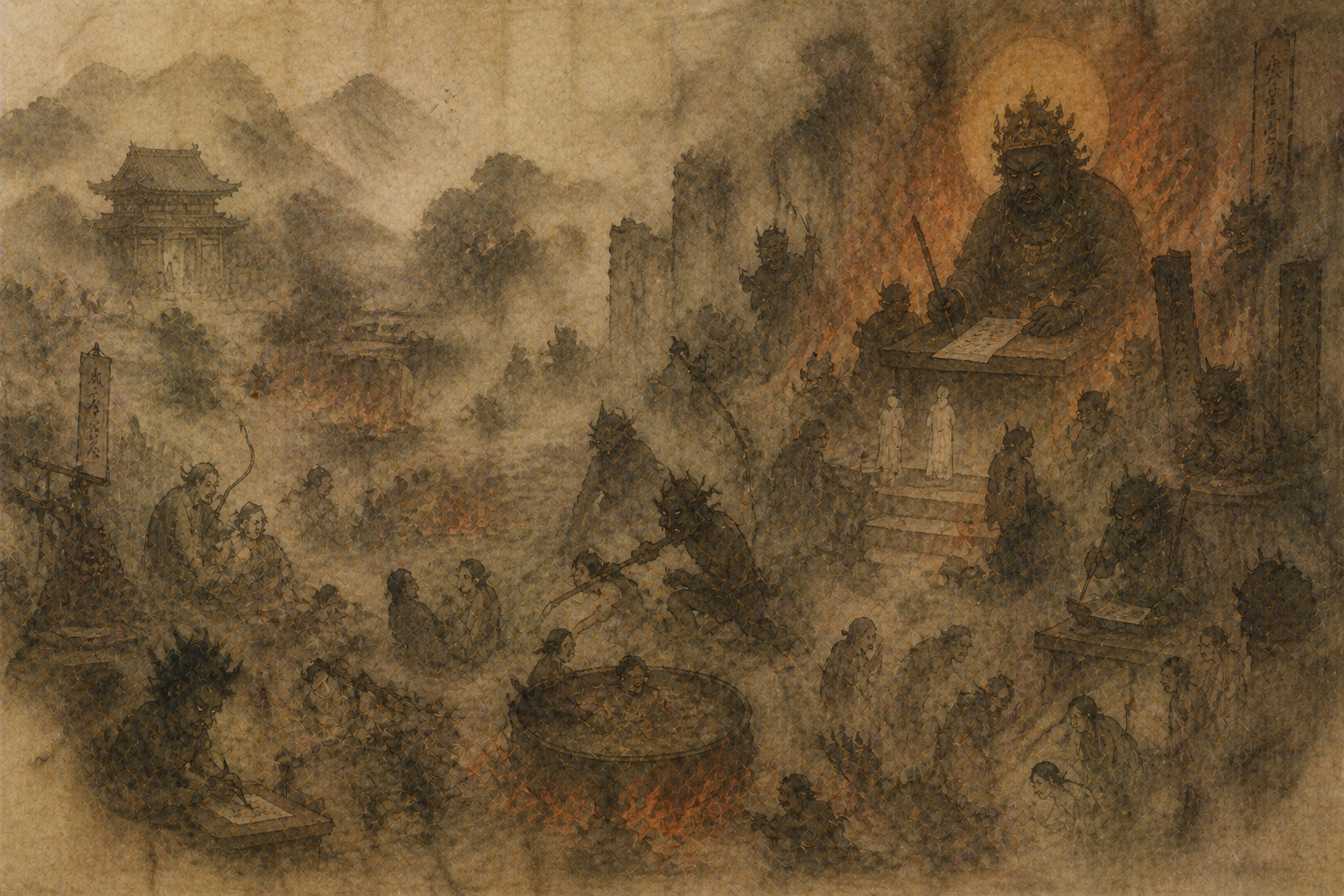
Quick Summary
- In six realms Buddhism, the “realms” can be understood as repeating patterns of mind and behavior, not just places.
- The six realms are: hell, hungry ghost, animal, human, jealous god, and god realms—each shaped by a dominant kind of suffering.
- You can recognize realms in everyday life through your reactions: anger, craving, numbness, restlessness, comparison, or complacency.
- The point isn’t labeling yourself—it’s noticing what’s driving you in the moment.
- Small shifts (pause, name the impulse, soften the story, choose a kinder action) can loosen a realm’s grip.
- “Human realm” is often highlighted because it’s workable: enough pain to wake you up, enough clarity to respond.
- Used well, the six realms become a simple map for compassion—toward yourself and others.
Introduction: Why the Six Realms Can Feel Confusing at First
You keep hearing “the six realms” and it’s not clear whether Buddhism is talking about literal worlds, a moral ranking system, or a poetic metaphor—and that uncertainty makes the whole idea hard to use in real life. A beginner-friendly way to approach six realms Buddhism is to treat the realms as a practical lens for noticing how suffering forms, how it repeats, and how it relaxes when you see it clearly. At Gassho, we focus on translating Buddhist ideas into plain, usable language without assuming prior study.
The six realms are traditionally described as different modes of existence, each with its own characteristic dissatisfaction. Even if you set aside big metaphysical questions, the model still works as a day-to-day map: it names the “world” you’re living in when anger takes over, when craving narrows your attention, or when comfort makes you careless.
This guide keeps things simple: what the six realms are, what each realm feels like from the inside, common misunderstandings, and how to apply the framework without turning it into self-judgment.
A Clear Way to Understand the Six Realms
In six realms Buddhism, the realms can be understood as recurring “mind-worlds” shaped by a dominant habit: rage, craving, dullness, restless desire, comparison, or complacent pleasure. When that habit is running the show, it doesn’t just color your mood—it changes what you notice, what you ignore, and what you think is necessary to do next.
Seen this way, the six realms aren’t a belief you have to adopt. They’re a lens for reading experience: “What kind of suffering is operating right now, and what is it making me do?” The value is diagnostic. It helps you spot the engine underneath your reactions instead of getting lost in the surface story.
Each realm has its own logic. In the hell realm, the logic is “I’m under attack.” In the hungry ghost realm, it’s “I need more.” In the animal realm, it’s “Just get through this.” In the human realm, it’s “This is hard, but I can learn.” In the jealous god realm, it’s “I must win.” In the god realm, it’s “Everything is fine—no need to look deeper.”
The realms also point to compassion. When you recognize a realm as a pattern of suffering, you’re less likely to reduce yourself (or someone else) to a fixed identity. You start seeing behavior as a temporary state with causes and conditions—something that can shift when it’s met with awareness and wise response.
GASSHO
Ask and learn about Buddhism in daily life.
GASSHO is a Buddhist community app where you can learn Buddhist teachings and ask questions to the head priest of Kongosanmaiin Temple on Mount Koya.
How the Six Realms Show Up in Ordinary Moments
The hell realm can show up as a hot, tight certainty that something is wrong and someone is to blame. Attention narrows. The body feels braced. Even neutral events get interpreted as threats, and the mind rehearses arguments or punishments.
The hungry ghost realm often feels like a low-grade itch that won’t resolve: scrolling, snacking, checking messages, chasing reassurance, chasing the next purchase, chasing the next compliment. You may get what you want, but the satisfaction doesn’t land. The wanting stays louder than the having.
The animal realm can feel like fog. You do what’s in front of you, avoid what’s uncomfortable, and keep things basic. It’s not “bad”—it can be protective when you’re overwhelmed—but it can also become a default where you stop asking what you actually need or what your actions are costing.
The human realm is the moment you can admit, “This hurts,” without immediately turning it into rage, escape, or performance. There’s enough clarity to notice choices. You can feel the pull of a habit and still pause. You can be imperfect and still be honest.
The jealous god realm (often described as the realm of rivalry) can appear as constant comparison: tracking who is ahead, who is respected, who is getting attention, who is “winning” at life. Even good things become stressful because they turn into contests. The mind keeps score, and the heart rarely rests.
The god realm can look like comfort that becomes a blindfold. Life is pleasant, your identity feels secure, and you subtly avoid anything that might challenge the image. When difficulty appears—aging, loss, criticism—it can feel shocking, not because it’s unusual, but because you’ve been trained to look away.
In practice, you might move through several realms in a single day. The usefulness is not in picking one label for your personality. It’s in noticing the shift: “Oh—this is hungry ghost energy,” or “This is hell realm heat,” and then giving yourself a little space to respond rather than react.
Common Misunderstandings Beginners Run Into
Mistake 1: Treating the realms as a moral ranking of people. The six realms are better used as patterns that arise in everyone. If you use them to judge (“I’m an animal realm person” or “They’re a hungry ghost”), you miss the point and harden the very habits the model is trying to soften.
Mistake 2: Thinking the realms are only literal places, or only metaphors. Different Buddhists hold different views, but for a beginner the practical approach is: regardless of metaphysics, the realms describe recognizable experiences. You can test the model against your own mind today.
Mistake 3: Using the realms to suppress emotions. Noticing “hell realm anger” doesn’t mean you should pretend you’re not angry. It means you can feel anger while also seeing the stories and impulses it generates—especially the urge to escalate, punish, or prove.
Mistake 4: Assuming the human realm means “happy.” The human realm is often described as workable, not comfortable. It includes grief, uncertainty, and frustration—plus the capacity to learn from them without being completely possessed by them.
Mistake 5: Turning the six realms into a personality test. The realms are situational. You can be generous at breakfast (human realm clarity), competitive at work (jealous god comparison), and doom-scrolling at night (hungry ghost craving). The map is meant to track conditions, not define identity.
Why This Teaching Matters in Daily Life
Six realms Buddhism matters because it gives you a simple vocabulary for what’s happening inside you without requiring a long philosophical detour. When you can name the pattern, you can interrupt it. Even a two-second pause can be the difference between feeding a realm and loosening it.
It also changes how you read other people. Instead of “They’re impossible,” you might see, “They’re in a hell realm moment,” or “They’re caught in hungry ghost wanting.” That doesn’t excuse harm, but it can reduce hatred and increase skill: firmer boundaries when needed, less contempt, more clarity.
Practically, the realms point to small, repeatable moves:
- Notice the body: heat, tightness, numbness, agitation—often the realm shows up there first.
- Name the pull: “attack,” “grab,” “hide,” “compete,” “coast.”
- Widen attention: include breath, sounds, the room, the other person’s humanity.
- Choose one non-feeding action: a slower reply, a glass of water, a walk, an honest sentence, a clean boundary.
Over time, this approach builds trust in your ability to meet experience directly. You’re not trying to “get rid of” realms forever. You’re learning to recognize them sooner and to suffer less unnecessarily when they arise.
Conclusion: A Map You Can Use Without Overthinking
The six realms in Buddhism are a compact map of how suffering organizes the mind into different “worlds.” Whether you interpret them as literal realms, psychological states, or both, the beginner-friendly value is immediate: you can notice which realm is operating, see what it’s asking you to do, and choose a response that creates less harm.
If you take only one thing from six realms Buddhism, let it be this: the realm is not who you are—it’s what’s happening. And what’s happening can change when it’s met with awareness, honesty, and a little kindness.
Ask a Buddhist priest
Have a question about Buddhism?
In the GASSHO app, you can ask questions about Buddhist teachings, daily concerns, and how to understand Buddhism in everyday life.
Frequently Asked Questions
- FAQ 1: What are the six realms in Buddhism?
- FAQ 2: Are the six realms meant to be literal places or psychological states?
- FAQ 3: What is the hell realm in six realms Buddhism?
- FAQ 4: What is the hungry ghost realm in Buddhism?
- FAQ 5: What does the animal realm represent in six realms Buddhism?
- FAQ 6: Why is the human realm considered important in Buddhism’s six realms?
- FAQ 7: What is the jealous god (asura) realm in six realms Buddhism?
- FAQ 8: What is the god (deva) realm in Buddhism’s six realms?
- FAQ 9: How do the six realms relate to karma in Buddhism?
- FAQ 10: Can you move through different realms in a single day?
- FAQ 11: Is the six realms teaching meant to judge people as “lower” or “higher”?
- FAQ 12: What is the “wheel of life” and how does it show the six realms?
- FAQ 13: How can I use six realms Buddhism as a self-reflection practice?
- FAQ 14: Do the six realms appear in early Buddhist teachings?
- FAQ 15: What is the main purpose of learning about the six realms in Buddhism?
FAQ 1: What are the six realms in Buddhism?
Answer: In six realms Buddhism, the six realms are commonly listed as hell beings, hungry ghosts, animals, humans, jealous gods (asuras), and gods (devas). They describe different modes of suffering and the mindsets that go with them, often taught as both cosmological realms and as patterns you can recognize in lived experience.
Takeaway: The six realms are a map of recurring suffering patterns, not just a list of “places.”
FAQ 2: Are the six realms meant to be literal places or psychological states?
Answer: Six realms Buddhism is presented in traditional sources as literal realms of rebirth, but many modern practitioners also use the realms as psychological descriptions of how the mind feels and behaves under certain conditions. As a beginner, you can treat them as a practical lens for noticing anger, craving, numbness, rivalry, and complacency in real time.
Takeaway: You can use the six realms as a practical framework even if you’re unsure about literal rebirth.
FAQ 3: What is the hell realm in six realms Buddhism?
Answer: The hell realm is associated with intense suffering driven by hatred, rage, and the feeling of being trapped in pain or conflict. In everyday terms, it can resemble moments when the mind is overheated, blame-focused, and convinced that aggression is the only relief.
Takeaway: Hell realm points to the suffering of anger and the narrow “attack” mindset it creates.
FAQ 4: What is the hungry ghost realm in Buddhism?
Answer: The hungry ghost realm is linked with craving, addiction-like wanting, and chronic dissatisfaction. Psychologically, it’s the experience of reaching for something—attention, food, status, reassurance—only to find that the relief doesn’t last and the wanting quickly returns.
Takeaway: Hungry ghost realm describes the pain of “never enough.”
FAQ 5: What does the animal realm represent in six realms Buddhism?
Answer: The animal realm is associated with ignorance in the sense of dullness, avoidance, and living on autopilot. In daily life it can look like numbing out, resisting reflection, or defaulting to comfort and habit when something feels too complex or threatening.
Takeaway: Animal realm highlights the suffering of confusion and “just get through it” living.
FAQ 6: Why is the human realm considered important in Buddhism’s six realms?
Answer: The human realm is often emphasized because it’s seen as a balanced condition: there is real suffering, but also enough clarity and opportunity to learn, practice ethics, and develop wisdom. As a lived experience, it’s the mindset where you can face difficulty without immediately collapsing into extremes like rage, craving, or denial.
Takeaway: The human realm is “workable” because it supports honest seeing and choice.
FAQ 7: What is the jealous god (asura) realm in six realms Buddhism?
Answer: The jealous god realm is connected with envy, competitiveness, and constant comparison. It’s the suffering of needing to be ahead, needing recognition, and feeling threatened by others’ success—even when your own life is objectively fine.
Takeaway: Asura realm is the stress of rivalry and never being able to rest.
FAQ 8: What is the god (deva) realm in Buddhism’s six realms?
Answer: The god realm is associated with pleasure, ease, and long periods of comfort, but also with complacency and avoidance of deeper truths like impermanence. In everyday terms, it can look like “everything is fine” as a way to bypass vulnerability, aging, loss, or the impact of one’s actions.
Takeaway: God realm points to the hidden fragility inside comfort and denial.
FAQ 9: How do the six realms relate to karma in Buddhism?
Answer: In six realms Buddhism, karma is the principle that intentional actions and the habits behind them have consequences. The realms illustrate how repeated patterns—like hatred, craving, or delusion—shape the kind of experience you inhabit, reinforcing certain reactions and making them feel like “your world.”
Takeaway: The six realms show how habits of mind create corresponding kinds of suffering.
FAQ 10: Can you move through different realms in a single day?
Answer: Yes. Used as a psychological map, six realms Buddhism describes shifts that can happen quickly: anger can pull you into a hell realm moment, craving into hungry ghost, comparison into asura, and so on. Noticing the shift early can help you choose a response that doesn’t intensify the pattern.
Takeaway: The realms can be moment-to-moment states, not fixed identities.
FAQ 11: Is the six realms teaching meant to judge people as “lower” or “higher”?
Answer: No. While the realms are sometimes depicted hierarchically, the practical use in six realms Buddhism is not moral labeling. It’s recognizing suffering patterns with compassion and clarity—both in yourself and others—so you can respond more wisely and cause less harm.
Takeaway: The six realms are for understanding suffering, not ranking human worth.
FAQ 12: What is the “wheel of life” and how does it show the six realms?
Answer: The wheel of life is a traditional Buddhist image that often includes the six realms as segments of cyclic existence. It visually represents how beings cycle through different conditions of suffering, driven by mental afflictions and actions, and it’s used as a teaching tool to encourage insight and ethical living.
Takeaway: The wheel of life is a visual teaching that places the six realms inside a larger cycle of cause and effect.
FAQ 13: How can I use six realms Buddhism as a self-reflection practice?
Answer: You can use the realms as a quick check-in: “Which realm is this reaction coming from?” Then notice the body sensation, the story you’re telling, and the impulse you want to act out (attack, grab, hide, compete, coast). Finally, choose one small action that doesn’t feed the pattern—like pausing before replying or naming the feeling honestly.
Takeaway: Identify the realm, spot the impulse, and choose a non-feeding next step.
FAQ 14: Do the six realms appear in early Buddhist teachings?
Answer: Yes, the idea of multiple realms of existence is found across Buddhist traditions, and the six-realm framework is widely taught in Buddhist cultures. Even when presented cosmologically, the realms also function as a practical description of how suffering and mental habits shape experience.
Takeaway: The six realms are a longstanding Buddhist teaching with both traditional and practical uses.
FAQ 15: What is the main purpose of learning about the six realms in Buddhism?
Answer: The main purpose of six realms Buddhism is to help you recognize how suffering operates and repeats—within a lifetime, within a day, or within a single conversation—and to encourage choices that reduce harm and increase clarity. The teaching is most useful when it leads to compassion, responsibility, and a wider view of what’s happening in the mind.
Takeaway: The six realms are a practical map for noticing suffering patterns and responding with more wisdom.