



What Is Silence Practice in Buddhism? Learning Without Filling the Space
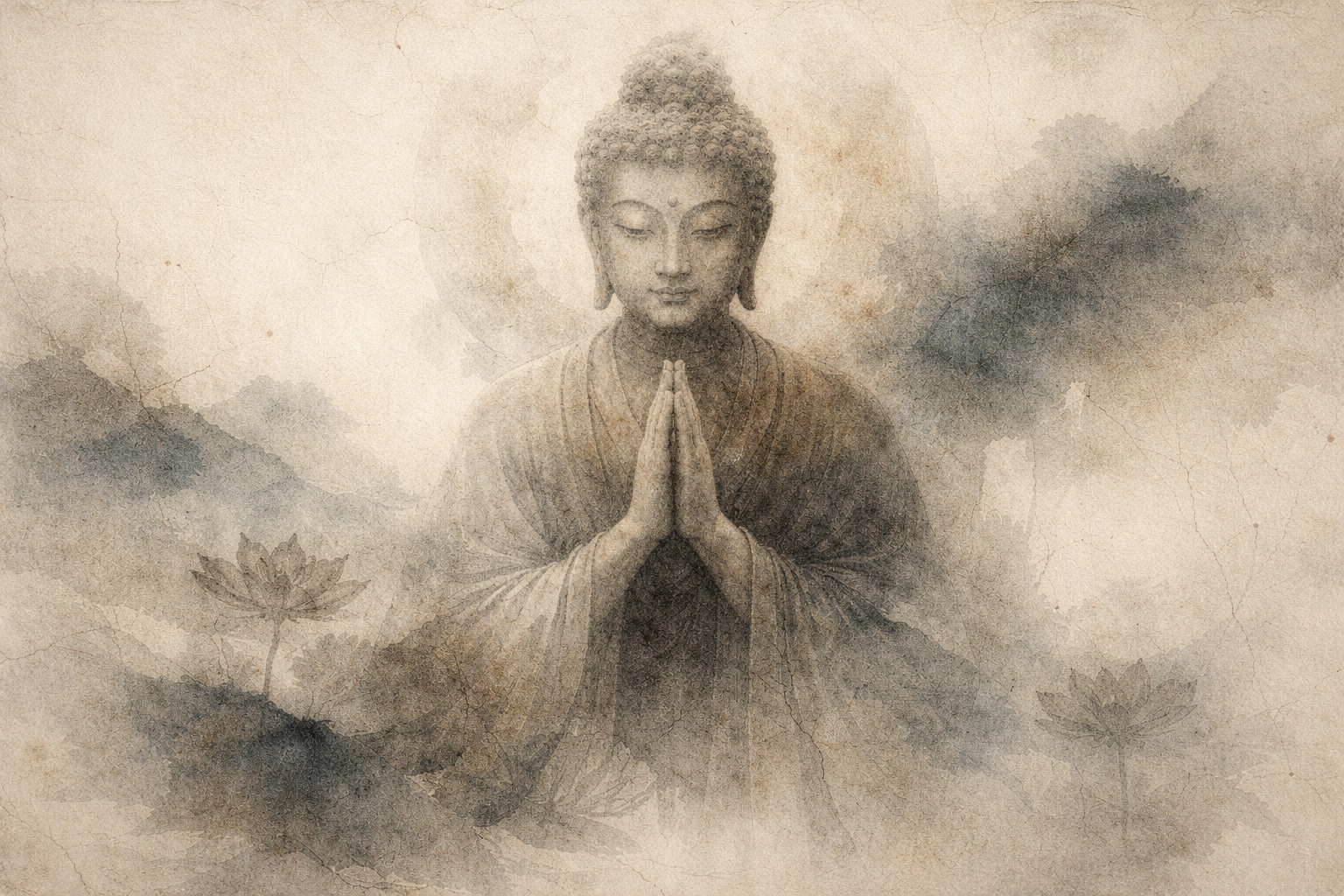
What Is Silence Practice in Buddhism? Learning Without Filling the Space
Quick Summary
- Silence practice in Buddhism is training in not automatically filling experience with speech, commentary, or mental noise.
- It includes outer silence (less talking) and inner silence (less compulsive thinking), without forcing the mind blank.
- The point is to notice what appears when you stop adding extra—sensations, emotions, impulses, and the urge to explain.
- Silence is used as a container for awareness, not as a performance of calm or a rule to suppress expression.
- Done well, it makes everyday communication clearer because you speak from necessity rather than habit.
- Common pitfalls are using silence to avoid conflict, to seem “spiritual,” or to chase a special peaceful state.
- You can practice in small doses: a quiet minute before replying, a silent walk, or a short period of sitting.
Introduction
If “silence practice Buddhism” sounds like it means sitting in a quiet room trying to stop thoughts, you’re not alone—and that misunderstanding makes the practice feel either impossible or oddly rigid. Silence practice is less about manufacturing emptiness and more about seeing how quickly we rush to fill space with words, opinions, plans, and self-explanations, then learning to pause before we do. At Gassho, we write about Buddhist practice in plain language with an emphasis on what you can actually observe in your own experience.
In daily life, silence can feel uncomfortable because it removes our usual tools for managing uncertainty: talking, narrating, joking, fixing, or performing competence. Buddhism treats that discomfort as useful information. When you stop filling the space, you can notice what the mind is trying to protect, prove, or control.
Silence practice doesn’t require you to become quiet all the time. It’s a deliberate training: you choose moments where you don’t add extra, and you watch what happens. Over time, you learn the difference between speech that’s responsive and speech that’s compulsive.
GASSHO
Ask and learn about Buddhism in daily life.
GASSHO is a Buddhist community app where you can learn Buddhist teachings and ask questions to the head priest of Kongosanmaiin Temple on Mount Koya.
A Practical Lens: Silence as Not Adding Extra
A helpful way to understand silence practice in Buddhism is to treat it as a lens on “adding.” Experience arrives on its own: sound, sensation, mood, memory, and the simple fact of being here. Then, almost instantly, we add commentary: “This is good,” “This is awkward,” “I should say something,” “They must think I’m…,” “I need to fix this.” Silence practice experiments with not adding the second layer so quickly.
This is not a belief about how the world “really is.” It’s a way of looking that you can test. When you refrain from filling the space—externally with speech, and internally with constant narration—you can see how much of your stress comes from the extra layer rather than from the raw moment itself.
Silence here doesn’t mean the mind becomes blank, and it doesn’t mean you never speak. It means you’re training the capacity to pause. In that pause, awareness has room to register what’s present before habit takes over. The practice is gentle but honest: it reveals impulses without immediately obeying them.
Over time, silence becomes less like “holding your tongue” and more like giving experience enough space to show its shape. You learn to recognize when speech is needed—clear, kind, timely—and when it’s just a reflex to escape discomfort.
How Silence Practice Feels in Ordinary Moments
You decide to be quiet for a few minutes—maybe while making tea, walking to the store, or sitting at the edge of your bed. At first, the mind often gets louder. Not because silence is “bad,” but because you’re no longer covering over the background hum with new input.
You notice the urge to label everything. A sound appears and the mind says, “Car.” A sensation appears and the mind says, “Tension.” A feeling appears and the mind says, “This is anxiety.” Silence practice doesn’t forbid labels; it simply lets you see the labeling as an activity, not as the whole truth of the moment.
Then you notice the urge to manage how you’re doing. “Am I calm yet?” “Is this working?” “I should be more present.” That self-monitoring is another way of filling the space. In silence practice, you can let even that urge be seen—without turning it into a problem to solve.
In conversation, silence practice can show up as a single breath before responding. You feel the impulse to interrupt, to correct, to reassure, to make a point. The pause doesn’t make you passive; it simply gives you a chance to notice what’s driving the impulse. Sometimes you still speak. Sometimes you realize the moment doesn’t require your words.
In emotionally charged situations, silence can reveal the body’s strategy. Maybe your chest tightens and you want to explain yourself. Maybe your face warms and you want to defend. Silence practice lets you feel those signals without immediately converting them into speech. You’re not suppressing emotion; you’re allowing it to be felt without instantly turning it into a story.
During a silent walk, you might notice how quickly attention jumps: sound to thought, thought to memory, memory to planning. Silence practice isn’t about stopping the jumping by force. It’s about recognizing the movement and returning to simple contact—feet on the ground, air on the skin, the changing field of sound—again and again.
Sometimes silence feels spacious. Sometimes it feels restless or dull. The practice is to let those textures be present without immediately trying to replace them with something more comfortable. That “not replacing” is where the learning happens.
Common Misunderstandings That Make Silence Harder
Misunderstanding 1: “Silence practice means no thoughts.” Thoughts will appear. The training is not to treat every thought as a command or a problem. Silence practice is compatible with thinking; it simply reduces compulsive engagement with thinking.
Misunderstanding 2: “Silence is automatically peaceful.” Silence can be peaceful, but it can also expose agitation, sadness, or fear. That doesn’t mean you’re doing it wrong. It means you’re seeing what was already there under the usual noise.
Misunderstanding 3: “Being silent is the same as being wise.” Silence can be used to avoid responsibility, punish others, or appear superior. Buddhist silence practice is not a social tactic. It’s an inner discipline that should support clarity and care.
Misunderstanding 4: “Silence means never speaking up.” Healthy practice includes appropriate speech. If silence becomes a way to swallow boundaries or avoid necessary conversations, it’s no longer serving awareness—it’s serving fear.
Misunderstanding 5: “I need perfect conditions.” Quiet rooms help, but silence practice is ultimately about not adding extra. You can practice in a noisy environment by noticing the urge to fight the noise, narrate it, or escape it.
Why Silence Practice Matters Outside the Meditation Seat
Silence practice matters because most suffering is amplified by reflexive “filling.” We fill uncertainty with assumptions, fill discomfort with distraction, fill insecurity with over-explaining, and fill loneliness with noise. Practicing silence gives you a workable alternative: stay with what’s here long enough to respond rather than react.
It also changes communication. When you’re less compelled to speak immediately, you can listen more fully. You may notice you don’t need to win every point, fix every mood, or narrate every experience. Speech becomes simpler and more accurate because it’s not trying to manage your internal tension.
In relationships, a small pause can prevent a familiar argument from igniting. Silence practice doesn’t make you indifferent; it makes room for choice. You can still be direct, but you’re less likely to be dragged by the first impulse.
Finally, silence practice helps you trust direct experience. When you stop constantly translating life into commentary, you rediscover that awareness can hold sound, emotion, and uncertainty without immediately turning them into a problem to solve.
Conclusion
Silence practice in Buddhism is not a vow to become quiet or a project to erase thought. It’s a training in not automatically filling the space—externally with speech and internally with compulsive narration. When you practice even briefly, you start to see the difference between what is happening and what you add on top of it.
If you want to begin, keep it small and honest: one minute of not adding extra, one breath before replying, one short walk without feeding the inner commentary. The point isn’t to achieve a special silence; it’s to learn from the space that’s already available.
Ask a Buddhist priest
Have a question about Buddhism?
In the GASSHO app, you can ask questions about Buddhist teachings, daily concerns, and how to understand Buddhism in everyday life.
Frequently Asked Questions
- FAQ 1: What does “silence practice” mean in Buddhism?
- FAQ 2: Is silence practice the same as meditation in Buddhism?
- FAQ 3: Do I have to stop thinking during silence practice in Buddhism?
- FAQ 4: Why does silence practice sometimes make me feel more anxious?
- FAQ 5: How long should a beginner do silence practice in Buddhism?
- FAQ 6: What do I focus on during silence practice Buddhism-style?
- FAQ 7: Is silence practice in Buddhism about not speaking at all?
- FAQ 8: How is silence practice different from giving someone the silent treatment?
- FAQ 9: Can I do silence practice in Buddhism if my environment is noisy?
- FAQ 10: What is “inner silence” in silence practice Buddhism?
- FAQ 11: How do I practice silence in Buddhist conversation without being awkward?
- FAQ 12: Does silence practice in Buddhism help with anger?
- FAQ 13: What should I do if silence practice brings up sadness or grief?
- FAQ 14: Is silence practice in Buddhism a form of retreat?
- FAQ 15: How do I know if my silence practice in Buddhism is becoming avoidance?
FAQ 1: What does “silence practice” mean in Buddhism?
Answer: Silence practice in Buddhism means intentionally refraining from filling experience with unnecessary speech and mental commentary, so you can notice sensations, emotions, and impulses more clearly. It includes outer silence (less talking) and inner silence (less compulsive narration), without trying to force the mind to be blank.
Takeaway: Silence practice is training in not adding extra, not a demand for an empty mind.
FAQ 2: Is silence practice the same as meditation in Buddhism?
Answer: It can be part of meditation, but it’s broader than a formal sit. Silence practice can happen while sitting, walking, eating, or in conversation as a deliberate pause before speaking. The common thread is reducing automatic “filling” and observing what arises.
Takeaway: Silence practice can be formal or informal, as long as it trains non-compulsive adding.
FAQ 3: Do I have to stop thinking during silence practice in Buddhism?
Answer: No. Thoughts will arise naturally. The practice is to notice thoughts as events in awareness and to reduce the habit of immediately following, elaborating, or believing every thought as urgent.
Takeaway: The goal is less entanglement with thought, not thought elimination.
FAQ 4: Why does silence practice sometimes make me feel more anxious?
Answer: When you remove your usual ways of covering discomfort (talking, scrolling, planning, explaining), the underlying tension becomes easier to notice. Silence isn’t creating the anxiety; it’s revealing what was already present and giving you a chance to meet it directly.
Takeaway: Increased anxiety can be a sign you’re seeing more clearly, not failing.
FAQ 5: How long should a beginner do silence practice in Buddhism?
Answer: Start small and consistent—one to five minutes of intentional silence can be enough to learn from. You can also practice micro-pauses: one breath before replying, or a short silent moment before starting a task.
Takeaway: Short, repeatable silence is often more effective than long, forced sessions.
FAQ 6: What do I focus on during silence practice Buddhism-style?
Answer: You can rest attention on simple anchors like breathing, bodily sensations, or ambient sound, while primarily watching the urge to add commentary. If attention wanders, you gently return without judging the wandering.
Takeaway: Use a simple anchor, but let the main lesson be noticing the “adding” impulse.
FAQ 7: Is silence practice in Buddhism about not speaking at all?
Answer: Not necessarily. Some periods may involve not speaking, but the deeper training is speaking less compulsively and more intentionally. Appropriate speech is still part of practice; silence is used to support clarity, not to avoid life.
Takeaway: Silence practice refines speech; it doesn’t automatically replace it.
FAQ 8: How is silence practice different from giving someone the silent treatment?
Answer: Silence practice is an inner discipline aimed at awareness and reduced reactivity. The silent treatment is a relational tactic used to punish, control, or withdraw communication. If silence harms connection or avoids necessary honesty, it’s not aligned with the spirit of Buddhist practice.
Takeaway: Practice silence to see clearly, not to manipulate or punish.
FAQ 9: Can I do silence practice in Buddhism if my environment is noisy?
Answer: Yes. Outer quiet helps, but silence practice is mainly about not adding extra reaction. In noise, you can notice resistance (“I hate this sound”), the urge to escape, and the body’s response, then return to direct hearing without the extra story.
Takeaway: Noise can become part of the practice when you stop fighting it internally.
FAQ 10: What is “inner silence” in silence practice Buddhism?
Answer: Inner silence means less compulsive mental talk—less rehearsing, judging, narrating, and arguing in your head. It doesn’t mean no thoughts; it means thoughts can arise without immediately turning into a chain you must follow.
Takeaway: Inner silence is reduced compulsion, not mental shutdown.
FAQ 11: How do I practice silence in Buddhist conversation without being awkward?
Answer: Use brief, natural pauses: feel one inhale before responding, listen until the other person fully finishes, and speak only what’s needed. If a pause feels tense, notice the urge to fill it and let that urge soften before you decide to speak.
Takeaway: A small pause can be enough to shift from reaction to response.
FAQ 12: Does silence practice in Buddhism help with anger?
Answer: It can help by creating a gap between the heat of anger and the impulse to speak or act. In that gap, you can feel the body sensations of anger and notice the stories fueling it, which often reduces the chance of saying something you regret.
Takeaway: Silence practice supports anger work by adding space before action.
FAQ 13: What should I do if silence practice brings up sadness or grief?
Answer: Let the feelings be present in the body without rushing to explain them away. Keep the practice gentle: shorter periods, steady breathing, and simple grounding in sensation. If emotions feel overwhelming or destabilizing, it’s wise to seek qualified support alongside practice.
Takeaway: Meet difficult feelings with steadiness and care, not force.
FAQ 14: Is silence practice in Buddhism a form of retreat?
Answer: It can be used in retreat settings, but it doesn’t require a retreat. You can create “mini-retreats” at home: a silent morning routine, a silent meal, or a short period of sitting where you practice not filling the space.
Takeaway: Retreat can deepen silence practice, but daily life offers plenty of entry points.
FAQ 15: How do I know if my silence practice in Buddhism is becoming avoidance?
Answer: If silence consistently replaces necessary communication, weakens boundaries, or becomes a way to hide from conflict and responsibility, it may be avoidance. Healthy silence practice increases clarity and appropriate speech, including the ability to have direct conversations when needed.
Takeaway: Good silence practice supports honest action; it doesn’t replace it.