



Silence by Thich Nhat Hanh: A Reader’s Guide
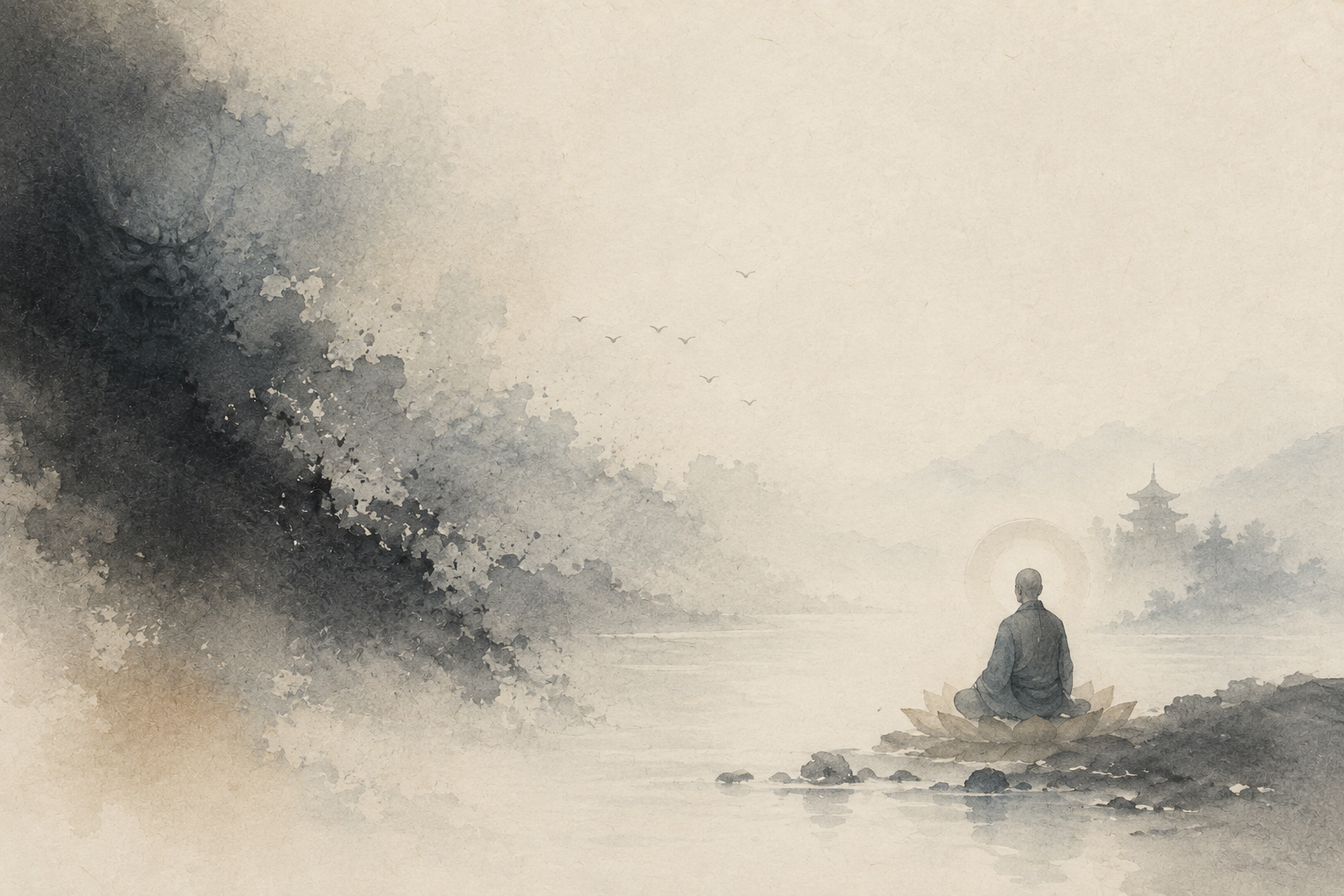
Quick Summary
- Silence by Thich Nhat Hanh treats silence as an inner capacity, not just the absence of sound.
- The book points to “inner noise” (worry, replaying, planning) as the main source of exhaustion.
- Silence is approached through ordinary moments: breathing, walking, listening, eating, and pausing.
- The aim is not to stop thoughts, but to stop being pushed around by them.
- Reading works best when you practice alongside it: short pauses, gentle attention, simple routines.
- “Noble silence” is framed as caring communication, not cold withdrawal.
- This guide helps you read the book as a set of usable instructions for daily life.
Introduction
You picked up Silence because your life is loud even when the room is quiet: constant thinking, constant input, constant pressure to respond, and a creeping sense that you can’t hear yourself anymore. The confusing part is that “be silent” can sound like a moral command or a personality type, when what you actually need is a practical way to settle the mind without forcing it. At Gassho, we write reader-first guides that translate contemplative books into clear, doable steps without mystifying the language.
Silence by Thich Nhat Hanh is best read as a manual for reducing inner friction. It doesn’t ask you to become someone else; it asks you to notice what’s already happening—how attention gets hijacked, how emotions recruit stories, how the body signals overload—and to return to what is simple and present.
This guide will help you understand what the book is pointing to, what to practice while you read, and how to avoid common misreadings that turn “silence” into suppression.
The Lens of Silence: What the Book Is Really Pointing To
In Silence, “silence” is less about controlling the environment and more about changing your relationship to experience. Sounds can be present—traffic, voices, notifications—and yet there can be a steadier inner space that doesn’t immediately tense, judge, or chase. The book treats silence as a capacity: the ability to pause and meet what’s here without instantly turning it into a problem to solve.
A key distinction is between outer noise and inner noise. Outer noise is the world doing what it does. Inner noise is the extra layer we add: rehearsing conversations, scanning for threats, comparing ourselves, narrating every sensation, and trying to outrun discomfort. The book’s core move is simple: notice the added layer, and gently stop feeding it.
This isn’t presented as a belief system. It’s a lens you can test: when you stop multitasking for a moment and feel one breath fully, does the mind soften even slightly? When you listen without preparing your reply, does the body relax? The book keeps returning to small experiments like these, because silence is something you verify in real time.
Another important point: silence here is not blankness. It’s clarity. It’s the difference between being flooded by mental commentary and being able to hear what’s actually happening—inside and around you—without immediately getting swept away.
GASSHO
Ask and learn about Buddhism in daily life.
GASSHO is a Buddhist community app where you can learn Buddhist teachings and ask questions to the head priest of Kongosanmaiin Temple on Mount Koya.
What Silence Feels Like in Ordinary Moments
You’re reading a message and feel a quick tightening in the chest. Before you even answer, the mind starts drafting five versions of a response, predicting outcomes, and replaying old conflicts. In the book’s terms, the “noise” isn’t the message—it’s the cascade. Silence begins when you notice the cascade and return to one simple anchor, like the sensation of breathing.
You’re walking to the kitchen and realize you don’t remember the last ten steps because you were elsewhere mentally. Nothing dramatic happened; attention just drifted into planning and reviewing. Practicing silence looks like feeling the feet, noticing the temperature of the air, and letting the next step be just one step.
You sit down to eat and automatically reach for a screen. The impulse isn’t evil; it’s a learned reflex to avoid stillness. Silence, in this lived sense, is the willingness to stay with the first few seconds of restlessness—without immediately anesthetizing it—and to come back to taste, chewing, and the body’s signals.
You hear a loud sound—sirens, a slammed door—and the body reacts before the mind has words. The book’s approach doesn’t deny that reaction. It invites you to recognize it as a wave: sensation rises, peaks, and changes. Silence is the space that allows the wave to move without becoming a story about how unsafe everything is.
You’re in conversation and notice you’re only half listening because you’re preparing your point. This is a subtle form of inner noise: the need to control how you’re seen. Practicing silence can be as plain as relaxing the jaw, feeling the breath, and letting the other person’s words land fully before you decide what to say.
You try to be quiet, but thoughts keep coming. The book doesn’t require you to “win” against thinking. It keeps pointing to a different skill: recognizing thoughts as events in the mind, not commands. Silence shows up as a little more room around the thought—enough room to choose whether to follow it.
Over time, you may notice that silence is often felt first in the body: shoulders dropping, breathing deepening, the face softening, the urge to rush easing. These are not trophies. They’re feedback—signs that you’re no longer adding unnecessary resistance to the moment.
Common Misreadings That Make Silence Harder
Misunderstanding 1: Silence means “no thoughts.” Many readers get stuck trying to force mental quiet. That struggle creates more noise: frustration, self-judgment, and tension. The book’s practical direction is closer to “stop fueling the thought-stream with panic and compulsion.” Thoughts can arise; you learn not to be dragged.
Misunderstanding 2: Silence is withdrawal from people. It can sound like you’re supposed to become distant or unresponsive. But the spirit of the book treats silence as a foundation for better connection: listening more fully, speaking more carefully, and not using words to discharge anxiety.
Misunderstanding 3: Silence is only possible in perfect conditions. If you wait for a retreat-like environment, you’ll postpone the practice indefinitely. The book repeatedly brings silence into imperfect settings—busy days, emotional moments, ordinary chores—because that’s where inner noise actually runs the show.
Misunderstanding 4: Silence is suppression. Some people try to “be silent” by pushing down anger, grief, or fear. That usually backfires. The book’s tone is gentler: make room for feelings, recognize them, and stop adding extra commentary that inflames them.
Misunderstanding 5: Silence is a personality trait. If you’re talkative, social, or mentally active, you might assume the book isn’t for you. But silence here is not introversion. It’s the ability to pause, return, and respond with awareness—whether you speak a lot or a little.
Why This Practice Changes Daily Life
When inner noise drops even a little, decision-making improves. You can feel the difference between urgency and importance. You notice when you’re about to send a reactive message, buy something to soothe discomfort, or say “yes” out of pressure. Silence creates a small gap where choice becomes possible.
Silence also changes how you relate to pain—physical or emotional. Instead of immediately spiraling into “How long will this last?” or “What does this mean about me?”, you learn to stay closer to direct experience. That doesn’t remove difficulty, but it reduces the extra suffering created by mental escalation.
Relationships benefit in a very down-to-earth way: you listen better. You interrupt less. You don’t have to win every moment. The book’s version of silence supports speech that is simpler and more accurate, because it isn’t driven by the need to defend an image of yourself.
Finally, silence helps you reclaim attention from constant stimulation. This matters because attention is not just a mental resource—it shapes your whole day. What you repeatedly attend to becomes your mood, your worldview, and your sense of what life is. The book’s practices are small, but they aim at something big: living from presence rather than from agitation.
Conclusion
Silence by Thich Nhat Hanh is most helpful when you stop treating it like a concept and start treating it like a set of experiments. Notice inner noise. Return to the body. Let sounds be sounds. Let thoughts be thoughts. Then choose one small moment each day—walking to the car, washing your hands, opening your laptop—to practice a few seconds of real quiet.
If you read the book this way, silence stops being an ideal. It becomes a usable skill: the ability to meet life without constantly adding extra struggle.
Ask a Buddhist priest
Have a question about Buddhism?
In the GASSHO app, you can ask questions about Buddhist teachings, daily concerns, and how to understand Buddhism in everyday life.
GASSHO is an app for exploring Buddhism in everyday life.
Learn more about Buddhist deities.


Frequently Asked Questions
- FAQ 1: What is “silence” in Thich Nhat Hanh’s book Silence?
- FAQ 2: Is Silence by Thich Nhat Hanh a meditation manual or a reflective book?
- FAQ 3: Do I need a quiet place to practice the “silence” Thich Nhat Hanh describes?
- FAQ 4: What does Thich Nhat Hanh mean by “inner noise” in Silence?
- FAQ 5: How can I read Silence by Thich Nhat Hanh without turning it into another self-improvement project?
- FAQ 6: Does Silence teach you to stop thinking?
- FAQ 7: What is “noble silence” in the context of Thich Nhat Hanh’s Silence?
- FAQ 8: How does Silence by Thich Nhat Hanh relate to anxiety and overthinking?
- FAQ 9: What is a simple daily practice inspired by “silence thich nhat hanh”?
- FAQ 10: Is Silence by Thich Nhat Hanh religious, or can anyone read it?
- FAQ 11: What should I do if practicing silence brings up uncomfortable emotions?
- FAQ 12: How is silence different from avoidance in Thich Nhat Hanh’s Silence?
- FAQ 13: Can I practice the “silence” Thich Nhat Hanh describes while working or parenting?
- FAQ 14: What are the main themes readers associate with “silence thich nhat hanh”?
- FAQ 15: What’s the best way to start reading Silence by Thich Nhat Hanh if I feel overwhelmed?
FAQ 1: What is “silence” in Thich Nhat Hanh’s book Silence?
Answer: In Silence, “silence” mainly refers to inner quiet—less compulsive thinking, less reactivity, and more space to be present—rather than a perfectly quiet environment.
Takeaway: The keyword “silence thich nhat hanh” points to inner stillness more than external quiet.
FAQ 2: Is Silence by Thich Nhat Hanh a meditation manual or a reflective book?
Answer: It reads like a reflective guide with many practical instructions—short practices for breathing, walking, listening, and pausing—so most readers use it as both inspiration and a light practice manual.
Takeaway: Treat Silence as something to practice with, not just think about.
FAQ 3: Do I need a quiet place to practice the “silence” Thich Nhat Hanh describes?
Answer: No. The book emphasizes working with inner noise even when outer noise is present. A quieter place can help, but it isn’t required for the core practice of returning to breath and awareness.
Takeaway: Outer sound doesn’t prevent inner silence.
FAQ 4: What does Thich Nhat Hanh mean by “inner noise” in Silence?
Answer: “Inner noise” is the mental and emotional commentary that keeps running—worrying, replaying, planning, judging—often fueled by fear or habit, even when nothing urgent is happening.
Takeaway: The book targets the mind’s extra commentary, not life itself.
FAQ 5: How can I read Silence by Thich Nhat Hanh without turning it into another self-improvement project?
Answer: Read slowly and pair a short passage with a small action (one mindful breath, one mindful step, one minute of listening). The point is gentle noticing, not “fixing yourself.”
Takeaway: Let the book support simple practice, not pressure.
FAQ 6: Does Silence teach you to stop thinking?
Answer: Not exactly. It encourages recognizing thoughts as thoughts and not automatically following them. Thinking still happens; the difference is less entanglement and less compulsion.
Takeaway: Silence is a new relationship to thought, not a thought-free mind.
FAQ 7: What is “noble silence” in the context of Thich Nhat Hanh’s Silence?
Answer: “Noble silence” is a mindful choice to refrain from unnecessary speech so you can listen deeply and speak more carefully when speech is helpful.
Takeaway: Noble silence is about care in communication, not coldness.
FAQ 8: How does Silence by Thich Nhat Hanh relate to anxiety and overthinking?
Answer: The book frames anxiety and overthinking as forms of inner noise that can be softened by returning to the body, the breath, and the present moment—especially when you notice spiraling stories.
Takeaway: The practices aim to reduce spirals, not deny feelings.
FAQ 9: What is a simple daily practice inspired by “silence thich nhat hanh”?
Answer: Choose one routine moment (opening your laptop, washing dishes, walking to the door) and take three slow breaths while feeling your body. Let sounds be present without labeling them as a problem.
Takeaway: Small, repeatable pauses build real silence.
FAQ 10: Is Silence by Thich Nhat Hanh religious, or can anyone read it?
Answer: Many people read it in a non-religious way because it focuses on direct experience—breathing, listening, attention, and compassion—rather than requiring a specific belief.
Takeaway: You can use the book’s practices regardless of background.
FAQ 11: What should I do if practicing silence brings up uncomfortable emotions?
Answer: Go gently: return to the breath, feel your feet on the ground, and allow emotions to be present without forcing a conclusion. If emotions feel overwhelming, it can help to seek support from a qualified mental health professional.
Takeaway: Silence can reveal what was already there—approach it with care.
FAQ 12: How is silence different from avoidance in Thich Nhat Hanh’s Silence?
Answer: Avoidance turns away from experience; silence turns toward experience without adding extra agitation. If you feel numb, shut down, or disconnected, that’s usually avoidance rather than the clarity the book points to.
Takeaway: Silence is presence, not disappearance.
FAQ 13: Can I practice the “silence” Thich Nhat Hanh describes while working or parenting?
Answer: Yes, because the practices are brief and portable: one conscious breath before replying, a moment of listening before speaking, or feeling your steps while moving through the house.
Takeaway: The book’s silence is designed for real life, not perfect conditions.
FAQ 14: What are the main themes readers associate with “silence thich nhat hanh”?
Answer: Readers commonly point to inner quiet, mindful breathing, deep listening, reducing mental chatter, and learning to respond rather than react as the central themes of Silence.
Takeaway: The keyword connects to attention, listening, and inner steadiness.
FAQ 15: What’s the best way to start reading Silence by Thich Nhat Hanh if I feel overwhelmed?
Answer: Start with a short section and practice one minute of quiet breathing afterward. Keep the goal modest: one small return to the present, repeated daily, rather than a dramatic change in mood.
Takeaway: Begin small—silence grows from consistent, gentle returns.