



Siddhartha Gautama Explained: The Life of the Buddha Before Awakening
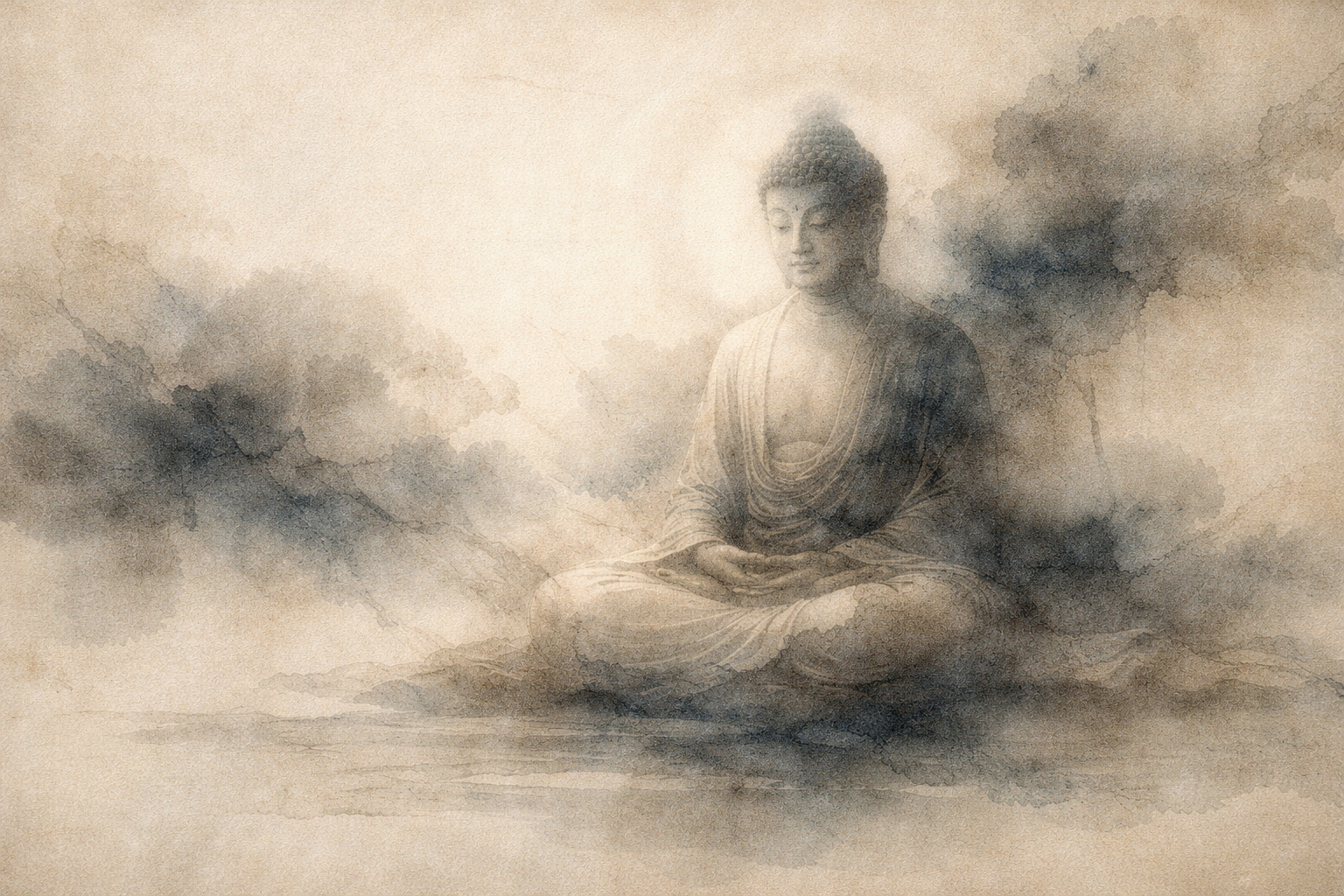
Quick Summary
- Siddhartha Gautama was a historical person in ancient India who became known as the Buddha (“the awakened one”).
- He was born into privilege, then left it behind after confronting sickness, aging, and death.
- His search wasn’t for a new belief, but for a practical end to human dissatisfaction and distress.
- After years of extremes, he emphasized a balanced approach often described as the “Middle Way.”
- He taught that suffering has causes we can observe, and that changing our relationship to craving and clinging changes our lives.
- His influence spread through teaching communities and oral tradition long before texts were written down.
- Understanding who Siddhartha Gautama was helps separate the human story from later legend and symbolism.
Introduction: Clearing Up Who Siddhartha Gautama Really Was
You’re probably stuck between two versions of Siddhartha Gautama: a distant, almost mythical figure on one side, and a vague “founder of Buddhism” label on the other. Neither helps much when you’re trying to understand who he was as a person, what problem he was trying to solve, and why his life still gets referenced in everyday conversations about suffering, attention, and peace of mind. At Gassho, we focus on clear, practice-oriented explanations grounded in widely shared historical and early textual sources.
Siddhartha Gautama is traditionally described as being born in the region around today’s Nepal/India border, into a wealthy family connected to a ruling clan. The details vary across sources, but the shape of the story is consistent: he had access to comfort, status, and protection from hardship—exactly the conditions many people assume should guarantee happiness.
Then the central tension appears: even with everything going “right,” he became preoccupied with what comfort can’t solve—aging, illness, loss, and death. That friction between a protected life and unavoidable reality is the engine of his story, and it’s why the question “who was Siddhartha Gautama?” is more than a history quiz.
He eventually left home, lived as a wandering seeker, and committed himself to understanding the roots of distress and the possibility of freedom from it. Whether you approach this as history, psychology, or spiritual biography, the point is the same: he treated suffering as something to investigate directly, not merely endure or explain away.
A Practical Lens: What His Life Was Pointing Toward
One helpful way to understand who Siddhartha Gautama was is to treat his life as a lens for seeing experience, not as a demand to adopt a belief system. The story isn’t mainly “a prince becomes holy.” It’s “a human being notices a problem that comfort can’t fix, then tests solutions until something actually works.”
In the traditional account, Siddhartha tried two common strategies for dealing with existential unease. First, he had the strategy of pleasure and security: if you can control your environment, you can control your mind. Then he tried the opposite: harsh self-denial and extreme discipline, as if pain could burn away confusion. Neither delivered what he was looking for.
What emerges from that failure is the core perspective associated with him: distress isn’t only caused by external conditions. It’s also shaped by internal habits—especially the way the mind grasps, resists, and builds an identity around what it wants and fears. This is not presented as a moral judgment; it’s more like a diagnosis of how reactivity works.
So when people ask “who was Siddhartha Gautama,” a grounded answer is: he was someone who insisted that the causes of suffering are observable in ordinary life, and that freedom is possible through understanding those causes and changing how we relate to them.
GASSHO
Ask and learn about Buddhism in daily life.
GASSHO is a Buddhist community app where you can learn Buddhist teachings and ask questions to the head priest of Kongosanmaiin Temple on Mount Koya.
How His Story Shows Up in Ordinary Moments
You don’t need ancient India to see the basic pattern Siddhartha Gautama was responding to. You can watch it in a normal morning: you wake up, check a message, and your mood shifts before you’ve even stood up. A single stimulus becomes a story, and the story becomes a self—“I’m behind,” “I’m not appreciated,” “I need to fix this now.”
Then comes the grasping. The mind reaches for something to stabilize itself: reassurance, control, distraction, a plan, a purchase, a perfect explanation. Even when you get what you want, the relief often doesn’t last, because the habit of needing relief is still running.
Or the opposite happens: resistance. You feel a difficult emotion and immediately tighten around it—jaw clenches, shoulders rise, attention narrows. The mind tries to push the feeling away, but the pushing becomes its own kind of suffering. The original discomfort is now paired with a second discomfort: “This shouldn’t be happening.”
In this light, Siddhartha Gautama’s life reads less like a distant legend and more like a careful study of reaction. He’s remembered for leaving luxury because luxury didn’t address the deeper instability of the mind. But the same dynamic appears when we chase smaller luxuries: the “just one more” scroll, snack, compliment, win, or certainty.
His turn away from extreme self-denial also maps onto everyday life. Many people try to solve inner pain by becoming harder on themselves: stricter routines, harsher self-talk, relentless self-optimization. Sometimes discipline helps, but when it becomes punishment, it often creates more tension, not less.
What’s left is a simple, testable orientation: notice what the mind does when it meets pleasure, pain, praise, blame, gain, and loss. Notice the speed of the reaction, the stories that form, and the way attention gets hijacked. The “Middle Way” here isn’t a slogan—it’s the lived experiment of not feeding either indulgence or self-attack.
Seen this way, the question “who was Siddhartha Gautama?” becomes intimate. He was someone who looked closely at the mechanics of dissatisfaction and asked what happens when you stop obeying every impulse to grasp or resist.
Common Misunderstandings About Siddhartha Gautama
One common misunderstanding is that Siddhartha Gautama was a god. In most early presentations, he’s described as a human being who woke up to how suffering works and then taught what he discovered. Later traditions may use more cosmic language, but the basic biography starts with a person, not a deity.
Another misunderstanding is that his life story is either 100% literal history or 100% fiction. A more realistic approach is to recognize layers: a historical teacher at the center, surrounded by symbolic storytelling that communicates meaning. The symbolism doesn’t automatically make the story “fake”; it often points to psychological truths in a memorable way.
It’s also easy to assume he rejected the world out of pessimism. But the motivation is better described as clarity: he saw that ordinary happiness is fragile when it depends on conditions that inevitably change. His search wasn’t “life is bad,” but “there must be a steadier freedom than temporary relief.”
Finally, people sometimes reduce him to a single event—“he meditated and became enlightened”—as if the rest is decoration. The traditional arc emphasizes long testing, mistakes, and refinement. That matters because it frames his teaching as experiential and investigative, not as a one-time miracle.
Why His Life Still Matters Today
Understanding who Siddhartha Gautama was helps you separate the heart of the message from the cultural packaging. The heart is about suffering and its causes—how craving, clinging, and confusion shape experience—and about the possibility of release through seeing clearly and living differently.
That matters because modern life is optimized for triggering grasping and resistance. Advertising, social media, and constant comparison all train the mind to reach outward for stability. Siddhartha’s story points back inward—not to self-absorption, but to direct observation of what actually drives stress.
It also matters because his biography models a kind of courage that doesn’t depend on drama. He didn’t solve the human condition by winning a debate or building an empire. He looked at the most universal facts—change, loss, uncertainty—and refused to pretend they weren’t there.
And finally, his life matters because it suggests a humane balance. Pleasure alone doesn’t satisfy; punishment doesn’t purify. A steady path is possible—one that reduces harm, clarifies attention, and makes room for compassion in ordinary relationships.
Conclusion: A Human Story With a Clear Aim
Who was Siddhartha Gautama? He was a historical seeker-teacher remembered for refusing easy answers to suffering. Born into privilege, he left it when he saw that comfort can’t protect the mind from change and loss. After testing extremes, he taught a balanced approach grounded in observation: distress has causes, those causes can be understood, and life can be lived with less grasping and more clarity.
If you keep his story at that human scale—curious, disciplined, unsentimental—it becomes easier to see why the Buddha’s life is still used as a mirror for our own.
Ask a Buddhist priest
Have a question about Buddhism?
In the GASSHO app, you can ask questions about Buddhist teachings, daily concerns, and how to understand Buddhism in everyday life.
Frequently Asked Questions
- FAQ 1: Who was Siddhartha Gautama in simple terms?
- FAQ 2: Was Siddhartha Gautama a real historical person?
- FAQ 3: Where was Siddhartha Gautama born?
- FAQ 4: Was Siddhartha Gautama a prince?
- FAQ 5: Why did Siddhartha Gautama leave his home life?
- FAQ 6: What does the name “Siddhartha Gautama” mean?
- FAQ 7: How did Siddhartha Gautama become the Buddha?
- FAQ 8: What is the “Middle Way” associated with Siddhartha Gautama?
- FAQ 9: Did Siddhartha Gautama teach a religion or a method?
- FAQ 10: What did Siddhartha Gautama teach about suffering?
- FAQ 11: When did Siddhartha Gautama live?
- FAQ 12: Did Siddhartha Gautama have a family?
- FAQ 13: Is Siddhartha Gautama the same as the Buddha?
- FAQ 14: What sources tell us who Siddhartha Gautama was?
- FAQ 15: Why is Siddhartha Gautama important today?
FAQ 1: Who was Siddhartha Gautama in simple terms?
Answer: Siddhartha Gautama was a historical teacher in ancient India who became known as the Buddha, meaning “the awakened one,” after dedicating his life to understanding suffering and how to end it.
Takeaway: He’s remembered as a human teacher focused on a practical solution to suffering.
FAQ 2: Was Siddhartha Gautama a real historical person?
Answer: Yes. While many details are preserved through religious tradition and later storytelling, most scholars accept that a real teacher lived in the 5th–4th century BCE range (dates vary) and became the central figure later called “the Buddha.”
Takeaway: There’s a historical core, even if some biography is symbolic or expanded later.
FAQ 3: Where was Siddhartha Gautama born?
Answer: Tradition places his birth in Lumbini, near the Himalayan foothills in a region associated with today’s Nepal, close to northern India.
Takeaway: His story begins in the Nepal–India border region of ancient South Asia.
FAQ 4: Was Siddhartha Gautama a prince?
Answer: Traditional accounts describe him as born into an elite, wealthy family connected to a ruling clan; “prince” is a common shorthand, though the exact political structure may not match later monarchies.
Takeaway: He likely grew up with high status and comfort, even if “prince” is simplified.
FAQ 5: Why did Siddhartha Gautama leave his home life?
Answer: The traditional biography says he was shaken by the realities of aging, sickness, and death and realized that comfort and status couldn’t solve the deeper problem of human suffering.
Takeaway: He left to search for a reliable freedom from suffering, not for adventure.
FAQ 6: What does the name “Siddhartha Gautama” mean?
Answer: “Siddhartha” is often explained as “one who achieves his aim” (or similar), and “Gautama” refers to his family/clan name in traditional usage; “Buddha” is a title meaning “awakened.”
Takeaway: “Siddhartha Gautama” is his personal name; “Buddha” is an honorific title.
FAQ 7: How did Siddhartha Gautama become the Buddha?
Answer: In the traditional account, after years of searching and experimenting with extreme practices, he adopted a balanced approach and had a profound awakening—understood as clear insight into the causes of suffering and the way to end it.
Takeaway: “Becoming the Buddha” refers to awakening through insight, not receiving a new identity by birth.
FAQ 8: What is the “Middle Way” associated with Siddhartha Gautama?
Answer: The Middle Way is the idea that neither indulgence in pleasure nor harsh self-mortification leads to freedom; a balanced, ethical, and mindful approach is more effective.
Takeaway: His life story emphasizes balance as a practical method, not a vague slogan.
FAQ 9: Did Siddhartha Gautama teach a religion or a method?
Answer: He is remembered for teaching a path—ethical living, mental training, and wisdom—aimed at reducing and ending suffering; over time, communities and traditions formed that became what we now call Buddhism.
Takeaway: The emphasis begins with practice and insight, later developing into religious forms.
FAQ 10: What did Siddhartha Gautama teach about suffering?
Answer: He taught that suffering (dissatisfaction, stress) has causes that can be understood—especially craving and clinging—and that changing those causes through a practical path can bring relief and freedom.
Takeaway: His teaching treats suffering as workable: understandable, not just inevitable.
FAQ 11: When did Siddhartha Gautama live?
Answer: Exact dates are debated, but he is commonly placed somewhere around the 5th century BCE (with some scholarly estimates spanning into the 4th century BCE).
Takeaway: The timeline is ancient and approximate, but the historical period is broadly agreed.
FAQ 12: Did Siddhartha Gautama have a family?
Answer: Traditional accounts say he married and had a son before leaving home to pursue his search; later stories describe eventual reconciliation and teaching within his extended community.
Takeaway: His biography includes ordinary human responsibilities, not only renunciation.
FAQ 13: Is Siddhartha Gautama the same as the Buddha?
Answer: Yes. Siddhartha Gautama is the personal name traditionally given to the person who later became known as “the Buddha,” a title meaning “the awakened one.”
Takeaway: “Buddha” is a title; Siddhartha Gautama is the person associated with that title.
FAQ 14: What sources tell us who Siddhartha Gautama was?
Answer: Much of what we know comes from early Buddhist texts preserved in different languages and traditions, plus historical and archaeological research that helps contextualize places, cultures, and timelines.
Takeaway: His life is known through a mix of early textual tradition and historical study.
FAQ 15: Why is Siddhartha Gautama important today?
Answer: He’s important because his life and teaching focus on a universal issue—human suffering—and offer a practical way to observe the mind, reduce harmful reactivity, and live with more clarity and compassion.
Takeaway: His relevance comes from addressing everyday distress with a workable approach.