



Savoring: How to Stay With a Pleasant Moment
Quick Summary
- Savoring means staying with a pleasant moment without squeezing it into a story or trying to make it last.
- The skill is simple: notice pleasure, soften around it, and let it be as it is.
- Savoring is different from chasing; it’s receptive rather than grasping.
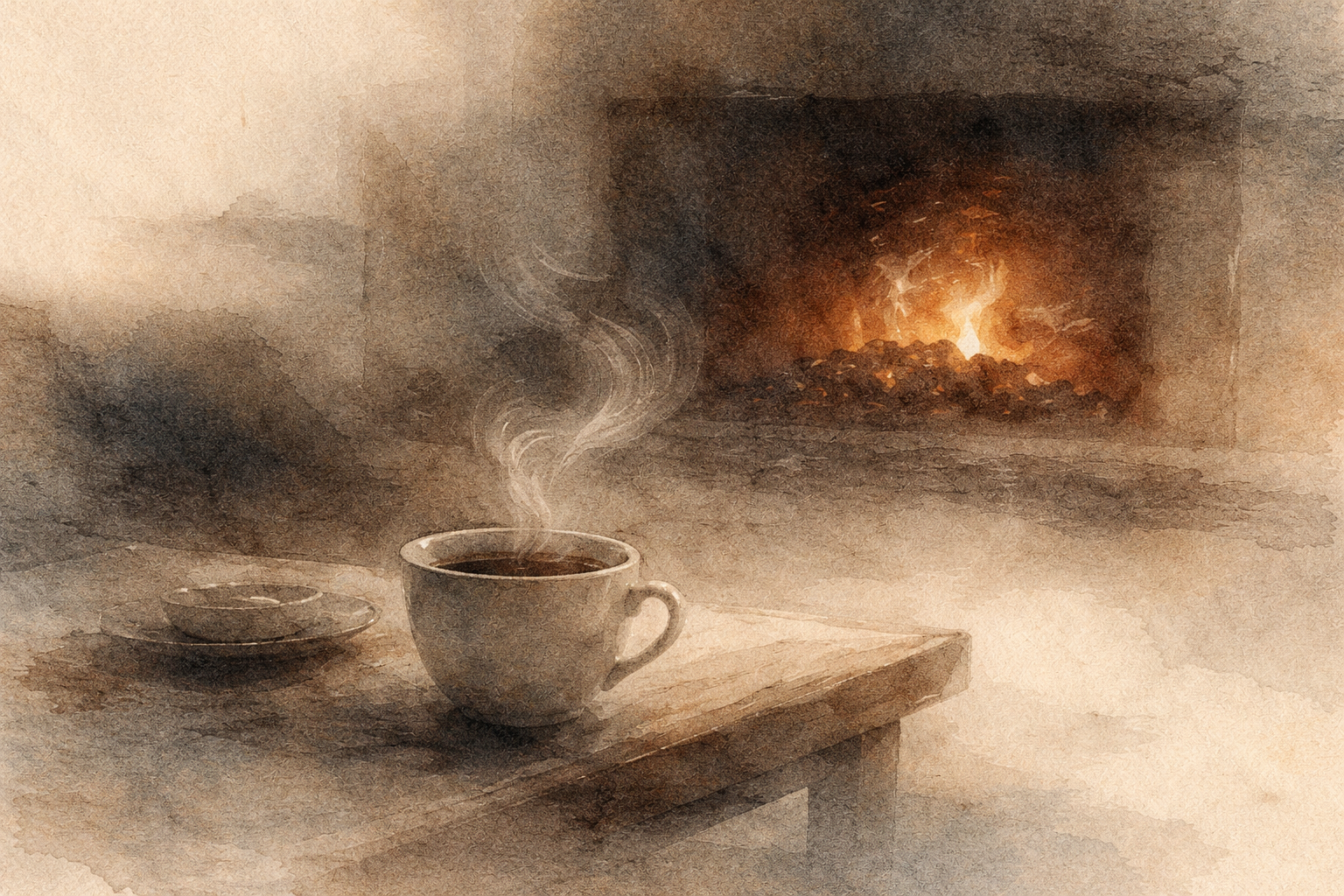
- Small moments work best: warm tea, sunlight, a kind message, a quiet breath.
- If anxiety shows up (“Don’t lose this”), that’s part of the experience to include, not a failure.
- Short, frequent savoring builds steadiness more reliably than rare “perfect” experiences.
- You can savor without clinging by letting the pleasantness change, fade, or end naturally.
Introduction
You finally get a pleasant moment—calm after a stressful day, a good conversation, a bite of food that lands just right—and almost immediately your mind either rushes ahead, tries to hold on, or starts worrying it will disappear. That reflex can make even happiness feel tense, like you’re responsible for keeping it alive. I’m writing from the perspective of a Zen-informed mindfulness practice focused on ordinary life and direct experience.
Savoring is a practical way to stay with what’s good without turning it into pressure. It’s not about forcing gratitude, manufacturing positivity, or pretending life is always sweet. It’s about learning how to receive a pleasant moment fully, with enough space that it can breathe.
A Simple Lens for Understanding Savoring
Savoring is the art of letting a pleasant experience register in the body and mind, on purpose, for a little longer than your usual autopilot would allow. The key word is “letting.” You’re not trying to intensify the moment or freeze it in place; you’re allowing it to be felt clearly.
A helpful lens is to distinguish between contact and grasping. Contact is the simple fact of pleasantness: warmth, ease, appreciation, relief, delight. Grasping is what often follows: “More,” “Again,” “Don’t change,” “This means I’m okay,” “What if it goes away?” Savoring stays closer to contact than to grasping.
Another way to see it: savoring is attention with a soft hand. Attention can be tight and controlling, like a fist. Or it can be steady and receptive, like an open palm. Pleasant moments tend to fade quickly when attention is absent, but they also get distorted when attention becomes possessive.
So the central perspective is simple: you can enjoy what’s pleasant without demanding that it last. When you stop negotiating with the moment—stop trying to convert it into security—there’s often more ease, and the pleasantness becomes cleaner and less anxious.
GASSHO
Ask and learn about Buddhism in daily life.
GASSHO is a Buddhist community app where you can learn Buddhist teachings and ask questions to the head priest of Kongosanmaiin Temple on Mount Koya.
What Savoring Feels Like in Real Life
It often starts as a tiny pause. You notice something good is happening: your shoulders drop, your breath smooths out, your chest feels open, your face relaxes. Without savoring, that signal gets skipped because the mind is already moving to the next task.
Then you do one small thing: you stay. You let the pleasantness be the main object for a few seconds. Not as a performance—more like listening closely to a quiet sound.
As you stay, you may notice the mind trying to “own” the experience. Thoughts appear: “This is nice,” “I needed this,” “I hope it continues,” “I should remember this.” Savoring doesn’t require you to stop those thoughts. It asks you to recognize them as additions, not the moment itself.
You might also notice a subtle fear underneath pleasure: the fear of losing it. That fear can tighten the body and shrink the experience. In savoring, you include the fear as part of what’s here—tightness in the belly, a little bracing in the jaw—while still letting the pleasantness be felt.
Often the pleasant moment changes when you pay attention. It may spread, soften, or become more textured. Or it may fade. Savoring is successful either way, because the point is not to keep the pleasure; the point is to meet it honestly while it’s present.
In ordinary situations, savoring can be very plain: the first sip of coffee, the sound of rain, the relief of taking off your shoes, the quiet after sending a difficult email, the comfort of clean sheets. These are not “special” experiences, but they are real, and they are available.
Over time, you may notice a shift: pleasant moments feel less like accidents and more like something you can actually receive. Not because you control life, but because you’re less absent for the good that already happens.
Common Misunderstandings That Make Savoring Hard
“Savoring means clinging.” Clinging tries to lock the moment in place. Savoring allows the moment to move. You can savor a sunset while fully knowing it will end.
“If I savor, I’ll jinx it or lose it faster.” What often makes pleasure feel fragile is the tension around it. Savoring is not superstition; it’s a way of relaxing the grip so the experience can be felt cleanly.
“Savoring is forcing positivity.” Real savoring is not a mood mandate. It’s simply giving a pleasant moment the dignity of your attention. If the day is hard, savoring might be as small as noticing one unforced breath.
“I should savor all the time.” That becomes another form of pressure. Savoring works best as a light, repeatable habit: a few seconds here and there, especially when you naturally notice something pleasant.
“Savoring means replaying memories.” Remembering can be sweet, but savoring is primarily about direct contact with what’s happening now. If you use memory, keep it embodied: notice what the recollection does in the body, rather than building a long story.
Why Savoring Matters in a Busy, Reactive Mind
Without savoring, the mind can become trained to register threats and problems more strongly than ease. That’s not a moral failing; it’s a common survival bias. But it can make life feel relentlessly sharp, even when good moments are present.
Savoring helps rebalance attention. It teaches the nervous system that safety and goodness are not only theoretical—they can be felt. This doesn’t erase difficulty, but it can reduce the sense of constant bracing.
It also changes how you relate to impermanence. When you practice receiving pleasant moments without demanding permanence, endings become less insulting. The moment can end without becoming a problem.
In relationships, savoring supports appreciation without possession. You can enjoy connection—laughter, warmth, shared silence—without turning it into a contract that the other person must keep delivering.
And practically, savoring is efficient. A few seconds of true contact can be more nourishing than an hour of distracted “treating yourself” while your mind is elsewhere.
Conclusion
Savoring is not about holding on to happiness. It’s about staying close to a pleasant moment long enough to actually feel it, while letting it be as changeable as it is. When you practice this gently—especially with small, ordinary pleasures—you build a steadier relationship with well-being: less chasing, less fear, more simple receiving.
If you want a simple practice, try this once today: when something pleasant appears, pause for three breaths, relax your face and belly, and feel the pleasantness directly. Let it come, let it change, let it go.
Ask a Buddhist priest
Have a question about Buddhism?
In the GASSHO app, you can ask questions about Buddhist teachings, daily concerns, and how to understand Buddhism in everyday life.
GASSHO is an app for exploring Buddhism in everyday life.
Learn more about Buddhist deities.


Frequently Asked Questions
- FAQ 1: What does “savoring” mean in mindfulness practice?
- FAQ 2: How is savoring different from craving?
- FAQ 3: Can savoring become a form of attachment?
- FAQ 4: What are quick ways to practice savoring during the day?
- FAQ 5: Why do pleasant moments disappear when I notice them?
- FAQ 6: Is savoring the same as gratitude?
- FAQ 7: How long should I savor a pleasant moment?
- FAQ 8: What if savoring makes me anxious about losing the feeling?
- FAQ 9: Can I savor something while it’s happening, or only afterward?
- FAQ 10: Does savoring help with stress?
- FAQ 11: What should I focus on when savoring—thoughts, emotions, or body sensations?
- FAQ 12: Can savoring backfire and make me want more pleasure?
- FAQ 13: How do I savor simple things when life feels dull?
- FAQ 14: Is savoring a distraction from difficult emotions?
- FAQ 15: What is one micro-practice for savoring I can do right now?
FAQ 1: What does “savoring” mean in mindfulness practice?
Answer: Savoring means intentionally staying with a pleasant experience—sensations, emotions, or simple ease—long enough to feel it clearly, without trying to force it to last or become bigger.
Takeaway: Savoring is receptive attention to pleasure, not a strategy to control it.
FAQ 2: How is savoring different from craving?
Answer: Craving adds pressure: “more,” “again,” “don’t change.” Savoring stays with what’s already here and lets it be temporary, focusing on direct felt experience rather than getting the next hit.
Takeaway: Craving reaches; savoring receives.
FAQ 3: Can savoring become a form of attachment?
Answer: It can if you use it to cling or to avoid reality. Healthy savoring includes the fact that the moment will change, and it relaxes the impulse to possess the pleasantness.
Takeaway: Savoring stays open to change; attachment tries to freeze.
FAQ 4: What are quick ways to practice savoring during the day?
Answer: Pause for three breaths, feel one pleasant sensation (warmth, ease, softness), relax the face and shoulders, and name it simply (“warm,” “relief,” “comfort”) without building a story.
Takeaway: Short pauses plus clear sensation is enough.
FAQ 5: Why do pleasant moments disappear when I notice them?
Answer: Often the noticing comes with tightening—trying to hold the feeling. That tension changes the body state, so the pleasantness shifts or fades. Try noticing with a softer, more curious attention.
Takeaway: The “loss” is often the grip, not the moment.
FAQ 6: Is savoring the same as gratitude?
Answer: They overlap, but savoring is primarily sensory and immediate (feeling the good), while gratitude often includes reflection (recognizing what supports the good). You can practice either, or combine them gently.
Takeaway: Savoring is felt contact; gratitude is often felt contact plus recognition.
FAQ 7: How long should I savor a pleasant moment?
Answer: Long enough to register it—often 10 to 30 seconds is plenty. If you feel strain or performance pressure, shorten it. Frequent small savoring tends to work better than rare long sessions.
Takeaway: Aim for repeatable, not heroic.
FAQ 8: What if savoring makes me anxious about losing the feeling?
Answer: Include the anxiety as part of the experience: notice where it lives in the body, soften around it, and return to the pleasant sensation. You’re practicing being with both without needing certainty.
Takeaway: Savoring can hold pleasure and fear in the same open attention.
FAQ 9: Can I savor something while it’s happening, or only afterward?
Answer: You can savor in real time by feeling the sensory details as they occur. Afterward, you can also savor by recalling the moment and noticing the bodily response, but keep it grounded rather than turning it into rumination.
Takeaway: Real-time savoring is simplest; memory-based savoring works best when embodied.
FAQ 10: Does savoring help with stress?
Answer: It can, because it trains attention to recognize and absorb brief moments of safety and ease, which can reduce constant bracing. It won’t remove stressors, but it can change how your system recovers.
Takeaway: Savoring supports recovery by letting ease actually land.
FAQ 11: What should I focus on when savoring—thoughts, emotions, or body sensations?
Answer: Body sensations are usually the most stable entry point: warmth, softness, openness, ease in breathing. Emotions and thoughts can be included, but anchoring in the body helps prevent drifting into stories.
Takeaway: Start with the body; let thoughts be secondary.
FAQ 12: Can savoring backfire and make me want more pleasure?
Answer: If savoring turns into “I must keep this,” it can feed wanting. Keep the emphasis on allowing and appreciating the moment’s natural arc, including its ending, and the practice stays balanced.
Takeaway: Savoring stays healthy when it includes letting the moment end.
FAQ 13: How do I savor simple things when life feels dull?
Answer: Go smaller and more sensory: temperature on the skin, the weight of your feet on the floor, the first breath after stepping outside. Dullness often shifts when attention becomes precise and gentle.
Takeaway: Precision with small sensations can reopen access to pleasantness.
FAQ 14: Is savoring a distraction from difficult emotions?
Answer: It can be used that way, but it doesn’t have to be. Skillful savoring doesn’t deny pain; it simply allows genuine pleasant moments to be felt too, which can bring balance and resilience.
Takeaway: Savoring is not denial when it’s paired with honesty about difficulty.
FAQ 15: What is one micro-practice for savoring I can do right now?
Answer: Exhale slowly, relax your jaw and eyes, and find one pleasant or neutral-comfortable sensation (even mild). Stay with it for three breaths, letting it be exactly as strong or weak as it is.
Takeaway: Three soft breaths can be a complete savoring practice.