



What Does Rokudo Mean? The Six Paths in Japanese Buddhism Explained
Quick Summary
- Rokudō (六道) literally means “the six paths” or “six realms” in Japanese Buddhist language.
- It points to six recurring modes of experience shaped by habit, emotion, and action—not just a distant cosmology.
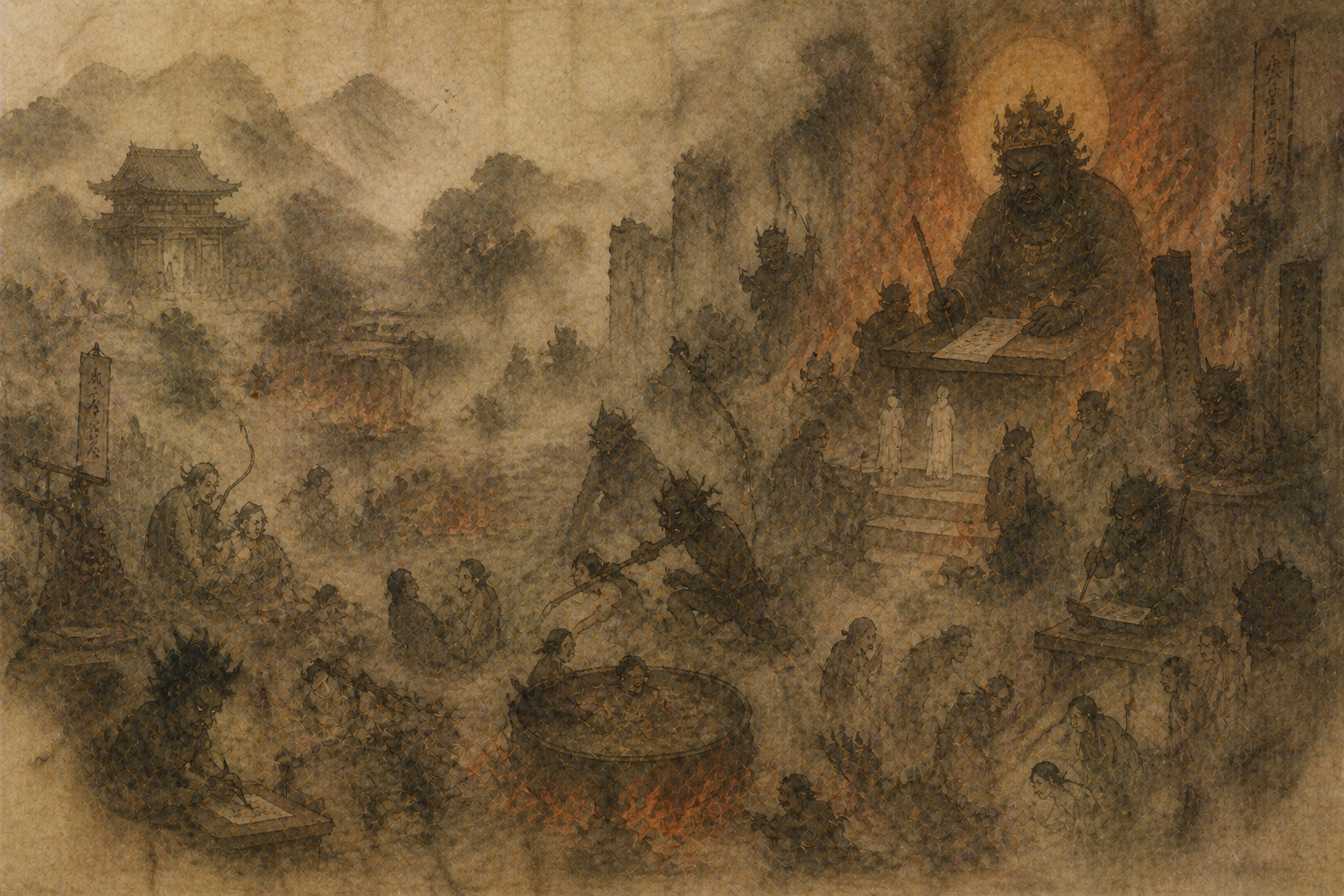
- The six are commonly listed as: hell, hungry ghosts, animals, asuras, humans, and devas.
- In everyday terms, rokudō can be read as six “worlds” you cycle through when the mind locks into certain reactions.
- The teaching is less about labeling people and more about noticing patterns and loosening their grip.
- “Rokudō” often appears with rinne (輪廻, cyclic wandering), but it can also be used as a practical mirror for daily life.
- Understanding the rokudō meaning helps you recognize suffering early and choose a more skillful response.
Introduction: What People Usually Mean When They Ask “Rokudō Meaning”
You’ve probably seen “rokudō” translated as “the six realms” and felt stuck on what that’s supposed to mean in real life: is it a literal map of the universe, a moral threat, or just poetic language? The most useful way to approach the rokudō meaning is as a clear description of how the mind creates worlds—over and over—through craving, aversion, and confusion. This explanation is written for Gassho, a Zen/Buddhism site focused on practical clarity over mystique.
In Japanese, rokudō is written 六道: roku (six) and dō (path, way, track). “Path” here doesn’t have to mean a road you travel with your feet; it can mean a channel your life falls into when certain conditions are present—especially strong emotions and repeated habits.
The classic list of six is familiar: hell beings, hungry ghosts, animals, asuras (fighting spirits), humans, and devas (heavenly beings). But the point of learning the list isn’t to memorize a chart. It’s to recognize the flavor of each realm as it appears in your own attention, speech, and choices.
A Clear Lens: Rokudō as Six Repeating Modes of Mind
As a lens for understanding experience, rokudō describes how a single day can contain multiple “worlds.” Not different physical locations, but different felt realities—each one convincing while you’re inside it. When the mind is dominated by a particular reaction, it narrows what you can see, what you can imagine, and what you think is possible.
In this sense, the six paths are not a belief you must adopt. They are a set of recognizable patterns: intense aversion can feel like a hell realm; compulsive wanting can feel like a hungry ghost realm; dullness and inertia can feel like an animal realm; comparison and rivalry can feel like an asura realm; ordinary mixed life—with both pain and insight—resembles the human realm; and comfortable pleasure with subtle complacency resembles the deva realm.
What makes them “paths” is repetition. A reaction happens, it gets reinforced, and soon it becomes the default route your mind takes under stress. Rokudō is a way to name those routes without turning them into a personal identity.
Seen this way, the rokudō meaning is practical: it helps you notice when you’ve entered a constricted world and gives you language to pause, widen attention, and respond with a bit more freedom.
GASSHO
Ask and learn about Buddhism in daily life.
GASSHO is a Buddhist community app where you can learn Buddhist teachings and ask questions to the head priest of Kongosanmaiin Temple on Mount Koya.
How the Six Paths Show Up in Ordinary Moments
In daily life, the “realm” you’re in often shows up first as a shift in the body: tightness in the chest, heat in the face, a restless buzzing, or a heavy fog. Before you have a story, you have a tone. Rokudō becomes visible when you learn to respect that early signal.
The hell path doesn’t require dramatic events. It can be the moment irritation hardens into certainty: everything feels unbearable, and the mind searches for someone or something to blame. Attention becomes narrow, and even neutral details look hostile.
The hungry ghost path can look like scrolling, snacking, checking messages, or chasing reassurance—anything that promises relief but doesn’t satisfy. The key feeling is “not enough.” Even when you get what you wanted, the mind quickly reaches again.
The animal path often appears as autopilot. You do what you always do, not because you chose it, but because it’s familiar. There may be comfort in routine, but also a reduced sensitivity—less curiosity, less willingness to look closely.
The asura path is the realm of comparison and friction. A small comment can become a contest; a coworker’s success can feel like a personal threat. The mind keeps score, rehearses arguments, and looks for advantage, even when you’d rather relax.
The human path is not “perfect balance.” It’s the ordinary capacity to reflect: you can feel desire or anger and still recognize, “This is a reaction.” There’s enough space to learn, apologize, start again, and act with some care even when things are messy.
The deva path can be subtle because it feels good. Life is comfortable, praise comes easily, and problems seem far away. The risk isn’t pleasure itself; it’s drifting into numbness—forgetting that conditions change and that other people may be struggling right beside you.
Common Misunderstandings About Rokudō
Misunderstanding 1: “Rokudō is only about the afterlife.” Many people meet the six paths as a cosmological teaching, so they assume it’s irrelevant unless you accept literal rebirth. But even without making metaphysical claims, rokudō still functions as a precise map of recurring mental worlds that can be observed directly.
Misunderstanding 2: “Each realm is a type of person.” It’s tempting to label others—“he’s an asura,” “she’s a hungry ghost.” That misses the point. Rokudō is most useful when applied inwardly and gently: “What realm am I building right now?”
Misunderstanding 3: “The goal is to stay in the human realm all the time.” The teaching isn’t a performance metric. People cycle through these states. The practical shift is earlier recognition and less compulsion—catching the movement before it becomes speech you regret or choices you can’t undo.
Misunderstanding 4: “Deva realm means spiritual success.” Pleasant states can be wholesome, but the deva pattern warns about comfort that dulls awareness. If ease makes you less attentive, less compassionate, or less honest, it’s still a kind of trap.
Why Knowing the Rokudō Meaning Helps in Daily Life
Rokudō gives you a vocabulary for what’s otherwise vague: “I’m just in a mood.” When you can name the pattern, you can work with it. Naming isn’t about judging yourself; it’s about seeing clearly enough to choose.
It also reduces shame. If you recognize that anger, craving, dullness, rivalry, and complacency are common human patterns, you’re less likely to treat them as personal failure. That makes it easier to take responsibility without self-hatred.
In relationships, the six paths can be a quiet checkpoint. Before sending the message, before making the comment, you can ask: “Which realm is speaking?” That single pause often changes the outcome more than any perfect advice.
Finally, rokudō points to compassion in a grounded way. When you see that people act from constricted worlds, you don’t have to excuse harm—but you can respond with more steadiness, less escalation, and a clearer sense of what actually helps.
Conclusion: Rokudō as a Map You Can Use Right Now
The simplest rokudō meaning is “six paths,” but the useful meaning is “six ways the mind builds a world.” Whether you read the realms literally, symbolically, or psychologically, the teaching points to something immediate: your experience changes when your reactions change. When you learn to recognize the realm you’re entering, you gain a little space—enough to soften, to refrain, to speak more carefully, and to begin again.
Ask a Buddhist priest
Have a question about Buddhism?
In the GASSHO app, you can ask questions about Buddhist teachings, daily concerns, and how to understand Buddhism in everyday life.
Frequently Asked Questions
- FAQ 1: What is the literal rokudo meaning in Japanese?
- FAQ 2: What are the six paths in the rokudo meaning?
- FAQ 3: Is rokudo meaning “six realms” or “six paths”?
- FAQ 4: Does rokudo meaning always imply rebirth?
- FAQ 5: What does “dō” mean in rokudō?
- FAQ 6: How is rokudo meaning used in Japanese Buddhist language?
- FAQ 7: What is the difference between rokudo and rinne?
- FAQ 8: Is rokudo meaning the same as “the wheel of life”?
- FAQ 9: Can rokudo meaning be understood psychologically?
- FAQ 10: What is the “human realm” in the rokudo meaning?
- FAQ 11: What is the “deva realm” in the rokudo meaning?
- FAQ 12: What is the “asura realm” in the rokudo meaning?
- FAQ 13: What is the “hungry ghost realm” in the rokudo meaning?
- FAQ 14: What is the “hell realm” in the rokudo meaning?
- FAQ 15: Why do people study rokudo meaning today?
FAQ 1: What is the literal rokudo meaning in Japanese?
Answer: Rokudō (六道) literally means “six paths” or “six ways,” from roku (six) and dō (path/way). In Buddhist usage it refers to six recurring realms or modes of existence/experience.
Takeaway: Rokudō literally means “six paths,” and it points to a structured set of six realms.
FAQ 2: What are the six paths in the rokudo meaning?
Answer: The six are typically listed as: hell (naraka), hungry ghosts (preta), animals, asuras, humans, and devas (heavenly beings). Japanese sources may use terms like jigoku, gaki, chikushō, shura, ningen, and ten.
Takeaway: Rokudō refers to a standard set of six realms, often named with Japanese equivalents.
FAQ 3: Is rokudo meaning “six realms” or “six paths”?
Answer: Both translations are common. “Six paths” stays closer to the literal meaning of 道 (dō, path/way), while “six realms” emphasizes the idea of distinct worlds of experience. In practice, they refer to the same teaching.
Takeaway: “Six paths” and “six realms” are two standard ways to translate rokudō.
FAQ 4: Does rokudo meaning always imply rebirth?
Answer: Traditionally, rokudō is discussed in connection with rebirth and cyclic existence. But many modern readers also use the term to describe observable “mental realms” that arise moment to moment—without making a claim about the afterlife.
Takeaway: Rokudō is traditionally tied to rebirth, but it can also be read as a practical map of lived experience.
FAQ 5: What does “dō” mean in rokudō?
Answer: Dō (道) means “way,” “path,” or “route.” In the rokudō meaning, it suggests a track that beings (or the mind) move along due to causes and conditions, especially habitual actions and reactions.
Takeaway: The “dō” in rokudō highlights repeated pathways rather than a single fixed identity.
FAQ 6: How is rokudo meaning used in Japanese Buddhist language?
Answer: In Japanese Buddhist contexts, rokudō commonly refers to the six realms within cyclic existence and appears in phrases about wandering, suffering, and liberation. It can also be used as a shorthand for the range of conditioned states beings cycle through.
Takeaway: In Japanese usage, rokudō is a familiar term for the six-realm framework of cyclic life.
FAQ 7: What is the difference between rokudo and rinne?
Answer: Rinne (輪廻) means cyclic wandering or transmigration—repeating cycles driven by causes and conditions. Rokudō names the six destinations/realms within that cycle. Rinne is the cycle; rokudō is the sixfold map within it.
Takeaway: Rinne describes the cycle itself, while rokudō describes the six realms within the cycle.
FAQ 8: Is rokudo meaning the same as “the wheel of life”?
Answer: They’re related but not identical. The “wheel of life” is a broader symbolic diagram that often includes the six realms as one part of its structure. Rokudō specifically refers to the six paths/realms themselves.
Takeaway: Rokudō is the six-realm component often shown within the larger “wheel of life” imagery.
FAQ 9: Can rokudo meaning be understood psychologically?
Answer: Yes. Many people interpret the six paths as recurring mind-states: hell as intense aversion, hungry ghosts as compulsive craving, animals as dull habit, asuras as rivalry, humans as reflective balance, and devas as pleasurable ease with potential complacency.
Takeaway: Rokudō can function as a practical psychological map of repeating emotional worlds.
FAQ 10: What is the “human realm” in the rokudo meaning?
Answer: In the six-path framework, the human realm is the condition where pleasure and pain are mixed and reflection is possible. It’s often described as a situation where insight and ethical choice can arise because life isn’t only torment or only comfort.
Takeaway: The human realm in rokudō highlights the everyday mix that supports reflection and choice.
FAQ 11: What is the “deva realm” in the rokudo meaning?
Answer: The deva realm refers to a state of pleasure, ease, and refined enjoyment. In the rokudō meaning, it can also imply the risk of complacency—getting so comfortable that you stop noticing impermanence or the suffering of others.
Takeaway: Deva realm means comfort and pleasure, with a caution about drifting into unawareness.
FAQ 12: What is the “asura realm” in the rokudo meaning?
Answer: The asura realm is commonly associated with conflict, jealousy, and competitiveness. As a lived pattern, it’s the mindset that turns life into a contest—always comparing, always needing to win, rarely feeling at ease.
Takeaway: Asura realm in rokudō points to rivalry and comparison as a self-perpetuating world.
FAQ 13: What is the “hungry ghost realm” in the rokudo meaning?
Answer: The hungry ghost realm (often called gaki in Japanese) symbolizes insatiable craving—wanting that can’t be satisfied. In practical terms, it’s the “not enough” feeling that keeps reaching for more even after getting what it asked for.
Takeaway: Hungry ghost realm means compulsive wanting that doesn’t resolve into contentment.
FAQ 14: What is the “hell realm” in the rokudo meaning?
Answer: The hell realm refers to intense suffering and torment. Read as a mind-state, it can describe moments when anger, fear, or despair becomes all-consuming and the world feels hostile, tight, and inescapable.
Takeaway: Hell realm in rokudō can be understood as overwhelming aversion and suffering.
FAQ 15: Why do people study rokudo meaning today?
Answer: People study the rokudō meaning because it offers a memorable framework for recognizing recurring patterns of suffering and reactivity. Whether taken literally or as a mirror of the mind, it helps identify “which world” you’re creating and where a small pause could change your next action.
Takeaway: Rokudō remains relevant because it names repeatable patterns and supports clearer, kinder choices.