



Why Do We Keep Replaying the Past? A Buddhist Explanation
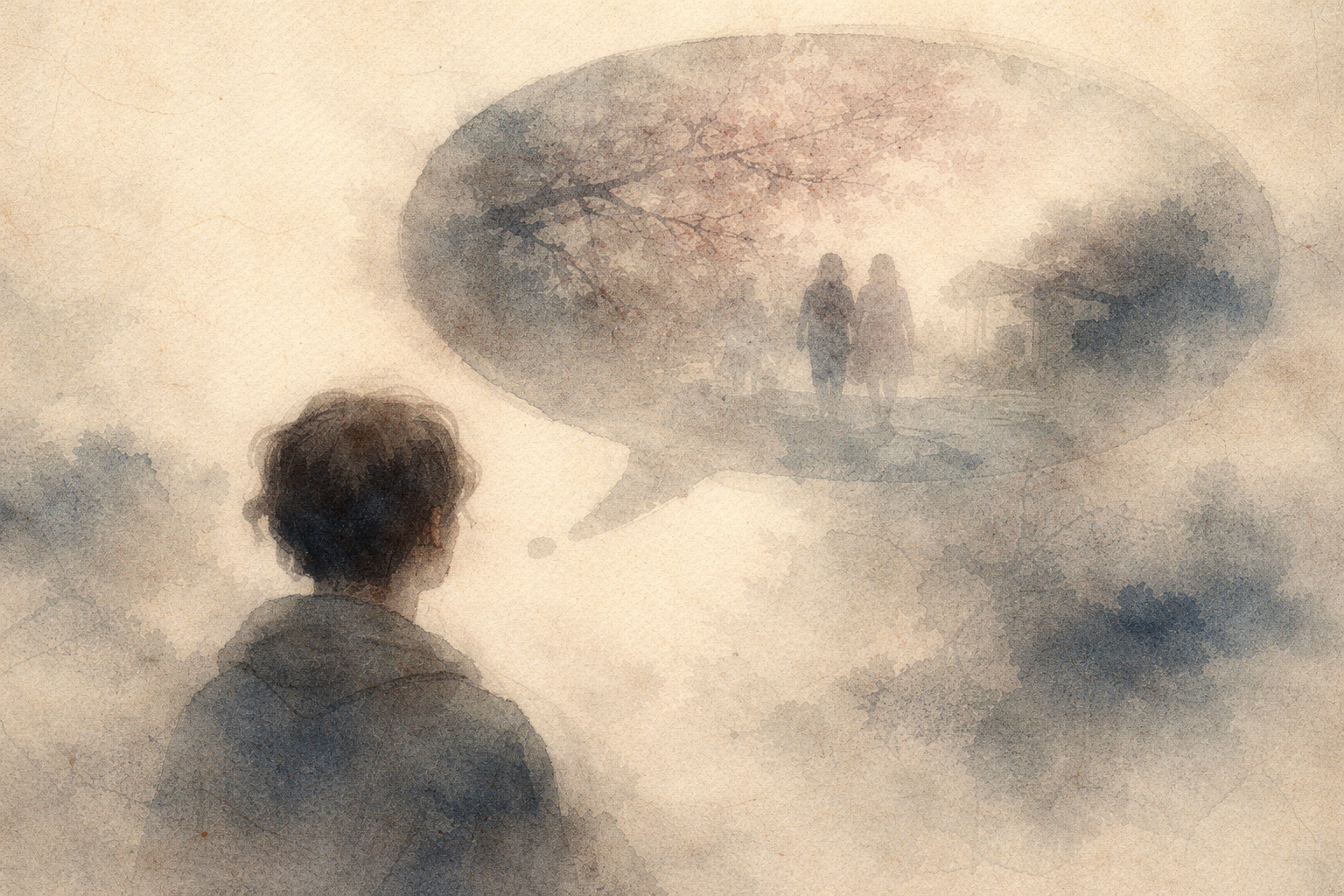
Quick Summary
- Replaying the past is often the mind trying to regain control, safety, or a sense of “who I am.”
- In Buddhism, the loop is fueled by craving (wanting a different past) and aversion (not wanting what happened).
- Memory isn’t the problem; clinging to the story and the emotion is what keeps it running.
- Watching the replay as a present-moment event (thought + body feeling) loosens its grip.
- Guilt, shame, and resentment often hide a demand: “This should not have happened.”
- Relief comes from meeting the pain directly, without feeding it with extra commentary.
- A small daily practice: name the replay, feel the body, soften the demand, choose the next action.
Why the Mind Won’t Stop Rewinding
You’re not “stuck in the past” because you enjoy it—you’re stuck because some part of you believes the replay will finally produce a different ending: a better choice, a cleaner explanation, an apology that lands, a version of you that feels acceptable. The problem is that the mind can simulate the past endlessly, but it can’t actually change it, so the replay becomes a treadmill that burns attention and still feels unfinished. At Gassho, we write about Buddhist practice as a practical way to work with everyday mental loops, not as a set of beliefs you have to adopt.
A Buddhist Lens on Replaying the Past
From a Buddhist perspective, “replaying the past” is less about the past and more about what’s happening right now: a thought appears, a feeling tone follows, the body tightens, and the mind tries to solve discomfort by thinking harder. The replay is a present-moment strategy—often automatic—for managing pain, uncertainty, or threat.
A key lens here is that suffering grows when the mind adds clinging to experience. Clinging can look like craving (wanting the past to be different, wanting approval, wanting certainty) or aversion (pushing away what happened, resisting the feeling it brings up). When craving and aversion are active, memory stops being information and becomes a battleground.
Another helpful idea is that the “story of me” is continually being rebuilt. When something in the past threatens that story—“I’m a good person,” “I’m safe,” “I’m respected,” “I’m in control”—the mind replays events to repair identity. It searches for the perfect interpretation that will restore a stable sense of self.
This isn’t framed as a moral failing. It’s a conditioned pattern: when pain arises, the mind reaches for what it knows—analysis, rehearsal, self-criticism, blame—because those feel like action. The Buddhist invitation is to see the replay clearly as a process, and then relate to it with more space and less compulsion.
What the Replay Feels Like in Real Life
The loop often starts small: a phrase you said “wrong,” a look someone gave you, a moment you didn’t stand up for yourself. The mind pulls the clip forward while you’re brushing your teeth or answering emails, and suddenly you’re back there, trying to edit the scene.
Notice how quickly the body joins in. The chest tightens, the jaw sets, the stomach drops, the face warms. Even if the memory is “just thoughts,” the nervous system treats it like a live event. This is one reason the replay feels urgent: it’s not only mental; it’s physiological.
Then comes the commentary. The mind adds verdicts: “I always do this,” “They think I’m weak,” “I ruined everything,” “I should have known.” These sentences feel like truth, but they’re often attempts to create certainty. If you can pin down the meaning, you can feel safer—at least temporarily.
Sometimes the replay is fueled by guilt. You keep returning to the moment because you want to undo harm, prove you’re not that person, or find a punishment that finally “balances the books.” Other times it’s fueled by resentment: you replay to build a case, to justify anger, to protect yourself from being naive again.
There can also be a quieter version: nostalgia that turns into ache. You replay a relationship, a home, a time when you felt more alive. The mind tries to hold what was pleasant, and the holding itself becomes painful because it highlights what’s gone.
In all these cases, the loop is maintained by a subtle demand: “This should not have happened,” or “This should have lasted,” or “I must figure this out before I can relax.” When that demand is believed, the mind keeps working the same material, hoping effort will produce relief.
A practical shift is to recognize the replay as an event happening now: a memory-image, a sentence in the mind, a surge in the body. When you see it this way, you don’t have to win the argument inside your head—you can attend to the actual experience that’s asking for care.
Misunderstandings That Keep the Loop Going
One common misunderstanding is thinking that stopping the replay means suppressing memory. Buddhism doesn’t require amnesia. The issue isn’t remembering; it’s compulsive re-living with clinging—feeding the same storyline until it feels “resolved,” even when it never resolves that way.
Another misunderstanding is believing the replay is productive because it feels serious. Rumination often masquerades as responsibility: “If I keep thinking, I’m being accountable.” But accountability is usually clearer and simpler than rumination: it leads to a specific repair, a lesson learned, or a boundary set—not endless mental punishment.
It’s also easy to assume the goal is to replace “negative thoughts” with “positive thoughts.” A Buddhist approach is more grounded: see the thought as a thought, feel the feeling as a feeling, and reduce the extra fuel you add. Relief doesn’t always come from a better story; it often comes from less attachment to any story.
Finally, people sometimes use spiritual ideas to bypass pain: “It’s all impermanent, so it shouldn’t hurt.” Impermanence doesn’t erase grief, regret, or anger. It simply points out that these experiences move and change when they’re met directly, rather than rehearsed and reinforced.
How This Helps You Live More Freely
When you understand replaying the past through a Buddhist lens, you stop treating the loop as a personal defect and start treating it as a pattern you can relate to differently. That alone reduces shame, which is often the hidden accelerant behind rumination.
It also clarifies what to do with the energy inside the replay. Instead of trying to “solve” the past, you can ask: what is the present-moment need underneath this? Safety, forgiveness, clarity, rest, a difficult conversation, a change in behavior. The mind may be stuck on old footage, but the need is current.
A simple practice is to interrupt the loop at the level of experience. Silently label what’s happening: “replaying.” Then feel the body for ten seconds without fixing it. Then name the demand you’re believing (“this shouldn’t have happened,” “I must be perfect,” “they must understand”). Softening that demand—just a little—often creates space.
From that space, you can choose one small next action that’s real: write an apology, set a boundary, schedule therapy, take a walk, or do nothing and rest. Buddhism is pragmatic here: freedom is not a special mood; it’s the ability to respond rather than react.
Conclusion
Replaying the past is the mind’s attempt to protect you with the tools it has: analysis, rehearsal, self-judgment, blame, longing. A Buddhist explanation doesn’t ask you to deny memory or force calm; it asks you to see the replay as a present event fueled by clinging, and to meet it with clearer attention and less demand. When the loop is seen and felt without being fed, it gradually loses authority—and your life returns to what can actually be lived: this moment, and the next honest step.
Frequently Asked Questions
- FAQ 1: What does “replaying the past” mean in Buddhism?
- FAQ 2: Why do I keep replaying the past according to Buddhism?
- FAQ 3: Is replaying the past the same as mindfulness in Buddhism?
- FAQ 4: Does Buddhism say I should stop thinking about the past entirely?
- FAQ 5: How does craving and aversion fuel replaying the past in Buddhism?
- FAQ 6: What is a Buddhist way to interrupt replaying the past in the moment?
- FAQ 7: Is replaying the past considered suffering (dukkha) in Buddhism?
- FAQ 8: How does Buddhism explain replaying the past after a mistake?
- FAQ 9: How does Buddhism view replaying the past when someone hurt me?
- FAQ 10: What does Buddhism say about regret and replaying the past?
- FAQ 11: Is replaying the past a form of attachment in Buddhism?
- FAQ 12: How can I tell the difference between reflection and replaying the past in Buddhism?
- FAQ 13: Does Buddhism recommend forgiveness to stop replaying the past?
- FAQ 14: How does impermanence relate to replaying the past in Buddhism?
- FAQ 15: What is one daily Buddhist practice for replaying the past?
FAQ 1: What does “replaying the past” mean in Buddhism?
Answer: In Buddhism, replaying the past is understood as a present-moment mental loop: memories and stories arise, and the mind clings to them through craving (wanting a different outcome) or aversion (rejecting what happened). The suffering comes less from the memory itself and more from the attachment to it.
Takeaway: The “past” you’re stuck in is often a current pattern of clinging.
FAQ 2: Why do I keep replaying the past according to Buddhism?
Answer: A Buddhist explanation is that the mind replays the past to seek relief—trying to regain control, certainty, or a stable sense of self. The loop continues because it temporarily feels like problem-solving, even when it reinforces tension and dissatisfaction.
Takeaway: The replay is an attempt at relief that accidentally becomes more suffering.
FAQ 3: Is replaying the past the same as mindfulness in Buddhism?
Answer: No. Mindfulness notices memories as they arise without getting pulled into the storyline. Replaying the past is getting absorbed in the narrative and emotionally re-living it, often with judgment, blame, or longing.
Takeaway: Mindfulness observes the replay; it doesn’t ride along with it.
FAQ 4: Does Buddhism say I should stop thinking about the past entirely?
Answer: Buddhism doesn’t require eliminating memory or reflection. It points to the difference between useful recollection (learning, making amends, planning wisely) and compulsive rumination that’s driven by clinging and keeps re-opening the same wound.
Takeaway: The goal isn’t no memory—it’s less compulsive attachment.
FAQ 5: How does craving and aversion fuel replaying the past in Buddhism?
Answer: Craving shows up as “I need the past to be different” or “I need them to approve of me.” Aversion shows up as “I can’t stand that this happened” or “I can’t feel this.” These pushes and pulls keep attention locked onto the same memory-track.
Takeaway: The loop runs on wanting and resisting, not on the memory itself.
FAQ 6: What is a Buddhist way to interrupt replaying the past in the moment?
Answer: A simple approach is: recognize “replaying,” feel the body sensations that come with it, and soften the demand underneath (such as “this shouldn’t have happened”). Then return attention to one concrete action you can do now, even if it’s small.
Takeaway: Name it, feel it, soften it, choose the next step.
FAQ 7: Is replaying the past considered suffering (dukkha) in Buddhism?
Answer: It can be, especially when it’s repetitive, involuntary, and tied to clinging. Buddhism describes dukkha as the stress and dissatisfaction that arise when we grasp at experience or push it away—exactly the dynamic that often powers rumination.
Takeaway: Replaying becomes dukkha when it’s driven by attachment and resistance.
FAQ 8: How does Buddhism explain replaying the past after a mistake?
Answer: The mind may replay to punish itself, to restore a sense of being “good,” or to find a perfect explanation that removes uncertainty. A Buddhist framing encourages remorse that leads to wise action (repair, learning) rather than endless self-attack that keeps the mind trapped.
Takeaway: Let remorse guide repair, not rumination.
FAQ 9: How does Buddhism view replaying the past when someone hurt me?
Answer: Replaying can be the mind trying to protect you by building a case, rehearsing arguments, or re-experiencing anger to feel strong. Buddhism doesn’t deny harm; it suggests noticing how the replay adds extra suffering and exploring responses that reduce ongoing inner burning.
Takeaway: Acknowledge harm while seeing how replaying keeps the injury active inside.
FAQ 10: What does Buddhism say about regret and replaying the past?
Answer: Regret can be a signal that values matter and that change is possible. Buddhism encourages turning regret into clear intention and skillful action now, rather than using regret as a reason to repeatedly re-live the same scene.
Takeaway: Regret is useful when it becomes present-day wisdom.
FAQ 11: Is replaying the past a form of attachment in Buddhism?
Answer: Often, yes. It can be attachment to being right, to being seen a certain way, to a lost pleasure, or to an identity that feels threatened. The replay tries to secure something that can’t be secured through thinking alone.
Takeaway: The mind replays to hold onto what feels unstable.
FAQ 12: How can I tell the difference between reflection and replaying the past in Buddhism?
Answer: Reflection tends to be brief, specific, and action-oriented: “What happened, what did I learn, what will I do?” Replaying is repetitive, emotionally charged, and circular, often ending in the same blame, shame, or anger without new clarity.
Takeaway: Reflection leads to a next step; replaying leads to another lap.
FAQ 13: Does Buddhism recommend forgiveness to stop replaying the past?
Answer: Forgiveness can help, but in Buddhism it’s usually approached as releasing ongoing hostility and self-torment, not pretending nothing happened. Sometimes forgiveness is gradual and begins with simply not feeding the replay with more harshness.
Takeaway: Forgiveness is often the easing of inner grip, not a forced declaration.
FAQ 14: How does impermanence relate to replaying the past in Buddhism?
Answer: Impermanence points out that thoughts, emotions, and body sensations change when they’re observed without clinging. Seeing the replay as a changing process—rather than a fixed truth—can reduce the sense that you must solve it before you can be okay.
Takeaway: The replay feels solid, but it’s made of shifting moments.
FAQ 15: What is one daily Buddhist practice for replaying the past?
Answer: Once a day, pause when a replay starts and do three steps: (1) label it “replaying,” (2) feel three body sensations without explaining them, and (3) ask, “What kind action can I take now?” Then do one small action, even if it’s just a breath and returning to your task.
Takeaway: Train attention to move from replay to embodied presence and wise action.