



What Does Red Mean in Buddhism? Energy, Protection, and Transformation
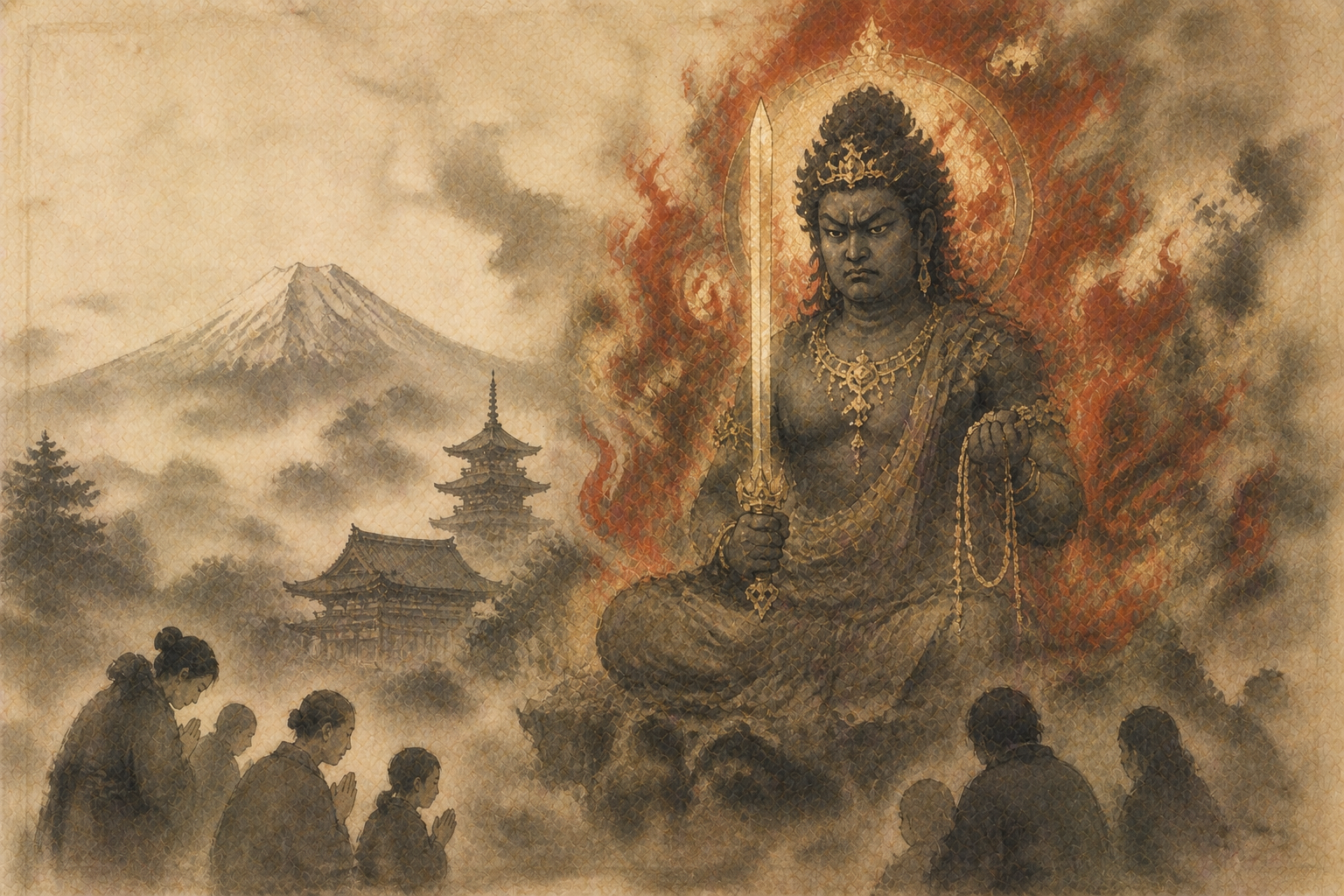
Quick Summary
- In Buddhism, red often points to vivid life-energy: warmth, vitality, and the “aliveness” of experience.
- Red can also signal protection—not as superstition, but as a reminder to stay steady when fear or negativity arises.
- It’s frequently linked with transformation: strong emotions can be met, understood, and redirected into clarity and care.
- Red appears in ritual art and clothing to communicate intensity, courage, and compassionate power.
- Meanings vary by culture and context; the same red can feel auspicious in one place and cautionary in another.
- The most useful reading is practical: what does “red” invite you to notice in your body, mind, and choices right now?
Introduction
You’ve seen red in Buddhist temples, paintings, robes, and offerings, and the explanations online can feel scattered—sometimes it’s “love,” sometimes “wrath,” sometimes “luck,” and none of it quite adds up in real life. The cleanest way to understand the red meaning Buddhism points to is to treat it as a signal for intensity: energy that can protect, energize, or overwhelm depending on how it’s held. At Gassho, we focus on grounded Buddhist symbolism as it relates to everyday attention and behavior.
Red is not a single fixed code. It’s closer to a highlighter: it draws your awareness to what’s hot, immediate, and powerful—especially the forces in you that move fast.
A Clear Lens for the Red Meaning in Buddhism
As a practical lens, red in Buddhism often points to raw life-force: the pulse of wanting, the heat of anger, the courage to act, the warmth of devotion. It’s the color of “this matters,” the moment when experience stops being abstract and becomes felt in the body—heart rate, breath, tension, urgency.
Because it marks intensity, red can be read in two directions. One direction is energizing: vitality, confidence, and the willingness to engage life directly. The other direction is destabilizing: reactivity, aggression, and the kind of craving that narrows your world to a single obsession.
That’s why red is also associated with protection. Protection here doesn’t have to mean “magic defense.” It can mean a reminder to stay collected when strong forces arise—inside you (fear, anger, desire) or around you (conflict, pressure, chaos). Red says: pay attention; don’t drift.
Finally, red often implies transformation. Buddhism repeatedly returns to the idea that difficult energies aren’t automatically “bad”; they become harmful when they’re unconscious and untrained. When they’re met with awareness, the same heat can become clarity, courage, and compassionate action.
GASSHO
Ask and learn about Buddhism in daily life.
GASSHO is a Buddhist community app where you can learn Buddhist teachings and ask questions to the head priest of Kongosanmaiin Temple on Mount Koya.
How Red Shows Up in Ordinary Experience
Think of the moment you feel provoked—someone cuts you off in traffic, a message lands the wrong way, a coworker dismisses your idea. Before you form a story, there’s a flash: heat in the face, tightness in the chest, a surge of “I need to respond.” Red, as a symbol, points to that surge.
In that surge, attention narrows. You start scanning for evidence that you’re right, that you’re threatened, that you must win. This is where red can mean danger—not because the color is negative, but because intensity can hijack perception.
Now consider a different kind of intensity: you see someone struggling and you feel a strong impulse to help. The body still lights up—energy rises—but it doesn’t have to harden into aggression. Red can also mean the courage to step forward without needing to dominate.
Or take desire: you want something badly—approval, comfort, a purchase, a relationship outcome. The mind starts bargaining and rehearsing. Red here can be a mirror: it shows you the heat of wanting, so you can notice whether it’s turning into grasping.
In practice, the useful move is simple: when “red energy” is present, you pause long enough to feel it clearly. Not to suppress it, not to justify it—just to recognize the temperature of the moment. That recognition alone often creates a little space.
With space, you can choose a cleaner expression of the same force. Anger can become boundary-setting without cruelty. Desire can become appreciation without clinging. Fear can become carefulness without panic. Red becomes less of a warning sign and more of a power source you learn to hold.
Over time, you may notice that intensity is not the enemy; unconsciousness is. Red, in this lived sense, is a prompt to wake up right where you are—especially when you’re most tempted to go on autopilot.
Common Misreadings of Red in Buddhist Symbolism
One common misunderstanding is treating red as universally “good” (love, luck, celebration) or universally “bad” (anger, danger, sin). In Buddhist contexts, red is more like a volume knob: it indicates strength and immediacy, which can serve wisdom or feed confusion.
Another misreading is assuming the meaning is identical everywhere. Cultural associations matter. In some places, red leans auspicious and festive; in others, it leans protective or forceful. Buddhist art uses shared visual language, but it still adapts to local symbolism.
It’s also easy to over-literalize “protection,” as if a red thread or red image works automatically regardless of conduct. A more grounded reading is that protective symbols train attention: they remind you to return to steadiness, ethics, and clear seeing when you feel pulled off-center.
Finally, people sometimes think “wrathful” red imagery promotes anger. In many Buddhist visual traditions, fierce forms are not endorsements of rage; they depict the fierce refusal to let confusion run the show. The point is not to become harsh, but to become unwavering.
Why the Red Meaning in Buddhism Matters Day to Day
Most of life is decided in high-energy moments: when you’re triggered, tempted, pressured, or passionately inspired. Red symbolism is useful because it points directly to those moments—when your next word, click, or gesture can either reduce suffering or multiply it.
Seeing red as “intensity” helps you stop moralizing your emotions. Instead of “I shouldn’t feel this,” the question becomes: “How do I hold this energy wisely?” That shift is practical and immediate.
Red also supports honest self-knowledge. You learn your patterns: what heats you up, what makes you defensive, what you chase, what you avoid. When you can name the heat, you can work with it.
And on a relational level, red can be a cue for care. If you feel the surge, you can slow down before you speak. You can choose firmness without contempt. You can protect what matters without turning people into enemies.
Conclusion
The red meaning Buddhism points to is less about a single definition and more about a skillful relationship with intensity. Red highlights the heat of life—energy that can protect, energize, and transform when it’s met with awareness. When you treat red as a prompt to notice what’s rising in you, the symbol stops being decorative and starts being useful.
Ask a Buddhist priest
Have a question about Buddhism?
In the GASSHO app, you can ask questions about Buddhist teachings, daily concerns, and how to understand Buddhism in everyday life.
Frequently Asked Questions
- FAQ 1: What is the red meaning in Buddhism in simple terms?
- FAQ 2: Does red always mean anger in Buddhism?
- FAQ 3: Why is red associated with protection in Buddhism?
- FAQ 4: What does red symbolize in Buddhist art and iconography?
- FAQ 5: Is the red meaning in Buddhism the same across all countries?
- FAQ 6: What does red represent emotionally in Buddhism?
- FAQ 7: How does red relate to transformation in Buddhism?
- FAQ 8: What does it mean when a Buddhist deity or figure is shown in red?
- FAQ 9: Does red have a “good luck” meaning in Buddhism?
- FAQ 10: What is the difference between red and saffron/orange meanings in Buddhism?
- FAQ 11: What does red mean in Buddhism when used in offerings or decorations?
- FAQ 12: Is red considered a warning color in Buddhism?
- FAQ 13: What does red mean in Buddhism compared to white?
- FAQ 14: Can the red meaning in Buddhism be interpreted psychologically?
- FAQ 15: How should I use the red meaning in Buddhism in daily life?
FAQ 1: What is the red meaning in Buddhism in simple terms?
Answer: Red in Buddhism commonly signals intensity—life-energy that can show up as passion, courage, strong emotion, or protective strength, depending on context.
Takeaway: Red usually points to “high energy” that needs awareness.
FAQ 2: Does red always mean anger in Buddhism?
Answer: No. Red can include anger, but it can also represent vitality, devotion, courage, and transformative power; it’s not a one-note symbol.
Takeaway: Red can include anger, but it’s broader than anger.
FAQ 3: Why is red associated with protection in Buddhism?
Answer: Red is often used to convey strength and steadiness in the face of fear or negativity, functioning as a reminder to stay grounded and alert when intense forces arise.
Takeaway: Protective red symbolism often means “stay steady and awake.”
FAQ 4: What does red symbolize in Buddhist art and iconography?
Answer: In many Buddhist visual contexts, red emphasizes power, warmth, magnetism, and transformative energy—highlighting what is vivid and compelling in the mind and heart.
Takeaway: In art, red often highlights potent, transformative qualities.
FAQ 5: Is the red meaning in Buddhism the same across all countries?
Answer: Not exactly. Buddhist symbolism interacts with local culture, so red may lean more festive and auspicious in some places and more protective or forceful in others.
Takeaway: Context and culture shape how red is read.
FAQ 6: What does red represent emotionally in Buddhism?
Answer: Red often corresponds to strong affect—desire, passion, anger, courage, or devotion—basically the “heat” of experience that can either cloud or clarify the mind.
Takeaway: Red points to emotional heat that can be handled wisely.
FAQ 7: How does red relate to transformation in Buddhism?
Answer: Red can symbolize the possibility that intense energies (like craving or anger) can be met with awareness and redirected into clarity, compassion, and skillful action.
Takeaway: Red can mean “strong energy that can be transformed.”
FAQ 8: What does it mean when a Buddhist deity or figure is shown in red?
Answer: A red figure often emphasizes dynamic power—magnetism, warmth, fierce compassion, or strong protective presence—rather than a purely “peaceful” or purely “angry” mood.
Takeaway: Red figures usually highlight potent, active qualities.
FAQ 9: Does red have a “good luck” meaning in Buddhism?
Answer: In some Buddhist cultures, red is treated as auspicious and celebratory, but Buddhist symbolism typically emphasizes how the color trains attention and intention, not luck alone.
Takeaway: Red can be auspicious, but it’s not only about luck.
FAQ 10: What is the difference between red and saffron/orange meanings in Buddhism?
Answer: Red often signals intensity and transformative power, while saffron/orange commonly suggests renunciation, simplicity, and disciplined practice; both can overlap but point to different emphases.
Takeaway: Red highlights intensity; saffron/orange often highlights simplicity and renunciation.
FAQ 11: What does red mean in Buddhism when used in offerings or decorations?
Answer: Red can express devotion, vitality, and heartfelt intention—an offering of “wholehearted energy” rather than something casual or half-present.
Takeaway: Red offerings often communicate sincere, energized devotion.
FAQ 12: Is red considered a warning color in Buddhism?
Answer: Sometimes it functions that way, but more as a mindfulness cue: strong energy is present, so act carefully and don’t let reactivity take over.
Takeaway: Red can warn you to be mindful when intensity rises.
FAQ 13: What does red mean in Buddhism compared to white?
Answer: Red often emphasizes heat, power, and transformation, while white commonly suggests clarity, purity, and openness; together they can show the balance of energy and clear seeing.
Takeaway: Red is “heat/energy,” while white is often “clarity/openness.”
FAQ 14: Can the red meaning in Buddhism be interpreted psychologically?
Answer: Yes. Red can be read as a symbol for heightened arousal—fight/flight intensity, desire, urgency—and as a reminder to notice the body and choose a wise response rather than reacting automatically.
Takeaway: Psychologically, red can mean “high activation—pause and choose.”
FAQ 15: How should I use the red meaning in Buddhism in daily life?
Answer: Treat red as a prompt: when you feel heat (anger, craving, pressure, excitement), slow down, feel it clearly, and choose the most compassionate and grounded action available.
Takeaway: Let red remind you to meet intensity with awareness.