



What Does Red Light Mean in Buddhist Protective Imagery?
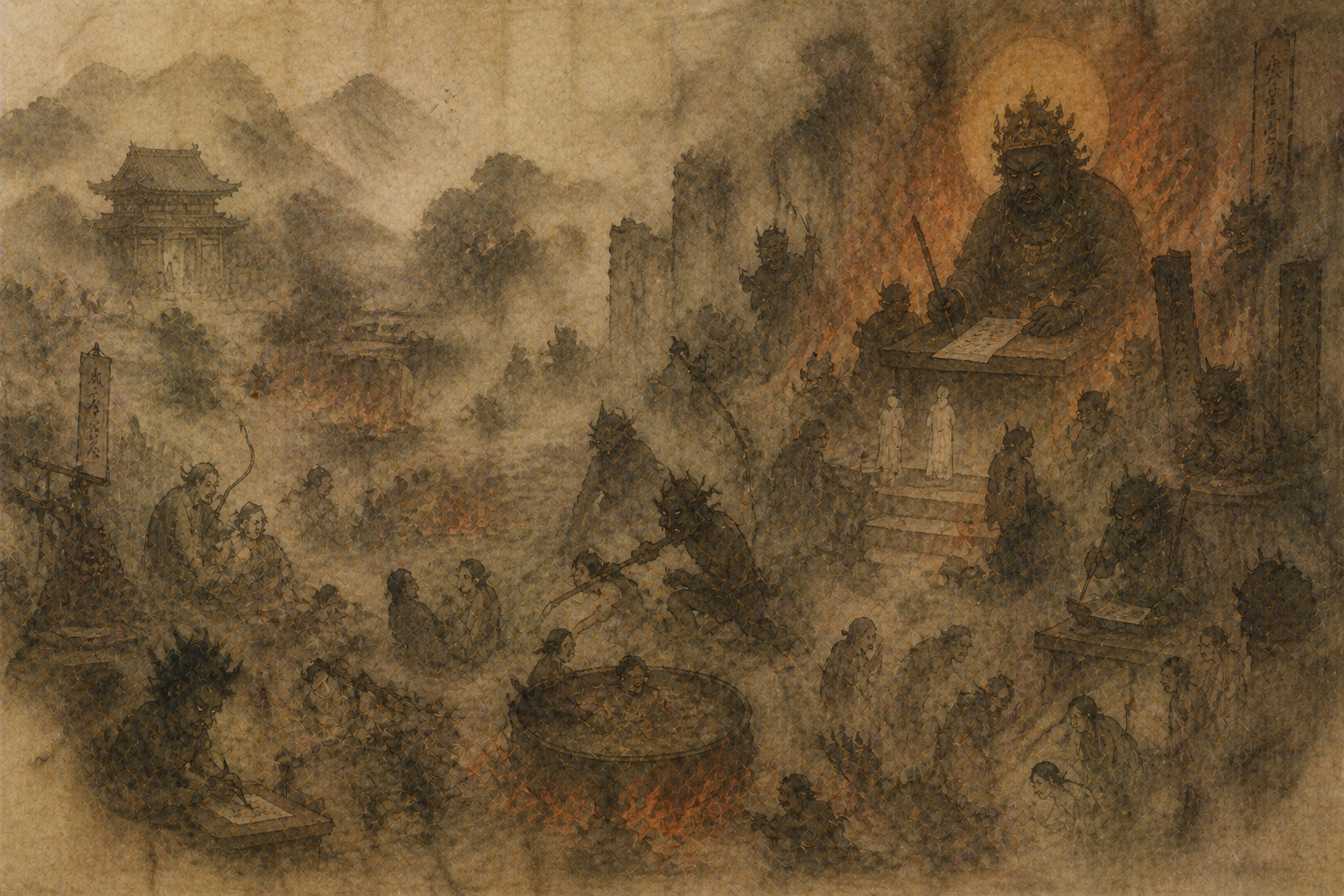
Quick Summary
- In red light Buddhist protective imagery, “red” usually signals energized protection: warmth, vitality, and a boundary against harm.
- Red light is often read as a skillful “alarm color” that wakes attention and steadies the mind when fear or agitation rises.
- Protective imagery is less about supernatural guarantees and more about training perception: seeing danger clearly without panic.
- The same red glow can feel comforting or intense; context (posture, mood, setting, icon details) changes the meaning.
- Red in protective scenes commonly points to fierce compassion: stopping harm firmly while keeping the heart un-hardened.
- Misreadings happen when red is reduced to “anger” or “evil,” ignoring its role as clarity and decisive care.
- You can use the symbolism practically: let “red light” cue grounding, ethical restraint, and calm boundaries.
What Does Red Light Mean in Buddhist Protective Imagery?
You’re looking at a protective Buddhist image—maybe a fierce figure, a guardian scene, or a halo-like glow—and the red light feels loaded: is it warning, anger, danger, blessing, or something else entirely? The most useful way to read red light Buddhist protective imagery is as a visual cue for energized protection: a warmth that draws a boundary, wakes you up, and helps you meet threat without collapsing into fear. Gassho writes about Buddhist symbolism in plain language, grounded in practice and everyday experience.
GASSHO
Ask and learn about Buddhism in daily life.
GASSHO is a Buddhist community app where you can learn Buddhist teachings and ask questions to the head priest of Kongosanmaiin Temple on Mount Koya.
A grounded way to read red as protection
In Buddhist protective imagery, color is rarely just decoration. Red light tends to function like a “signal” to the nervous system: it says, “Pay attention—something matters here.” That doesn’t automatically mean violence or rage. It often means intensity directed toward safeguarding what is wholesome: life, clarity, ethical restraint, and the capacity to respond rather than react.
Seen as a lens rather than a belief, red light points to a particular quality of mind: warmth with force. Warmth keeps protection from turning cold or cruel. Force keeps compassion from becoming passive. In that sense, red can symbolize the willingness to stop harm decisively—internally (habits, impulses) and externally (threats, coercion)—without losing the thread of care.
Protective imagery also works psychologically: it gives the mind a stable “shape” for courage. A red aura, flame-like radiance, or red background can represent the heat of aliveness that burns through hesitation and confusion. The point is not to promise that nothing bad will ever happen, but to train a mind that can face what happens with steadiness.
Context matters. Red light around a protective figure can read as a boundary (a perimeter), a purification (burning away what clings), or a mobilization (energy gathered for action). The same red can feel soothing when you need reassurance, or fierce when you need to stop indulging a harmful pattern. The image is doing its job when it changes how you hold your experience.
How red light shows up in ordinary experience
Imagine you’re anxious and scanning for danger—online, at work, in a relationship. Your attention becomes narrow, and everything looks like a threat. In that state, red light Buddhist protective imagery can act like a mirror: it reflects intensity back to you, but in a contained, purposeful form. The mind learns, “Intensity can be held; it doesn’t have to spill into panic.”
Sometimes the “protective” moment is simply noticing the first spark of reactivity. A red glow can be read as that first heat in the body—tight jaw, hot face, quickened pulse—before words or actions happen. The image invites a pause: feel the heat, name it, and choose what it’s for. Protection begins there.
In daily life, boundaries are often the real battlefield. You might need to say no, end a conversation, stop doomscrolling, or refuse a familiar self-attack. Red light, as a symbol, can cue a clean boundary: not a dramatic shutdown, but a firm line that prevents further harm. The “light” part matters—it’s visible, conscious, and deliberate.
There’s also the experience of shame: the sense that you’re “bad” for having anger, desire, or fear. Protective imagery with red light can normalize heat without endorsing harm. It suggests that strong energy can be redirected. The question becomes less “How do I get rid of this?” and more “How do I steer it?”
When you’re tired, red can look like agitation. When you’re clear, red can look like courage. The same symbol lands differently depending on sleep, stress, and support. That’s not a problem; it’s information. The image is showing you your current relationship to intensity.
Finally, protective imagery can help with the subtle fear of being alive: the background hum that something might go wrong. A steady red radiance can be taken as permission to be fully here—warm, awake, and responsive—without needing certainty. Protection, in this sense, is the capacity to stay present when you’d rather disappear.
Common misunderstandings about red protective symbolism
One common mistake is to equate red with “anger,” full stop. Anger can be part of the human palette, but protective imagery usually points to something more disciplined: energy harnessed for clarity and care. The face may look fierce, the color may look hot, yet the function is often to interrupt harm and confusion.
Another misunderstanding is to treat red light as a literal omen—“If I see red, something bad will happen,” or “This guarantees I’m protected.” Buddhist imagery is typically more practical than that. It’s a training device for perception and intention: it shapes how you meet uncertainty, not a contract with the universe.
People also overgeneralize across cultures and time periods. Red can mean celebration, life-force, authority, warning, or sacredness depending on region and artistic convention. In protective contexts, the safest reading is functional: what does the red light do in the composition—highlight a boundary, intensify presence, or draw attention to a protective stance?
Finally, some viewers assume “fierce” means “violent.” Protective imagery can look confrontational because it’s meant to confront what harms. But the deeper message is often restraint: power that does not need to prove itself, and compassion that does not collapse into appeasement.
Why this symbolism matters in real life
Red light Buddhist protective imagery is useful because it gives you a simple, memorable cue: wake up, warm up, and draw a clean line. When you’re overwhelmed, you don’t need a complex philosophy—you need a reliable reminder to return to what’s skillful.
It also reframes protection as an inner skill. Instead of outsourcing safety to luck or constant control, you practice the kind of attention that notices early signs of harm—harsh speech, spiraling thoughts, compulsive habits—and interrupts them before they spread.
And it supports a mature view of compassion. Compassion isn’t only softness. Sometimes it’s the courage to say, “This stops here,” while staying human. Red light, in protective scenes, can symbolize that exact blend: heat without hatred, strength without cruelty.
Conclusion
In red light Buddhist protective imagery, red is best read as energized clarity: a warm, forceful presence that protects by waking attention and setting boundaries. If the color feels intense, that may be the point—it’s asking you to meet intensity consciously, steer it toward care, and stop harm without hardening your heart.
Ask a Buddhist priest
Have a question about Buddhism?
In the GASSHO app, you can ask questions about Buddhist teachings, daily concerns, and how to understand Buddhism in everyday life.
Frequently Asked Questions
- FAQ 1: What does red light Buddhist protective imagery usually symbolize?
- FAQ 2: Is red light in Buddhist protective imagery a sign of anger?
- FAQ 3: Why is the protective aura sometimes shown as a red glow or flames?
- FAQ 4: Does red light Buddhist protective imagery mean danger is present?
- FAQ 5: How do I interpret red light around a fierce-looking protective figure?
- FAQ 6: Is red light Buddhist protective imagery meant to ward off evil?
- FAQ 7: Can red light in protective imagery represent compassion?
- FAQ 8: Why does red light Buddhist protective imagery feel intense or unsettling to some people?
- FAQ 9: Does the meaning of red light change depending on the artwork?
- FAQ 10: Is red light Buddhist protective imagery connected to “fire” symbolism?
- FAQ 11: How can I use red light Buddhist protective imagery as a practical reminder?
- FAQ 12: Does red light in Buddhist protective imagery mean the figure is “wrathful”?
- FAQ 13: Is it wrong to feel comforted by red light Buddhist protective imagery?
- FAQ 14: How is red light Buddhist protective imagery different from red used in decorative art?
- FAQ 15: What’s a balanced way to approach red light Buddhist protective imagery without superstition?
FAQ 1: What does red light Buddhist protective imagery usually symbolize?
Answer: It commonly symbolizes energized protection—warmth, vitality, and a clear boundary that helps the mind stay awake and steady in the presence of threat or confusion.
Takeaway: Red light often points to protective intensity guided by clarity, not random aggression.
FAQ 2: Is red light in Buddhist protective imagery a sign of anger?
Answer: Not necessarily. While red can relate to heat and intensity, in protective imagery it more often indicates force harnessed for safeguarding—stopping harm without losing compassion.
Takeaway: Read red as disciplined energy before you read it as anger.
FAQ 3: Why is the protective aura sometimes shown as a red glow or flames?
Answer: A red glow or flame-like radiance can visually communicate “active protection”: attention that is bright, alert, and able to burn through confusion or hesitation.
Takeaway: The red radiance often functions as a visual metaphor for wakefulness and purification.
FAQ 4: Does red light Buddhist protective imagery mean danger is present?
Answer: It can be read as a warning-like cue, but more reliably it means “be attentive.” The image may be emphasizing readiness and clear boundaries rather than predicting a specific danger.
Takeaway: Red often signals alertness, not a literal omen.
FAQ 5: How do I interpret red light around a fierce-looking protective figure?
Answer: Consider the red light as highlighting function: the figure embodies decisive care that confronts harm. The fierceness is a visual language for “don’t let this pass,” not a celebration of violence.
Takeaway: Focus on what the red light is doing—strengthening protection—rather than the shock value.
FAQ 6: Is red light Buddhist protective imagery meant to ward off evil?
Answer: Many people use protective images that way culturally, but a practice-oriented reading is that the imagery trains the mind to recognize and interrupt harmful forces—fear, hatred, compulsions—before they take over.
Takeaway: “Warding off” can be understood as strengthening awareness and restraint.
FAQ 7: Can red light in protective imagery represent compassion?
Answer: Yes—specifically fierce compassion: warmth that is willing to act, set limits, and prevent harm. Red can express care that has backbone.
Takeaway: Red can symbolize compassion expressed as firm protection.
FAQ 8: Why does red light Buddhist protective imagery feel intense or unsettling to some people?
Answer: Red is a high-arousal color, and protective scenes often emphasize confrontation with harm. If you’re already stressed, the symbolism can amplify intensity rather than soothe it.
Takeaway: Your reaction is part of the message—red highlights your relationship to intensity.
FAQ 9: Does the meaning of red light change depending on the artwork?
Answer: Yes. Composition, surrounding colors, facial expression, posture, and setting all shape meaning. Red might read as boundary, vitality, purification, or urgent attention depending on context.
Takeaway: Interpret red light in relation to the whole protective image, not in isolation.
FAQ 10: Is red light Buddhist protective imagery connected to “fire” symbolism?
Answer: Often, yes. Fire-like red light can suggest burning through confusion, cutting attachment, or energizing clarity—protective functions expressed through the metaphor of heat and illumination.
Takeaway: Red light frequently borrows the language of fire to show active protection.
FAQ 11: How can I use red light Buddhist protective imagery as a practical reminder?
Answer: You can treat it as a cue to pause, feel what’s happening in the body, and choose a protective response: soften the breath, clarify your next words, or set a boundary without escalation.
Takeaway: Let red light prompt conscious, non-reactive protection.
FAQ 12: Does red light in Buddhist protective imagery mean the figure is “wrathful”?
Answer: Red can accompany fierce or wrathful visual styles, but the color alone doesn’t define the figure. In protective contexts, red more broadly signals intensity and power directed toward preventing harm.
Takeaway: Red may support a fierce mood, but its core job is to communicate protective energy.
FAQ 13: Is it wrong to feel comforted by red light Buddhist protective imagery?
Answer: Not at all. Many people experience red as warmth and reassurance—like a protective “presence” that helps them feel less alone with fear or uncertainty.
Takeaway: Comfort can be a valid response; red isn’t only a “warning” color.
FAQ 14: How is red light Buddhist protective imagery different from red used in decorative art?
Answer: In protective imagery, red is typically functional: it directs attention, intensifies a boundary, or conveys active safeguarding. Decorative red may simply balance the palette or signal celebration without a protective emphasis.
Takeaway: Protective red is usually “doing something” psychologically in the image.
FAQ 15: What’s a balanced way to approach red light Buddhist protective imagery without superstition?
Answer: Treat it as symbolic training for the mind: red light represents alert warmth and decisive boundaries. Notice what it evokes in you, then translate that into skillful action—clarity, restraint, and compassionate firmness.
Takeaway: Read red light as a practical cue for awake, ethical protection.