



Pratyahara: Understanding the Turning of Attention Inward
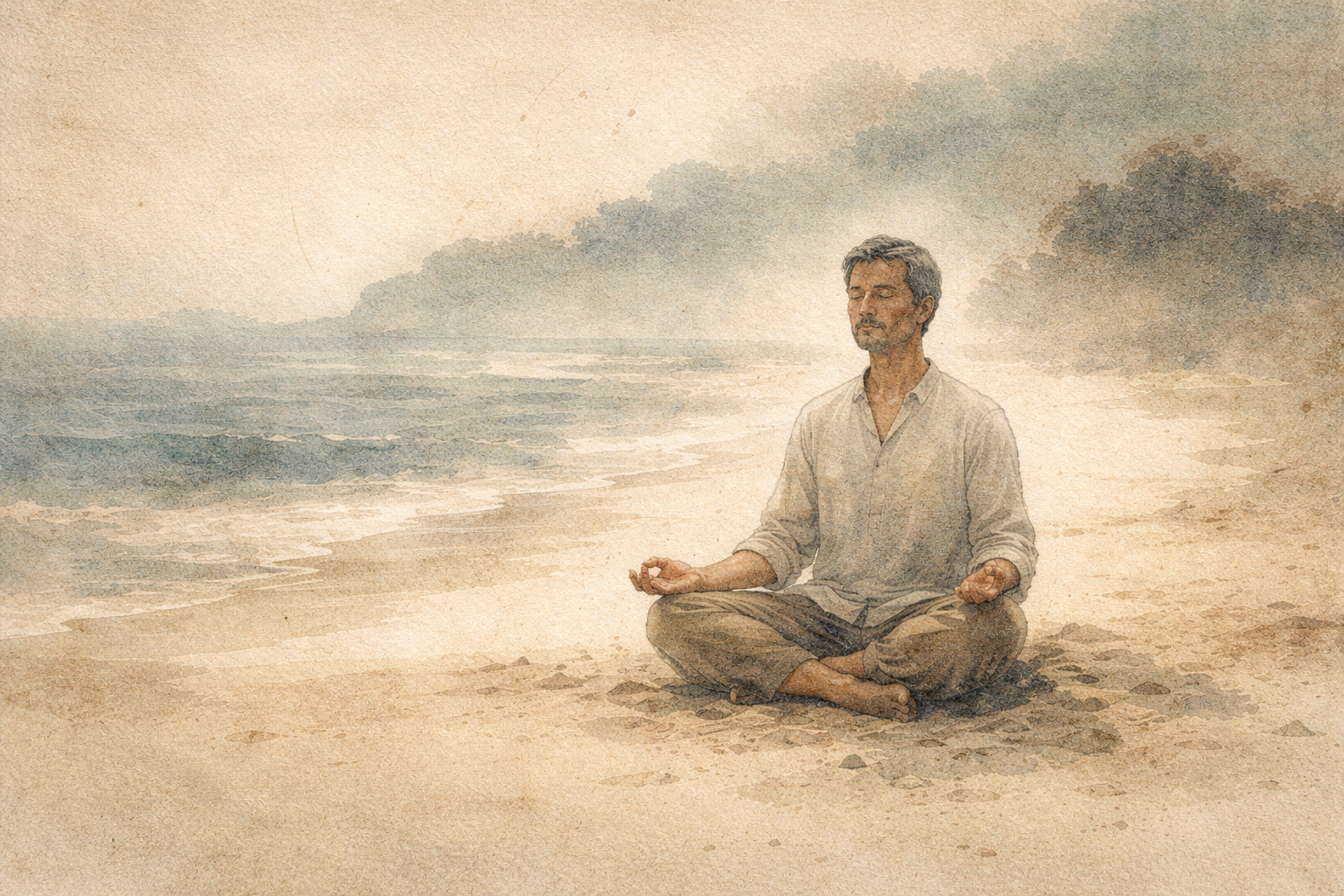
Quick Summary
- Pratyahara is the deliberate turning of attention inward, without needing to block the senses.
- It’s less about “shutting the world out” and more about not being pulled around by it.
- You can practice pratyahara in ordinary moments: notifications, conversations, cravings, and stress.
- The key skill is noticing the tug of stimulation and choosing where attention rests.
- Pratyahara supports steadier meditation by reducing reactive loops before they escalate.
- It can be gentle and practical: soften the gaze, feel the breath, relax the “reach” of attention.
- Healthy pratyahara isn’t avoidance; it’s a reset that helps you re-engage more wisely.
Pratyahara: Understanding the Turning of Attention Inward
You’re trying to meditate or simply feel steady, but your attention keeps getting hijacked—by noise, screens, worries, or the constant urge to check, fix, and react. Pratyahara names the exact pivot you’re missing: not more effort, not more control, but a clean shift from being pulled outward to resting inward on purpose. At Gassho, we focus on simple, lived practices that make inner stability feel realistic in modern life.
GASSHO
Ask and learn about Buddhism in daily life.
GASSHO is a Buddhist community app where you can learn Buddhist teachings and ask questions to the head priest of Kongosanmaiin Temple on Mount Koya.
A Clear Way to Understand Pratyahara
Pratyahara is often described as “withdrawal of the senses,” but that phrase can mislead people into imagining a forced shutdown. A more workable lens is this: the senses can keep functioning, while attention stops chasing every signal. Sounds still arrive, sights still appear, thoughts still form—yet the mind doesn’t have to lean forward into each one.
Seen this way, pratyahara is not a belief or a special state. It’s a relationship to experience: stimulation is allowed, but it doesn’t automatically become a command. The moment you notice “I’m being pulled,” you have the option to soften the pull and return to what you choose to attend to.
That choice can be very ordinary: feeling the breath, sensing the body, listening without mentally chasing the sound, or staying with a single task without splitting into ten micro-reactions. Pratyahara is the skill of reducing unnecessary “reach” so attention can settle.
Importantly, pratyahara isn’t about rejecting the world. It’s about reclaiming agency. When attention is less reactive, you can engage with life more cleanly—responding rather than reflexively reacting.
What Pratyahara Feels Like in Everyday Moments
You’re sitting down to rest, and a notification pings. Before you even decide, your hand moves. In that tiny gap—between sound and reaching—pratyahara is the ability to notice the impulse and pause. The phone can remain on the table; the mind doesn’t have to lunge.
You’re in a conversation and someone says something sharp. The body tightens, and the mind starts drafting replies. Pratyahara here isn’t silence or passivity; it’s the inward turn that lets you feel the tightening directly, without immediately feeding it with more story. You sense the heat, the pressure, the urge—then you choose your next words from a steadier place.
You’re trying to focus at work, but your attention keeps scanning: new tabs, messages, background noise, the itch to multitask. Practicing pratyahara can look like relaxing the eyes, feeling both feet on the floor, and letting the “search mode” in the mind unwind. The environment doesn’t vanish; the compulsive checking softens.
You’re alone and the mind starts replaying a mistake. The senses aren’t the issue now—thought is. Pratyahara still applies: you notice the mind reaching for another round of replay, and you redirect attention to something simpler and more immediate, like breathing or bodily sensation. The thought may continue in the background, but it no longer gets the steering wheel.
You’re eating and realize you’re barely tasting anything because you’re scrolling or thinking ahead. A gentle inward turn brings attention back to texture, temperature, chewing, and the body’s signals. This isn’t moralizing about distraction; it’s training the capacity to stay with what’s here.
You’re meditating and a sound appears—traffic, a neighbor, a creak. Without pratyahara, attention runs outward: “What is that? I don’t like it. Will it stop?” With pratyahara, the sound is simply known. The mind doesn’t need to travel with it. You remain anchored, and the sound can come and go.
Across these situations, the common thread is subtle: pratyahara feels like less grabbing. Not numbness, not blankness—just a quieter reflex to chase, fix, or amplify what arises.
Common Misunderstandings That Make It Harder
One common misunderstanding is that pratyahara means forcing the senses to stop. That usually backfires: the more you try to block sound or sensation, the more attention fixates on it. A more effective approach is allowing sensory input while reducing the mind’s compulsive follow-through.
Another confusion is treating pratyahara as avoidance—like using “inwardness” to escape responsibilities, relationships, or uncomfortable truths. Healthy pratyahara is temporary and functional: it helps you regulate attention so you can return to life with more clarity, not less.
Some people assume pratyahara should feel instantly peaceful. In practice, turning inward can reveal restlessness that was previously masked by stimulation. That doesn’t mean you’re doing it wrong; it means you’re finally seeing what constant outward engagement was covering up.
It’s also easy to mistake pratyahara for “spacing out.” Spacing out is dullness and disconnection. Pratyahara is alert and intimate: you’re more in touch with what’s happening, but less compelled to chase it.
Why This Inward Turn Changes Daily Life
Pratyahara matters because modern life is designed to pull attention outward—constantly. Without training, attention becomes reactive by default, and reactivity quietly shapes your mood, speech, spending, and relationships. The inward turn is a way to interrupt that pattern at the source.
When you can pause the automatic reach, you gain a small but meaningful freedom: you can choose what deserves your energy. That choice reduces mental fragmentation. Even a few moments of pratyahara—before replying to a message, before opening another tab, before speaking in irritation—can change the tone of an entire day.
It also supports meditation in a practical way. Many people try to “concentrate harder,” but the real issue is that attention keeps leaking outward through habit. Pratyahara is like closing the unnecessary windows so the mind can naturally settle without strain.
Over time, this skill can make ordinary activities feel less rushed. You still hear the world and meet your obligations, but you’re less owned by the next stimulus. That’s not a mystical promise—just the predictable result of practicing attention the way you’d practice any other capacity.
Conclusion
Pratyahara is the simple, powerful move of turning attention inward without needing the world to be quiet first. It’s the difference between being dragged by stimulation and relating to stimulation with choice. If you practice one thing, practice the pause: notice the tug, soften the reach, and return attention to something steady—breath, body, or the task in front of you.
Ask a Buddhist priest
Have a question about Buddhism?
In the GASSHO app, you can ask questions about Buddhist teachings, daily concerns, and how to understand Buddhism in everyday life.
Frequently Asked Questions
- FAQ 1: What does pratyahara mean in simple terms?
- FAQ 2: Is pratyahara the same as blocking out noise?
- FAQ 3: How do I practice pratyahara when my mind is racing?
- FAQ 4: What is the difference between pratyahara and concentration?
- FAQ 5: Can pratyahara be practiced outside of meditation?
- FAQ 6: Does pratyahara mean withdrawing from people or responsibilities?
- FAQ 7: What are signs that pratyahara is happening?
- FAQ 8: Why does turning inward sometimes feel uncomfortable?
- FAQ 9: How is pratyahara related to the senses?
- FAQ 10: Can pratyahara help with phone and screen distraction?
- FAQ 11: Is pratyahara a form of suppression?
- FAQ 12: What is a simple pratyahara exercise I can do in one minute?
- FAQ 13: How do I practice pratyahara without becoming dull or spaced out?
- FAQ 14: Does pratyahara require a quiet environment?
- FAQ 15: How long does it take to develop pratyahara?
FAQ 1: What does pratyahara mean in simple terms?
Answer: Pratyahara means turning attention inward so you’re less driven by sensory input and impulses. The senses can still function, but attention stops automatically chasing every sound, sight, or urge.
Takeaway: Pratyahara is about reducing reactivity, not shutting down perception.
FAQ 2: Is pratyahara the same as blocking out noise?
Answer: No. Blocking noise is a form of resistance that often increases fixation. Pratyahara is allowing noise to be present while choosing not to follow it with attention, commentary, or irritation.
Takeaway: Let sound exist; release the habit of chasing it.
FAQ 3: How do I practice pratyahara when my mind is racing?
Answer: Start with something concrete: feel the breath at the nostrils or the rise and fall of the belly, or feel contact points like feet and hands. Each time you notice the mind reaching outward or spinning inward, gently return to that anchor without arguing with thoughts.
Takeaway: Use a simple anchor and repeat the return.
FAQ 4: What is the difference between pratyahara and concentration?
Answer: Pratyahara is the easing of outward pull—less chasing of stimulation. Concentration is sustained attention on one object. Pratyahara often makes concentration easier because fewer impulses compete for attention.
Takeaway: Pratyahara reduces “leaks,” concentration stabilizes focus.
FAQ 5: Can pratyahara be practiced outside of meditation?
Answer: Yes. You can practice it while walking, eating, working, or talking by noticing the urge to check, react, or multitask and then softening that urge while staying present with the body and the task.
Takeaway: Daily life offers constant chances to practice pratyahara.
FAQ 6: Does pratyahara mean withdrawing from people or responsibilities?
Answer: Not necessarily. Pratyahara is an internal shift in attention, not a lifestyle of isolation. It can actually help you engage more skillfully because you’re less reactive and more grounded.
Takeaway: It’s an inward reset that supports healthier engagement.
FAQ 7: What are signs that pratyahara is happening?
Answer: Common signs include fewer automatic reaches for stimulation, less compulsive checking, a steadier sense of the body, and the ability to let sounds or thoughts pass without immediately following them.
Takeaway: Look for reduced compulsion, not a perfectly quiet mind.
FAQ 8: Why does turning inward sometimes feel uncomfortable?
Answer: When stimulation drops, you may notice restlessness, tension, or emotions that were previously covered by busyness. Pratyahara doesn’t create discomfort; it reveals what was already present beneath constant outward engagement.
Takeaway: Discomfort can be a normal part of noticing more clearly.
FAQ 9: How is pratyahara related to the senses?
Answer: Pratyahara changes your relationship to sensory input: seeing, hearing, tasting, touching, and smelling can continue, but attention no longer has to “go out” and cling to each sensation with craving or aversion.
Takeaway: The senses stay online; the grasping can soften.
FAQ 10: Can pratyahara help with phone and screen distraction?
Answer: Yes. Pratyahara trains you to notice the impulse to check and to pause before acting. Even a single breath while feeling the body can interrupt the automatic loop and restore choice.
Takeaway: The practice is the pause between ping and reach.
FAQ 11: Is pratyahara a form of suppression?
Answer: No. Suppression pushes experience away with tension. Pratyahara allows experience to be present while reducing the mind’s tendency to chase, amplify, or identify with it.
Takeaway: Pratyahara is relaxation of reactivity, not pushing things down.
FAQ 12: What is a simple pratyahara exercise I can do in one minute?
Answer: Sit or stand still, soften the eyes, and feel three full breaths. On each exhale, relax the face, jaw, and shoulders, and let sounds be “just sound” without following them. Keep returning to bodily sensation.
Takeaway: Soften, feel the breath, and stop chasing sensory hooks.
FAQ 13: How do I practice pratyahara without becoming dull or spaced out?
Answer: Keep the body in the foreground: feel posture, breathing, and contact points. If you notice fogginess, gently brighten attention by opening the eyes, straightening the spine, or emphasizing the inhale while staying relaxed.
Takeaway: Stay embodied to keep pratyahara clear and awake.
FAQ 14: Does pratyahara require a quiet environment?
Answer: No. Quiet can help at first, but pratyahara is specifically useful in imperfect conditions. The practice is learning not to be pulled by what you hear or see, even when the environment is active.
Takeaway: Pratyahara is portable; it works in real life.
FAQ 15: How long does it take to develop pratyahara?
Answer: It varies, but you can notice small shifts quickly: a shorter reaction time, fewer compulsive checks, or an easier return to the breath. Consistency matters more than duration—brief, repeated moments of inward turning build the habit.
Takeaway: Look for small, repeatable wins rather than a dramatic change.