



Maitreya: The Future Buddha in Buddhism
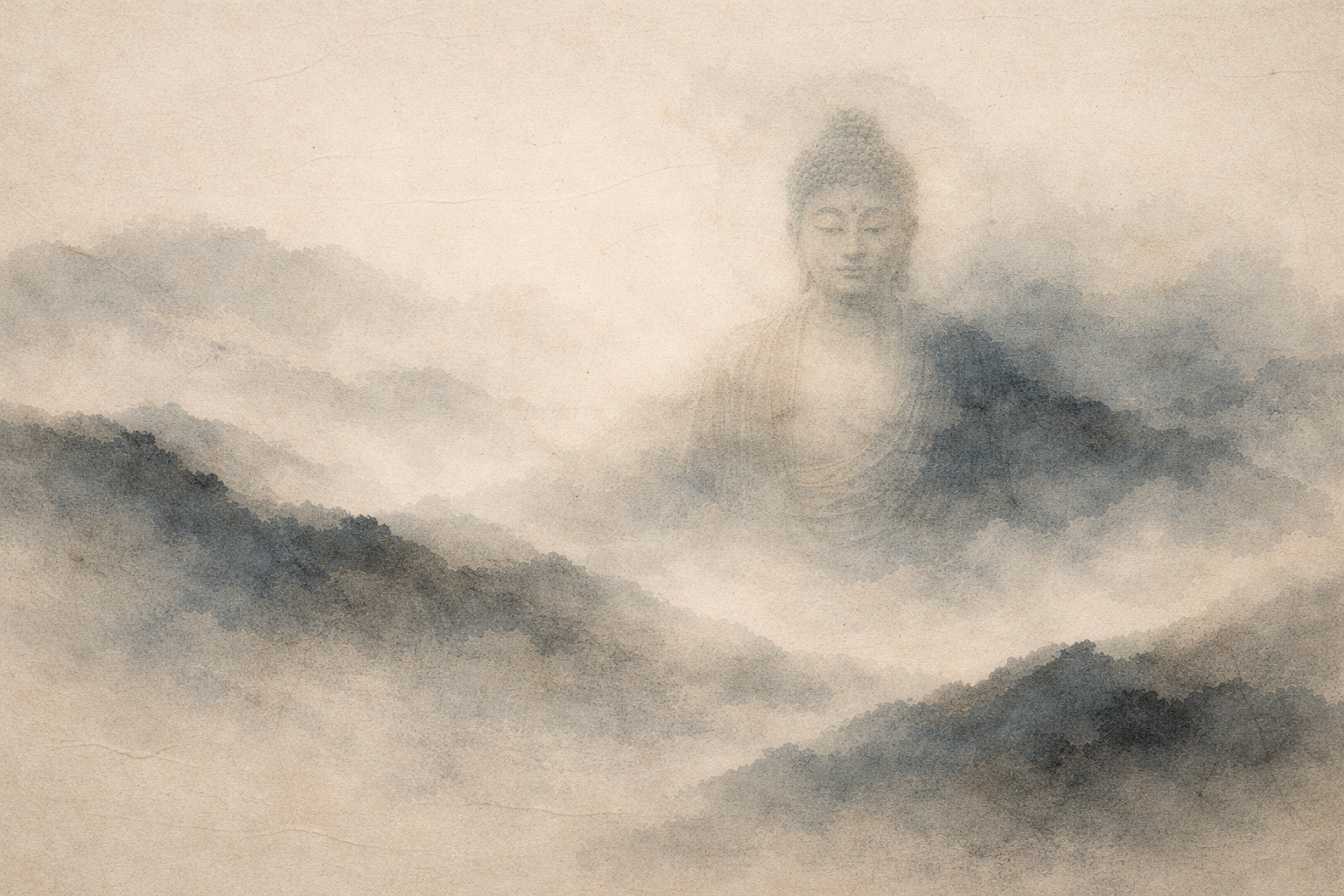
Quick Summary
- Maitreya is described in Buddhist tradition as the “future Buddha,” a symbol of awakening that has not yet appeared in the world.
- In many stories, Maitreya is associated with patience, ethical living, and the slow ripening of conditions rather than sudden rescue.
- People often confuse Maitreya with a savior figure; in Buddhism, the emphasis stays on causes, conditions, and human responsibility.
- Images of Maitreya vary widely—sometimes seated in a “ready to rise” posture, sometimes shown as a generous, approachable presence.
- Thinking about Maitreya can function as a practical lens: what kind of world is being prepared by today’s choices?
- The idea of a future Buddha can soften impatience and perfectionism, especially in work, relationships, and long stretches of uncertainty.
- Maitreya is less about predicting a date and more about noticing how hope, responsibility, and attention shape daily life.
Introduction
If “Maitreya” sounds like a mysterious promise—someone coming later to fix what feels broken now—you’re not alone, and that assumption quietly creates more confusion than clarity. The tradition’s language can make it sound like a prophecy, but what most people actually need is a grounded way to understand why a “future Buddha” matters when the day is already full of emails, conflict, fatigue, and noise. This explanation is written from a practical, text-aware Buddhist perspective without trying to recruit you into belief.
Maitreya is commonly described as the next Buddha to appear in the world after the teachings of the present Buddha have faded. That single sentence can be heard in two very different ways: as a supernatural timeline, or as a mirror held up to ordinary life—showing how long-term consequences unfold and how human beings keep shaping the conditions they live in.
When people search for Maitreya, they’re often trying to place a name they’ve seen in art, a statue, a mantra, or a passing reference in a book. Underneath that, there’s usually a more personal question: is Buddhism saying help is coming later, or is it saying something about what can be seen and done now?
Seeing Maitreya as a Lens, Not a Prediction
One helpful way to hold Maitreya is as a lens for understanding time and responsibility. A “future Buddha” points to the idea that awakening is not owned by the past, and that human life is not sealed shut by the present. In everyday terms, it resembles the difference between reacting to today’s mood and caring about the direction your life is taking.
In ordinary situations, people often want immediate closure: a quick apology, a fast fix at work, a clean answer in a relationship. The image of Maitreya gently challenges that reflex. It suggests that conditions ripen, that causes matter, and that what is being built now may not show its full results right away.
This doesn’t require turning Maitreya into a literal countdown. It can be understood as a way of noticing how hope operates. Hope can be escapist—waiting for a different era to arrive. Or it can be steady—staying with what is possible in this moment, even when the moment is imperfect.
Seen this way, Maitreya is not a distant figure meant to replace your agency. The idea simply highlights a quiet truth most people already know: what you repeat becomes your world, and what you neglect also becomes your world—just more slowly.
How the Future Buddha Theme Shows Up in Daily Experience
At work, the “future Buddha” theme can show up as a small pause before sending a sharp message. There’s the immediate satisfaction of being right, and there’s the longer arc of trust. Noticing that difference is not mystical—it’s simply seeing that actions have a future, even when the future is not visible yet.
In relationships, Maitreya often appears as the tension between wanting someone to change and recognizing what is actually happening. The mind can cling to an imagined version of the other person, or it can stay close to what is said, what is done, and what is consistently avoided. That closeness to facts—without dramatizing them—already changes the tone of the heart.
When fatigue is strong, the idea of a future Buddha can be felt as impatience with yourself: “I should be better by now.” But the body doesn’t negotiate with ideals. It asks for rest, food, and a little honesty. In that honesty, the future stops being a fantasy and becomes a simple question: what supports clarity, and what drains it?
In silence—on a commute, in a kitchen, in the few minutes before sleep—people often notice how the mind tries to manufacture a storyline. It wants a climax, a resolution, a hero. Maitreya can be a gentle counterweight to that habit. The future is not a dramatic reveal; it is often the accumulation of small, repeated movements of attention.
There are also moments when the world feels heavy: news cycles, social conflict, the sense that things are unraveling. In those moments, “Maitreya will come” can be used as a way to avoid grief or responsibility. But it can also be held as a reminder that despair is not the only honest response. The mind can acknowledge pain without turning it into a permanent verdict.
Even in ordinary irritation—standing in line, dealing with a slow device, hearing the same complaint again—the future Buddha theme can be felt as the difference between feeding the irritation and noticing it. Irritation always promises relief if it is expressed. Yet it often leaves a residue. Seeing that residue is a kind of realism, not a moral achievement.
Over time, the most practical “Maitreya” experience may be this: the future is being trained in the present. Not in a grand way, but in the way attention returns to what is actually happening, and in the way choices quietly shape the next hour, the next conversation, the next version of the self that shows up.
Gentle Clarifications About Common Maitreya Confusions
A common misunderstanding is to treat Maitreya as a savior who will arrive to repair the world on behalf of everyone else. That expectation is understandable—many people are exhausted, and the heart wants relief. But the Maitreya idea tends to point in a different direction: relief is connected to causes and conditions, and those conditions are shaped by ordinary human actions.
Another confusion is to turn Maitreya into a date on a calendar, as if the point were to calculate when things will finally make sense. The mind likes certainty, especially when life feels unstable. Yet the deeper emphasis is often on how certainty can become another form of clinging—another way to avoid the vulnerability of not knowing.
Some people also assume that devotion to Maitreya must be either fully literal or completely meaningless. But many aspects of Buddhist culture function symbolically without being “just a symbol.” In daily life, people already live this way: a wedding ring is not merely metal, and a family photo is not merely paper. Meaning can be real without needing to become a rigid claim.
Finally, it’s easy to imagine Maitreya as something far away, unrelated to your actual day. That distance can feel safe. But it can also hide the simplest point: the future is not separate from the habits that are being rehearsed now—especially the habits of speech, attention, and how quickly the mind turns discomfort into a story.
Where Maitreya Touches Ordinary Life Without Fanfares
The idea of Maitreya can sit quietly in the background of a normal day, like a reminder that not everything meaningful is immediate. A kind word that seems to do nothing may still change the tone of a workplace. A moment of restraint in an argument may never be praised, yet it can prevent a long chain of regret.
It can also soften the pressure to force results. Many people live as if every effort must pay off quickly, or it wasn’t worth doing. The “future Buddha” theme makes room for a slower kind of sanity: some things ripen later, and some things matter even when they are not visible.
In the middle of routine—laundry, bills, caring for someone, cleaning up after a mistake—Maitreya can be remembered as a simple continuity. Life is not only made of peak experiences. It is made of what is repeated, what is repaired, and what is carried forward without drama.
Conclusion
Maitreya can be held lightly, like a horizon that keeps the heart from collapsing into the present moment’s mood. The future does not arrive as an idea; it arrives as the next moment shaped by this one. In that sense, the teaching is close at hand, waiting in ordinary awareness.
Frequently Asked Questions
- FAQ 1: Who is Maitreya in Buddhism?
- FAQ 2: What does the name “Maitreya” mean?
- FAQ 3: Is Maitreya considered the next Buddha?
- FAQ 4: Is Maitreya a savior figure?
- FAQ 5: When is Maitreya supposed to appear?
- FAQ 6: Where is Maitreya said to be now?
- FAQ 7: How is Maitreya depicted in Buddhist art?
- FAQ 8: Why is Maitreya sometimes shown seated as if ready to stand?
- FAQ 9: Is the “Laughing Buddha” the same as Maitreya?
- FAQ 10: Do all Buddhists believe in Maitreya?
- FAQ 11: What is the difference between Maitreya and a bodhisattva?
- FAQ 12: Are there temples or festivals dedicated to Maitreya?
- FAQ 13: Is Maitreya mentioned in Buddhist scriptures?
- FAQ 14: How do people relate to Maitreya without treating it as a prophecy?
- FAQ 15: Why does the idea of Maitreya matter today?
FAQ 1: Who is Maitreya in Buddhism?
Answer: Maitreya is traditionally described as the “future Buddha,” the one who will appear in a later time when the current Buddha’s teachings are no longer present in the world. Many people also relate to Maitreya as a symbol of patience and the long arc of ethical cause and effect rather than as a figure for immediate rescue.
Takeaway: Maitreya points to awakening as something that can arise in the world again, not something locked in the past.
FAQ 2: What does the name “Maitreya” mean?
Answer: “Maitreya” is commonly connected with the idea of loving-kindness or friendliness (often linked to the Sanskrit/Pali root for “friendliness”). In practice, people use the name as a reminder of warmth and goodwill in human life, especially when the mind tends toward harshness or cynicism.
Takeaway: The name itself emphasizes a quality of heart rather than a dramatic storyline.
FAQ 3: Is Maitreya considered the next Buddha?
Answer: Yes, in many Buddhist traditions Maitreya is described as the next Buddha to appear in the world after the present Buddha’s dispensation has faded. The emphasis is usually on the idea of a future arising from conditions, not on predicting a timetable that can be verified in ordinary life.
Takeaway: “Next Buddha” is often best heard as a teaching about time and conditions, not a countdown.
FAQ 4: Is Maitreya a savior figure?
Answer: Maitreya is sometimes misunderstood as a savior who will fix the world for everyone else. In Buddhist framing, the stress typically remains on causes and conditions—how suffering is created and eased through actions, speech, and mind—rather than on being rescued from outside one’s life.
Takeaway: Maitreya is better understood as a future expression of awakening than as a promise of rescue.
FAQ 5: When is Maitreya supposed to appear?
Answer: Traditional sources often place Maitreya’s appearance in a far-distant future, sometimes described in vast time scales. Because these time frames are not practical for everyday verification, many readers treat them as a way of expressing “not soon” and highlighting long-term moral and social conditions rather than as a date to calculate.
Takeaway: The timing is usually presented as distant, steering attention toward long-term responsibility.
FAQ 6: Where is Maitreya said to be now?
Answer: Many traditional accounts describe Maitreya as residing in a heavenly realm prior to appearing in the human world. For modern readers, this can be held either literally or symbolically; either way, the practical point often remains the same: awakening is not treated as finished with history.
Takeaway: “Where Maitreya is” matters less than what the story suggests about continuity and possibility.
FAQ 7: How is Maitreya depicted in Buddhist art?
Answer: Maitreya is depicted in multiple ways across cultures: sometimes as a bodhisattva adorned with ornaments, sometimes seated in a distinctive posture, and sometimes in forms that emphasize approachability and generosity. These images are often meant to evoke qualities—patience, kindness, readiness—more than to serve as a single standardized portrait.
Takeaway: Maitreya imagery varies, but it commonly points toward warmth and future-oriented hope.
FAQ 8: Why is Maitreya sometimes shown seated as if ready to stand?
Answer: One well-known artistic motif shows Maitreya seated with a posture that looks “poised,” sometimes interpreted as readiness to rise and enter the world. People often read this as a visual reminder that compassion is not only contemplative—it is also responsive to conditions when the time is right.
Takeaway: The “ready to rise” posture can be read as readiness, not urgency.
FAQ 9: Is the “Laughing Buddha” the same as Maitreya?
Answer: In some East Asian contexts, the popular “Laughing Buddha” figure is associated with Budai (Hotei), who is sometimes linked in folklore with Maitreya. However, this association is cultural and varies by region; it’s not the same as saying every smiling, round-bellied statue is universally “Maitreya” across Buddhism.
Takeaway: Some cultures connect Budai/Hotei with Maitreya, but the identification isn’t uniform everywhere.
FAQ 10: Do all Buddhists believe in Maitreya?
Answer: Not everyone relates to Maitreya in the same way. Some hold the future Buddha narrative as literal, some treat it as symbolic, and some rarely think about it at all. Buddhism includes a wide range of emphases, and many practitioners focus more on present-moment ethics and awareness than on future figures.
Takeaway: Maitreya is important in many places, but not everyone centers their practice on it.
FAQ 11: What is the difference between Maitreya and a bodhisattva?
Answer: Maitreya is often described as a bodhisattva now (in the period before becoming a Buddha) and as the future Buddha later. “Bodhisattva” is a broader term for a being oriented toward awakening and compassion, while “Maitreya” refers to a specific figure within that broader idea.
Takeaway: “Bodhisattva” is a category; “Maitreya” is a particular name within the tradition.
FAQ 12: Are there temples or festivals dedicated to Maitreya?
Answer: Yes, in various Buddhist cultures there are temples, statues, and devotional events connected with Maitreya. The tone of these expressions often emphasizes hope, generosity, and moral renewal—community ways of keeping the heart oriented toward kindness over the long term.
Takeaway: Maitreya devotion often functions as communal encouragement toward goodwill and ethical living.
FAQ 13: Is Maitreya mentioned in Buddhist scriptures?
Answer: Maitreya appears in multiple Buddhist textual sources and later commentarial traditions, though details vary across languages and regions. For most readers, the key point is consistent: Maitreya represents a future arising of awakening when conditions support it.
Takeaway: Texts mention Maitreya in different ways, but the central theme is future awakening shaped by conditions.
FAQ 14: How do people relate to Maitreya without treating it as a prophecy?
Answer: Many people relate to Maitreya as a contemplative symbol: a way to remember patience, long-term responsibility, and the possibility of moral renewal. Instead of asking “When will Maitreya come?”, the focus shifts to what kinds of speech, choices, and social conditions make a kinder future more plausible.
Takeaway: Maitreya can be held as a horizon for the heart rather than a prediction to prove.
FAQ 15: Why does the idea of Maitreya matter today?
Answer: Maitreya matters today because it challenges two common extremes: despair that nothing can improve, and magical thinking that improvement will arrive without causes. As a “future Buddha,” Maitreya keeps attention on how the future is shaped by ordinary human patterns—especially how people speak, cooperate, and respond to suffering in daily life.
Takeaway: Maitreya keeps hope connected to responsibility, not fantasy.