



Kathina: The Buddhist Robe-Offering Ceremony Explained
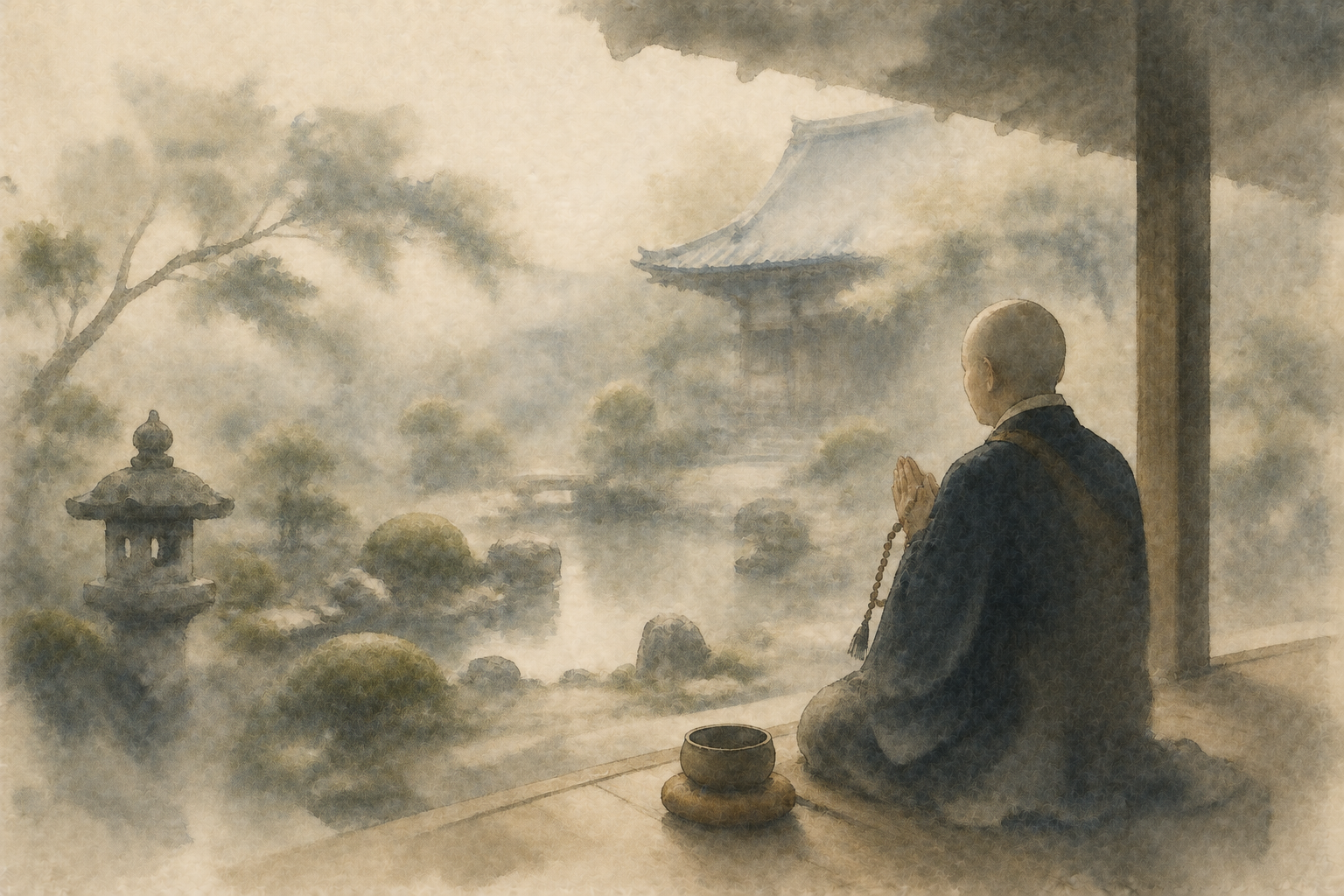
- Kathina is a traditional Buddhist robe-offering ceremony held after the rains retreat period.
- It centers on gratitude, support for monastic life, and strengthening community ties.
- The offering is typically a robe cloth (or robe set) presented to the monastic community, not to an individual as a personal gift.
- A key feature is the community’s shared decision about which monastic receives the kathina robe.
- Kathina is time-bound: it happens within a specific window after the retreat ends.
- For laypeople, it’s a practical way to express generosity with clear, simple intentions.
- For monasteries, it’s both symbolic and logistical: robes are essential, and the ceremony renews mutual care.
“Kathina” can feel confusing because people talk about it like a festival, a fundraiser, a robe, and a rule-bound ritual all at once—and if you’re trying to understand what’s actually happening, the explanations often get buried under unfamiliar terms. The clean way to see kathina is as a structured moment when a community turns gratitude into something concrete: cloth, labor, and shared intention offered to support a life of practice. At Gassho, we focus on clear, lived explanations of Buddhist traditions without assuming you already know the vocabulary.
Kathina is widely known as a robe-offering ceremony, but it’s more accurate to call it a community event with a robe at its center. The robe matters because it’s a basic necessity for monastics, and because offering something necessary (rather than decorative) keeps generosity grounded. The ceremony also matters because it’s time-specific and communal: it happens after a period of intensified monastic practice, and it’s carried out as a shared act rather than a private exchange.
If you’ve only seen kathina described as “making merit,” it can sound transactional, like a spiritual points system. A more helpful lens is to treat kathina as a training in relationship: how a community supports those who commit to a disciplined life, and how that support is offered without trying to control outcomes. The robe is the visible part; the real emphasis is the quality of giving—simple, timely, and not centered on personal recognition.
A Clear Way to Understand Kathina
Seen plainly, kathina is a way of aligning three things: need, timing, and intention. The need is practical—monastics require robes and related requisites. The timing is deliberate—kathina is linked to the completion of a retreat period, when practice has been steady and contained. The intention is relational—lay supporters and monastics acknowledge interdependence without turning it into a personal bargain.
It helps to view the ceremony as a “container” for generosity. Many people want to give, but don’t know what’s appropriate, useful, or respectful. Kathina answers that by providing a clear form: an offering made to the monastic community, within a recognized period, in a way that reduces awkwardness and favoritism. The structure protects both sides: supporters can give cleanly, and monastics can receive without personal solicitation.
Another useful lens is to notice how kathina shifts attention from “my gift” to “our support.” Even when one monastic receives the kathina robe, the event is framed as a community act. That framing matters because it trains a different kind of joy—one that doesn’t depend on being seen, praised, or singled out. The ceremony becomes a practice in letting generosity be complete without extra narrative.
Finally, kathina can be understood as a renewal of trust. Monastics commit to a disciplined way of living; laypeople commit to sustaining what they value. Kathina is one of the moments where that mutual commitment becomes visible, not as ideology, but as a simple exchange of care.
GASSHO
Ask and learn about Buddhism in daily life.
GASSHO is a Buddhist community app where you can learn Buddhist teachings and ask questions to the head priest of Kongosanmaiin Temple on Mount Koya.
What Kathina Feels Like on the Ground
For many lay attendees, the first thing you notice is your own mind trying to “do it right.” You wonder what to wear, when to bow, how to hold the offering, whether you should speak, and what you might accidentally get wrong. That self-consciousness is normal, and kathina quietly gives it something wholesome to do: show up, pay attention, and participate respectfully.
As the ceremony unfolds, attention often shifts from performance to presence. You start noticing small details: the steadiness of chanting, the careful handling of cloth, the way people move without rushing. The mind that arrived looking for a clear explanation begins to settle into a simpler question: “Can I offer this without needing anything back?”
There’s also a very ordinary kind of vulnerability that can appear. Giving publicly can trigger comparison—how much others gave, whether your contribution is “enough,” whether you belong. Kathina gives you a chance to see that comparison as a passing mental habit. You can notice it, let it be there, and still choose to give in a way that matches your real capacity.
For some people, the most striking moment is when the community decides who receives the kathina robe. If you’re used to gift-giving as a direct personal exchange, it can feel unusual that the offering is made to the community and then allocated. But watching that process can soften the urge to control outcomes. You see a form of generosity that doesn’t insist on directing the result.
Even if you don’t understand every word spoken, the ceremony can clarify something basic: support is not abstract. It’s cloth, food, time, transport, cleaning, cooking, organizing, and showing up. Kathina makes that visible without making it heavy. It’s a reminder that spiritual life is sustained by ordinary hands.
Afterward, what lingers is often quieter than expected. Not “I did something holy,” but “I participated in something steady.” The mind may feel less cluttered by self-focus, at least temporarily, because the act of giving—done simply—interrupts the endless loop of self-improvement and self-judgment.
And if you’re someone who tends to overthink Buddhist rituals, kathina can be a relief: it’s not asking you to adopt a new identity. It’s asking you to practice a human skill—generosity—inside a clear, time-tested form.
Common Confusions About the Kathina Ceremony
One common misunderstanding is that kathina is basically a donation drive. While money may be involved in modern settings, the heart of kathina is the robe offering and the communal act around it. When it’s reduced to fundraising, the ceremony can lose its distinctive training: giving that is timely, appropriate, and not centered on personal status.
Another confusion is thinking the robe is a personal gift to a favorite monastic. Traditionally, kathina is offered to the monastic community, and the community determines who receives the kathina robe according to its own considerations. This helps prevent favoritism and keeps the act from becoming a social transaction.
People also assume kathina is the same everywhere. In reality, the outer details can vary by country and community: the schedule, the language, the procession style, and what exactly is offered. What stays consistent is the basic shape—an offering connected to the post-retreat period, carried by communal intention and communal decision-making.
Finally, some people worry that if they don’t understand the ritual, they shouldn’t attend. Kathina is not an exam. If you arrive with respect, follow the guidance of the hosts, and keep your intention simple, you’re already participating in the most important part.
Why Kathina Still Matters in Modern Life
Modern life trains us to treat everything as a personal brand: what we support, what we post, what we’re seen doing. Kathina points in the opposite direction. It emphasizes giving that doesn’t need to be optimized, advertised, or turned into identity. That’s not old-fashioned—it’s corrective.
It also offers a rare kind of social clarity. Many communities struggle with vague expectations and unspoken resentments: who does the work, who benefits, who is appreciated. Kathina makes support explicit. It says, in effect, “This is how we care for the conditions that allow practice to continue.”
On a personal level, kathina can be a practical antidote to the feeling of helplessness. When the world feels too large to fix, a clear, bounded act of generosity can steady the mind. You don’t have to solve everything to do something real. Cloth offered with a clean intention is not small when it strengthens a living community.
And for people who value Buddhist practice but live far from monasteries, kathina can reconnect practice to relationship. It reminds you that teachings don’t float in the air; they’re carried by people, schedules, buildings, food, and care. Supporting those conditions is part of how practice stays available.
Closing Thoughts on Kathina
Kathina is best understood as generosity with a backbone: a clear time, a clear purpose, and a communal form that keeps the mind from turning giving into self-display. If you approach it with simple respect—curious, unhurried, and willing to participate without needing to be the center—you’ll understand the ceremony in the only way that really counts: from the inside of the act.
Ask a Buddhist priest
Have a question about Buddhism?
In the GASSHO app, you can ask questions about Buddhist teachings, daily concerns, and how to understand Buddhism in everyday life.
GASSHO is an app for exploring Buddhism in everyday life.
Learn more about Buddhist deities.


Frequently Asked Questions
- FAQ 1: What is kathina in Buddhism?
- FAQ 2: When does kathina take place?
- FAQ 3: Is kathina a festival or a religious ritual?
- FAQ 4: What is offered during kathina?
- FAQ 5: Who receives the kathina robe?
- FAQ 6: Do laypeople offer kathina robes to a specific monk or nun?
- FAQ 7: What does the word “kathina” mean?
- FAQ 8: Is kathina only practiced in one Buddhist tradition?
- FAQ 9: What is the purpose of kathina?
- FAQ 10: Is kathina the same as making merit?
- FAQ 11: Can someone attend a kathina ceremony without being Buddhist?
- FAQ 12: What should I wear or do at kathina?
- FAQ 13: Does kathina involve making a robe on the same day?
- FAQ 14: Can kathina offerings be money instead of cloth?
- FAQ 15: How is kathina different from a regular robe offering?
FAQ 1: What is kathina in Buddhism?
Answer: Kathina is a traditional robe-offering ceremony held after the rains retreat period, where lay supporters offer robe cloth (or robes) to the monastic community, and the community formally assigns the kathina robe to a suitable monastic.
Takeaway: Kathina is a community-based robe offering connected to the post-retreat season.
FAQ 2: When does kathina take place?
Answer: Kathina takes place after the rains retreat ends, within a limited period when the ceremony is considered valid according to traditional timing rules observed by the hosting monastic community.
Takeaway: Kathina is time-bound and happens shortly after the retreat period.
FAQ 3: Is kathina a festival or a religious ritual?
Answer: It can feel like a festival because it’s communal and often includes food and gathering, but kathina is fundamentally a formal religious ceremony centered on offering robe material to the monastic community and completing specific communal procedures.
Takeaway: Kathina may look festive, but its core is a structured robe-offering rite.
FAQ 4: What is offered during kathina?
Answer: The central offering is robe cloth or a robe set intended for monastic use. Many communities also offer related requisites (such as practical supplies), but the defining feature is the kathina robe offering itself.
Takeaway: The robe (or robe cloth) is the heart of kathina.
FAQ 5: Who receives the kathina robe?
Answer: The offering is made to the monastic community, and the community decides which monastic receives the kathina robe according to its own criteria and the ceremony’s formal process.
Takeaway: Kathina is offered to the community first, then assigned within the community.
FAQ 6: Do laypeople offer kathina robes to a specific monk or nun?
Answer: In the kathina framework, the offering is typically presented to the community rather than as a personal gift to a chosen individual, which helps keep the act impartial and communal.
Takeaway: Kathina is designed to avoid personal favoritism in robe giving.
FAQ 7: What does the word “kathina” mean?
Answer: “Kathina” is traditionally associated with the idea of a firm or stable “frame” used in robe-making, and by extension it refers to the robe-offering ceremony and the formal act that “sets” the offering within the community.
Takeaway: Kathina points to a formal, stabilizing framework for robe offering.
FAQ 8: Is kathina only practiced in one Buddhist tradition?
Answer: Kathina is especially associated with communities that preserve the post-rains-retreat robe-offering tradition, and it is most commonly encountered in regions and monasteries where that monastic calendar is actively observed.
Takeaway: Kathina is widespread, but you’ll see it most where the rains-retreat cycle is central.
FAQ 9: What is the purpose of kathina?
Answer: Kathina supports monastic life materially (robes are essential) and strengthens the relationship between lay supporters and the monastic community through a clear, communal act of generosity after the retreat period.
Takeaway: Kathina is practical support and community renewal in one ceremony.
FAQ 10: Is kathina the same as making merit?
Answer: People often describe kathina as “merit-making,” but the ceremony is more than a concept: it’s a concrete practice of giving—timely, appropriate, and community-oriented—where intention and respect matter as much as the material offering.
Takeaway: Kathina can be described as merit-making, but it’s best understood as structured generosity.
FAQ 11: Can someone attend a kathina ceremony without being Buddhist?
Answer: In many places, yes. Visitors are usually welcome if they behave respectfully, follow local guidance, and understand that kathina is a religious ceremony centered on supporting the monastic community.
Takeaway: You can often attend kathina as a respectful guest, even without formal affiliation.
FAQ 12: What should I wear or do at kathina?
Answer: Expectations vary by community, but modest clothing, quiet attention, and following the hosts’ instructions are generally appropriate. If offerings are made, they are typically presented in the way the organizers indicate for the kathina ceremony.
Takeaway: Keep it modest and follow the community’s guidance for kathina etiquette.
FAQ 13: Does kathina involve making a robe on the same day?
Answer: Some communities include robe-making or preparation as part of the kathina observance, while others focus on the formal offering and allocation. The exact activities depend on local custom and practical needs.
Takeaway: Robe-making may be included in kathina, but it isn’t identical everywhere.
FAQ 14: Can kathina offerings be money instead of cloth?
Answer: Many modern communities accept financial support around kathina to help cover robe and monastery needs, but the defining symbol of kathina is the robe offering presented in a formal way to the monastic community.
Takeaway: Money may support kathina, but the ceremony’s centerpiece is the robe offering.
FAQ 15: How is kathina different from a regular robe offering?
Answer: A regular robe offering can happen at many times, but kathina is a specific, time-limited post-retreat ceremony with a formal communal process for offering and assigning the robe, giving it a distinctive communal and calendrical role.
Takeaway: Kathina is a special post-retreat robe offering with specific timing and procedure.