



What Does Jobutsu Mean? Becoming a Buddha in Japanese Buddhist Terms
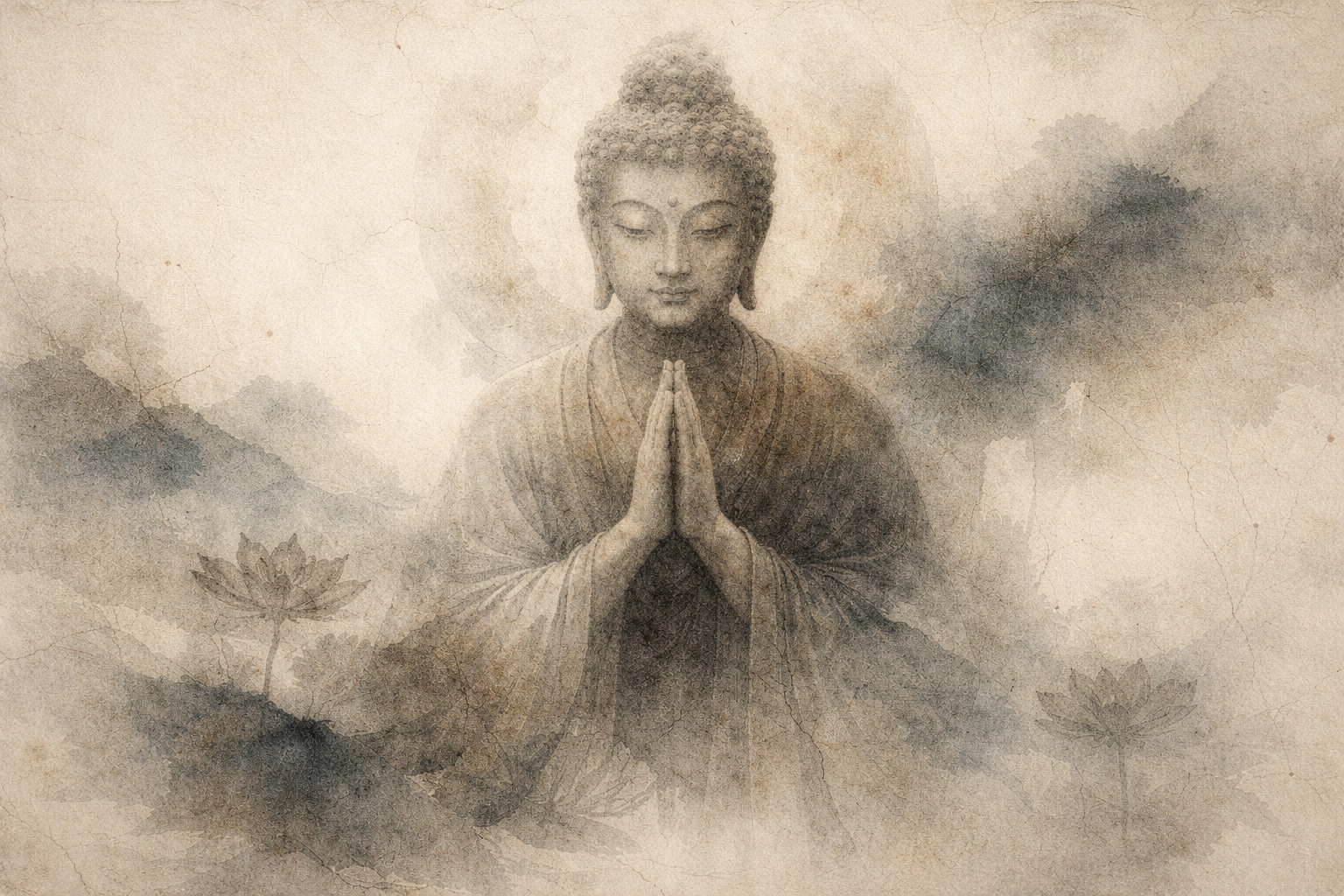
What Does Jobutsu Mean? Becoming a Buddha in Japanese Buddhist Terms
Quick Summary
- Jobutsu (成仏) literally means “to become a Buddha,” but in Japanese usage it often points to being at peace after death or reaching liberation, depending on context.
- The word can describe a religious ideal (awakening) and also a cultural expression used in funerals and memorial settings.
- In everyday Japanese, “jobutsu suru” may imply the deceased has settled—not necessarily a technical claim about full Buddhahood.
- “Becoming a Buddha” here is best read as a lens on suffering and release, not a promise of instant perfection.
- Jobutsu is closely tied to ideas of letting go of clinging, ending torment, and no longer being driven by resentment or fear.
- Misunderstandings happen when people treat jobutsu as either mere superstition or a guaranteed afterlife outcome.
- A practical way to relate to “jobutsu meaning” is to ask: What would it look like to stop feeding the inner fires right now?
Introduction
If you’ve seen the word jobutsu (成仏) translated as “becoming a Buddha,” it can feel confusing fast: is it about enlightenment, death, funerals, ghosts, or simply “rest in peace”? The honest answer is that it can point to all of those depending on who is speaking and why, and the only reliable way to understand jobutsu meaning is to look at how the word functions in Japanese Buddhist language and everyday Japanese. Gassho writes about Buddhist terms as lived language, not as museum definitions.
In Japanese, 成 (jō) suggests “to become” or “to accomplish,” and 仏 (butsu) means “Buddha.” Put together, 成仏 (jobutsu) literally reads as “becoming Buddha.”
But literal meaning is only the starting point. In practice, jobutsu often carries a softer, more human implication: the sense that suffering has ended, that something unresolved has settled, that a person is no longer caught in agitation. That’s why you’ll see it appear in memorial contexts and also in phrases about “not being able to jobutsu,” meaning “not being able to rest” or “not being able to let it go.”
GASSHO
Ask and learn about Buddhism in daily life.
GASSHO is a Buddhist community app where you can learn Buddhist teachings and ask questions to the head priest of Kongosanmaiin Temple on Mount Koya.
A Clear Lens for Understanding “Becoming a Buddha”
A helpful way to approach jobutsu meaning is to treat it as a lens on release. “Becoming a Buddha” isn’t primarily a badge you earn; it points to the end of being pushed around by craving, aversion, and confusion. In that sense, jobutsu names a shift from being compelled to being free—less “I achieved something special” and more “the compulsions stopped running the show.”
This lens also explains why the word can appear around death. When people say someone “jobutsu shita,” they may be expressing a hope or reassurance that the person is no longer suffering—no longer tangled in unfinished business, pain, or fear. It’s not always a technical statement about the highest possible awakening; it can be a compassionate way of saying, “May they be at peace.”
At the same time, the literal phrase “becoming a Buddha” keeps the bar high in a useful way. It reminds us that the deepest peace isn’t just comfort or distraction; it’s a fundamental unhooking from what keeps the mind burning. Read this way, jobutsu isn’t asking you to adopt a belief about invisible realms—it’s pointing to a recognizable human experience: the difference between being consumed and being settled.
So the core perspective is simple: jobutsu points to the end of torment, whether that torment is framed as existential suffering, unresolved attachment, or the restless momentum of the mind. The word’s power comes from holding both meanings at once: a lofty ideal and a very down-to-earth wish.
How Jobutsu Shows Up in Ordinary Life
You can see the “jobutsu lens” in small moments when the mind wants to keep a story alive. An argument replays in your head, and even when you’re alone, your body stays tense as if the fight is still happening. The impulse is to keep proving your point internally. Jobutsu, as a way of seeing, highlights that this replay is a form of not-settling.
Sometimes it shows up as a refusal to let an old hurt end. You might notice how a single memory can become a fuel source: you revisit it, intensify it, and then feel justified in staying angry. The jobutsu angle doesn’t demand that you approve of what happened; it simply notices the cost of continuing to burn.
It also appears in grief. There can be love, sadness, and longing—yet also a tightness that comes from trying to control what cannot be controlled. In that tightness, the mind bargains: “If I think about it enough, I can fix it.” The jobutsu lens points to the moment you recognize that the bargaining is pain on top of pain.
In daily stress, jobutsu can be felt as the difference between reacting and responding. A harsh email arrives, and the mind instantly drafts ten angry replies. Then there’s a pause—maybe just a breath—where you see the surge as a surge. Nothing mystical: just noticing the heat before you pour gasoline on it.
In relationships, it can look like releasing the need to “win” a conversation. You notice the urge to land a final line, to make the other person feel wrong. Then you see the aftertaste: even if you win, you don’t feel free. Jobutsu, in this everyday sense, is the willingness to stop feeding the urge that keeps you trapped.
Even in self-judgment, the same pattern appears. The mind keeps a running list of failures, and it uses that list to define who you are. The jobutsu perspective notices that this is another kind of haunting—being followed by a story you keep reauthoring. “Becoming a Buddha” can sound grand, but in lived experience it often begins as something plain: not continuing the inner attack.
None of this requires you to claim an attainment. It’s simply a way to recognize when the mind is stuck in a loop and to see the possibility of settling. In that sense, jobutsu is less about a finish line and more about the direction of release: away from compulsive grasping, toward ease.
Common Misreadings of Jobutsu
Misunderstanding 1: “Jobutsu just means someone died.” In casual speech, people may use jobutsu around death, but the word isn’t a neutral synonym for “passed away.” It carries the nuance of settling or being at peace, which is why it can sound like a wish, a prayer, or a reassurance.
Misunderstanding 2: “Jobutsu means instant, total enlightenment for everyone.” The literal translation can sound absolute. But in real Japanese usage, jobutsu often functions as a compassionate expression rather than a precise doctrinal claim. Treating it as a guaranteed metaphysical outcome can flatten how the word is actually used.
Misunderstanding 3: “Jobutsu is only about ghosts or hauntings.” You may encounter phrases like “can’t jobutsu,” sometimes used in stories about lingering spirits. But even there, the core idea is still the same: something is unresolved, clinging continues, rest is not found. The ghost language is a dramatic wrapper around a human theme—unfinished attachment.
Misunderstanding 4: “If I’m still upset, I’m failing at Buddhism.” Jobutsu as a lens is descriptive, not a weapon. It points to how clinging feels and what it costs. It doesn’t require you to suppress emotion or pretend you’re calm. The shift it suggests is from being possessed by emotion to being able to hold it without feeding it endlessly.
Why the Meaning of Jobutsu Still Matters
Understanding jobutsu meaning matters because it changes how you relate to suffering. If “becoming a Buddha” sounds like a distant religious fantasy, it’s easy to dismiss it. But if jobutsu is understood as the end of needless inner burning, it becomes immediately relevant: it names a possibility that shows up in ordinary moments.
It also matters culturally. When jobutsu is used in memorial settings, it often carries tenderness: a way of speaking about death that emphasizes peace rather than fear. Knowing that nuance helps you hear what people are actually trying to say—often something closer to “may they be free” than “they achieved a cosmic rank.”
On a personal level, jobutsu points to a practical question: what are you keeping alive that doesn’t need to be alive? Resentments, self-stories, compulsive comparisons, old arguments—these can function like inner hauntings. The word jobutsu gives a name to the act of letting the haunting end.
And finally, it matters because language shapes aspiration. “Rest” can sound passive; “becoming a Buddha” can sound impossible. Jobutsu holds both: the gentleness of rest and the seriousness of freedom. That combination can steady practice without turning it into a performance.
Conclusion
Jobutsu (成仏) literally means “to become a Buddha,” but its lived meaning in Japanese often points to something more immediate and human: the ending of unrest, the settling of what clings, the hope that suffering has ceased. Read as a lens rather than a slogan, jobutsu invites a simple recognition—when the mind is feeding the fire, and when it’s possible to stop.
Ask a Buddhist priest
Have a question about Buddhism?
In the GASSHO app, you can ask questions about Buddhist teachings, daily concerns, and how to understand Buddhism in everyday life.
Frequently Asked Questions
- FAQ 1: What is the literal jobutsu meaning in Japanese?
- FAQ 2: Does jobutsu mean “rest in peace”?
- FAQ 3: Is jobutsu only used when someone dies?
- FAQ 4: What does “jobutsu suru” mean in Japanese conversation?
- FAQ 5: What does “jobutsu dekinai” mean?
- FAQ 6: Is jobutsu the same as enlightenment?
- FAQ 7: How do you pronounce jobutsu?
- FAQ 8: What kanji are used for jobutsu and what do they mean?
- FAQ 9: Why do Japanese people say someone “became a Buddha” after death?
- FAQ 10: Does jobutsu imply a specific afterlife belief?
- FAQ 11: Is jobutsu a common word in modern Japanese?
- FAQ 12: How is jobutsu different from nirvana in meaning?
- FAQ 13: Can jobutsu be used metaphorically for living people?
- FAQ 14: Is jobutsu considered a goal, a state, or a process?
- FAQ 15: What is the simplest way to explain jobutsu meaning to a beginner?
FAQ 1: What is the literal jobutsu meaning in Japanese?
Answer: Jobutsu (成仏) literally means “to become a Buddha,” combining 成 (“to become/accomplish”) and 仏 (“Buddha”). In real usage, the nuance can range from spiritual liberation to the idea of being peacefully settled after death.
Takeaway: The literal translation is “becoming a Buddha,” but context determines the nuance.
FAQ 2: Does jobutsu mean “rest in peace”?
Answer: It can function that way in everyday Japanese, especially when speaking about the deceased. People may use jobutsu to express a hope or sense that someone is no longer suffering, which overlaps with “rest in peace,” even if the literal words are different.
Takeaway: In memorial contexts, jobutsu often carries a “may they be at peace” feeling.
FAQ 3: Is jobutsu only used when someone dies?
Answer: No. While jobutsu is common in funeral and memorial language, it also appears in broader religious or philosophical talk about liberation, and in expressions about not being able to “settle” or “let go.”
Takeaway: Jobutsu is strongly associated with death, but its meaning is not limited to death.
FAQ 4: What does “jobutsu suru” mean in Japanese conversation?
Answer: “Jobutsu suru” (成仏する) means “to become a Buddha,” but conversationally it can imply that someone (often the deceased) has found peace, or that something unresolved has finally settled.
Takeaway: “Jobutsu suru” can be literal or a gentle way of saying “they’ve settled/are at peace.”
FAQ 5: What does “jobutsu dekinai” mean?
Answer: “Jobutsu dekinai” (成仏できない) literally means “cannot become a Buddha,” and it’s used to suggest not being able to rest or move on. Depending on context, it can refer to lingering attachment, unresolved feelings, or (in folklore) a spirit that cannot settle.
Takeaway: “Jobutsu dekinai” points to unresolved clinging—psychologically or in story language.
FAQ 6: Is jobutsu the same as enlightenment?
Answer: Jobutsu can be used to point toward awakening or liberation, but it’s not always used as a precise technical synonym for “enlightenment.” In Japanese, it often carries a broader sense of release and peace, especially in cultural usage around death.
Takeaway: Jobutsu may overlap with enlightenment, but it’s often used more broadly than that.
FAQ 7: How do you pronounce jobutsu?
Answer: It’s commonly pronounced “joh-boo-tsu,” with a long “jo” sound (じょうぶつ / jōbutsu). You may also see it written as “joubutsu” to show the long vowel.
Takeaway: Pronounce it like “joh-boo-tsu” (jōbutsu).
FAQ 8: What kanji are used for jobutsu and what do they mean?
Answer: Jobutsu is written 成仏. 成 means “to become,” “to accomplish,” or “to complete,” and 仏 means “Buddha.” Together they express “becoming Buddha,” with context shaping whether it’s read as liberation, peace, or settling after death.
Takeaway: 成仏 literally encodes “become” + “Buddha.”
FAQ 9: Why do Japanese people say someone “became a Buddha” after death?
Answer: It’s often a respectful, consoling way to speak: the person is no longer suffering and has come to peace. It can also reflect religious hopes, but in many situations it functions as compassionate language rather than a strict doctrinal claim.
Takeaway: It’s frequently a cultural-religious expression of peace, not a literal “rank achieved” statement.
FAQ 10: Does jobutsu imply a specific afterlife belief?
Answer: Not necessarily. The word can be used within religious frameworks that include after-death views, but it’s also used as a general expression of release and settling. The same term can carry different levels of metaphysical commitment depending on the speaker.
Takeaway: Jobutsu can be religious, but it doesn’t force one single afterlife interpretation.
FAQ 11: Is jobutsu a common word in modern Japanese?
Answer: Yes, especially in contexts related to death, memorials, and expressions about “moving on.” It may sound formal or religious, but many people recognize it as part of everyday cultural vocabulary.
Takeaway: Jobutsu is widely understood, particularly in memorial and “letting go” contexts.
FAQ 12: How is jobutsu different from nirvana in meaning?
Answer: Jobutsu emphasizes “becoming Buddha” or “settling into peace,” while “nirvana” is often explained as “extinguishing” the fires of craving and suffering. They can point in a similar direction (release), but the imagery and typical usage differ.
Takeaway: Both relate to release, but jobutsu uses “becoming Buddha/settling,” while nirvana uses “extinguishing.”
FAQ 13: Can jobutsu be used metaphorically for living people?
Answer: Yes. While it’s most common for the deceased, jobutsu can be used metaphorically to mean someone finally let go, stopped obsessing, or found closure—essentially, they “settled” what was keeping them restless.
Takeaway: Jobutsu can describe a living kind of “release,” not only a post-death idea.
FAQ 14: Is jobutsu considered a goal, a state, or a process?
Answer: In literal terms it sounds like a goal (“become Buddha”), but in usage it often points to the condition of being settled and no longer suffering. Many people relate to it as a direction of release rather than a measurable achievement.
Takeaway: Jobutsu can read like a goal, but it’s often understood as the settling of suffering.
FAQ 15: What is the simplest way to explain jobutsu meaning to a beginner?
Answer: A simple explanation is: “Jobutsu means ‘becoming a Buddha,’ and it’s often used to mean ‘being free from suffering’ or ‘resting in peace,’ especially after death.” If you add one more layer, it also points to letting go of what keeps the mind burning.
Takeaway: Jobutsu = “becoming Buddha,” commonly understood as peace and release from suffering.