



Jizo vs Kannon: What Is the Difference Between These Two Compassionate Figures?
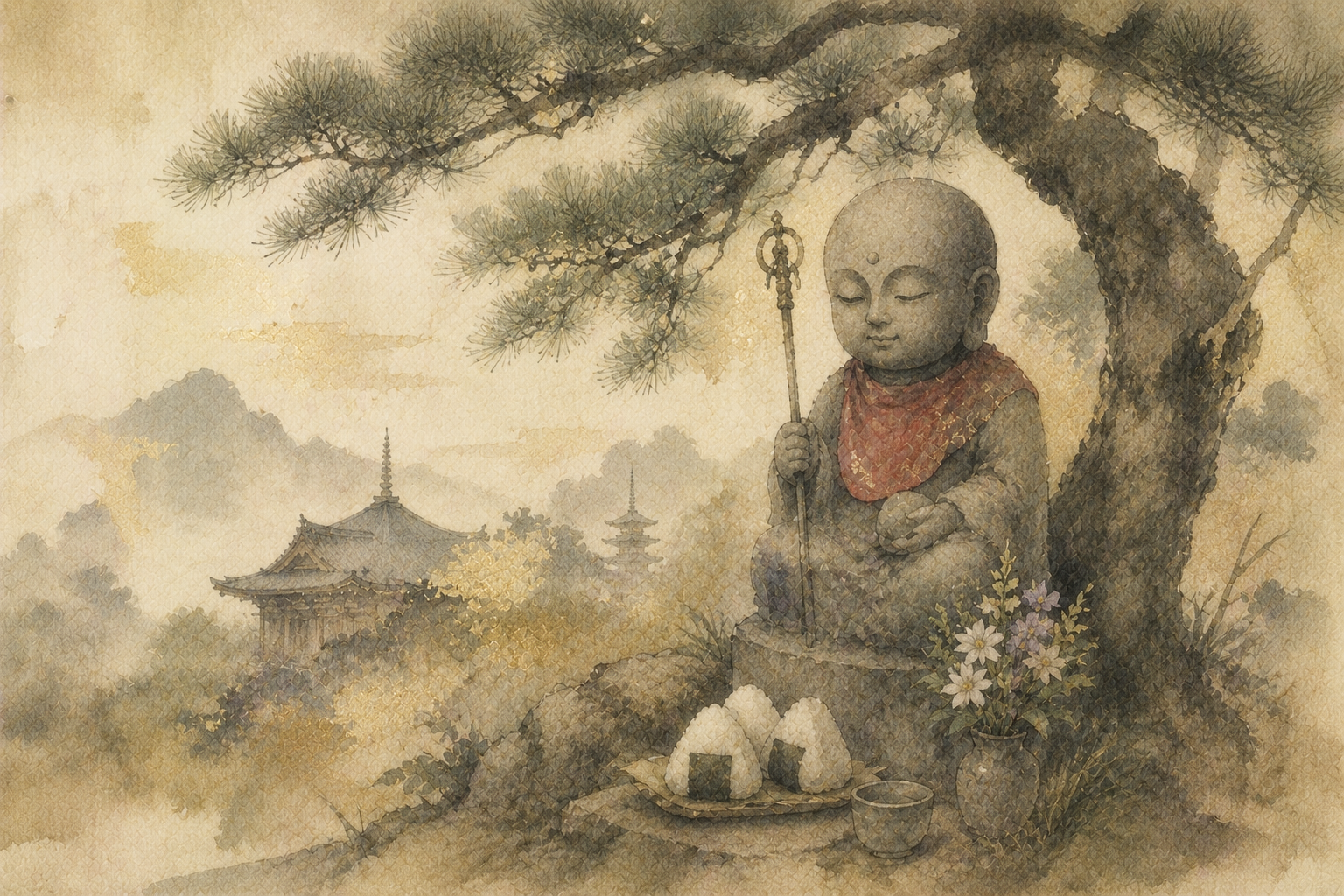
Quick Summary
- Jizo is often pictured as a gentle monk-like figure associated with protecting children, travelers, and those in vulnerable in-between places.
- Kannon (Avalokiteshvara) is widely known as the embodiment of compassion that responds to suffering in many forms and situations.
- In practice, Jizo feels “close to the ground”: small, local, approachable, and tied to everyday thresholds like roadsides and cemeteries.
- Kannon feels “all-directions”: expansive compassion, listening deeply, and meeting needs with flexibility.
- Iconography differs: Jizo often has a shaved head and staff; Kannon may appear in many forms, sometimes holding a vase or willow branch.
- Neither is “better”: they are two lenses for compassion—steady presence (Jizo) and responsive care (Kannon).
- If you’re choosing one for a home altar or a gift, pick the figure that matches the kind of support you want to remember and practice.
Introduction
If you’re stuck on “Jizo vs Kannon,” it’s usually because both are described as compassionate—and the images overlap just enough to make the difference feel fuzzy. The cleanest way to sort it out is to stop treating them like competing deities and start seeing them as two distinct styles of compassion you can recognize in your own life and choices. At Gassho, we focus on practical clarity and lived meaning rather than trivia.
People often meet Jizo first at a roadside statue or a quiet cemetery corner, and meet Kannon first in a temple hall or a chant—so the emotional “feel” of each figure can be as important as the formal definitions.
Once you know what each figure emphasizes, the confusion tends to dissolve: Jizo points to steady protection in vulnerable passages, while Kannon points to listening and responding to suffering wherever it appears.
A Clear Lens for Understanding Jizo and Kannon
A helpful way to understand Jizo vs Kannon is to treat them as two lenses on compassion rather than two “characters” you must memorize. A lens doesn’t demand belief; it changes what you notice. With Jizo, you notice the places where life feels exposed—transitions, losses, uncertainty, and the small fear that comes with not knowing what happens next.
Jizo’s compassion is often portrayed as close, patient, and protective. It’s the kind of care that stays near the vulnerable without needing to fix everything immediately. In that sense, Jizo can be understood as the compassion of accompaniment: walking with, standing with, keeping watch.
Kannon’s compassion, by contrast, is often portrayed as responsive and wide-reaching. The emphasis is on hearing suffering and meeting it skillfully—sometimes gently, sometimes firmly, sometimes in a form that fits the moment. With Kannon, you notice the many ways distress shows up and the many ways care can be expressed.
Seen this way, “difference” doesn’t mean separation. Jizo and Kannon can be complementary: one highlights steadiness at the threshold; the other highlights responsiveness in the midst of complexity.
GASSHO
Ask and learn about Buddhism in daily life.
GASSHO is a Buddhist community app where you can learn Buddhist teachings and ask questions to the head priest of Kongosanmaiin Temple on Mount Koya.
How the Difference Shows Up in Ordinary Life
Imagine you’re walking through a difficult week and you can’t tell what you need—advice, comfort, a plan, or just someone to sit with you. The “Jizo vs Kannon” distinction can be felt right there: sometimes the most healing thing is steady presence, and sometimes it’s an active, tailored response.
When the mind is anxious, it often wants certainty. Jizo-like compassion meets that anxiety by lowering the stakes: “You don’t have to solve everything right now. Just take the next step. You’re not alone.” Internally, that can look like softening the jaw, letting the breath drop, and allowing the moment to be incomplete.
In grief or tenderness, the heart can feel raw and exposed. Jizo-like energy is protective without being dramatic—more like a handrail than a rescue. You may notice yourself becoming less performative about your pain and more willing to simply acknowledge it.
Then there are moments when suffering is not just heavy—it’s tangled. A friend needs support, but also boundaries. A family situation calls for patience, but also honesty. Kannon-like compassion shows up as listening carefully, noticing what’s actually being asked, and responding in a way that fits. Internally, that can feel like moving from “I should say the right thing” to “Let me hear what’s really happening.”
Kannon-like attention also notices the subtle forms of suffering: irritation, loneliness, shame, the quiet sense of being unseen. Instead of forcing a single solution, it adapts. Sometimes the response is a kind word; sometimes it’s silence; sometimes it’s a practical action like making a call or offering a ride.
In daily interactions, Jizo can remind you to be trustworthy and consistent—showing up when it’s inconvenient, keeping your promises, being a calm presence. Kannon can remind you to be perceptive and flexible—changing your approach when the first one doesn’t help, and letting compassion be intelligent rather than automatic.
Neither mode is “more spiritual.” They’re two human capacities: the capacity to stay, and the capacity to respond. Seeing Jizo vs Kannon this way turns the comparison into a practical mirror.
Common Misunderstandings That Create Confusion
Misunderstanding 1: “They’re basically the same figure with different names.” Both are compassionate, but their emphasis and imagery point to different qualities. Jizo is often associated with protection in liminal spaces (roads, crossings, loss), while Kannon is associated with hearing and responding to suffering broadly.
Misunderstanding 2: “Jizo is only for children, and Kannon is for everyone else.” Jizo is strongly linked with children in popular devotion, but the underlying theme is vulnerability and safe passage—something adults experience too. Kannon’s compassion is broad, but that doesn’t make it vague; it can be very specific and personal.
Misunderstanding 3: “Kannon is ‘higher’ and Jizo is ‘lower.’” People sometimes rank them based on temple placement or grandeur of statues. That misses the point. Jizo’s “small roadside statue” feeling is part of its teaching: compassion can be humble, local, and near at hand.
Misunderstanding 4: “If I choose one, I’m rejecting the other.” Many people keep both in mind: Jizo for steadiness in hard passages, Kannon for responsive care in complex situations. Choosing a focus is often about what you need to remember right now, not about exclusivity.
Misunderstanding 5: “The iconography is too confusing, so it doesn’t matter.” Details like a staff, a vase, or a particular posture aren’t just art history—they’re cues. They help you recall a quality of mind: protection, listening, guidance, or responsiveness.
Why This Difference Matters for Your Practice and Daily Choices
Understanding Jizo vs Kannon matters because compassion isn’t one-size-fits-all. When you’re under stress, you may default to a single style—either trying to fix everything (over-responding) or going quiet and distant (under-responding). These two figures offer a balanced reminder: sometimes the wisest compassion is to stay close; sometimes it’s to adapt and act.
It also matters for how you relate to symbols. A figure on a shelf, a small statue in a garden, or an image you pass on a walk can become a cue for attention. Jizo can cue steadiness, patience, and protection of what is tender. Kannon can cue listening, empathy, and the willingness to meet reality as it is.
In relationships, the distinction can prevent common mistakes. Jizo-like care helps when someone needs reliability more than advice. Kannon-like care helps when someone needs to be heard and met with a response that fits their actual situation, not your assumptions.
Even in self-care, the difference is practical. Jizo can look like giving yourself a safe container—rest, routine, gentle boundaries. Kannon can look like asking, “What is the suffering here, exactly?” and responding with the right kind of support rather than a generic fix.
Conclusion
Jizo vs Kannon isn’t a debate about which compassionate figure is “correct.” It’s a way to recognize two compassionate functions you can lean on: Jizo as steady protection through vulnerable passages, and Kannon as responsive care that listens and meets suffering in the form it takes.
If you’re choosing one image to keep close, choose the one that reminds you of what you most need to practice right now—steadiness and accompaniment (Jizo) or listening and skillful response (Kannon). Over time, many people find the two naturally support each other.
Ask a Buddhist priest
Have a question about Buddhism?
In the GASSHO app, you can ask questions about Buddhist teachings, daily concerns, and how to understand Buddhism in everyday life.
Frequently Asked Questions
- FAQ 1: What is the main difference in meaning between Jizo and Kannon?
- FAQ 2: Is Jizo a Buddha and is Kannon a Buddha?
- FAQ 3: Why is Jizo often shown as a monk-like figure while Kannon looks more regal or varied?
- FAQ 4: What objects help you tell Jizo vs Kannon apart in statues?
- FAQ 5: Why do people associate Jizo with children more than Kannon?
- FAQ 6: Is Kannon the same as Guan Yin, and does that affect Jizo vs Kannon?
- FAQ 7: When would someone choose Jizo over Kannon for a home altar?
- FAQ 8: When would someone choose Kannon over Jizo for a home altar?
- FAQ 9: Can you venerate both Jizo and Kannon, or is that considered inconsistent?
- FAQ 10: Are Jizo and Kannon associated with different places, like roadsides vs temples?
- FAQ 11: Does Jizo vs Kannon map to different kinds of compassion in daily behavior?
- FAQ 12: Why is Kannon sometimes depicted as female, and does Jizo have a gendered depiction?
- FAQ 13: Is it “wrong” to pray to Jizo for help that seems more like Kannon’s role, or vice versa?
- FAQ 14: How do chants or mantras relate to Jizo vs Kannon?
- FAQ 15: If I can only remember one simple phrase for Jizo vs Kannon, what should it be?
FAQ 1: What is the main difference in meaning between Jizo and Kannon?
Answer: Jizo is commonly associated with protective, close-to-home compassion—especially for those who feel vulnerable or “in between” (such as travelers, the grieving, and children). Kannon is commonly associated with compassion that listens and responds broadly to suffering in many forms. Both point to compassion, but they emphasize different qualities: steadiness (Jizo) and responsiveness (Kannon).
Takeaway: Think “Jizo stays with you” and “Kannon meets you as you are.”
FAQ 2: Is Jizo a Buddha and is Kannon a Buddha?
Answer: In most common explanations, both Jizo and Kannon are described as bodhisattva figures—compassionate beings who represent and enact compassion rather than being framed primarily as historical Buddhas. People may speak about them with deep devotion, but the practical point is how each figure functions as a symbol and support for compassion.
Takeaway: Both are typically understood as bodhisattvas, not “competing Buddhas.”
FAQ 3: Why is Jizo often shown as a monk-like figure while Kannon looks more regal or varied?
Answer: Jizo is frequently depicted with a shaved head and simple robes, highlighting humility, closeness, and a protective presence that walks alongside ordinary life. Kannon is depicted in many forms, sometimes more ornate, to express adaptability—compassion that can appear in whatever way is helpful for the situation.
Takeaway: Jizo’s simplicity signals steady accompaniment; Kannon’s variety signals flexible response.
FAQ 4: What objects help you tell Jizo vs Kannon apart in statues?
Answer: Jizo is often shown holding a staff (shakujō) and sometimes a wish-fulfilling jewel, with a gentle monk-like appearance. Kannon may hold a vase (often associated with compassion), a willow branch, or appear with multiple arms in some depictions to symbolize many ways of helping. Local styles vary, so context and inscription can also matter.
Takeaway: Look for Jizo’s staff and monk-like form; look for Kannon’s varied forms and compassionate implements.
FAQ 5: Why do people associate Jizo with children more than Kannon?
Answer: Jizo devotion is strongly connected with protecting children and caring for those who are especially vulnerable, which is why you often see small Jizo statues dressed with bibs or hats. Kannon is also compassionate toward children, but is more broadly framed as responding to suffering in general rather than being popularly centered on child-protection imagery.
Takeaway: Jizo’s popular role is “protector of the vulnerable,” which often centers on children.
FAQ 6: Is Kannon the same as Guan Yin, and does that affect Jizo vs Kannon?
Answer: Kannon is the Japanese name for Avalokiteshvara, who is widely known as Guan Yin in Chinese contexts. This doesn’t change the core “Jizo vs Kannon” comparison; it mainly explains why Kannon may be recognized under different names and artistic styles across cultures.
Takeaway: Kannon and Guan Yin refer to the same compassionate figure in different cultural settings.
FAQ 7: When would someone choose Jizo over Kannon for a home altar?
Answer: People often choose Jizo when they want a daily reminder of protection, steadiness, and care for vulnerability—especially during grief, life transitions, or when supporting children or family members. It’s less about “over” Kannon and more about what quality you want to keep close and practice consistently.
Takeaway: Choose Jizo when you want a symbol of steady, protective presence.
FAQ 8: When would someone choose Kannon over Jizo for a home altar?
Answer: People often choose Kannon when they want a daily reminder to listen deeply and respond skillfully to suffering—both their own and others’. Kannon can feel especially fitting when you’re working with relationships, caregiving, or emotional overwhelm where the “right response” needs sensitivity and flexibility.
Takeaway: Choose Kannon when you want a symbol of listening and responsive compassion.
FAQ 9: Can you venerate both Jizo and Kannon, or is that considered inconsistent?
Answer: Many people relate to both without any sense of contradiction, because the figures highlight complementary aspects of compassion. Jizo can represent steadfast accompaniment through vulnerable passages, while Kannon can represent attentive responsiveness to suffering as it appears day by day.
Takeaway: Honoring both can be a balanced way to remember “stay with it” and “respond wisely.”
FAQ 10: Are Jizo and Kannon associated with different places, like roadsides vs temples?
Answer: Jizo statues are famously common at roadsides, crossings, and cemeteries, reflecting themes of travel, thresholds, and protection. Kannon is also found in many places, often prominently in temples and dedicated halls, reflecting a broad devotional presence. These are tendencies, not strict rules.
Takeaway: Jizo is often encountered in everyday threshold spaces; Kannon is often encountered in broader devotional settings.
FAQ 11: Does Jizo vs Kannon map to different kinds of compassion in daily behavior?
Answer: Yes. Jizo-like compassion looks like reliability: showing up, staying calm, offering protection and steadiness. Kannon-like compassion looks like attunement: listening carefully, understanding what’s needed, and responding in a fitting way. Both are practical, human expressions of care.
Takeaway: Jizo emphasizes steadiness; Kannon emphasizes attuned response.
FAQ 12: Why is Kannon sometimes depicted as female, and does Jizo have a gendered depiction?
Answer: Kannon appears in many forms, and in East Asian art is often depicted in a feminine or androgynous way to express gentleness and nurturing compassion. Jizo is typically depicted in a monk-like form that reads as masculine in many cultures, though the core point of both figures is compassionate function rather than gender identity.
Takeaway: Artistic gender cues vary, but the emphasis is on compassion, not gender.
FAQ 13: Is it “wrong” to pray to Jizo for help that seems more like Kannon’s role, or vice versa?
Answer: In everyday devotion, people often turn to whichever figure feels close and meaningful, regardless of neat categories. The “Jizo vs Kannon” distinction is mainly a guide for understanding symbolism and emphasis, not a strict rulebook for what you’re allowed to ask for.
Takeaway: Use the distinction for clarity, not for policing your sincerity.
FAQ 14: How do chants or mantras relate to Jizo vs Kannon?
Answer: People may chant names or short phrases connected with Jizo or Kannon as a way to steady attention and evoke the quality each represents. In the “Jizo vs Kannon” frame, chanting Jizo can feel like grounding into protection and patience, while chanting Kannon can feel like opening into listening and responsive compassion.
Takeaway: Chants can function as attention-cues: grounding with Jizo, opening with Kannon.
FAQ 15: If I can only remember one simple phrase for Jizo vs Kannon, what should it be?
Answer: A simple memory aid is: Jizo is “compassion that accompanies,” and Kannon is “compassion that responds.” Both point back to the same heart-quality, expressed in different ways.
Takeaway: Jizo accompanies; Kannon responds.