



Is Meditation a Form of Escapism?
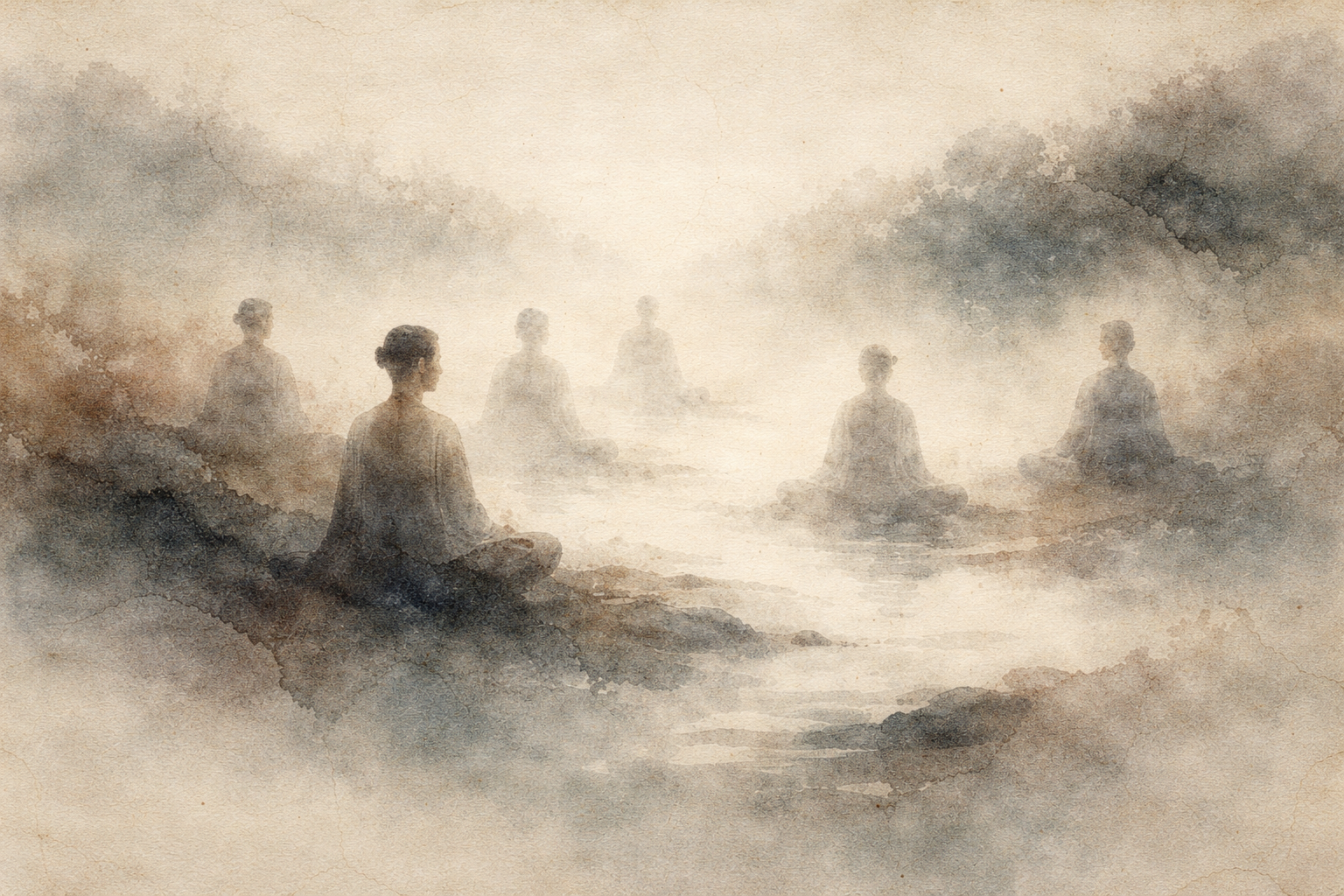
Quick Summary
- “Is meditation escapism?” depends less on the technique and more on the intention behind it.
- Meditation can be used to avoid life, but it can also be a way to meet life more directly.
- Escapism usually narrows attention to feel better; meditation often widens attention to see clearly.
- If practice makes relationships, work, and responsibility feel more honest, it’s likely not escapism.
- If practice becomes a reason to withdraw, numb out, or stay “above it all,” escapism may be present.
- Calm is not the same as avoidance; calm can be the condition that allows difficult truths to be faced.
- The most reliable test is what happens after you stand up: more clarity and care, or more distance and denial.
Introduction
Calling meditation “escapism” can feel like a fair accusation when sitting quietly looks like opting out of messy conversations, deadlines, grief, or the plain effort of being a decent human. At the same time, dismissing meditation as avoidance can miss what many people are actually doing: learning to stop running internally so they can respond more cleanly in the very situations they used to flee. This perspective is written for Gassho, a Zen/Buddhism site focused on practical clarity rather than spiritual posturing.
The confusion often comes from the fact that both escapism and meditation can look similar from the outside: less talking, fewer reactions, more silence. But the inner direction can be opposite. One is a shrinking away from experience to protect a preferred mood; the other is a willingness to stay present even when the mood is not preferred.
It also doesn’t help that modern life rewards constant stimulation. When someone chooses stillness, it can be labeled as “checking out,” especially if the people around them are used to bonding through shared stress, complaint, or urgency. The question is worth taking seriously, because meditation can be misused—just like work, fitness, or entertainment can be misused.
A Clear Lens: Intention Versus Avoidance
A grounded way to approach “is meditation escapism” is to look at intention and effect rather than the activity itself. Sitting quietly is not automatically wise, and it’s not automatically avoidant. The same outward behavior can be driven by very different inner motives: one person sits to dodge a difficult email; another sits to stop spiraling so they can write it without aggression or fear.
Escapism usually has a tight, protective feel. It aims to replace what is happening with something more comfortable—numbing out, fantasizing, scrolling, or rehearsing a story that keeps responsibility at a distance. Meditation, at its best, does not replace experience. It makes room for experience to be felt without immediately turning it into a problem that must be solved or a threat that must be eliminated.
This difference shows up in ordinary moments. At work, avoidance tends to postpone: “I’ll deal with it later,” while tension quietly grows. A more honest kind of meditation doesn’t erase the task; it reveals the sensations of resistance, the urge to distract, and the fear of being judged—so the task can be met with fewer extra layers.
In relationships, escapism often looks like emotional absence: being physically present but unreachable, using calm as a shield. Meditation can look similar on the surface—less reactivity—but the inner movement is toward contact. It can make it easier to hear criticism without collapsing, to apologize without self-hatred, and to be quiet without withholding.
How It Feels in Real Life When It’s Not Escapism
In lived experience, the line between meditation and escapism often appears as a shift in how attention behaves. When the mind is escaping, attention hunts for an exit: a thought that soothes, a plan that promises control, a distraction that dulls discomfort. When the mind is meditating, attention may still want an exit, but that wanting becomes visible—like noticing your hand reaching for the phone before you’ve even decided.
Consider fatigue after a long day. Escapism tends to bargain: “I deserve to disappear for a while,” and then the evening is spent half-numb, half-restless. Meditation doesn’t have to be heroic; it simply makes the fatigue more direct. The heaviness in the eyes, the impatience, the craving for something easy—these can be felt without immediately being converted into a story about what you “need” to do to feel okay.
In a tense workplace moment—an abrupt message, a meeting that feels like a performance—escapism often shows up as mental rehearsal and self-defense. The mind writes speeches, imagines outcomes, and tries to outrun uncertainty. A meditative stance doesn’t magically remove the stakes. It notices the tightening in the chest, the heat in the face, the impulse to interrupt, the urge to be seen as competent. The situation remains, but the inner struggle becomes less automatic.
In conflict with someone close, escapism can look like “being spiritual” as a way to avoid vulnerability. Silence becomes punishment. Calm becomes superiority. Meditation, when it is alive, feels more like staying near the raw edge without dramatizing it. You might still pause before speaking, but the pause is not a withdrawal; it’s a moment where the next sentence is not forced by habit.
Even in simple silence—waiting in a car, standing in a kitchen, walking to the train—escapism tends to fill the space quickly. The mind reaches for noise because quiet exposes what has been postponed: loneliness, regret, uncertainty, or just the plain restlessness of being human. Meditation doesn’t need to label any of that. It lets the quiet be quiet, and lets the discomfort be discomfort, without immediately turning away.
Another everyday sign is what happens to small responsibilities. When meditation is used as escape, ordinary tasks start to feel beneath you or irrelevant: returning calls, paying bills, showing up on time. When meditation is not escapism, the same tasks may feel simpler—not necessarily pleasant, but less tangled. The mind spends less energy arguing with reality, so basic follow-through becomes more possible.
And there is the subtle matter of mood. Escapism is often mood-driven: “I’ll engage with life when I feel better.” Meditation can include calm, but it doesn’t depend on calm. It can sit beside anxiety without needing anxiety to leave first. That willingness—quietly staying with what is already here—is often the most practical difference.
Where People Get Stuck: Common Misreadings
One common misunderstanding is equating “not reacting” with “not caring.” When someone becomes less explosive, others may assume they’ve become detached or indifferent. But reduced reactivity can simply mean fewer reflexive defenses. The care may still be there, just less theatrical—less fueled by panic, more grounded in listening.
Another misunderstanding is thinking meditation should feel good, and therefore using it to chase a particular state. This is an easy habit to fall into because relief is real, and relief is attractive. But when the goal becomes “never feel stressed,” meditation can quietly turn into a sophisticated form of avoidance, especially in seasons of grief, conflict, or uncertainty.
People also confuse privacy with withdrawal. Taking time to sit can look like shutting others out, particularly in families or workplaces that expect constant availability. Yet a short period of quiet can be the difference between responding with clarity and reacting with resentment. The misunderstanding often comes from timing and communication, not from the act of meditation itself.
Finally, there is the habit of using spiritual language to cover ordinary fear: “I’m letting go” can sometimes mean “I don’t want to deal with this.” This isn’t a moral failure; it’s a human shortcut. The mind prefers clean stories to messy feelings. Over time, the difference becomes easier to sense in the body: avoidance feels like contraction and numbness, while honest presence feels like contact—even when it’s uncomfortable.
Why This Question Matters in Daily Life
The question “is meditation escapism” matters because it touches trust—trust in oneself, and trust from others. If meditation becomes a way to disappear, relationships can quietly erode. People feel left alone with the practical and emotional labor of life. Resentment grows, even if no one says it out loud.
But if meditation supports clearer contact with experience, it tends to show up in small, unglamorous ways: fewer impulsive messages, more honest pauses, less defensiveness in a hard conversation. It can look like being able to admit, “I’m overwhelmed,” without turning that admission into blame.
At work, the difference can be equally ordinary. Escapism often increases procrastination and quiet dread. A more grounded mind doesn’t remove pressure, but it can reduce the extra suffering of constant inner argument. The day still has tasks, but the mind is less busy constructing an identity around success or failure.
In the end, the question is not about being a “good meditator.” It’s about whether quiet time makes it easier to meet life as it is—emails, dishes, apologies, fatigue, affection—or whether it becomes a hiding place. The answer is rarely permanent. It can change week to week, depending on stress, support, and honesty.
Conclusion
When the mind stops searching for an exit, even briefly, life appears more plainly. The same sounds, the same responsibilities, the same feelings are there, but they do not have to be fought or decorated. In that plainness, the question of escapism becomes something that can be seen directly, moment by moment, in one’s own awareness.
Frequently Asked Questions
- FAQ 1: Is meditation escapism if I use it to calm down?
- FAQ 2: How can I tell whether my meditation is avoidance or healthy coping?
- FAQ 3: Can meditation become a way to suppress emotions?
- FAQ 4: Is meditation escapism if I prefer it over socializing?
- FAQ 5: Does “detachment” in meditation mean not caring about life?
- FAQ 6: Is meditation escapism if I meditate instead of solving my problems?
- FAQ 7: Can meditation make someone passive or less motivated?
- FAQ 8: Is using meditation to fall asleep a form of escapism?
- FAQ 9: Is meditation escapism if I do it to avoid conflict?
- FAQ 10: Can meditation be used to bypass grief or trauma?
- FAQ 11: Is meditation escapism if it makes me feel “above” my emotions?
- FAQ 12: What are signs that meditation is helping me face reality more directly?
- FAQ 13: Is meditation escapism if I enjoy the peaceful feeling it gives me?
- FAQ 14: Can meditation reduce stress without becoming escapism?
- FAQ 15: Is meditation escapism in Buddhism?
FAQ 1: Is meditation escapism if I use it to calm down?
Answer:Not necessarily. Calming down can be a practical way to reduce reactivity so a situation can be met more clearly. It leans toward escapism when “calm” becomes the goal that replaces dealing with what needs to be addressed—like using meditation to avoid an apology, a decision, or a hard conversation.
Real result: The American Psychological Association notes that meditation is commonly used for stress reduction and emotional regulation, which can support healthier responses rather than avoidance.
Takeaway: Calm can be preparation for engagement, not a hiding place.
FAQ 2: How can I tell whether my meditation is avoidance or healthy coping?
Answer:Look at what happens after you meditate. Healthy coping tends to leave you more willing to face the same responsibilities—work tasks, relationship repair, basic self-care—even if they’re still uncomfortable. Avoidance tends to leave you more distant, more delayed, or more convinced that ordinary life is the problem.
Real result: The UK NHS describes mindfulness as a way to relate differently to thoughts and feelings, which can support day-to-day functioning rather than replace it.
Takeaway: The effect on real-life follow-through is a strong clue.
FAQ 3: Can meditation become a way to suppress emotions?
Answer:Yes, it can—especially if meditation is used to force feelings away or to maintain a “peaceful” image. Suppression often shows up as numbness, tightness, or a delayed emotional rebound later. Meditation is less escapist when emotions are allowed to be felt as they are, without immediately acting them out or pushing them down.
Real result: Research reviews in Frontiers in Psychology (via NCBI) discuss how mindfulness relates to emotion regulation, including the difference between acceptance-based regulation and suppression.
Takeaway: If practice becomes emotional “shut down,” escapism may be involved.
FAQ 4: Is meditation escapism if I prefer it over socializing?
Answer:Preferring quiet doesn’t automatically mean escapism. Some people genuinely restore in solitude. It becomes escapist when meditation is used to avoid necessary human contact—like refusing repair after conflict, dodging intimacy, or hiding from accountability—while calling it “self-care.”
Real result: The Mindful organization frequently frames mindfulness as supporting healthier relationships and communication, not replacing them.
Takeaway: Solitude can be nourishing, but avoidance leaves relationships unattended.
FAQ 5: Does “detachment” in meditation mean not caring about life?
Answer:No. In everyday terms, detachment can simply mean not being yanked around by every thought and mood. Caring can still be present, sometimes more steadily, because it’s less mixed with panic, control, or self-protection. Escapism is more like disengagement—checking out while life continues to ask something of you.
Real result: The Encyclopaedia Britannica describes Buddhist practice as addressing suffering through insight and conduct, not through indifference to life.
Takeaway: Less clinging can support clearer care, not less care.
FAQ 6: Is meditation escapism if I meditate instead of solving my problems?
Answer:It can be, depending on what “instead of” means. If meditation becomes a repeated delay tactic—used to postpone decisions, conversations, or practical steps—then it functions like avoidance. If it helps you approach the same problems with less reactivity and more clarity, it’s closer to support than escape.
Real result: The Mayo Clinic notes meditation can help people manage stress symptoms, which may improve the ability to cope with challenges rather than remove them.
Takeaway: Meditation can support problem-solving, but it shouldn’t replace it.
FAQ 7: Can meditation make someone passive or less motivated?
Answer:Sometimes people fear that less striving means less effectiveness. In practice, reduced reactivity can look like slower responses, but it can also mean fewer impulsive choices and less burnout-driven effort. If motivation drops because meditation is being used to disengage from life, that’s a sign to look at intention and avoidance patterns.
Real result: A review in Current Opinion in Psychology (via NCBI) discusses mindfulness and self-regulation, including how attention and emotion regulation can influence behavior and goal pursuit.
Takeaway: Less frantic striving isn’t the same as giving up.
FAQ 8: Is using meditation to fall asleep a form of escapism?
Answer:Using a simple meditation to settle the mind at bedtime is usually closer to self-care than escapism. It becomes escapist if sleep is used as the main strategy to avoid life—sleeping excessively to dodge responsibilities or emotions. The same tool can be supportive or avoidant depending on the broader pattern.
Real result: The Sleep Foundation describes meditation as a method that may help with sleep by reducing arousal and rumination.
Takeaway: Sleep support is fine; chronic avoidance through sleep is different.
FAQ 9: Is meditation escapism if I do it to avoid conflict?
Answer:It can be. If meditation becomes a reason to never address issues, never set boundaries, or never repair harm, then it functions as avoidance. If it helps you approach conflict with less heat—more listening, fewer defensive reflexes—then it can be a support for engagement rather than an escape from it.
Real result: The Greater Good Science Center (UC Berkeley) describes mindfulness as present-moment awareness that can influence how people respond in relationships and stressful interactions.
Takeaway: The key is whether meditation delays repair or makes repair more possible.
FAQ 10: Can meditation be used to bypass grief or trauma?
Answer:Yes. Some people use meditation to stay “above” pain, which can postpone necessary processing and support. Meditation is not a substitute for trauma-informed care when it’s needed. If practice consistently leads to numbness, dissociation, or overwhelm, it may be functioning as avoidance or may need additional support around it.
Real result: The U.S. Department of Veterans Affairs (National Center for PTSD) provides resources on trauma responses and emphasizes evidence-based care; mindfulness may be helpful for some, but it is not universally appropriate in the same way for everyone.
Takeaway: Meditation can support healing, but it shouldn’t be used to erase pain that needs care.
FAQ 11: Is meditation escapism if it makes me feel “above” my emotions?
Answer:That “above it all” feeling can be a warning sign. It may indicate subtle distancing—turning meditation into a way to avoid vulnerability or to protect an identity of being calm. Meditation is less escapist when emotions are acknowledged as part of human life, even when they’re inconvenient or uncomfortable.
Real result: Clinical discussions of mindfulness-based approaches often emphasize acceptance and contact with experience rather than emotional avoidance; see overview material from the American Psychological Association.
Takeaway: If calm becomes superiority, escapism may be hiding inside it.
FAQ 12: What are signs that meditation is helping me face reality more directly?
Answer:Common signs include fewer impulsive reactions, more willingness to have overdue conversations, and a simpler relationship with discomfort (less dramatizing, less denial). Another sign is practical: you still handle your life—work, health, relationships—without needing meditation to justify withdrawal from them.
Real result: The Center for Mindfulness (UMass) has long framed mindfulness as cultivating awareness in everyday life, not only during formal sitting.
Takeaway: If life becomes more workable, meditation is likely serving engagement.
FAQ 13: Is meditation escapism if I enjoy the peaceful feeling it gives me?
Answer:Enjoying peace is not a problem. The issue is attachment to peace—when peace becomes the only acceptable experience and everything else is treated as failure. Meditation becomes escapist when it’s used to chase a mood and reject the rest of life’s emotional range.
Real result: Many mainstream mindfulness resources, including the UK NHS, describe mindfulness as changing one’s relationship to thoughts and feelings, not guaranteeing a constant pleasant state.
Takeaway: Peace is fine; needing peace all the time is where avoidance can begin.
FAQ 14: Can meditation reduce stress without becoming escapism?
Answer:Yes. Stress reduction can be a legitimate outcome when it supports clearer choices and healthier responses. It becomes escapism when stress reduction is used to avoid necessary change—like staying in harmful patterns while using meditation to tolerate them indefinitely.
Real result: The National Center for Complementary and Integrative Health (NCCIH) summarizes evidence that mindfulness-based interventions can help with stress and related symptoms for some people.
Takeaway: Lower stress can support action; it doesn’t have to replace action.
FAQ 15: Is meditation escapism in Buddhism?
Answer:In a Buddhist context, meditation is generally framed as a way of seeing experience more clearly, not as a way of leaving life behind. But any practice can be used defensively if the mind wants to avoid pain, responsibility, or intimacy. The practical question remains the same: does meditation increase clarity and compassion in daily life, or does it create distance and denial?
Real result: Reference overviews such as the Encyclopaedia Britannica describe Buddhist practice as oriented toward understanding and responding to suffering, not escaping ordinary reality.
Takeaway: Buddhism points toward direct seeing; escapism points toward disappearance.