



Is It Bad If Meditation Feels Restless Instead of Calm?
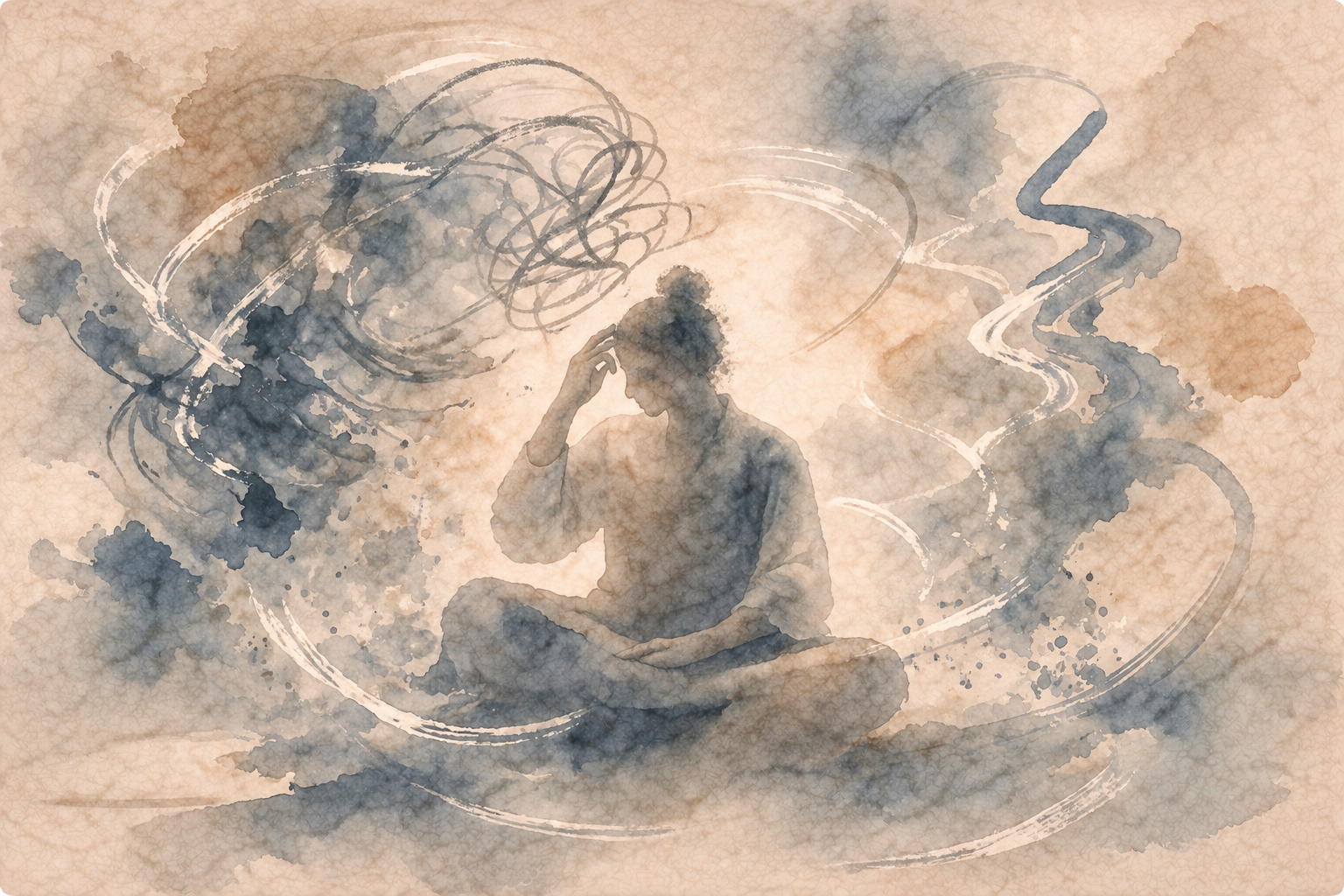
Quick Summary
- Restlessness in meditation is common and not automatically “bad” or a sign you’re failing.
- Often, meditation doesn’t create restlessness—it reveals what was already moving under the surface.
- Calm can be a byproduct, but forcing calm usually increases agitation.
- Work with restlessness by noticing sensations, softening effort, and returning gently to an anchor.
- Small adjustments (shorter sits, open eyes, labeling, more body awareness) can help immediately.
- Some restlessness is physiological (sleep, caffeine, stress) and responds to practical changes.
- If restlessness becomes overwhelming or triggers panic, it’s wise to seek qualified support and modify practice.
Introduction
If meditation feels restless instead of calm, it can make you question the whole point: “Am I doing it wrong, or is something wrong with me?” The honest answer is that restlessness is often a normal response to finally sitting still—what’s been carried all day has room to show itself, and the mind doesn’t always greet that with serenity. At Gassho, we focus on grounded, practical meditation guidance that respects real human nervous systems and real daily lives.
Many people start meditating with an image of instant quiet: a smooth breath, a peaceful mind, a gentle glow. Then they sit down and meet fidgeting, planning, irritation, and a body that suddenly has opinions. That contrast can feel discouraging, but it’s also useful information—because it shows you what your attention does when it isn’t constantly occupied.
This article treats restlessness as something to understand and work with, not something to “win against.” Calm may come, but the more reliable skill is learning how to relate to whatever is present without adding extra struggle.
A Helpful Lens: Restlessness Isn’t the Enemy
It’s tempting to judge meditation by one metric: “Do I feel calm?” But calm is a changing state, not a guaranteed outcome. A more workable lens is to see meditation as training in noticing—learning how attention moves, how reactions form, and how quickly we tighten around discomfort.
From that perspective, restlessness isn’t proof that meditation is failing. It’s often proof that you’re actually paying attention. When you stop feeding the mind constant stimulation, you may notice the momentum that was already there: unfinished conversations, background anxiety, excitement, boredom, or the body’s stored stress.
Another key point: trying to force calm can create more agitation. The mind hears “be calm” as a demand, and the body responds with tension. Meditation works better when the intention is simple and kind: “Let me feel what’s here, and return to my anchor gently.”
So the central view is not “restlessness is bad,” but “restlessness is a workable experience.” You don’t have to like it. You don’t have to suppress it. You learn to meet it clearly, without turning it into a personal verdict.
GASSHO
Ask and learn about Buddhism in daily life.
GASSHO is a Buddhist community app where you can learn Buddhist teachings and ask questions to the head priest of Kongosanmaiin Temple on Mount Koya.
What Restless Meditation Feels Like in Real Life
Restlessness often shows up first in the body. You sit down and suddenly notice buzzing in the legs, a need to swallow, an urge to adjust posture, or a vague pressure that says, “Move.” The mind may interpret this as a problem, but it’s also just sensation plus an impulse.
Then thoughts arrive with urgency. Planning feels necessary. Remembering feels important. The mind offers convincing reasons to stop: “Now is the time to check that message,” or “I should reorganize my schedule.” The content changes, but the flavor is similar: a push away from stillness.
Sometimes restlessness is emotional. You may feel irritation at the practice, impatience with your own mind, or a subtle fear that you’re “not getting it.” That emotional layer can be more uncomfortable than the thoughts themselves, because it adds self-judgment.
Often there’s a cycle: you notice restlessness, you try to clamp down, the clamping increases tension, and the tension increases restlessness. The sit becomes a negotiation: “Just five more breaths,” followed by “Why is this so hard?”
A useful shift is to separate the raw experience from the commentary. Raw experience might be: tight chest, tapping foot, fast thoughts, heat in the face. Commentary might be: “This is bad,” “I’m failing,” “Meditation isn’t for me.” When you can see the difference, the practice becomes less personal and more workable.
In many cases, the moment you stop arguing with restlessness, it changes shape. It may still be there, but it becomes less sticky. You might notice small gaps—one calm breath, one neutral moment, one softening in the shoulders. Not as a trophy, just as evidence that attention can relate differently.
And sometimes it stays restless the whole time. Even then, something important can happen: you practiced returning. You practiced not obeying every impulse. You practiced being present with an uncomfortable state without escalating it. That’s not a consolation prize—it’s the training.
Common Misreadings That Make Restlessness Worse
One common misunderstanding is believing that “good meditation” equals a blank mind. When you expect silence, normal thinking feels like failure. But minds produce thoughts the way lungs produce breath. The skill is noticing and returning, not eliminating mental activity.
Another misreading is treating restlessness as something to overpower. If you sit with a harsh inner voice—“Stop moving. Stop thinking. Be calm.”—you may create a fight response. The body tightens, the breath gets shallow, and the mind becomes even more reactive.
It’s also easy to ignore practical causes. Too much caffeine, too little sleep, a stressful day, hunger, or screen overload can all show up as restlessness. Meditation isn’t separate from physiology; it’s happening inside it.
Finally, some people assume restlessness means they should quit. Often the more accurate conclusion is: adjust the approach. Shorten the sit, use a more body-based anchor, keep the eyes slightly open, or practice in a way that feels steady rather than intense.
Why This Matters Beyond the Cushion
Learning to sit with restlessness changes how you meet everyday discomfort. The same impulse that says “I can’t stand this sit” also shows up as “I need to fix this feeling right now” in conversations, work stress, and relationships. Meditation gives you a small, safe place to see that impulse clearly.
When you can notice restlessness without immediately acting it out, you gain a pause. That pause can prevent reactive emails, compulsive scrolling, or snapping at someone you care about. It’s not about becoming passive; it’s about choosing your response instead of being pushed by momentum.
It also builds honesty. If your mind is busy, you learn to admit “busy” rather than pretending to be calm. That kind of clarity is stabilizing. It reduces the gap between how you think you should feel and how you actually feel.
And over time, you may notice a quieter confidence: even when calm isn’t available, you can still be present. That’s a more durable kind of peace—less dependent on conditions.
Conclusion
So, is it bad if meditation feels restless instead of calm? Usually, no. It’s often a normal and workable part of sitting down and meeting your actual mind and body. The key is to stop using calm as the only measure of success and start valuing the skill of noticing, softening, and returning.
If you want a simple next step, try this for one week: sit for a shorter time than you think you “should,” keep your attention in the body (breath, hands, or contact points), and when restlessness appears, label it gently as “restless” and return without scolding yourself. Calm may come or not—but your relationship to the moment can change either way.
Ask a Buddhist priest
Have a question about Buddhism?
In the GASSHO app, you can ask questions about Buddhist teachings, daily concerns, and how to understand Buddhism in everyday life.
Related Articles
What to Do When Your Mind Won’t Stop Thinking — Practical ways to work with busy thoughts without turning meditation into a battle.
How to Focus on the Breath Without Straining — Learn the difference between steady attention and tense effort.
Meditation and Anxiety: What to Expect — How anxious energy can show up in practice, and how to respond safely and skillfully.
Short Meditations That Actually Work — Options for days when longer sits increase agitation or resistance.
Frequently Asked Questions
- FAQ 1: Is it bad if meditation feels restless instead of calm?
- FAQ 2: Why do I feel more restless when I meditate than when I’m busy?
- FAQ 3: Does restlessness mean I’m meditating wrong?
- FAQ 4: Is meditation supposed to feel calm every time?
- FAQ 5: What should I do in the moment when meditation feels restless instead of calm?
- FAQ 6: Should I stop meditating if it makes me restless?
- FAQ 7: Can trying too hard to be calm make meditation feel more restless?
- FAQ 8: Is physical fidgeting during meditation a bad sign?
- FAQ 9: How long should I sit if meditation feels restless instead of calm?
- FAQ 10: Does restlessness mean meditation is bringing up suppressed stress?
- FAQ 11: Is it bad if my mind races the whole time and I never feel calm?
- FAQ 12: Can caffeine, sleep, or stress make meditation feel restless instead of calm?
- FAQ 13: Should I switch techniques if meditation feels restless instead of calm?
- FAQ 14: Is it bad if I feel restless and irritated during meditation?
- FAQ 15: When is restlessness during meditation a sign I should get extra help?
FAQ 1: Is it bad if meditation feels restless instead of calm?
Answer: Usually not. Restlessness is a common experience when you sit still and notice what your mind and body are already carrying. Meditation isn’t only about producing calm; it’s also about learning to relate skillfully to whatever is present.
Takeaway: Restlessness is often normal and workable, not a sign of failure.
FAQ 2: Why do I feel more restless when I meditate than when I’m busy?
Answer: Busyness can mask agitation by constantly feeding the mind new input. When you meditate, the usual distractions drop away, so underlying tension, unfinished thoughts, and nervous energy become more noticeable.
Takeaway: Meditation can reveal restlessness that was already there.
FAQ 3: Does restlessness mean I’m meditating wrong?
Answer: Not necessarily. Many people are practicing correctly and still feel restless. The key question is whether you’re noticing restlessness and returning gently to your anchor, rather than getting pulled into frustration or forcing calm.
Takeaway: The “right” move is returning kindly, not eliminating restlessness.
FAQ 4: Is meditation supposed to feel calm every time?
Answer: No. Calm can happen, but meditation sessions vary with sleep, stress, hormones, workload, and many other conditions. Expecting calm every time can create pressure that increases restlessness.
Takeaway: Calm is a possible outcome, not a requirement.
FAQ 5: What should I do in the moment when meditation feels restless instead of calm?
Answer: Try a simple sequence: notice “restless,” soften your effort (especially in the face, jaw, and belly), feel one or two physical sensations clearly (breath, hands, contact points), and return without rushing. If needed, shorten the session rather than turning it into a fight.
Takeaway: Name it, soften, feel the body, and return gently.
FAQ 6: Should I stop meditating if it makes me restless?
Answer: If it’s mild restlessness, stopping usually isn’t necessary—adjusting is. Try shorter sits, a more body-based focus, or practicing with eyes slightly open. If restlessness becomes overwhelming, panicky, or destabilizing, it’s wise to pause and seek guidance from a qualified professional or experienced teacher.
Takeaway: Mild restlessness calls for adjustments; severe distress calls for support.
FAQ 7: Can trying too hard to be calm make meditation feel more restless?
Answer: Yes. Forcing calm often adds tension, and tension fuels agitation. A softer intention—“I’ll stay present and return when I wander”—tends to reduce the struggle that keeps restlessness going.
Takeaway: Straining for calm can create the very restlessness you dislike.
FAQ 8: Is physical fidgeting during meditation a bad sign?
Answer: Not automatically. Some fidgeting is the body discharging energy or responding to discomfort. The practice is to notice the urge, feel it clearly for a moment, and then choose: adjust mindfully if needed, or stay still if it’s tolerable.
Takeaway: Fidgeting is information; respond deliberately rather than automatically.
FAQ 9: How long should I sit if meditation feels restless instead of calm?
Answer: Choose a duration that keeps you engaged without tipping into a battle—often 5–15 minutes is enough to practice returning. You can build consistency first, then extend time gradually if it feels stable.
Takeaway: Short, steady practice often works better than long, tense sessions.
FAQ 10: Does restlessness mean meditation is bringing up suppressed stress?
Answer: It can. When you stop distracting yourself, stress that was muted by activity can become more obvious. That doesn’t mean something is wrong; it means you’re noticing what’s present. Go gently, and use grounding techniques (body sensations, sounds, open eyes) if it feels too intense.
Takeaway: Restlessness may be stress becoming visible—approach it with care and grounding.
FAQ 11: Is it bad if my mind races the whole time and I never feel calm?
Answer: It’s not “bad,” but it may be a sign to simplify the practice. Use a very clear anchor (like feeling the breath at the nostrils or the rise and fall of the belly), return more frequently without judgment, and reduce extra pressure (shorter sits, fewer goals).
Takeaway: A racing mind isn’t a moral problem—simplify and return.
FAQ 12: Can caffeine, sleep, or stress make meditation feel restless instead of calm?
Answer: Yes. Stimulants, poor sleep, and high stress can all increase physical and mental agitation. If meditation feels consistently restless, experiment with timing (earlier in the day), reducing caffeine, and doing a brief walk before sitting.
Takeaway: Restlessness is often physiological—practical changes can help.
FAQ 13: Should I switch techniques if meditation feels restless instead of calm?
Answer: Sometimes, yes. If one approach reliably ramps you up, try a more grounding option: feeling contact points, listening to ambient sound, or gently labeling “thinking” and “restless.” The goal is not novelty—it’s finding a method that supports steadiness.
Takeaway: Switching to a more grounding technique can reduce restlessness.
FAQ 14: Is it bad if I feel restless and irritated during meditation?
Answer: Irritation is a common companion to restlessness, especially when you expect calm. Treat irritation as another experience to notice: feel where it sits in the body, name it softly, and avoid adding the second layer of “I shouldn’t feel this.”
Takeaway: Irritation isn’t a failure—meet it directly and drop the self-judgment.
FAQ 15: When is restlessness during meditation a sign I should get extra help?
Answer: Consider extra support if restlessness escalates into panic, dissociation, intense fear, or feels unmanageable; if it worsens a mental health condition; or if you’re unable to function afterward. A qualified mental health professional and an experienced meditation guide can help you adjust practice safely.
Takeaway: If restlessness becomes overwhelming or destabilizing, get support and modify practice.