



What Does Hotoke Mean? Buddha, the Dead, and Sacred Presence
Quick Summary
- Hotoke (仏) can mean the Buddha, a Buddha image, or a deceased person, depending on context.
- In everyday Japanese, hotoke often refers to the dead with a tone of respect and tenderness.
- In Buddhist settings, hotoke points to awakening and the quality of compassionate presence, not just a historical figure.
- The same word can feel religious, cultural, or intimate depending on who says it and where.
- Understanding hotoke meaning is mostly about noticing what is being honored: wisdom, memory, or sacredness.
- Misunderstandings happen when people assume it always means “Buddha” in the textbook sense.
- Used carefully, hotoke can soften how we relate to grief, anger, and everyday friction.
Introduction: Why “Hotoke” Feels Confusing in Real Life
You look up hotoke meaning and get “Buddha,” but then you hear someone call a deceased relative hotoke, or you see hotoke-sama used with a warmth that doesn’t sound like a dictionary definition. The confusion is reasonable: hotoke is one of those Japanese words that carries religious depth, everyday politeness, and emotional intimacy all at once, and context does most of the work. I’ve translated and explained Japanese Buddhist terms for readers of Gassho with a focus on how words actually function in lived Japanese usage.
A Clear Lens for Understanding Hotoke Meaning
A practical way to understand hotoke is to treat it less like a single definition and more like a pointer. The word points toward what is being regarded as worthy of reverence: awakened wisdom, compassionate presence, or the dignity of someone who has died.
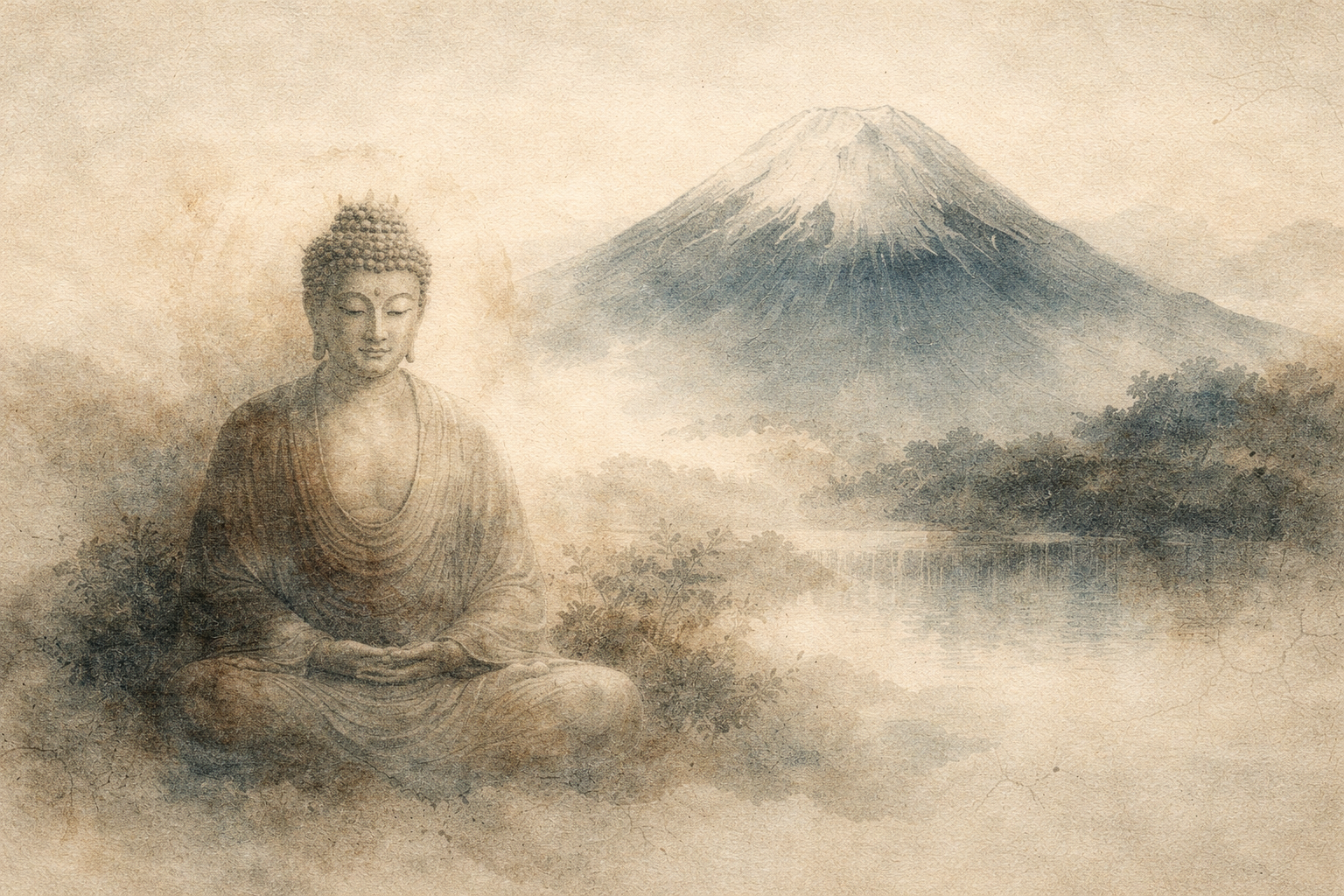
In one context, hotoke means the Buddha—not only the historical Buddha, but “Buddha” as a symbol of awakening itself. In another context, it can mean a Buddha figure or image (a statue, icon, or representation) that serves as a focal point for respect and recollection.
In everyday Japanese, hotoke also commonly means the deceased. This isn’t a technical claim about what happens after death; it’s a social and emotional way of speaking that grants the dead a protected status—someone no longer to be argued with, competed with, or reduced to their flaws.
So the central lens is simple: hotoke is a word of honoring. It marks a shift in how we hold something in attention—less as an object to judge, and more as something to meet with care.
GASSHO
Ask and learn about Buddhism in daily life.
GASSHO is a Buddhist community app where you can learn Buddhist teachings and ask questions to the head priest of Kongosanmaiin Temple on Mount Koya.
How Hotoke Shows Up in Ordinary Experience
You might notice hotoke first as a change in tone. Someone speaks about a person who died, and the conversation becomes quieter, slower, more careful. The word doesn’t just label; it changes the emotional posture of the room.
In grief, people often swing between idealizing and blaming: “They were perfect” or “I can’t forgive them.” Referring to the dead as hotoke can function like a middle path in language—still honest about complexity, but less interested in keeping the argument alive inside your head.
Even outside funerals, hotoke can appear when someone shows unusual patience. You might hear a remark like “He’s a hotoke,” meaning “He’s saintly,” “He’s incredibly tolerant,” or “He didn’t retaliate.” The point isn’t theology; it’s the felt contrast between reactive behavior and steady composure.
That contrast is easy to observe in yourself. A harsh email arrives, and the mind immediately drafts a sharper reply. Then there’s a pause—maybe only a second—where you notice the heat in the body, the tightening in the jaw, the story forming. In that pause, “hotoke” can be understood as the possibility of not escalating.
In homes with a Buddhist altar or memorial space, the word can also shape daily routines. A small bow, a moment of stillness, a brief offering—these actions are less about “believing something” and more about training attention toward gratitude and remembrance.
Sometimes the experience is simply ethical: you’re about to speak badly of someone who has passed away, and you stop. Not because you’re forced to, but because it feels out of place. Calling the dead hotoke can act like a social reminder: don’t turn this person into entertainment.
And sometimes it’s intimate. You remember a face, a voice, a small kindness. The word hotoke can hold that memory without demanding a conclusion—just a quiet recognition that something precious was here.
Common Misreadings of Hotoke
One common misunderstanding is assuming hotoke always means “Buddha” in the strict religious sense. In real Japanese usage, it often means “the deceased,” and the speaker may not be making any doctrinal statement at all.
Another misreading is thinking that calling someone hotoke after death means “they were morally perfect.” More often, it’s a cultural way of setting down the fight. It can be a decision to relate to the person with respect, even if the relationship was complicated.
A third confusion is treating hotoke as only a “thing”—a statue, an icon, an object. In many settings, the object matters less than what it supports: recollection, humility, gratitude, and a sense of sacred presence in the middle of ordinary life.
Finally, some people hear hotoke and assume it implies a specific sect or a specific set of beliefs. In practice, the word is broader than that. It’s often a shared cultural vocabulary for reverence, mourning, and restraint.
Why Hotoke Meaning Matters in Daily Life
Words shape attention. When you understand hotoke meaning as “a way of honoring,” you can hear what someone is doing emotionally: protecting the dead from gossip, protecting the living from needless conflict, or protecting a moment from being flattened into routine.
It also matters because grief is not only sadness—it’s often irritation, regret, numbness, and unfinished conversation. The word hotoke can offer a gentle boundary: you can remember, you can miss, you can even disagree internally, but you don’t have to keep prosecuting the past.
In relationships, the “hotoke” sense of patience is equally practical. It points to the possibility of responding without adding fuel—pausing before sarcasm, choosing clarity over punishment, and letting a small offense remain small.
And in a broader sense, hotoke reminds you that “sacred” doesn’t always arrive as fireworks. Sometimes it arrives as a quieter voice, a softened grip, a moment of respect you didn’t think you had time for.
Conclusion: Hotoke as Buddha, Beloved Dead, and a Way of Holding Life
Hotoke can mean Buddha, a Buddha image, or the deceased—but the thread connecting these meanings is the act of honoring. If you listen for that thread, the word becomes less confusing: it’s not only a definition, it’s a shift in how someone is relating to what’s in front of them. Understanding hotoke meaning is ultimately understanding a Japanese way of naming sacred presence—sometimes in temples, sometimes in mourning, and sometimes in the smallest decision not to react.
Ask a Buddhist priest
Have a question about Buddhism?
In the GASSHO app, you can ask questions about Buddhist teachings, daily concerns, and how to understand Buddhism in everyday life.
Frequently Asked Questions
- FAQ 1: What is the basic hotoke meaning in Japanese?
- FAQ 2: Why does hotoke sometimes mean “the dead” in Japanese?
- FAQ 3: Does hotoke always refer to the historical Buddha?
- FAQ 4: What does hotoke-sama mean?
- FAQ 5: Is hotoke the same word as butsu (仏)?
- FAQ 6: What does it mean when someone says “ano hito wa hotoke da”?
- FAQ 7: Can hotoke mean a Buddha statue or icon?
- FAQ 8: Is it rude to call a deceased person hotoke?
- FAQ 9: Does hotoke imply the deceased has become a Buddha?
- FAQ 10: What is the difference between hotoke and kami in meaning?
- FAQ 11: How do you write hotoke in kanji and kana?
- FAQ 12: What does “hotoke no kao mo sando” mean and how does it relate to hotoke meaning?
- FAQ 13: Is hotoke used in formal Buddhist services, or mostly in everyday speech?
- FAQ 14: How do you translate hotoke into English accurately?
- FAQ 15: What does hotoke meaning suggest about “sacred presence” in Japanese Buddhism?
FAQ 1: What is the basic hotoke meaning in Japanese?
Answer: The basic hotoke meaning is “Buddha,” but in Japanese it can also mean a Buddha image or, very commonly, a deceased person spoken of respectfully.
Takeaway: Hotoke is a context-driven word that often signals reverence.
FAQ 2: Why does hotoke sometimes mean “the dead” in Japanese?
Answer: In everyday usage, calling the deceased hotoke is a respectful convention that treats the dead with dignity and restraint, rather than a precise doctrinal statement.
Takeaway: “Hotoke = the dead” is often cultural respect expressed through language.
FAQ 3: Does hotoke always refer to the historical Buddha?
Answer: No. Hotoke can refer to the historical Buddha, but it can also refer to Buddha as an ideal of awakening, a Buddha figure, or the deceased depending on the situation.
Takeaway: Hotoke is broader than “one person in history.”
FAQ 4: What does hotoke-sama mean?
Answer: Hotoke-sama adds the honorific -sama, making the phrase more reverent; it may refer to the Buddha, a Buddha image, or the deceased with heightened respect.
Takeaway: “-sama” intensifies the respect already present in hotoke.
FAQ 5: Is hotoke the same word as butsu (仏)?
Answer: They use the same character (仏). Butsu is a Sino-Japanese reading often used in compounds, while hotoke is the native Japanese reading and is common in everyday speech and memorial contexts.
Takeaway: Same kanji, different readings and typical usage.
FAQ 6: What does it mean when someone says “ano hito wa hotoke da”?
Answer: It usually means “That person is like a Buddha,” implying they are unusually patient, gentle, or forgiving in a situation where many people would react.
Takeaway: Hotoke can be a compliment for calm, non-reactive character.
FAQ 7: Can hotoke mean a Buddha statue or icon?
Answer: Yes. In Japanese, hotoke can refer to a Buddha image, especially when people speak casually about “the Buddha” in a room or temple setting.
Takeaway: Hotoke may point to a representation, not only a person.
FAQ 8: Is it rude to call a deceased person hotoke?
Answer: Generally, no—it’s often respectful. Still, tone and family preference matter; some families may prefer the person’s name plus an honorific, especially in formal situations.
Takeaway: Hotoke is usually respectful, but match the setting and the family’s style.
FAQ 9: Does hotoke imply the deceased has become a Buddha?
Answer: Not necessarily. In many everyday conversations, hotoke functions as a respectful label for the dead without making a specific claim about their spiritual status.
Takeaway: Hotoke often expresses reverence, not a literal transformation claim.
FAQ 10: What is the difference between hotoke and kami in meaning?
Answer: Hotoke is associated with Buddha/Buddhist reverence and also the deceased, while kami refers to deities or sacred presences in a different religious-cultural vocabulary. They aren’t interchangeable in typical Japanese usage.
Takeaway: Hotoke and kami point to different categories of sacred reference.
FAQ 11: How do you write hotoke in kanji and kana?
Answer: Hotoke is commonly written as 仏 (sometimes 佛 in older forms) and in kana as ほとけ.
Takeaway: Hotoke = 仏 / ほとけ in standard modern writing.
FAQ 12: What does “hotoke no kao mo sando” mean and how does it relate to hotoke meaning?
Answer: The proverb “Even the face of a Buddha (hotoke) [can be angered] three times” suggests that even a very patient person has limits. It uses hotoke as a symbol of calm tolerance.
Takeaway: Hotoke can symbolize patience, not just a religious figure.
FAQ 13: Is hotoke used in formal Buddhist services, or mostly in everyday speech?
Answer: It appears in both, but its feel changes: in formal settings it can sound reverent and devotional, while in everyday speech it often refers gently to the deceased or to someone’s saintly patience.
Takeaway: Hotoke spans formal and casual contexts with different nuances.
FAQ 14: How do you translate hotoke into English accurately?
Answer: Translate by context: “Buddha,” “the Buddha,” “a Buddha image,” or “the deceased.” A single fixed translation often misses the social and emotional nuance.
Takeaway: The most accurate translation of hotoke depends on the scene.
FAQ 15: What does hotoke meaning suggest about “sacred presence” in Japanese Buddhism?
Answer: It suggests that “sacred” can be expressed as a way of relating—through reverence, restraint, and compassion—whether the reference is Buddha, a Buddha image, or the dead remembered with care.
Takeaway: Hotoke often names a respectful way of holding what matters.