



Grief vs. Mourning: What Is the Difference?
Quick Summary
- Grief is the inner, personal response to loss; mourning is the outward, social expression of that loss.
- Grief can be private, messy, and non-linear; mourning often involves rituals, language, and shared customs.
- You can grieve without visibly mourning, and you can mourn even when you feel emotionally “numb.”
- Confusing the two can create shame: “I’m doing it wrong,” or pressure to perform sadness.
- A clear distinction helps you ask for the right support: emotional care for grief, community space for mourning.
- From a Zen-friendly lens, both are natural movements of the heart—best met with honesty and gentleness.
- There’s no single correct timeline; what matters is responsiveness to what’s actually happening now.
Introduction
You’re trying to make sense of why you feel one thing on the inside, yet the outside world seems to expect something else—tears, composure, rituals, “closure,” the right words at the right time. The confusion usually comes from treating grief and mourning as the same, when they’re related but not identical, and that mix-up can quietly add pressure on top of pain. At Gassho, we write about human experience with a grounded Zen-informed approach that favors clarity over performance.
When people say “I’m grieving,” they often mean a whole bundle: sadness, anger, relief, numbness, longing, guilt, even moments of calm that feel suspicious. When people say “I’m mourning,” they may mean attending a service, wearing black, sitting shiva, sharing stories, posting an obituary, taking bereavement leave, or simply letting others know a loss happened. These two words point to different layers of the same reality.
Separating them doesn’t make loss clinical; it makes it more workable. It helps you name what’s happening, reduce self-judgment, and choose actions that actually support you rather than satisfy an imagined standard.
A Clear Lens: Inner Grief and Outer Mourning
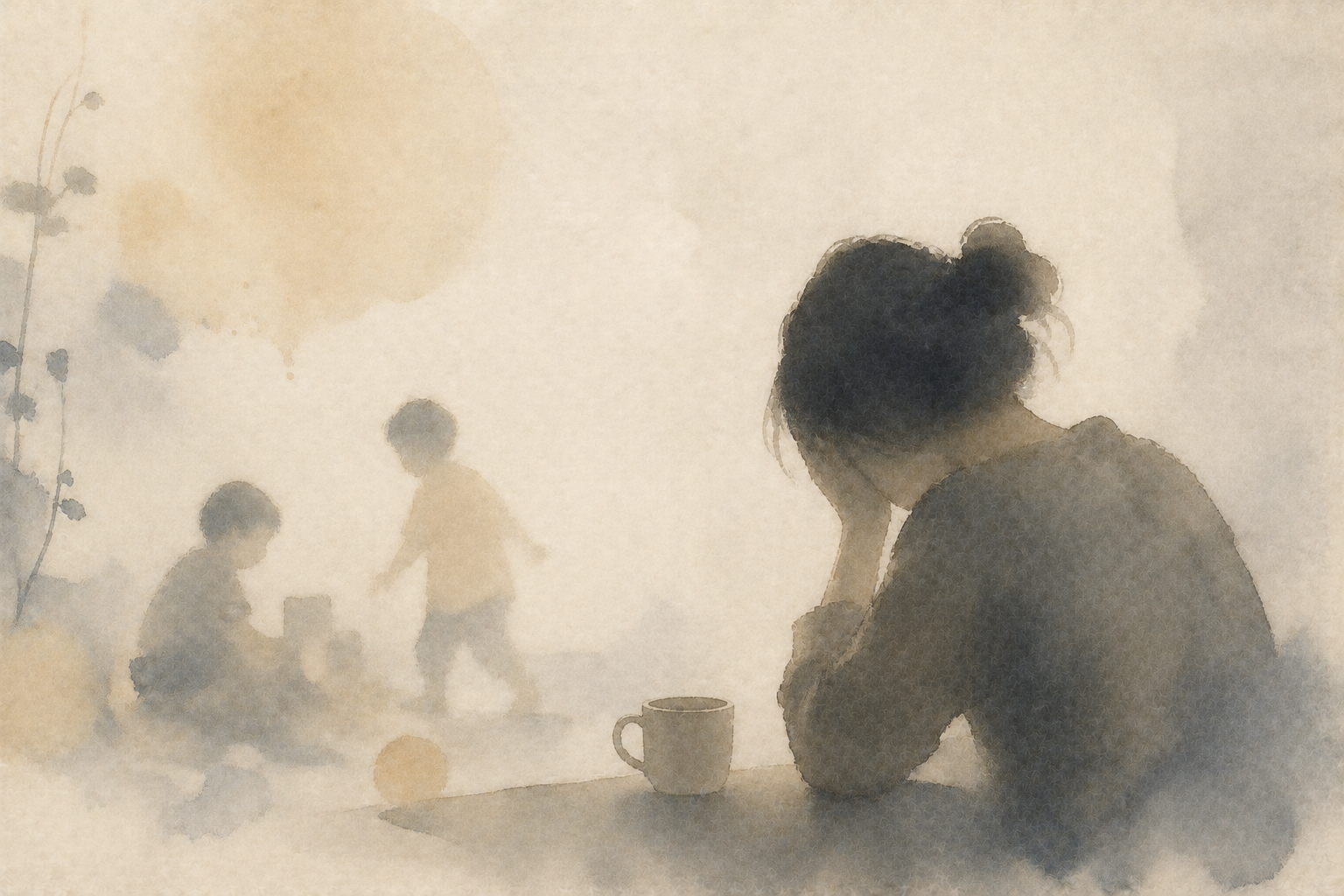
A helpful way to distinguish grief from mourning is to see grief as internal experience and mourning as external expression. Grief is what happens in the body and mind when something or someone important is gone: waves of feeling, changes in attention, shifts in energy, and the mind repeatedly touching the fact of absence. Mourning is how that loss is carried into the world through behavior, communication, and ritual—whether formal or informal.
This isn’t a belief system; it’s a practical lens. It lets you notice two different needs: the need to be with what you feel (grief), and the need to relate to others and to meaning-making practices (mourning). Sometimes those needs align; sometimes they don’t. You might feel deep grief but have no desire to talk. Or you might participate in mourning customs while feeling emotionally flat.
From a Zen-friendly perspective, both grief and mourning are natural responses to impermanence and attachment—attachment not as a flaw, but as evidence that you loved, relied on, or valued something. The point isn’t to erase attachment; it’s to meet the reality of change without adding extra violence through denial, self-criticism, or forced “positivity.”
When you hold the distinction gently, you can stop asking, “Am I doing grief correctly?” and start asking, “What is true in me right now, and what support fits that truth?” That shift alone can reduce the secondary suffering that comes from comparing your process to someone else’s.
GASSHO
Ask and learn about Buddhism in daily life.
GASSHO is a Buddhist community app where you can learn Buddhist teachings and ask questions to the head priest of Kongosanmaiin Temple on Mount Koya.
How the Difference Shows Up in Everyday Moments
You might notice grief first as a change in attention. You read the same sentence three times. You walk into a room and forget why. Your mind keeps returning to a small detail: a voice message, a smell, a phrase you wish you’d said. That repetitive returning is not a failure of willpower; it’s the mind learning a new world.
Then there’s the body. Grief can feel like heaviness in the chest, a tight throat, a hollow stomach, fatigue that sleep doesn’t fix, or restlessness that won’t settle. These sensations can arrive without a clear “sad thought” attached. You may simply feel off, tender, or raw.
Mourning, by contrast, often shows up as decisions and actions: whether to attend a gathering, what to say when someone asks, whether to keep a routine, how to mark an anniversary, what to do with belongings, how to respond to condolences. Even choosing silence can be part of mourning—an outward boundary that protects an inward process.
Sometimes grief and mourning move in opposite directions. You may cry alone but feel composed at the memorial. Or you may feel nothing in private, then suddenly break down when you hear a song in a public place. Neither pattern is “more real.” They’re different expressions of a nervous system adapting to loss.
Social expectations can complicate mourning. People may expect you to speak, to be strong, to be devastated, to be grateful, to be over it. You might notice yourself scanning for the “right” face to wear. That scanning is a form of stress layered on top of grief, and it can make you feel strangely alone even in a room full of support.
In quieter moments, the distinction becomes practical. If what’s present is grief, you may need privacy, rest, simple food, fewer decisions, and someone who can listen without fixing. If what’s present is a need to mourn, you may need structure: a ceremony, a walk to a meaningful place, a letter written and read aloud, a shared meal, a way to let the world acknowledge what happened.
And sometimes what’s present is neither dramatic nor clear—just a subtle sense of absence. In Zen terms, you can meet that absence with straightforward attention: “This is what loss feels like today.” Not to make it go away, but to stop arguing with it.
Common Mix-Ups That Add Extra Pain
Mix-up 1: Assuming mourning is proof of grief. Visible mourning—crying at a service, posting tributes, wearing certain clothing—doesn’t measure the depth of love. Some people mourn quietly. Some people show emotion later. Some people express care through logistics and responsibility. None of that is a moral ranking.
Mix-up 2: Believing grief should look a certain way. Grief can include relief, humor, numbness, irritation, or even moments of peace. When those appear, people often panic: “What’s wrong with me?” Usually, nothing. The mind and body are complex, and grief is not a single emotion.
Mix-up 3: Treating rituals as fake or pointless. Mourning rituals aren’t only about tradition; they’re containers. A container can hold what feels too big to hold alone. Even a simple ritual—lighting a candle, saying a name, sharing one story—can give shape to something otherwise shapeless.
Mix-up 4: Thinking you must “move on” to be healthy. A more realistic aim is to move with what’s true. Grief changes over time, but it doesn’t always disappear. Mourning may also reappear at anniversaries or life milestones. That return isn’t regression; it’s remembrance meeting a new moment.
Mix-up 5: Confusing privacy with avoidance. Wanting to be alone can be wise. Avoidance is when you can’t touch the reality of loss at all without panic or shutdown. The difference is subtle and personal. If you’re unsure, gentle support from a trusted person or professional can help you tell the difference.
Why the Distinction Helps in Real Life
Knowing the difference between grief and mourning helps you ask for the right kind of help. If you’re grieving, you may need emotional safety: someone who can sit with you, practical support with meals or errands, permission to be inconsistent. If you’re mourning, you may need community acknowledgment: time off work, a gathering, a structured way to honor the loss.
It also reduces shame. Many people judge themselves for not crying “enough,” for crying “too much,” for laughing, for functioning, for not functioning. When you see mourning as expression and grief as experience, you can stop using outward behavior as a scoreboard for inner truth.
In relationships, the distinction prevents unnecessary conflict. One person may need to talk and plan a memorial (mourning) while another needs silence and rest (grief). Without language, each can misread the other as cold, dramatic, avoidant, or controlling. With language, you can negotiate: “I can do the planning tomorrow; tonight I need quiet,” or “I need one hour to share stories; then I need to be alone.”
From a Zen-oriented angle, this is also about meeting reality without forcing it. Grief is a truth of the heart; mourning is a truth of connection. When both are allowed, loss becomes less of a private burden and more of a human experience held with dignity.
Conclusion
Grief is the inner weather of loss; mourning is how that weather is acknowledged and carried in the world. When you stop treating them as identical, you gain room to be honest: you can feel what you feel without performing it, and you can choose forms of mourning that actually support you rather than satisfy expectations.
If you’re in the middle of loss right now, a simple next step is to ask: “What’s happening inside me (grief), and what do I need outside me (mourning)?” Answering that gently—day by day—is often more helpful than trying to find the “right” way to hurt.
Ask a Buddhist priest
Have a question about Buddhism?
In the GASSHO app, you can ask questions about Buddhist teachings, daily concerns, and how to understand Buddhism in everyday life.
Frequently Asked Questions
- FAQ 1: What is the simplest difference between grief and mourning?
- FAQ 2: Can you grieve without mourning?
- FAQ 3: Can you mourn without feeling much grief?
- FAQ 4: Is mourning just another word for a funeral?
- FAQ 5: Which lasts longer—grief or mourning?
- FAQ 6: Why do people confuse grief and mourning?
- FAQ 7: Is crying a sign of grief or mourning?
- FAQ 8: Are grief and mourning both necessary for healing?
- FAQ 9: How do cultural traditions relate to mourning?
- FAQ 10: What does “private grief” mean compared to “public mourning”?
- FAQ 11: Does mourning always involve religion?
- FAQ 12: How can knowing the difference help me support someone who lost a loved one?
- FAQ 13: Is it normal for grief to feel physical while mourning feels social?
- FAQ 14: If I don’t follow mourning customs, does that mean I’m avoiding grief?
- FAQ 15: What’s a practical way to tell whether I need space for grief or support for mourning right now?
FAQ 1: What is the simplest difference between grief and mourning?
Answer: Grief is your internal response to loss (feelings, thoughts, body sensations), while mourning is the external expression of that loss (rituals, communication, behaviors, and social customs). They often overlap, but they are not the same thing.
Takeaway: Grief is inner experience; mourning is outward expression.
FAQ 2: Can you grieve without mourning?
Answer: Yes. Many people grieve privately, especially if they lack community support, prefer solitude, or don’t connect with formal rituals. The absence of visible mourning doesn’t mean the loss isn’t deeply felt.
Takeaway: Quiet grief is still real grief.
FAQ 3: Can you mourn without feeling much grief?
Answer: Yes. You might participate in funerals, memorials, or family customs while feeling numb, calm, or emotionally distant. This can happen due to shock, stress, complicated relationships, or simply how your nervous system responds.
Takeaway: Mourning can happen even when emotions feel muted.
FAQ 4: Is mourning just another word for a funeral?
Answer: No. A funeral is one possible mourning ritual, but mourning can include many forms: gatherings, prayers, storytelling, time off work, wearing certain clothing, creating a small home ritual, or marking anniversaries.
Takeaway: A funeral is one form of mourning, not the definition of it.
FAQ 5: Which lasts longer—grief or mourning?
Answer: Either can last longer depending on the person and the context. Mourning rituals may be time-limited, while grief can continue in waves for years. Sometimes mourning continues too, especially through anniversaries and life milestones.
Takeaway: There’s no universal timeline for either grief or mourning.
FAQ 6: Why do people confuse grief and mourning?
Answer: In everyday speech, people use the terms interchangeably, and many cultures blend inner feelings with outward expectations. When language is vague, it’s easy to assume that visible emotion equals “proper grieving.”
Takeaway: Common language blurs two different layers of loss.
FAQ 7: Is crying a sign of grief or mourning?
Answer: Crying can be part of grief (an internal emotional release) and also part of mourning (an outward expression witnessed by others). Not crying doesn’t prove you aren’t grieving, and crying doesn’t always show the full depth of grief.
Takeaway: Crying can belong to both, but it’s not a measurement tool.
FAQ 8: Are grief and mourning both necessary for healing?
Answer: Many people benefit from both, but “necessary” is too rigid. Some heal with private grieving and minimal ritual; others need strong communal mourning. What helps is matching support to your actual needs rather than forcing a standard process.
Takeaway: Helpful support is personalized, not mandatory or one-size-fits-all.
FAQ 9: How do cultural traditions relate to mourning?
Answer: Cultural traditions mainly shape mourning—what is done publicly, what is said, how long rituals last, and how community support is offered. Grief is universal, but the “approved” ways to express it vary widely across cultures and families.
Takeaway: Culture strongly influences mourning, more than grief itself.
FAQ 10: What does “private grief” mean compared to “public mourning”?
Answer: Private grief refers to your internal experience that may happen alone—thoughts, sensations, memories, and emotions. Public mourning refers to outward expressions that others can witness—ceremonies, conversations, posts, or shared remembrance.
Takeaway: Private and public are often the practical boundary between grief and mourning.
FAQ 11: Does mourning always involve religion?
Answer: No. Mourning can be religious, spiritual, secular, or purely personal. The key is that it provides a form—words, actions, or gatherings—that acknowledges the loss and allows connection or meaning-making.
Takeaway: Mourning is about expression and acknowledgment, not necessarily religion.
FAQ 12: How can knowing the difference help me support someone who lost a loved one?
Answer: It helps you offer the right kind of care: support their grief with listening, patience, and practical help; support their mourning by showing up for rituals, respecting customs, and acknowledging the loss openly without forcing emotion.
Takeaway: Support the inner experience and the outer expression in different ways.
FAQ 13: Is it normal for grief to feel physical while mourning feels social?
Answer: Yes. Grief often shows up physically (fatigue, tightness, restlessness) because it affects the nervous system. Mourning often feels social because it involves communication, roles, and shared practices with family, friends, or community.
Takeaway: Physical grief and social mourning are common, normal patterns.
FAQ 14: If I don’t follow mourning customs, does that mean I’m avoiding grief?
Answer: Not necessarily. You might be grieving in a private way, or the available customs may not fit your values or circumstances. Avoidance is more about being unable to face the reality of the loss at all, rather than choosing a different form of mourning.
Takeaway: Skipping rituals isn’t automatically avoidance; context matters.
FAQ 15: What’s a practical way to tell whether I need space for grief or support for mourning right now?
Answer: Ask two questions: “What is happening inside me right now?” (grief) and “What kind of acknowledgment or structure would help outside me?” (mourning). If you need quiet, rest, and permission to feel, prioritize grief support. If you need connection, ritual, or shared remembrance, prioritize mourning support.
Takeaway: Name the inner need (grief) and the outer need (mourning) separately.