



Gassho vs Prayer: How the Practices Differ
Quick Summary
- Gassho is a gesture of joining palms that expresses respect, presence, and humility; prayer is typically verbal or mental communication directed toward a sacred reality.
- Gassho often emphasizes how you show up (attention and attitude), while prayer often emphasizes what you ask, confess, praise, or commit to.
- Gassho can be done without asking for anything; prayer commonly includes requests, intercession, or guidance-seeking (though not always).
- Both practices can calm the nervous system, soften self-centeredness, and support ethical action when done sincerely.
- The biggest difference is orientation: gassho tends to be relational and immediate (this moment, this person), while prayer often reaches beyond the moment toward help, meaning, or alignment.
- Neither is “better”; they serve different inner needs and can complement each other.
- If you feel awkward with prayer language, gassho can be a simple, nonverbal way to practice reverence and gratitude.
Introduction
If you’ve been told that gassho is “basically prayer,” or you’ve tried both and felt they land differently in your body, you’re not imagining it—these practices can look similar from the outside while working on the inside in very different ways. At Gassho, we focus on practical, lived experience and clear language rather than religious salesmanship.
Hands together can be a greeting, a thank-you, a quiet apology, or a way to steady attention before speaking. Prayer can be any of those too, but it often carries an additional sense of addressing someone or something—asking, listening, surrendering, or aligning with what you hold sacred.
Sorting out “gassho vs prayer” isn’t about picking a side; it’s about understanding what each practice trains in you, so you can use it honestly instead of performing it.
A Clear Lens for Seeing the Difference
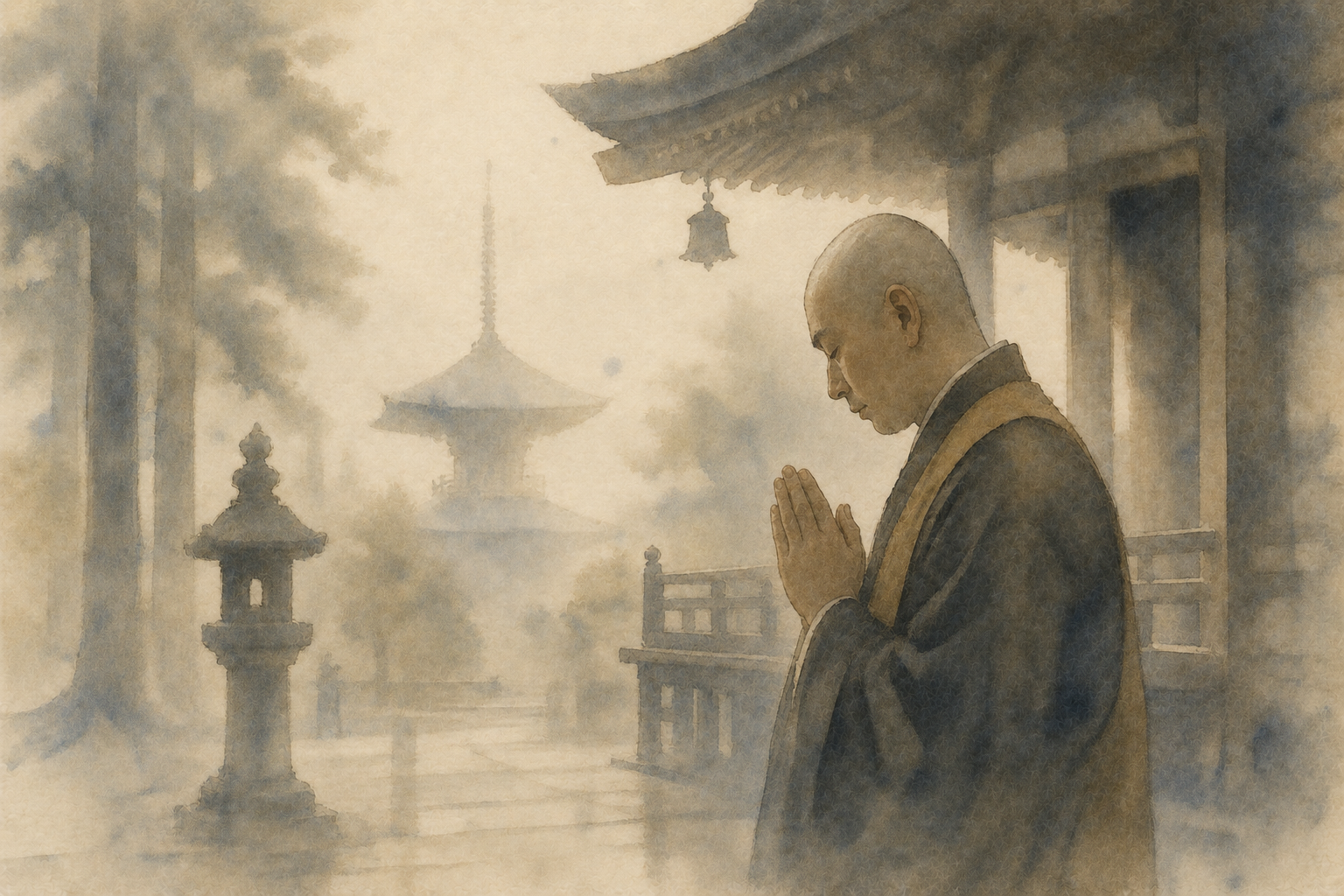
A helpful way to distinguish gassho from prayer is to look at orientation: where your attention goes, and what relationship you’re enacting. In gassho, the joined palms are less a message and more a posture of mind—an embodied “I’m here, I’m listening, I’m not above this.” It’s a physical cue that shapes attention and attitude.
Prayer, in many forms, is more explicitly communicative. Even when it’s silent, it often has the feeling of addressing: speaking to, opening to, or being witnessed by what you consider sacred. That can include gratitude and praise, but also confession, asking for help, or holding others in care.
Gassho can be complete without words, without a request, and without a storyline. It can be done toward a person, a moment, a meal, a difficult feeling, or simply the fact of being alive. Prayer can also be wordless, but it often carries a sense of intention that reaches beyond the immediate moment—toward guidance, forgiveness, protection, or alignment with a higher good.
Seen this way, the difference isn’t “Buddhist vs religious” or “gesture vs belief.” It’s more practical: gassho tends to train presence and humility through the body, while prayer tends to train relationship and reliance through communication—sometimes with the body involved, sometimes not.
GASSHO
Ask and learn about Buddhism in daily life.
GASSHO is a Buddhist community app where you can learn Buddhist teachings and ask questions to the head priest of Kongosanmaiin Temple on Mount Koya.
How It Feels in Ordinary Moments
Imagine you’re about to enter a room where someone is upset with you. If you bring your hands into gassho for a breath, you may notice your shoulders drop and your face soften. The gesture doesn’t solve the conflict, but it can interrupt the reflex to defend yourself and create a small pocket of steadiness.
In that same moment, prayer might show up as an inner sentence: “Help me not make this worse,” or “Let me speak truthfully,” or “Give me patience.” The effect can be similar—less reactivity—but the mechanism feels different: prayer frames the moment as something you’re not carrying alone.
When you do gassho before eating, the shift is often immediate and sensory. You notice the food, the effort behind it, the fact that you’re receiving. There may be gratitude, but it’s not necessarily directed outward; it can be a quiet recognition that reduces mindless consumption.
When you pray before eating, you might feel a relational warmth—gratitude offered to life, to the sacred, to the people who provided the meal. The words (spoken or unspoken) can gather scattered attention into a single intention: to receive with care and to live in a way that honors that care.
In a stressful workday, gassho can function like a reset button you can press without anyone noticing. Hands together under a desk or briefly at your chest can remind you: “Slow down. Respect this moment. Don’t turn your fear into sharpness.” It’s less about changing circumstances and more about changing your stance toward them.
Prayer in that same workday may feel like reaching for support—naming what you need, admitting what you can’t control, or asking for clarity. Sometimes the biggest change is not that the situation improves, but that you stop pretending you’re self-sufficient in the face of everything.
And in grief, the difference can become especially clear. Gassho can be a simple way to bow to what hurts without trying to fix it—an embodied acknowledgment: “This matters.” Prayer may become a place to speak directly from the ache—asking for comfort, holding someone in love, or expressing anger and confusion without polishing it.
Common Confusions That Blur the Line
One misunderstanding is thinking gassho is “just a cultural gesture,” like a polite habit with no inner content. It can be cultural, yes—but when practiced intentionally, it’s a way of training the body to express respect and to reduce the ego’s urge to dominate. The meaning isn’t in the hands alone; it’s in the quality of attention you bring.
Another confusion is assuming prayer is always about “asking for things.” Many people do pray that way, but prayer can also be gratitude, confession, listening, devotion, or a commitment to act differently. Reducing prayer to requests misses its role as a practice of relationship and moral orientation.
People also mix up “nonverbal” with “nonreligious.” Gassho can be used in religious contexts, and prayer can be silent and wordless. The key difference is not volume or vocabulary; it’s whether the practice is primarily an embodied stance of reverence (gassho) or an act of communication and reliance (prayer).
Finally, some worry that doing gassho is “pretending to be someone you’re not,” or that prayer requires certainty you don’t have. Both practices can be done honestly at the level you’re actually at: gassho as simple respect, prayer as simple sincerity. You don’t need to force feelings; you can practice the posture of care and let the heart catch up in its own time.
Why the Distinction Helps in Daily Life
When you know what gassho is for, you stop using it as decoration and start using it as a tool for presence. It becomes a small, repeatable way to interrupt reactivity—before you speak, before you eat, before you open your phone, before you walk into a difficult conversation.
When you know what prayer is for, you stop treating it like a vending machine or a performance. It becomes a way to tell the truth: what you fear, what you hope, what you regret, what you’re grateful for, and what kind of person you’re trying to be when life presses you.
Understanding the difference also prevents unnecessary inner conflict. If prayer language doesn’t fit you, gassho offers a respectful, grounded alternative that still trains humility and gratitude. If you need a sense of being held, guided, or forgiven, prayer may meet that need more directly than a gesture alone.
Most importantly, both practices can point you toward the same everyday outcome: less self-importance, more care, and a little more space between impulse and action.
Conclusion
Gassho and prayer can look similar because both can be quiet, reverent, and heartfelt. But they differ in what they primarily train: gassho is an embodied stance of respect and presence, while prayer is a communicative act of relationship, reliance, and intention.
If you’re choosing between them, consider what you need most in the moment. If you need to soften and show up, try gassho. If you need to speak truth, ask for help, or align your life with what you hold sacred, try prayer. And if you’re drawn to both, you don’t have to force a false separation—let each practice do what it does best.
Ask a Buddhist priest
Have a question about Buddhism?
In the GASSHO app, you can ask questions about Buddhist teachings, daily concerns, and how to understand Buddhism in everyday life.
Frequently Asked Questions
- FAQ 1: Is gassho the same thing as prayer?
- FAQ 2: What is the main purpose of gassho compared to prayer?
- FAQ 3: Does gassho require belief in a deity the way prayer sometimes does?
- FAQ 4: Can gassho be done without any words, and is that still different from silent prayer?
- FAQ 5: Is gassho always religious, or can it be purely a mindfulness practice?
- FAQ 6: How do gassho and prayer differ in what they do to attention?
- FAQ 7: Is it appropriate to use gassho as a substitute for prayer?
- FAQ 8: Why do some people feel calmer with gassho than with prayer?
- FAQ 9: Do gassho and prayer differ in whether they involve asking for help?
- FAQ 10: Can gassho be directed toward another person the way prayer is directed toward the sacred?
- FAQ 11: Is gassho more about gratitude than prayer?
- FAQ 12: What’s a simple way to practice gassho without turning it into “prayer hands”?
- FAQ 13: Can prayer include a physical gesture similar to gassho?
- FAQ 14: If I’m not sure what I believe, should I choose gassho over prayer?
- FAQ 15: Can gassho and prayer be combined without mixing them up?
FAQ 1: Is gassho the same thing as prayer?
Answer: Not exactly. Gassho is primarily an embodied gesture of respect and presence (palms together), while prayer is typically an act of communication—spoken or silent—directed toward what you consider sacred, often involving gratitude, confession, asking, or listening.
Takeaway: Gassho is more about posture and presence; prayer is more about communication and relationship.
FAQ 2: What is the main purpose of gassho compared to prayer?
Answer: Gassho often functions as a momentary training in humility, respect, and attentiveness—especially in everyday interactions. Prayer often functions as a way to express devotion, seek guidance, ask for help, or align your life with your deepest values or faith.
Takeaway: Gassho steadies how you show up; prayer shapes what you express and entrust.
FAQ 3: Does gassho require belief in a deity the way prayer sometimes does?
Answer: Gassho does not inherently require belief in a deity; it can be practiced as a simple, sincere gesture of reverence or gratitude. Prayer varies widely—some forms are explicitly theistic, while others are more contemplative or devotional without a fixed image of the divine.
Takeaway: Gassho can be meaningful without specific beliefs; prayer depends on how you define the sacred.
FAQ 4: Can gassho be done without any words, and is that still different from silent prayer?
Answer: Yes, gassho is commonly wordless and complete as a gesture. Silent prayer can also be wordless, but it often still has the inner sense of addressing, asking, offering, or listening. The difference is less about sound and more about orientation: stance (gassho) versus communication (prayer).
Takeaway: Wordless doesn’t mean identical—gassho is a gesture of presence, silent prayer is often an inner dialogue or offering.
FAQ 5: Is gassho always religious, or can it be purely a mindfulness practice?
Answer: It can be either. In some contexts gassho is explicitly devotional, but it can also be used in a simple, mindful way: a brief pause that expresses respect, gratitude, or non-reactivity without requiring religious framing.
Takeaway: Gassho can be devotional or practical, depending on your intention.
FAQ 6: How do gassho and prayer differ in what they do to attention?
Answer: Gassho often gathers attention into the body—hands, breath, posture—creating a grounded pause. Prayer often gathers attention into intention and meaning—what you’re asking, offering, or committing to—sometimes with a felt sense of being heard or guided.
Takeaway: Gassho anchors attention; prayer aims attention toward intention and relationship.
FAQ 7: Is it appropriate to use gassho as a substitute for prayer?
Answer: It can be, if your goal is to express reverence, gratitude, or humility without words. But if your practice of prayer is specifically about asking, confessing, or speaking to the sacred, gassho may feel incomplete on its own. Many people use both depending on the moment.
Takeaway: Gassho can replace prayer for reverence, but not always for communication or petition.
FAQ 8: Why do some people feel calmer with gassho than with prayer?
Answer: Gassho is immediate and bodily: it can reduce mental chatter by giving the mind a simple physical form to inhabit. Prayer can be calming too, but if someone feels uncertain about belief, wording, or “doing it right,” prayer may trigger self-consciousness rather than ease.
Takeaway: Gassho often calms through simplicity; prayer calms when it feels sincere and unforced.
FAQ 9: Do gassho and prayer differ in whether they involve asking for help?
Answer: Typically, yes. Gassho is often complete without asking for anything; it’s a gesture of respect or acknowledgment. Prayer frequently includes asking for help, guidance, forgiveness, or support—though it can also be pure gratitude or devotion without requests.
Takeaway: Asking is common in prayer and optional in gassho.
FAQ 10: Can gassho be directed toward another person the way prayer is directed toward the sacred?
Answer: Yes. Gassho is often used as a respectful greeting or acknowledgment toward another person, emphasizing mutual dignity and presence. Prayer is usually directed toward the sacred (or the highest good as you understand it), though it may include praying for other people as well.
Takeaway: Gassho commonly faces the human in front of you; prayer commonly faces the sacred beyond you.
FAQ 11: Is gassho more about gratitude than prayer?
Answer: Gassho can express gratitude very naturally, especially before meals or after receiving help, but it’s not limited to gratitude—it can also express apology, respect, or readiness to listen. Prayer can be deeply grateful too, but it often includes a broader range of communication such as praise, confession, or requests.
Takeaway: Both can express gratitude; gassho emphasizes embodied appreciation, prayer emphasizes expressed appreciation.
FAQ 12: What’s a simple way to practice gassho without turning it into “prayer hands”?
Answer: Try one breath with palms together at the chest and silently note something concrete like “respect,” “thank you,” or “listening.” Keep it grounded in the moment rather than aiming it at a request. If a request naturally arises, you can acknowledge it and decide whether you want to shift into prayer intentionally.
Takeaway: Let gassho be a brief, embodied pause—then choose prayer separately if you want to ask or speak inwardly.
FAQ 13: Can prayer include a physical gesture similar to gassho?
Answer: Yes. Many prayer traditions use posture—hands together, kneeling, bowing, or placing a hand on the heart—to support sincerity and focus. The overlap in gesture doesn’t erase the difference in function: prayer is still primarily communicative, while gassho is primarily an embodied expression of reverence and presence.
Takeaway: Similar body language can support both, but the inner orientation is what distinguishes them.
FAQ 14: If I’m not sure what I believe, should I choose gassho over prayer?
Answer: If belief-language feels forced, gassho can be a sincere starting point because it doesn’t require specific theology—only a willingness to pause and show respect. You can also experiment with prayer as honest speech: not certainty, but truthfulness (“I don’t know what I believe, but I’m asking for clarity”).
Takeaway: Choose the practice that lets you be most honest—gassho for simple reverence, prayer for honest communication.
FAQ 15: Can gassho and prayer be combined without mixing them up?
Answer: Yes. A clean way to combine them is sequence: begin with gassho for one or two breaths to settle and soften, then move into prayer if you want to speak, ask, or listen inwardly. Ending with gassho can also close the moment with respect and gratitude.
Takeaway: Use gassho to ground the body, then prayer to express intention—keeping each practice clear.