



Who Was Dogen? The Zen Master Who Founded Soto Zen
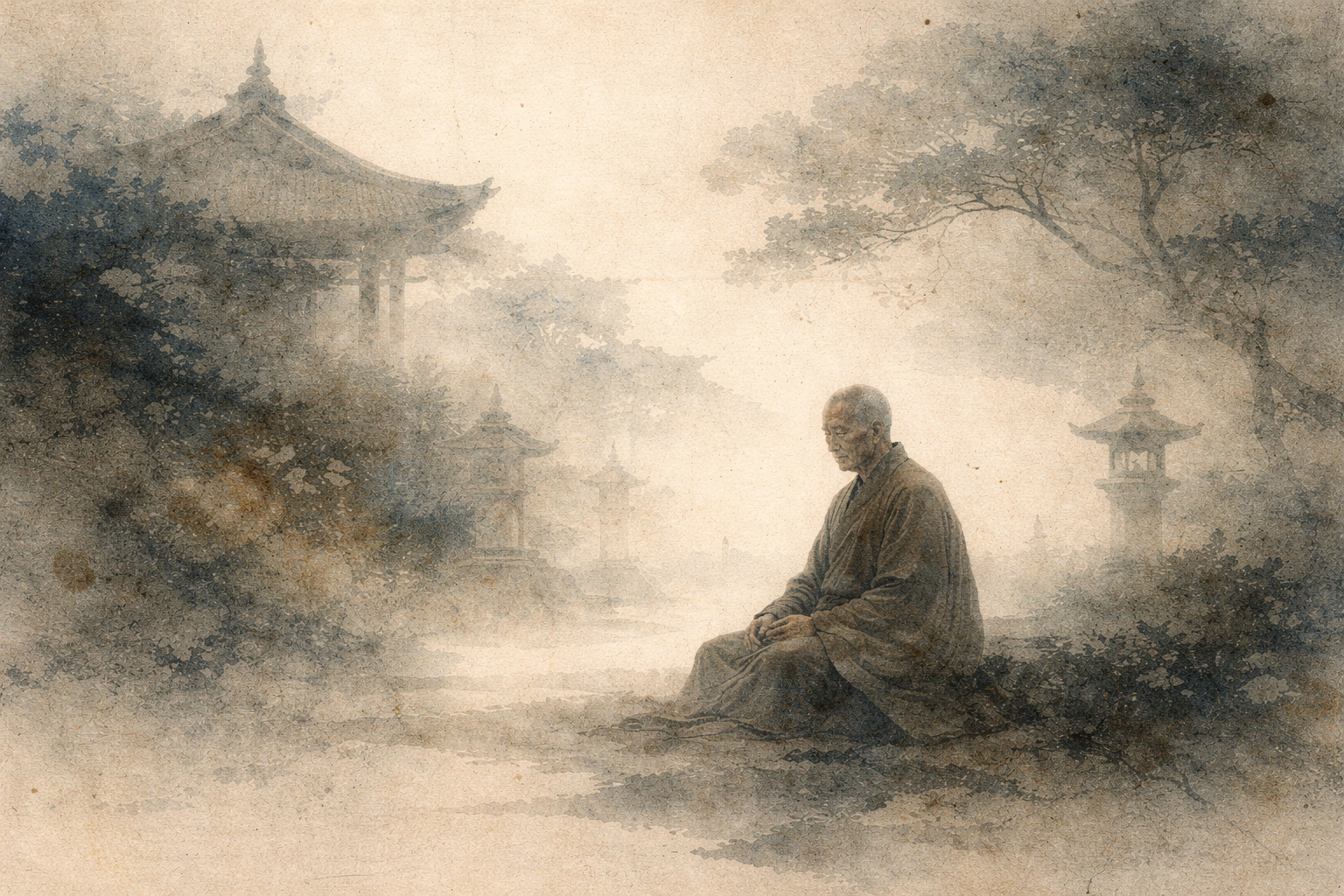
Who Was Dogen? The Zen Teacher Who Shaped Japanese Buddhism
Quick Summary
- Dogen (1200–1253) was a Japanese Buddhist monk and writer best known for articulating a rigorous, practice-centered approach to awakening.
- He traveled to China, trained deeply, and returned to Japan with a clear emphasis on sitting practice as the heart of the path.
- His major work, Shobogenzo, is a collection of talks and essays that explore time, self, effort, and everyday activity.
- He founded a monastic community that later became central to Japanese Zen, shaping training standards and temple life.
- Dogen’s writing is famous for being both practical and challenging, using wordplay and vivid images to shift how you see experience.
- He argued that practice is not a means to an end; practice itself expresses awakening in the present moment.
- His influence continues through meditation practice, ethics, and the idea that ordinary actions can be the site of deep clarity.
Introduction
If you keep seeing Dogen’s name but can’t tell whether he was a philosopher, a meditation teacher, or a religious reformer, you’re not alone—his reputation is big, and the details are often presented in a confusing blur of Japanese terms and lofty claims. Dogen matters because he didn’t just leave inspiring quotes; he left a demanding, coherent way to relate to practice, attention, and daily life that still shapes how people understand Zen in Japan and beyond. At Gassho, we focus on clear, historically grounded explanations of Buddhist practice and texts.
Dogen lived in 13th-century Japan during a time of social change and intense religious debate. He became known for insisting that the heart of the path is not special experiences or status, but the steady discipline of showing up—physically, mentally, and ethically—moment after moment.
To understand who Dogen was, it helps to hold two facts together: he was a serious monastic organizer concerned with training standards, and he was an unusually original writer who used language to unsettle fixed ideas about self, time, and “getting somewhere.”
GASSHO
Ask and learn about Buddhism in daily life.
GASSHO is a Buddhist community app where you can learn Buddhist teachings and ask questions to the head priest of Kongosanmaiin Temple on Mount Koya.
Dogen’s central lens: practice as the point, not the prize
A helpful way to approach Dogen is to treat his teaching as a lens for seeing experience rather than a set of beliefs to adopt. Through that lens, the most important question shifts from “How do I achieve awakening later?” to “What is this moment asking of my body, attention, and conduct right now?”
Dogen repeatedly points toward a simple but demanding idea: practice is not merely preparation for a future result. Practice is the direct expression of clarity in the present. That doesn’t mean you always feel clear; it means you relate to what’s happening with sincerity, steadiness, and fewer hidden bargains.
In this view, the ordinary mind’s habit of turning everything into a project becomes visible. You notice how quickly you measure yourself, compare moments, and chase a “better” state. Dogen’s lens doesn’t scold that habit; it exposes it, then invites a different posture—one that is less about winning and more about fully inhabiting what you’re already doing.
This is why his writing can feel both practical and slippery. He’s not trying to hand you a neat theory. He’s trying to loosen the grip of the mind that insists reality must fit into your preferred categories before you can meet it.
How Dogen’s perspective shows up in everyday experience
Imagine you sit down to practice and your mind immediately starts negotiating: “If I do this long enough, I’ll finally calm down,” or “If I do it right, I’ll become a better person.” Dogen’s angle makes you notice the bargaining itself—the subtle way the present moment is treated as a tool for a future self.
Then you notice something else: even when the mind is busy, the body is already here. Breathing is already happening. Sounds arrive without effort. Sensations change on their own. Dogen’s emphasis encourages a kind of honesty: instead of trying to manufacture a special state, you attend to what is already functioning.
In ordinary tasks—washing dishes, answering a message, walking to the store—attention often splits. One part does the task; another part rehearses arguments, regrets, or plans. Through Dogen’s lens, the question becomes very plain: can you do one thing at a time without turning it into a commentary about yourself?
When irritation appears, you can watch how quickly it becomes a story: “They shouldn’t,” “I always,” “This never.” Dogen’s writing often nudges you back to the raw data before the story hardens—tightness in the chest, heat in the face, the impulse to speak. Not to suppress it, but to see it clearly enough that you’re not compelled by it.
There’s also the experience of time. Some days feel like they rush; others drag. Dogen is famous for pushing readers to see time not as a neutral container but as something intimately tied to what you’re doing and how you’re meeting it. In lived terms, that can look like this: when attention is scattered, time feels thin and slippery; when attention is gathered, time feels textured and workable.
Even self-image becomes more observable. You can notice the mind trying to secure an identity—competent, spiritual, productive, kind—and the anxiety that follows when reality doesn’t cooperate. Dogen’s approach doesn’t demand you erase personality; it invites you to stop treating identity as the manager of the moment.
Over and over, the practical implication is modest: return to what you are actually doing. Not as a performance, not as a self-improvement hack, but as a direct meeting with life as it is—messy, repetitive, and surprisingly intimate when you stop standing at a distance from it.
Common misunderstandings about Dogen
Misunderstanding 1: “Dogen taught that nothing matters because everything is already perfect.” Dogen’s emphasis on practice being complete in itself is sometimes misread as permission to drift. In reality, his writing and monastic guidelines are strict: show up, be precise, and take conduct seriously. “Already complete” is not an excuse; it’s a way to stop postponing sincerity.
Misunderstanding 2: “Dogen is only for scholars.” His language can be dense, but the core concerns are everyday: distraction, impatience, pride, discouragement, and the longing to feel grounded. Many people connect with Dogen through shorter texts, careful translations, and simple practice instructions before tackling the more complex essays.
Misunderstanding 3: “He was mainly a philosopher, not a practitioner.” Dogen wrote as someone organizing training and living a disciplined schedule. His ideas are inseparable from practice and community life. Even his most abstract passages are usually trying to reshape how you sit, work, speak, and relate.
Misunderstanding 4: “Dogen rejected all rituals and forms.” He criticized empty formalism, but he also valued forms when they support attention and humility. The point is not to collect rituals; it’s to let forms serve wakefulness rather than ego.
Misunderstanding 5: “If I understand Dogen intellectually, I’ve gotten the message.” Dogen’s writing often functions like a mirror. If it only becomes a concept, it can miss its job. The real test is whether it changes how you meet the next breath, the next conversation, the next small responsibility.
Why Dogen still matters for modern life
Dogen’s relevance isn’t about adopting medieval Japanese culture. It’s about confronting a very modern problem: the constant habit of living one step removed from your own life, treating the present as a hallway leading to the “real” moment later.
His insistence on practice as the point challenges the productivity mindset that turns everything—even spirituality—into a metric. When you stop using practice to negotiate with the future, you can relate to your mind with more patience and less self-violence.
Dogen also offers a grounded antidote to spiritual consumerism. Instead of chasing novelty, he points to repetition, commitment, and the quiet dignity of doing ordinary things carefully. That’s not glamorous, but it’s stabilizing.
Finally, his work supports ethical seriousness without moral panic. When attention is trained, you see consequences sooner: how words land, how moods spread, how small choices shape relationships. That kind of clarity is practical compassion—less about ideals, more about responsiveness.
Conclusion
So, who was Dogen? He was a 13th-century Japanese monk, teacher, and writer who argued—relentlessly—that the heart of the path is not a future trophy but the direct, embodied act of practice in the present. He shaped Japanese Buddhism by setting a high bar for training and by leaving a body of writing that still challenges the mind’s habit of postponing life.
If Dogen feels difficult at first, that may be part of the point: his work often refuses to let you stand safely outside your own experience. Read him slowly, test his emphasis in ordinary moments, and let the question become simple again—what does it mean to fully do what you are doing?
Ask a Buddhist priest
Have a question about Buddhism?
In the GASSHO app, you can ask questions about Buddhist teachings, daily concerns, and how to understand Buddhism in everyday life.
Frequently Asked Questions
- FAQ 1: Who was Dogen in simple terms?
- FAQ 2: When did Dogen live?
- FAQ 3: Where was Dogen from?
- FAQ 4: Why is Dogen famous?
- FAQ 5: What did Dogen teach that was distinctive?
- FAQ 6: Did Dogen travel to China?
- FAQ 7: What is Dogen’s most important book?
- FAQ 8: What does “Shobogenzo” mean in relation to who Dogen was?
- FAQ 9: Was Dogen mainly a philosopher or a meditation teacher?
- FAQ 10: What role did Dogen play in Japanese Buddhism?
- FAQ 11: What is Dogen’s connection to Eihei-ji?
- FAQ 12: Why is Dogen’s writing considered difficult?
- FAQ 13: What is “Uji” and why does it matter for understanding who Dogen was?
- FAQ 14: Did Dogen leave practical guidance for monastic life?
- FAQ 15: What is the most accurate one-sentence answer to “who was Dogen”?
FAQ 1: Who was Dogen in simple terms?
Answer: Dogen (1200–1253) was a Japanese Buddhist monk, teacher, and writer known for emphasizing disciplined practice and for composing influential works that shaped how Zen was understood and practiced in Japan.
Takeaway: Dogen was both a rigorous practitioner and a major religious thinker.
FAQ 2: When did Dogen live?
Answer: Dogen lived from 1200 to 1253, during Japan’s Kamakura period, a time of political change and new religious movements.
Takeaway: Dogen was a 13th-century figure, not a modern teacher.
FAQ 3: Where was Dogen from?
Answer: Dogen was Japanese and was born in or near Kyoto, the cultural and religious center of Japan at the time.
Takeaway: Dogen’s roots were in the heart of medieval Japanese religious life.
FAQ 4: Why is Dogen famous?
Answer: He is famous for his uncompromising focus on practice, his role in establishing a lasting monastic community, and his writings—especially Shobogenzo—which remain among the most important texts in Japanese Zen.
Takeaway: Dogen’s fame comes from both institutions and ideas.
FAQ 5: What did Dogen teach that was distinctive?
Answer: A key theme in Dogen’s teaching is that practice is not merely a method to reach awakening later; practice itself expresses awakening in the present, when done wholeheartedly and sincerely.
Takeaway: For Dogen, practice is not just a means—it is the heart of the path.
FAQ 6: Did Dogen travel to China?
Answer: Yes. Dogen traveled to China as a young monk to train and to clarify his questions about practice, then returned to Japan and taught what he had learned through his own distinctive voice.
Takeaway: Dogen’s formation included intensive training abroad.
FAQ 7: What is Dogen’s most important book?
Answer: Dogen’s best-known work is the Shobogenzo (“Treasury of the True Dharma Eye”), a collection of essays and talks that explore practice, time, language, and everyday conduct.
Takeaway: Shobogenzo is the central text for understanding Dogen’s thought.
FAQ 8: What does “Shobogenzo” mean in relation to who Dogen was?
Answer: The title is often translated as “Treasury of the True Dharma Eye,” and it reflects Dogen’s aim: to point readers back to direct practice and clear seeing rather than abstract speculation.
Takeaway: The title signals Dogen’s focus on lived clarity, not mere theory.
FAQ 9: Was Dogen mainly a philosopher or a meditation teacher?
Answer: He was both, but his writing grows out of practice and training. Dogen’s “philosophical” passages are usually meant to reshape how one practices and lives, not to build a detached system of ideas.
Takeaway: Dogen’s thought is practice-driven, not purely academic.
FAQ 10: What role did Dogen play in Japanese Buddhism?
Answer: Dogen helped define a durable model of monastic training and left writings that influenced later generations’ understanding of practice, discipline, and the meaning of awakening in everyday life.
Takeaway: Dogen shaped both religious institutions and spiritual interpretation.
FAQ 11: What is Dogen’s connection to Eihei-ji?
Answer: Dogen founded Eihei-ji, a monastery that became a major center for his community and remains historically associated with his legacy and approach to training.
Takeaway: Eihei-ji is a key place linked to who Dogen was as an organizer and teacher.
FAQ 12: Why is Dogen’s writing considered difficult?
Answer: Dogen often uses layered language, wordplay, and unconventional turns of phrase to challenge fixed ways of thinking. The difficulty is partly stylistic and partly intentional—meant to shift how the reader sees experience.
Takeaway: Dogen can be hard because he writes to transform perception, not to simplify it.
FAQ 13: What is “Uji” and why does it matter for understanding who Dogen was?
Answer: “Uji” is a famous essay by Dogen often translated as “Being-Time,” exploring how time and existence are inseparable in lived experience. It shows Dogen’s distinctive way of using language to reframe everyday reality.
Takeaway: “Uji” highlights Dogen’s signature focus on time, presence, and practice.
FAQ 14: Did Dogen leave practical guidance for monastic life?
Answer: Yes. Alongside his essays, Dogen wrote detailed instructions and guidelines for training and community life, reflecting his concern for discipline, care, and consistency in practice.
Takeaway: Dogen was a hands-on teacher who cared about daily training details.
FAQ 15: What is the most accurate one-sentence answer to “who was Dogen”?
Answer: Dogen was a 13th-century Japanese Buddhist monk and writer whose practice-centered teaching and influential texts helped shape the direction of Japanese Zen and its monastic culture.
Takeaway: Dogen’s identity is best captured as a teacher-writer who reshaped practice and training in Japan.