



Can You Keep Learning Buddhism If You Have Doubts?
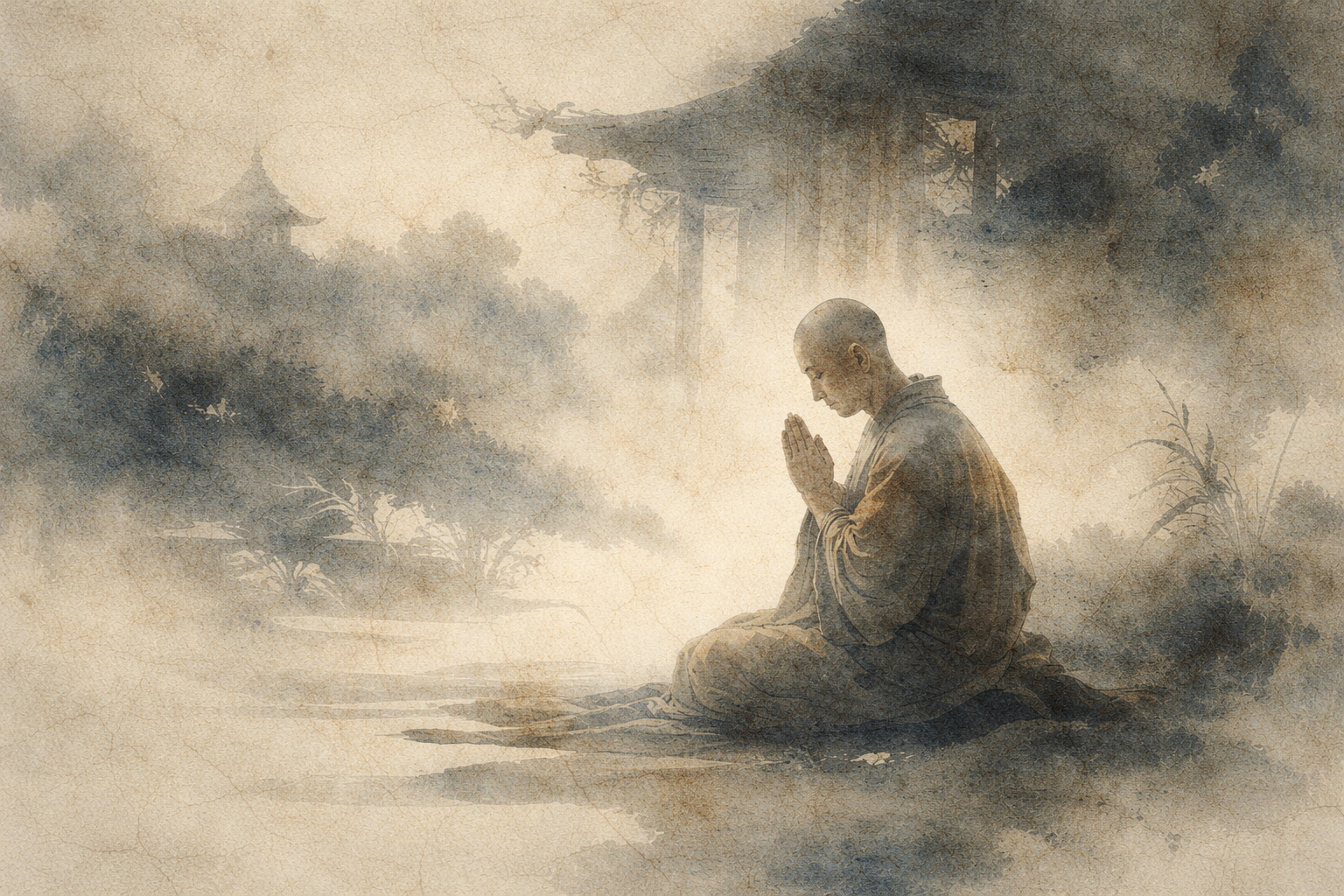
- Doubts don’t disqualify you from learning Buddhism; they can be part of the learning.
- The key is to treat doubt as an experience to observe, not a verdict you must obey.
- You can keep practicing with “provisional trust”: try, test, and see what reduces suffering.
- Not every teaching needs immediate agreement; some are better approached as experiments.
- Healthy skepticism is different from rumination that keeps you stuck.
- Small, consistent practices (ethics, attention, kindness) work even when beliefs feel uncertain.
- If doubt becomes distressing, simplify: return to basics and seek grounded guidance.
Doubting Buddhism can feel like you’re doing it “wrong”—like everyone else has quiet certainty while you’re stuck questioning, resisting, or mentally arguing with what you read. That tension is real: you may want the relief Buddhism promises, but you don’t want to pretend you believe things you don’t, or force yourself into a worldview that doesn’t fit. At Gassho, we focus on practical, experience-based Buddhism that respects honest uncertainty.
A practical way to understand doubt in Buddhism
A helpful lens is to see Buddhism less as a set of beliefs you must adopt and more as a way of looking closely at experience—especially the moments that create stress, reactivity, and dissatisfaction. From that angle, doubt isn’t an enemy of the path; it’s one of the experiences the path can illuminate.
Doubt often shows up as a demand for certainty before you take the next step: “If I can’t be sure this is true, I shouldn’t practice.” But human life rarely offers that kind of certainty. Buddhism, approached practically, invites a different approach: test what you can test. If a teaching encourages more clarity, less harm, and more steadiness, you can use it without needing to settle every philosophical question first.
This doesn’t mean “believe blindly.” It means you can hold ideas lightly—like tools on a workbench. You pick up a tool, try it, and see what it does. If it helps you relate to anger, fear, craving, or self-criticism with more wisdom, it’s worth keeping nearby. If it doesn’t help, you set it down without drama.
In this view, learning Buddhism with doubts becomes a training in honesty and discernment: noticing what you actually experience, noticing what stories you add on top, and gradually learning which actions and attitudes reduce suffering for you and the people around you.
GASSHO
Ask and learn about Buddhism in daily life.
GASSHO is a Buddhist community app where you can learn Buddhist teachings and ask questions to the head priest of Kongosanmaiin Temple on Mount Koya.
What it looks like when you keep learning while unsure
You read a teaching and feel a quick internal “No.” Maybe it sounds too idealistic, too moralistic, or just not compatible with how you see the world. Before deciding you’re “not Buddhist enough,” you notice the reaction itself: tightness in the chest, a defensive tone in the mind, a rush to conclude.
Then another layer appears: the mind wants to resolve the discomfort immediately. It tries to win an argument, find the perfect explanation, or label the whole tradition as flawed. Doubt can be less about the teaching and more about the mind’s urgency to feel safe through certainty.
In ordinary life, doubt often arrives when you’re already stressed. You try to practice for a few minutes, but your thoughts say, “This isn’t working,” or “I’m doing it wrong,” or “This is just self-hypnosis.” Instead of treating those thoughts as final judgments, you can treat them as mental events—sounds in the mind—appearing and fading.
You may also notice that doubt has different “flavors.” Sometimes it’s curious and clean: “I don’t understand this yet.” Sometimes it’s protective: “If I commit, I might be disappointed.” Sometimes it’s exhausted: “I’ve tried so many things; I don’t trust anything.” Seeing the flavor matters, because each one asks for a different response.
Keeping learning can look very simple: you continue reading, reflecting, and practicing, but you stop demanding that every step produce immediate certainty. You let the practice be small and repeatable—paying attention to speech, noticing reactivity, pausing before you send the message, choosing one kind action even when you don’t feel spiritual.
Over time, you may find that some doubts dissolve on their own when you stop feeding them with constant debate. Others remain, but they become less personal—less like a crisis and more like an open question. The learning continues because you’re working with what’s real: your mind as it is today.
And sometimes you discover something surprisingly steady: even when beliefs wobble, practices like patience, honesty, and compassion still make your day more livable. That’s not a mystical claim; it’s a direct, observable shift in how you relate to yourself and others.
Common ways doubt can get misunderstood
One misunderstanding is thinking doubt means you’re failing. In reality, doubt can be a sign that you’re taking the teachings seriously enough to question them. The problem isn’t doubt itself; it’s when doubt becomes a rigid identity (“I’m a doubter”) or a constant escape hatch from practice.
Another misunderstanding is confusing doubt with discernment. Discernment is careful and patient; it looks at evidence in lived experience. Doubt can be discerning, but it can also be restless—jumping from one conclusion to another to avoid discomfort. If your questioning leaves you more contracted, more cynical, or more reactive, it may be worth asking what the doubt is protecting.
A third misunderstanding is assuming you must accept every claim to benefit from Buddhism. You can learn a great deal from the basics—attention, ethics, compassion, and understanding reactivity—without forcing yourself to adopt ideas you can’t honestly stand behind. Learning can be incremental and selective, especially at the beginning.
Finally, some people think the goal is to eliminate doubt permanently. A more workable aim is to relate to doubt skillfully: to recognize it, listen for what’s reasonable, and not let it run your life. That’s a mature kind of confidence—quiet, flexible, and grounded in what you’ve actually tested.
Why continuing with doubts can improve your daily life
When you keep learning Buddhism without demanding certainty, you practice staying present with discomfort instead of outsourcing your peace to perfect answers. That skill transfers directly to daily life: difficult conversations, uncertainty at work, health worries, relationship ambiguity, and the ordinary unpredictability of being human.
You also become less vulnerable to extremes. Without practice, doubt can push you into two unhelpful modes: blind belief (to escape uncertainty) or total dismissal (to avoid disappointment). Learning with doubt helps you stay in the middle—open-minded, but not gullible; skeptical, but not closed.
On a practical level, many Buddhist trainings are immediately useful regardless of belief: pausing before reacting, noticing the stories you tell yourself, choosing speech that reduces harm, and cultivating kindness when your mind wants to harden. These are not abstract ideals; they are daily decisions.
And there’s a quiet relief in realizing you don’t have to “solve Buddhism” to benefit from it. You can let learning be a relationship—one that includes questions, revisions, and honest limits—while still moving toward less suffering and more clarity.
Conclusion
Yes—you can keep learning Buddhism if you have doubts, and you don’t need to fake certainty to do it. Treat doubt as something to observe and understand, not a final authority. Keep what is testable, practice what reduces harm, and let your confidence grow from lived experience rather than pressure to believe. The path can be steady even when your mind is not.
Ask a Buddhist priest
Have a question about Buddhism?
In the GASSHO app, you can ask questions about Buddhist teachings, daily concerns, and how to understand Buddhism in everyday life.
Frequently Asked Questions
- FAQ 1: Can you keep learning Buddhism if you have doubts?
- FAQ 2: Does Buddhism require faith even when you’re unsure?
- FAQ 3: What’s the difference between healthy doubt and getting stuck in doubt?
- FAQ 4: If I disagree with some Buddhist teachings, can I still learn Buddhism?
- FAQ 5: Is it disrespectful to study Buddhism while doubting it?
- FAQ 6: How do I practice when my mind keeps saying “this is pointless”?
- FAQ 7: Can doubt be part of Buddhist practice rather than an obstacle?
- FAQ 8: What should I focus on in Buddhism if I’m unsure about big concepts?
- FAQ 9: How long is it okay to have doubts while learning Buddhism?
- FAQ 10: What if my doubts make me anxious or depressed?
- FAQ 11: Should I stop reading Buddhist texts if they trigger more doubt?
- FAQ 12: Can I learn Buddhism without calling myself a Buddhist if I have doubts?
- FAQ 13: How do I talk about my doubts in a Buddhist community without feeling judged?
- FAQ 14: What’s a simple daily practice for learning Buddhism while doubting?
- FAQ 15: When do doubts mean I should step back from Buddhism?
FAQ 1: Can you keep learning Buddhism if you have doubts?
Answer: Yes. Doubt can be treated as part of what you learn from—an experience to observe—rather than a sign you must stop. You can continue by focusing on what is testable in your daily life, like whether a practice reduces reactivity and harm.
Takeaway: Doubt doesn’t disqualify you; it can become material for practice.
FAQ 2: Does Buddhism require faith even when you’re unsure?
Answer: You don’t have to force belief to learn. A workable approach is “provisional trust”: try a teaching as an experiment and keep it only if it proves helpful and ethical in lived experience.
Takeaway: You can practice without pretending to be certain.
FAQ 3: What’s the difference between healthy doubt and getting stuck in doubt?
Answer: Healthy doubt is curious and patient; it asks clear questions and tests them. Stuck doubt loops, ruminates, and demands total certainty before taking any step, often increasing anxiety or cynicism.
Takeaway: If doubt keeps you from any practice at all, it may be rumination rather than discernment.
FAQ 4: If I disagree with some Buddhist teachings, can I still learn Buddhism?
Answer: Yes. You can learn selectively and honestly, focusing on teachings that you can apply and verify in your experience. Disagreement can be held respectfully as an open question rather than a reason to quit entirely.
Takeaway: Learning can continue even when some ideas don’t land for you.
FAQ 5: Is it disrespectful to study Buddhism while doubting it?
Answer: Not necessarily. Respect is shown through sincerity, careful reading, and ethical behavior—not by pretending you have no questions. Honest doubt can be more respectful than superficial agreement.
Takeaway: Sincere questioning can coexist with respect.
FAQ 6: How do I practice when my mind keeps saying “this is pointless”?
Answer: Treat that thought as an event, not a command. Practice small: one mindful breath, one pause before speaking, one kind action. Then notice the results—especially whether you create less harm or recover faster from stress.
Takeaway: Keep practice small and evidence-based when doubt is loud.
FAQ 7: Can doubt be part of Buddhist practice rather than an obstacle?
Answer: Yes. Doubt can reveal attachment to certainty, fear of being wrong, or a need for control. Observing how doubt feels in the body and how it drives behavior can deepen self-understanding.
Takeaway: Doubt can be studied like any other mental state.
FAQ 8: What should I focus on in Buddhism if I’m unsure about big concepts?
Answer: Focus on what’s immediately observable: stress and reactivity, attention and distraction, speech and its consequences, kindness and its effects. These areas don’t require you to settle every “big” question first.
Takeaway: Start with what you can verify in daily life.
FAQ 9: How long is it okay to have doubts while learning Buddhism?
Answer: There’s no deadline. Doubts can change over time, and some questions may remain open. What matters is whether your learning is making you more honest, less reactive, and more compassionate—not whether you’ve achieved perfect certainty.
Takeaway: Doubt can be present for a long time without blocking learning.
FAQ 10: What if my doubts make me anxious or depressed?
Answer: Simplify your approach: reduce information overload, return to basic practices, and prioritize sleep, support, and stability. If doubt is tied to significant anxiety or depression, consider talking with a qualified mental health professional alongside your spiritual learning.
Takeaway: When doubt becomes distress, stabilize first and keep practice gentle.
FAQ 11: Should I stop reading Buddhist texts if they trigger more doubt?
Answer: Not always, but it can help to pace yourself. Choose simpler, practical material and reflect slowly, or alternate reading with direct practice. If reading turns into endless argument in your head, it may be time to focus on application rather than accumulation.
Takeaway: Adjust the input so learning stays grounded.
FAQ 12: Can I learn Buddhism without calling myself a Buddhist if I have doubts?
Answer: Yes. Labels aren’t required for learning. You can study and practice what helps while staying honest about where you are, especially if adopting an identity feels premature or pressured.
Takeaway: You can learn without committing to a label.
FAQ 13: How do I talk about my doubts in a Buddhist community without feeling judged?
Answer: Be specific and humble: name what you’re unsure about and what you’re trying to understand, rather than presenting doubt as a debate to win. If a group discourages honest questions or pressures conformity, it may not be a supportive environment for learning.
Takeaway: Share doubts as sincere questions, and choose communities that welcome honesty.
FAQ 14: What’s a simple daily practice for learning Buddhism while doubting?
Answer: Try a short daily check-in: notice one moment of reactivity, pause for one breath, and choose the least harmful next action (in speech or behavior). At the end of the day, reflect briefly on what changed when you paused.
Takeaway: A tiny pause-and-choose practice keeps learning real even with doubts.
FAQ 15: When do doubts mean I should step back from Buddhism?
Answer: Consider stepping back if your engagement consistently increases distress, rigidity, or self-judgment, or if you feel pressured to suppress honest questions. Stepping back doesn’t have to be quitting; it can be a reset—returning later with a simpler, kinder approach.
Takeaway: If learning is harming your well-being, pause, simplify, and reassess.