



Calm Meditation: Simple Ways to Quiet the Mind

Quick Summary
Calm meditation invites you to slow down, breathe, and listen beneath the noise. It’s less about achieving peace and more about remembering it. Rooted in both modern science and Buddhist stillness, this practice helps you find steadiness even when life refuses to stay quiet.
- Science meets stillness: Research shows calm meditation lowers stress and strengthens emotional clarity.
- Everyday accessibility: No retreat required—just breath and awareness, wherever you are.
- Ancient roots, modern form: Calm meditation carries the spirit of Gassho, a moment of unity and gratitude.
- Gentle practice: Even a few mindful minutes can soften tension and restore perspective.
- Sustainable calm: Over time, quiet becomes less an escape and more a way of being.
Introduction
Most people don’t need more advice; they need quiet. Calm meditation is the art of coming home to that quiet. It begins, strangely enough, with discomfort—the mind protests, the body fidgets. It’s almost comic how the first minute feels longer than the rest combined. But then something softens. The breath stops sounding mechanical and starts to feel alive, like your lungs are gently brushing the surface of your thoughts.
Calm meditation isn’t about suppressing noise; it’s about remembering that beneath the static, there’s stillness. You can practice it while sitting in morning traffic or standing in your kitchen waiting for the kettle to boil. These brief, ordinary moments are gateways. Each pause is a small rebellion against the rush, a reminder that calm isn’t found elsewhere—it’s recovered.
What Is Calm Meditation?

Calm meditation refers to practices that guide your nervous system from tension to balance. It doesn’t demand blank minds or lofty ideals. Instead, it invites awareness—the kind that notices without judging. Imagine your thoughts as clouds moving across a wide sky; calm meditation is remembering you are the sky, not the weather.
Historically, calm meditation draws from both Buddhist breath training and the “relaxation response” described in Western medicine. In modern life, it serves as a quiet rebellion against overstimulation. When practiced daily, it helps dissolve mental clutter and reveals a natural ease already present beneath the noise.
How Does Calm Meditation Work on the Body and Mind?
When you breathe slowly and mindfully, your body listens to that quiet signal. The parasympathetic nervous system gently activates, your heartbeat steadies, your muscles loosen, and it feels as if the gears of stress are softly coming to rest.
This shift is more than a feeling. According to Harvard Health Publishing, mindfulness practice has been shown to reduce stress while improving mood, cognition, and memory. Moreover, research published in Frontiers in Psychology found that meditation practice significantly lowered cortisol, the hormone associated with stress. In that single mindful breath, both the body and mind begin to find their quiet balance again.
But something more subtle happens too. Your awareness becomes steadier. Thoughts still come, but they lose their sharpness. It’s like turning down the volume on a crowded room—you can finally hear your own voice again. Many practitioners describe calm meditation as a gentle recalibration, a reminder that stillness isn’t the absence of motion but the balance within it.
How to Practice Calm Meditation
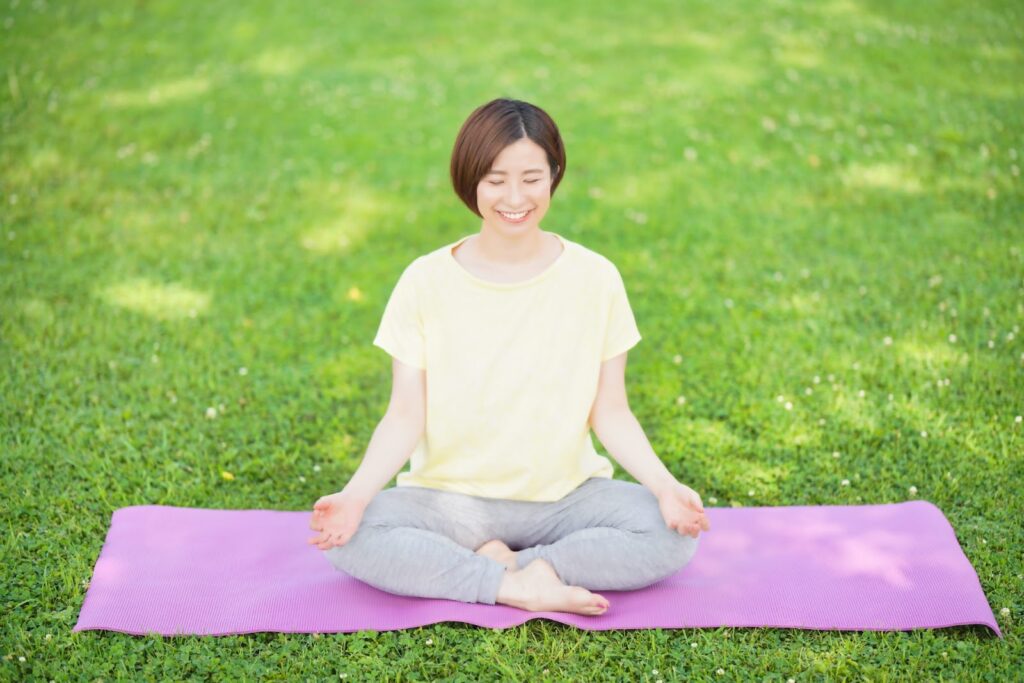
Start where you are—no perfect setting, no special gear. Sit or lie down. Close your eyes, or don’t. Feel the air move in and out as if it were smoothing the rough edges of your thoughts.
- Take one slow inhale through your nose, one long exhale through your mouth.
- Notice how the breath anchors you in the present moment.
- When distractions appear—and they always do—greet them like old friends passing by.
- Gently return to breathing, again and again.
- End with gratitude—one quiet acknowledgment of something good, however small.
Calm meditation rewards patience, not perfection. Some days will feel restless; others will melt into peace. Apps like Gassho can help structure short sessions—five minutes before bed, ten minutes before meetings—but the real teacher is your own breath.
The Science Behind Calm Meditation
Science is slowly catching up with what ancient practitioners once understood — stillness transforms the brain. Recent neuroscientific findings suggest that mindfulness practice may induce changes in brain regions responsible for emotion regulation and attention.
Moreover, a meta-analysis indexed in PubMed reported that mindfulness-based programs (MBPs) can enhance adults’ cognitive performance, particularly attention and executive function. Each moment of mindful stillness gently shapes both the mind and the brain’s capacity for flexibility.
On a biological level, calm meditation turns down the brain’s “default mode network”—the stream of rumination that fuels anxiety. It’s as if the mind, left unguarded, learns how to rest again. Calm isn’t passive; it’s an active training of the nervous system toward equilibrium. The longer you practice, the more your body learns what peace feels like.
Common Challenges and How to Overcome Them
Distraction, boredom, even irritation—these are all part of the process. The goal isn’t to eliminate them but to see them clearly. Think of your thoughts as waves on water. You don’t calm the sea by fighting the waves; you let the water settle on its own.
If you grow drowsy, try sitting more upright. If your mind races, shorten the session. You can even keep your eyes open and focus softly on a single object. Many people find comfort in guided recordings or soft ambient sounds, but silence works too. Remember: every return to awareness is an act of success.
Integrating Calm Meditation into Daily Life

The true power of calm meditation lies in its portability. You can practice while waiting for a webpage to load, while washing dishes, or in the quiet seconds before answering a call. The idea is simple—replace mindless pauses with mindful ones.
Even a brief moment of mindful breathing during the workday allows the brain and body to quietly reset. Research published in the Journal of Occupational Health Psychology has shown that short mindfulness breaks taken during the day can enhance concentration and foster a greater sense of recovery.
In just a few minutes of stillness, the mind regains clarity and the body renews its energy. Think of these moments as small investments in calm. Over time, they compound into steadiness. Eventually, calm meditation stops being an activity you “do” and becomes the way you move through life—measured, aware, unhurried.
The Buddhist Roots of Calm Meditation
In Japanese, Gassho means “palms together”—a gesture of gratitude, humility, and connection. In Zen and Pure Land traditions, it’s more than posture; it’s a state of heart. When you bring your palms together, you’re symbolically uniting opposites—inner and outer, self and world, breath and thought. Calm meditation shares this same principle: the act of returning to unity through stillness.
In Buddhist meditation, this quiet returning is known as samatha, the practice of calming the mind before insight arises. It’s not an escape from the world but a clearer way of being within it. The Buddha often compared the mind to a pond: when the surface is agitated, you can’t see your reflection. Let the ripples settle, and truth appears by itself.
Modern calm meditation, especially through tools like Gassho, carries that same DNA. Each pause, each breath, is a modern Gassho—a small bow to awareness. You don’t need to call it religion to feel its depth. When you sit quietly and breathe with intention, you’re practicing something timeless: compassion expressed as calm.
Cultural Roots and Modern Adaptations
Calm meditation is both ancient and new. Zen monks call it “shikantaza”—just sitting. Stoic philosophers described ataraxia, a state of serene balance. In India, yogic traditions developed pranayama—breath as the bridge between body and spirit.
Today, science and technology have translated these timeless ideas into accessible tools. Apps, online communities, and digital retreats have democratized the art of calm. Some worry that turning ancient wisdom into push notifications cheapens it—but perhaps it’s the opposite. Maybe we’re learning to bring silence into the noise, to find the temple within the timeline.
Conclusion
Calm meditation doesn’t promise eternal peace. Some days you’ll feel scattered, others serene. That’s fine. The practice isn’t to fix the storm—it’s to learn how to hold an umbrella with grace. Over time, calm stops being a temporary mood and becomes the ground you walk on. You’ll still feel everything, but it won’t shake you so easily.
If you start today, begin small. One breath. That’s enough to remind your nervous system: you’re safe, you’re here, you can rest.
Frequently Asked Questions

FAQ 1: What is calm meditation?
Answer: Calm meditation is a simple practice of paying steady, kind attention to the present moment so the nervous system can shift from stress to balance. Rather than forcing thoughts to stop, it teaches the mind to notice sensations, feelings, and breath without reacting. Over time, many practitioners report fewer stress spikes, clearer focus, and a gentler baseline mood. Calm meditation is flexible—two minutes before a meeting or ten minutes before bed both count, and consistency matters more than perfection.
Real Results: Authoritative overviews from Harvard Health and NCCIH summarize evidence that mindfulness-style practices reduce stress and support well-being.
Takeaway: Calm meditation is training in relaxed awareness, not thought suppression.
FAQ 2: How is calm meditation different from mindfulness?
Answer: Mindfulness is the broad skill of present-moment awareness in daily life; calm meditation is a formal, quieter exercise that emphasizes soothing arousal and settling attention. In practice they overlap: a short calm session strengthens mindfulness during the day, while mindful moments (walking, sipping tea) reinforce calm. Many users find that starting with structured calm sessions makes it easier to carry awareness into conversations, commutes, and stressful tasks.
Real Results: Harvard Health distinguishes common forms, noting mindfulness, samatha (calming), and related practices can each aid mood and attention.
Takeaway: Calm meditation is the still-water version of mindfulness—one trains the other.
FAQ 3: Can I do calm meditation without an app?
Answer: Yes. A timer and your breath are enough. Sit comfortably, notice each inhale and exhale, and return attention when it wanders. Apps can help with reminders and variety, but unassisted practice remains effective when done regularly. Many practitioners alternate: app-guided sessions for structure on busy days, simple breath awareness on quiet days. The skill being trained is attention—not the technology around it.
Real Results: Harvard Health reviews show both guided and self-guided mindfulness can support stress reduction and focus when practiced consistently.
Takeaway: Your most reliable teacher is your breath; apps are helpful, not mandatory.
FAQ 4: How long does it take to feel results?
Answer: Early shifts—slightly slower reactions, easier refocus—often appear within one to two weeks of daily practice. Physiological changes, like steadier heart rate or improved sleep onset, typically emerge over several weeks as the parasympathetic “rest-and-digest” response becomes more accessible. Progress is rarely linear: some days feel flat, others surprisingly clear. Treat each return to the breath as a repetition that builds capacity.
Real Results: A large meta-analysis in JAMA Internal Medicine found mindfulness programs improved anxiety, depression, and pain versus controls. Harvard Health reports benefits after relatively short daily sessions.
Takeaway: Think “fitness for attention”—small daily reps add up.
FAQ 5: Is calm meditation effective for anxiety or insomnia?
Answer: Many people use calm meditation to quiet looping thoughts and prepare the body for rest. Practiced in the evening, it can lower arousal and make drifting off easier; during the day, it builds familiarity with noticing and releasing worry spirals. It is not a cure-all, but as part of a sleep routine and alongside professional care when needed, calm practice can be a steadying tool.
Real Results: Reviews in Sleep Medicine and related journals link mindfulness-based approaches to improved sleep quality and reduced insomnia severity.
Takeaway: Calm the nervous system and sleep often follows.
FAQ 6: What’s the best time of day to meditate for calm?
Answer: The best time is the one you’ll actually keep. Many prefer mornings for a clear start or evenings to downshift, but mixed schedules work if anchored to routines: after coffee, before lunch, or pre-bed. Consistency trains the brain to expect quiet at certain cues. Short “micro-pauses” (one to three minutes) between tasks can also smooth the day’s edges and reduce cumulative stress.
Real Results: Harvard Health notes flexible timing works—regular short sessions improve attention and mood over weeks. NHS resources also offer brief guided options for winding down at night.
Takeaway: Tie calm to habits you already have, not to the clock.
FAQ 7: Can I practice calm meditation lying down?
Answer: Yes—especially for relaxation and pre-sleep routines. Lying down may invite drowsiness, which is fine if rest is the goal. For alert practice, try sitting upright with a supported spine and relaxed shoulders. Many people blend postures across the day: seated in the morning, reclining at night. The intention (rest vs. alertness) should guide the shape of the practice.
Real Results: NHS and UK hospital resources (NUH) endorse mindfulness and relaxation in seated or lying positions, including pre-sleep sequences.
Takeaway: Choose posture by purpose—rest or steady alertness.
FAQ 8: How do I stay focused when my mind wanders?
Answer: Expect wandering; noticing it is the skill. Label the distraction gently (thinking, planning, remembering), then escort attention back to breath or body sensation. Use shorter sessions if you feel flooded, or add tactile anchors like feeling the hands touch. Over time, the “return” becomes quicker and kinder, and the mind learns that calm is safe to revisit.
Real Results: Reviews summarized by Harvard Health describe attentional improvements after weeks of practice, reflecting more efficient shifts from distraction to focus.
Takeaway: The return is the rep—each gentle comeback builds focus.
FAQ 9: What does science say about calm meditation?
Answer: Across decades, research reports small-to-moderate benefits for stress, anxiety, mood, pain, and attention, with variability based on program quality and practice time. Meditation is not a replacement for medical care but a useful adjunct that improves self-regulation. Effects tend to accumulate with consistent daily work rather than marathon sessions. Credible sources emphasize realistic expectations: helpful, not magical.
Real Results: A JAMA Internal Medicine meta-analysis and NCCIH fact sheet summarize evidence and limitations.
Takeaway: The consensus: meaningful benefits, especially with steady practice.
FAQ 10: How important is breathing in calm meditation?
Answer: Breath is the anchor and feedback loop. Slow, comfortable nasal breathing signals safety to the nervous system, easing heart rate and tension while giving the mind a rhythmic object. Subtle techniques—lengthening the exhale, feeling air at the nostrils—can stabilize attention without strain. If breath is uncomfortable, use sound or touch as your anchor and return to breathing later.
Real Results: A Frontiers review details how controlled breathing shapes brain rhythms and autonomic markers related to emotion regulation.
Takeaway: Breathe slower, feel safer—attention follows the exhale.
FAQ 11: Can calm meditation help with workplace stress?
Answer: Brief calm breaks reduce reactivity, clear mental clutter, and can improve tone in tough conversations. Even two minutes between tasks helps reset attention. Teams benefit when a few people model short pauses and sane pacing. Calm at work is less about long sessions and more about frequent micro-resets that prevent pressure from stacking into burnout.
Real Results: A randomized controlled trial reported improved employee well-being after mindfulness training; additional guidance supports on-the-go practice via smartphone delivery (Journal of Occupational Health Psychology – Mindfulness Training Improves Employee Well-Being, Mindfulness On-The-Go).
Takeaway: Small mindful pauses, repeated often, are a competitive advantage.
FAQ 12: Where can I find guided calm meditation sessions?
Answer: Reliable options include hospital-supported resources, university centers, and well-vetted apps. Start with a few short tracks, note how your body feels before and after, and keep the ones that genuinely settle you. As the habit forms, alternate guided audio with quiet, self-guided breathing so calm becomes portable and independent of your phone.
Real Results: Mindscape (Harvard Health) lists reputable app and center resources; NHS also curates brief guided practices for everyday winding down.
Takeaway: Guidance is abundant—choose calm that fits your day.
FAQ 13: Can children or teenagers practice calm meditation?
Answer: Yes. Calm meditation can help young people develop emotional regulation, focus, and stress resilience. For kids, short sessions (2-5 minutes) with simple instructions are most appropriate. Schools and youth programs increasingly incorporate breath awareness and mindful pauses to support mood and behaviour. Still, the format must be age-sensitive and supervised.
Real Results: A systematic review found mindfulness-meditation techniques improved cognitive and socio-emotional skills in children aged 6–12. (Frontiers).
Takeaway: Starting calm meditation early builds emotional strength for life.
FAQ 14: What if I fall asleep during meditation?
Answer: Falling asleep during meditation is common—especially when the body is fatigued or the posture is reclined. It signals that the nervous system is easing off tension. If the goal is alertness, consider sitting upright or meditating earlier in the day. But if rest is the aim, allow yourself that transition gently.
Real Results: Sleep-related mindfulness approaches show that relaxation and meditation before bed can support better sleep without negative effects. (Frontiers)
Takeaway: Sleep during meditation isn’t a failure—it might be the body accepting calm.
FAQ 15: How can I make calm meditation a daily habit?
Answer: Habit formation for meditation follows similar patterns to other healthy behaviours—cue, routine, reward. Linking a calm meditation to an existing daily action (e.g., after brushing teeth, before lunch) helps. Short, consistent sessions matter more than occasional long ones. Tracking progress and being patient supports onward motion.
Real Results: A health-behaviour model shows meditation can be viewed as a health behaviour and identifies stages of development toward habit formation. (Springer Nature Link).
Takeaway: Anchor calm to what you already do every day.
FAQ 16: I can’t feel any results and feel discouraged.
Answer: That’s a normal part of the path. Calm meditation isn’t about achieving instant change—it’s about cultivating the capacity to notice change as it unfolds. Doubt and restlessness are simply visitors; you can watch them, too. Like roots growing underground, calm deepens where you can’t yet see it. Every breath, every return, is building steadiness.
Real Results: Many practitioners share that one day they simply realize they react less or feel lighter—change arrives quietly, often without fanfare. The progress of calm meditation is slow, steady, and entirely natural.
Takeaway: You don’t chase calm; you notice it’s already begun to grow.
FAQ 17: How is calm meditation related to yoga?
Answer: Calm meditation and yoga share foundational elements—breath, body awareness, stillness. Yoga often concludes with a meditative pose (savasana) which mirrors calm meditation’s aim: the body resting while the mind watches. Both practices support mind-body integration and cultivate inner calm.
Real Results: Studies show meditative postures and breath-based practices in yoga reduce anxiety and heart-rate markers of stress. (MDPI).
Takeaway: Yoga moves the body toward the calm the mind sustains.
FAQ 18: Do I need silence to practice calm meditation?
Answer: No—absolute silence is not required. Calm meditation trains awareness of whatever is present—sound, sensation, breath—without reacting. Background noise becomes part of the experience. Practice in less-than-ideal environments supports resilience and flexibility.
Real Results: Studies indicate mindfulness training increases tolerance to environmental distractions and reduces stress perception despite ambient noise. (Reality Pathing).
Takeaway: The world quiets when you do.
FAQ 19: Can calm meditation replace therapy or medication?
Answer: Calm meditation can complement professional treatment but it should not be considered a substitute for therapy or medication when clinical needs exist. It supports self-regulation, but complex conditions often require clinical interventions. Always consult qualified professionals.
Real Results: Clinical guidelines from major mental-health organizations recommend meditation as adjunctive, not replacement, for standard treatments. (Springer Nature Link).
Takeaway: Meditation heals best beside—not instead of—professional care.
FAQ 20: What are good guided calm meditation options and how should I choose?
Answer: Guided calm meditations are available via apps, websites, or local classes. Choose options that feel gentle on your nervous system, respect your pace, and are credible (led by experienced instructors). Alternate guided and unguided sessions to build autonomy. Monitor how you feel before and after to decide what fits.
Real Results: Trusted platforms list brief guided meditations tailored for beginners and daily routines; consistent use of these supports adoption of calm practices. (Springer Nature Link).
Takeaway: Guidance is abundant—pick calm that fits your rhythm.
FAQ 21: Can the mindfulness app Gassho be used for calm meditation?
Answer: Yes. Gassho is an excellent companion for calm or mindfulness meditation. The app features chants by monks from Kongō Sanmai-in Temple, guided breathing, and natural soundscapes that gently synchronize the mind and body. Even in a busy environment, the sound itself becomes a doorway into stillness. Start with a few minutes and let the rhythm guide your awareness—no pressure, just presence.
Real Results: The Gassho app offers short guided meditations, around five minutes each, designed for everyday use—before bed, on a commute, or between meetings. These sessions make it easier to weave calm meditation into ordinary life.
Takeaway: Let sound lead you to silence—Gassho turns ordinary moments into quiet acts of awareness.
Related Articles
- Harvard Health – Mindfulness Practice for Focus
Describes how consistent mindfulness practice sharpens attention, memory, and overall cognitive performance. - Neurobiological Changes Induced by Mindfulness and Meditation — A recent open-access review showing improvements in emotional processing & brain structure via mindfulness practices.
- Meditation and Mindfulness: Effectiveness and Safety | NCCIH — Authoritative U.S. government site summarizing benefits and limitations of meditation/mindfulness (good supporting evidence for calm meditation)
- 5-Minute Mindfulness Meditation with Gassho: A Simple Guide
Breathe with awareness and listen to the sound. A small moment of meditation to restore inner calm—right from your smartphone. - Mindfulness Meditation and the Brain: The Science Behind Its Benefits
Gently explores how mindfulness meditation is deeply connected to the structure and function of our brain.