



Do Buddhists Believe in Heaven or Hell?
Quick Summary
- Buddhists often talk about “heaven” and “hell,” but usually not as eternal, one-time destinations decided by a single judgment.
- Many Buddhist explanations treat heaven and hell as temporary conditions shaped by causes—especially habits of mind and action.
- Some people understand these realms literally; others read them as psychological descriptions of lived experience.
- The emphasis tends to fall on how suffering and ease are created moment by moment, not on winning a permanent afterlife.
- “Hell” can look like being trapped in anger, fear, or shame; “heaven” can look like ease, gratitude, and safety—both can shift quickly.
- Because states change, the question becomes less “Where will I go?” and more “What am I building right now?”
- Even when afterlife language appears, the practical focus stays close to daily life: speech, choices, attention, and relationship.
Introduction
If you’re trying to figure out whether Buddhists “believe in heaven or hell,” the confusing part is that the words show up, but they don’t always mean what you think they mean—especially if you’re expecting a single, eternal reward or punishment. Gassho is a Zen/Buddhism site focused on plain-language clarity and lived experience over abstract debate.
In everyday Buddhist conversation, “heaven” and “hell” often function less like fixed addresses and more like descriptions of conditions: what life feels like when the mind is dominated by certain patterns, and what it feels like when those patterns loosen. That framing can sound evasive at first, but it’s actually very concrete once you notice how quickly your inner world can turn bright or brutal in the middle of an ordinary day.
This matters because many people carry a quiet fear that one wrong move locks them into permanent punishment—or a quiet hope that one right belief guarantees permanent safety. Buddhism tends to press on a different nerve: the way causes accumulate, the way consequences unfold, and the way experience keeps changing.
A Different Lens on “Heaven” and “Hell”
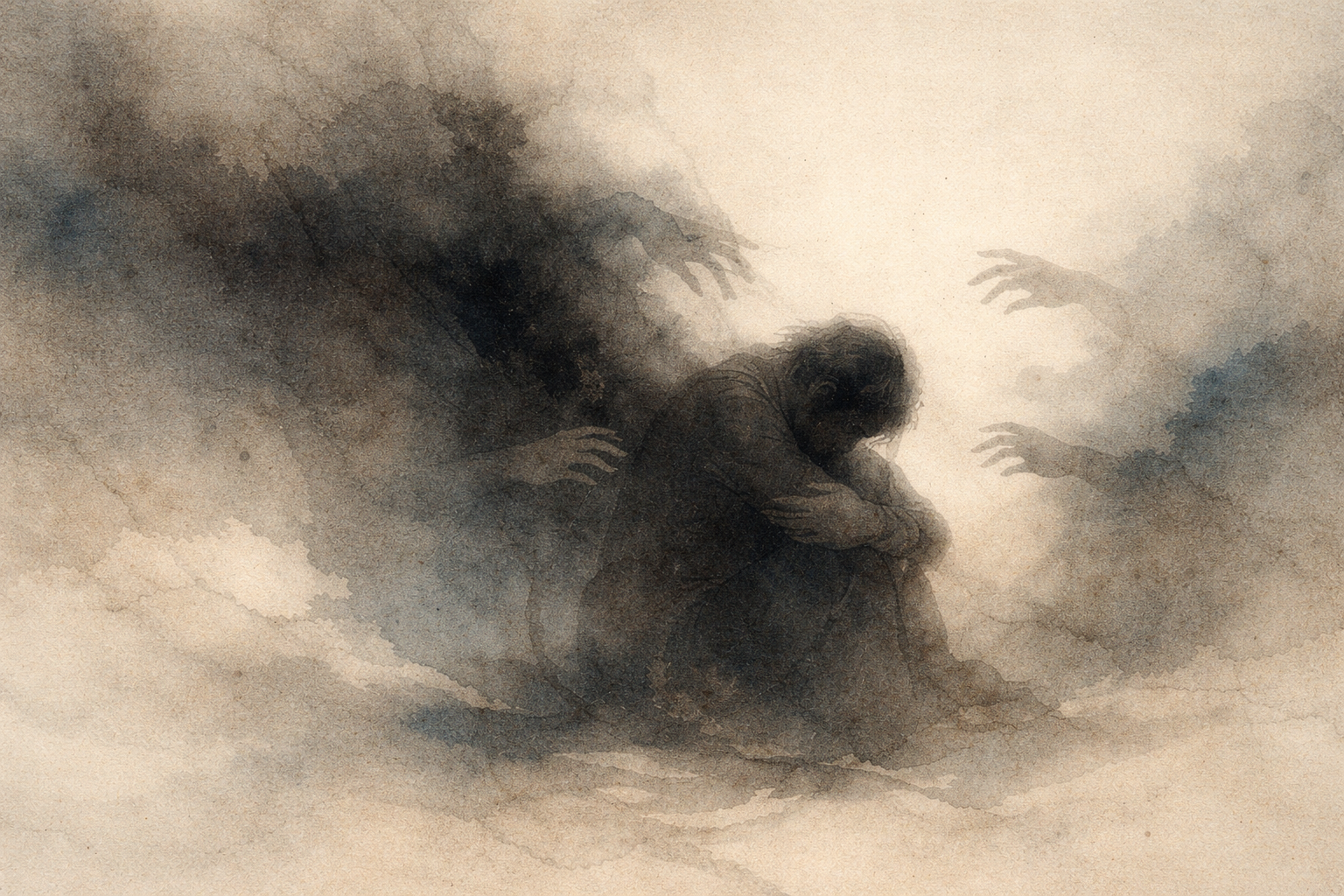
A common Buddhist way of seeing is to treat “heaven” and “hell” as names for experiences that arise when certain conditions are present. When the mind is flooded with resentment, suspicion, or panic, the world narrows and hardens; even a normal room can feel hostile. When the mind is steady and kind, the same room can feel workable, even gentle. The point isn’t to force a belief, but to notice how experience is shaped.
Think of a workday: one harsh email arrives, and suddenly everything is interpreted as an attack. Your body tightens, your thoughts speed up, and you replay conversations that haven’t even happened yet. In that moment, “hell” isn’t a distant place—it’s the claustrophobic reality created by a particular mental weather. Later, a sincere apology or a small act of understanding can soften the whole field. The outer facts may barely change, but the inner world does.
In relationships, the same pattern shows up. When you’re caught in blame, you can’t hear nuance; you only hear threat. When you’re caught in craving, you can’t rest; you’re always reaching for more reassurance. When you’re caught in numbness, even good news lands flat. These are not moral labels stamped on a person. They’re descriptions of what it’s like to live inside certain reactions.
So when Buddhists speak about heaven and hell, it can be less about signing onto a cosmic map and more about recognizing how suffering and ease are constructed—through attention, through repetition, through what the mind keeps feeding. Fatigue, stress, and loneliness can make the “lower” states feel inevitable; rest, honesty, and connection can make the “higher” states feel natural. The lens stays close to what can be observed.
How It Shows Up in Ordinary Moments
Notice what happens when you wake up already tired. The smallest inconvenience—traffic, a spilled drink, a slow computer—can feel personal. The mind starts narrating: “Of course this would happen to me.” That narration is powerful. It doesn’t just describe the day; it manufactures the day’s emotional climate, and the body follows along with tension and impatience.
Then notice a different morning: you slept well, or you had one quiet minute before checking your phone. The same traffic is still there, but it doesn’t hook you as deeply. You can feel irritation arise, but it doesn’t have to become a full identity. The mind has a little space. In that space, “hell” is not denied—it’s simply not fed into a larger story.
At work, a common trigger is comparison. You see someone else praised, and something contracts. The mind starts building a case: why you’re overlooked, why it’s unfair, why nothing will change. Even if you keep smiling, the inner experience can be scorching. It’s not dramatic in the movie sense; it’s ordinary. But it’s unmistakably painful, and it colors everything you touch for the next hour.
In the middle of that contraction, sometimes there’s a brief noticing: “This is what jealousy feels like.” Not as a confession, not as a self-improvement project—just recognition. The heat may still be there, but the mind is no longer completely fused with it. The story loosens a little. The body releases a fraction. The world becomes slightly wider again.
In close relationships, “heaven” and “hell” can alternate quickly. A partner forgets something important, and the mind jumps to meaning: “I don’t matter.” The pain is real, but the interpretation can be fast and absolute. Later, you remember a hundred quiet ways you are cared for, and the same event looks different. The emotional world changes, not because facts were erased, but because attention stopped clinging to one interpretation.
Even silence can swing both ways. On one day, silence feels like relief—no performance, no pressure. On another day, the same silence feels like rejection, and the mind fills it with imagined criticism. The difference is not the silence. The difference is the mind’s habit of turning open space into a verdict.
Over time, it becomes easier to see that “heaven” and “hell” are not only about big life events. They are built from small moments of tightening and releasing, from the way a thought is believed or questioned, from the way a feeling is resisted or allowed to pass. Nothing mystical is required to recognize this. It’s as close as your next reaction.
Where People Commonly Get Stuck
One common misunderstanding is to assume Buddhism must either copy a familiar heaven-and-hell system or reject it entirely. But the language can be used in more than one register. Sometimes it points to afterlife imagery; sometimes it points to the immediate texture of experience. Confusion is natural when the same words are carrying different kinds of meaning.
Another sticking point is the idea that “hell” talk is mainly about fear and control. In many Buddhist contexts, the emphasis is less on being threatened and more on being shown: when the mind is consumed by hatred, it burns; when it’s consumed by greed, it starves; when it’s consumed by confusion, it stumbles. This isn’t a courtroom scene. It’s closer to how a mood changes your whole day.
People also get stuck thinking “heaven” must mean constant happiness. But ordinary life doesn’t work that way. Even a good day includes frustration, uncertainty, and loss. A more grounded reading is that “heavenly” experience is lighter, less tangled, less self-centered—still human, still changing, but not dominated by the same compulsions.
Finally, there’s the habit of turning these ideas into identity: “I’m a hell person” or “I’m trying to be a heaven person.” That habit quietly reinforces the very tension it wants to escape. It’s more workable to see shifting conditions than fixed labels—like weather patterns moving through a single sky.
Why This Question Matters in Daily Life
When heaven and hell are treated as distant endpoints, the present moment can feel like a test you’re constantly failing. When they’re seen as descriptions of lived conditions, the present moment becomes more honest: this is what anger does to a conversation; this is what fear does to the body; this is what kindness does to a room.
In small conflicts, this perspective can make the emotional stakes clearer without making them dramatic. A single sarcastic comment can create a miniature hell for an afternoon. A single moment of patience can keep a difficult evening from tipping over. The point isn’t to be perfect; it’s to see how quickly a mind-state becomes a world.
It also softens the obsession with certainty. People often want a final answer—literal or not literal, real or not real. But daily life keeps offering something more immediate: the direct evidence of how clinging and aversion feel, and how relief feels when they loosen. The question becomes less theoretical when it’s recognized in the middle of a commute, a meeting, or a quiet kitchen.
And it can bring a certain tenderness. If hell is not only “out there,” then it’s easier to recognize it in yourself without shame, and easier to recognize it in others without contempt. Everyone knows what it’s like to be trapped in a story. Everyone knows what it’s like to come up for air.
Conclusion
Heaven and hell can be heard as distant places, but they can also be recognized as the changing climates of the heart. Experience keeps turning, moment by moment, shaped by what is grasped and what is released. Karma need not be argued about here; it can be noticed in the simple way a single reaction becomes a whole world. The rest is verified in the middle of ordinary life.
Frequently Asked Questions
- FAQ 1: Do Buddhists believe in heaven or hell in the same way as Christianity?
- FAQ 2: Do Buddhists believe hell is eternal?
- FAQ 3: Do Buddhists believe in heaven as a permanent paradise?
- FAQ 4: If Buddhists believe in heaven or hell, who decides where you go?
- FAQ 5: Are Buddhist heaven and hell literal places or mental states?
- FAQ 6: What do Buddhists believe happens after death regarding heaven or hell?
- FAQ 7: Do Buddhists believe you can go to heaven or hell more than once?
- FAQ 8: Do Buddhists believe good people go to heaven and bad people go to hell?
- FAQ 9: Do Buddhists believe in punishment in hell?
- FAQ 10: Do Buddhists believe heaven and hell exist right now?
- FAQ 11: Do Buddhists believe animals can be reborn into heaven or hell?
- FAQ 12: Do Buddhists believe meditation guarantees heaven or avoids hell?
- FAQ 13: Do Buddhists believe in a final judgment that sends you to heaven or hell?
- FAQ 14: Do all Buddhists believe in heaven or hell?
- FAQ 15: Why do Buddhist teachings talk about heaven and hell at all?
FAQ 1: Do Buddhists believe in heaven or hell in the same way as Christianity?
Answer: Usually, no. Buddhist discussions of heaven and hell commonly differ from a one-time, eternal destination decided by a single divine judgment. They are more often presented as temporary conditions that arise due to causes and actions, and they can be understood as both cosmological and psychological language depending on the context.
Takeaway: The same words appear, but the underlying logic is often different.
FAQ 2: Do Buddhists believe hell is eternal?
Answer: In many Buddhist explanations, hell is not eternal. It is described as a painful condition that lasts as long as the supporting causes last, rather than an unending punishment. This is one reason Buddhist “hell” is often discussed as a changing state rather than a permanent sentence.
Takeaway: Hell is commonly framed as intense but not forever.
FAQ 3: Do Buddhists believe in heaven as a permanent paradise?
Answer: Often, heaven is not treated as permanent either. It can be described as a pleasant, refined condition that still changes and eventually ends when the causes that support it are exhausted. In a more everyday reading, “heaven” can also point to the felt ease that comes when the mind is less tangled in reactivity.
Takeaway: Heaven is frequently described as enjoyable, but not final.
FAQ 4: If Buddhists believe in heaven or hell, who decides where you go?
Answer: Many Buddhist presentations do not center on a single being who judges and assigns a destination. Instead, the emphasis is on cause and effect: actions, intentions, and habits shaping the kind of experience that follows. The “decider” is less a person and more the momentum of conditions you participate in creating.
Takeaway: The focus is typically on causes unfolding, not a judge issuing a verdict.
FAQ 5: Are Buddhist heaven and hell literal places or mental states?
Answer: You’ll find both interpretations among Buddhists. Some take heaven and hell as literal realms; others understand them as vivid descriptions of mental suffering and mental ease that can be experienced here and now. In practice, many people hold the language lightly and pay attention to what it points to in lived experience.
Takeaway: The terms can be read literally, psychologically, or both.
FAQ 6: What do Buddhists believe happens after death regarding heaven or hell?
Answer: Views vary, but many Buddhist frameworks include the possibility of rebirth into different conditions, including heavenly or hellish ones, depending on causes. At the same time, Buddhist teaching often keeps pulling attention back to the present: how suffering and ease are being shaped right now through the mind’s patterns and choices.
Takeaway: After-death language exists, but the practical emphasis often stays close to the present.
FAQ 7: Do Buddhists believe you can go to heaven or hell more than once?
Answer: In many Buddhist descriptions, yes—because heaven and hell are not necessarily final endpoints. They are conditions that can arise and pass as causes change. This is part of why Buddhist heaven and hell are often discussed as temporary and conditioned rather than permanent and absolute.
Takeaway: Heaven and hell are commonly treated as repeatable conditions, not one-time final destinations.
FAQ 8: Do Buddhists believe good people go to heaven and bad people go to hell?
Answer: The framing is often less about labeling people as “good” or “bad” and more about recognizing patterns and consequences. Helpful actions and intentions tend to support more ease; harmful ones tend to support more suffering. It’s not always presented as a simple moral sorting of individuals, but as conditions arising from causes.
Takeaway: The emphasis is usually on patterns and consequences, not fixed moral identities.
FAQ 9: Do Buddhists believe in punishment in hell?
Answer: Buddhist hell imagery can sound like punishment, but it is often explained more as the natural ripening of painful causes than as a sentence imposed by an authority. In a psychological reading, “punishment” can look like the way hatred, cruelty, or obsession burns the mind from the inside and distorts perception.
Takeaway: Hell is often framed as consequences unfolding, not punishment assigned.
FAQ 10: Do Buddhists believe heaven and hell exist right now?
Answer: Many Buddhists would say heaven and hell can be recognized in present experience as shifting states of mind and heart. A day dominated by anger, fear, or shame can feel hellish; a day with steadiness, generosity, and connection can feel heavenly. This doesn’t require denying afterlife interpretations—it simply highlights what is immediately observable.
Takeaway: Heaven and hell can be understood as experiences that arise in everyday life.
FAQ 11: Do Buddhists believe animals can be reborn into heaven or hell?
Answer: In traditions that include rebirth across different forms of life, it is generally considered possible for beings to move between many conditions over time, including heavenly or hellish ones. Interpretations differ, and some people focus less on mapping possibilities and more on the ethical and psychological meaning of suffering and ease.
Takeaway: In rebirth-based views, movement between many conditions is typically considered possible.
FAQ 12: Do Buddhists believe meditation guarantees heaven or avoids hell?
Answer: Meditation is not usually presented as a transaction that guarantees a heavenly outcome or automatically cancels hell. It is more often associated with seeing the mind clearly—how reactivity forms, how it passes, and how suffering is intensified or softened. Outcomes are not typically framed as guaranteed, especially in a simplistic “do X, get heaven” way.
Takeaway: Meditation is commonly framed as clarity about experience, not a guaranteed afterlife reward.
FAQ 13: Do Buddhists believe in a final judgment that sends you to heaven or hell?
Answer: Many Buddhist explanations do not revolve around a single final judgment. Instead, they emphasize ongoing cause and effect, with conditions changing as causes change. That makes heaven and hell less like permanent verdicts and more like experiences that arise from accumulated patterns.
Takeaway: The model is often ongoing cause-and-effect rather than a one-time final judgment.
FAQ 14: Do all Buddhists believe in heaven or hell?
Answer: No. Buddhism is practiced across many cultures, and people relate to heaven-and-hell language differently. Some hold it literally, some symbolically, and some focus mainly on the here-and-now meaning of suffering and ease. What’s common is the attention to how experience is conditioned and how it changes.
Takeaway: Belief varies, but the focus on conditioned experience is widespread.
FAQ 15: Why do Buddhist teachings talk about heaven and hell at all?
Answer: One reason is that vivid language can make consequences feel real, not abstract. “Heaven” and “hell” can point to the intensity of ease and suffering—whether understood as future realms, present mind-states, or both. The terms can function as mirrors, helping people recognize what certain habits create when they are repeated and believed.
Takeaway: The language often aims to make cause-and-effect feel immediate and human.