



Buddha Eyes Symbol Meaning: Awareness, Insight, and Clear Seeing Explained
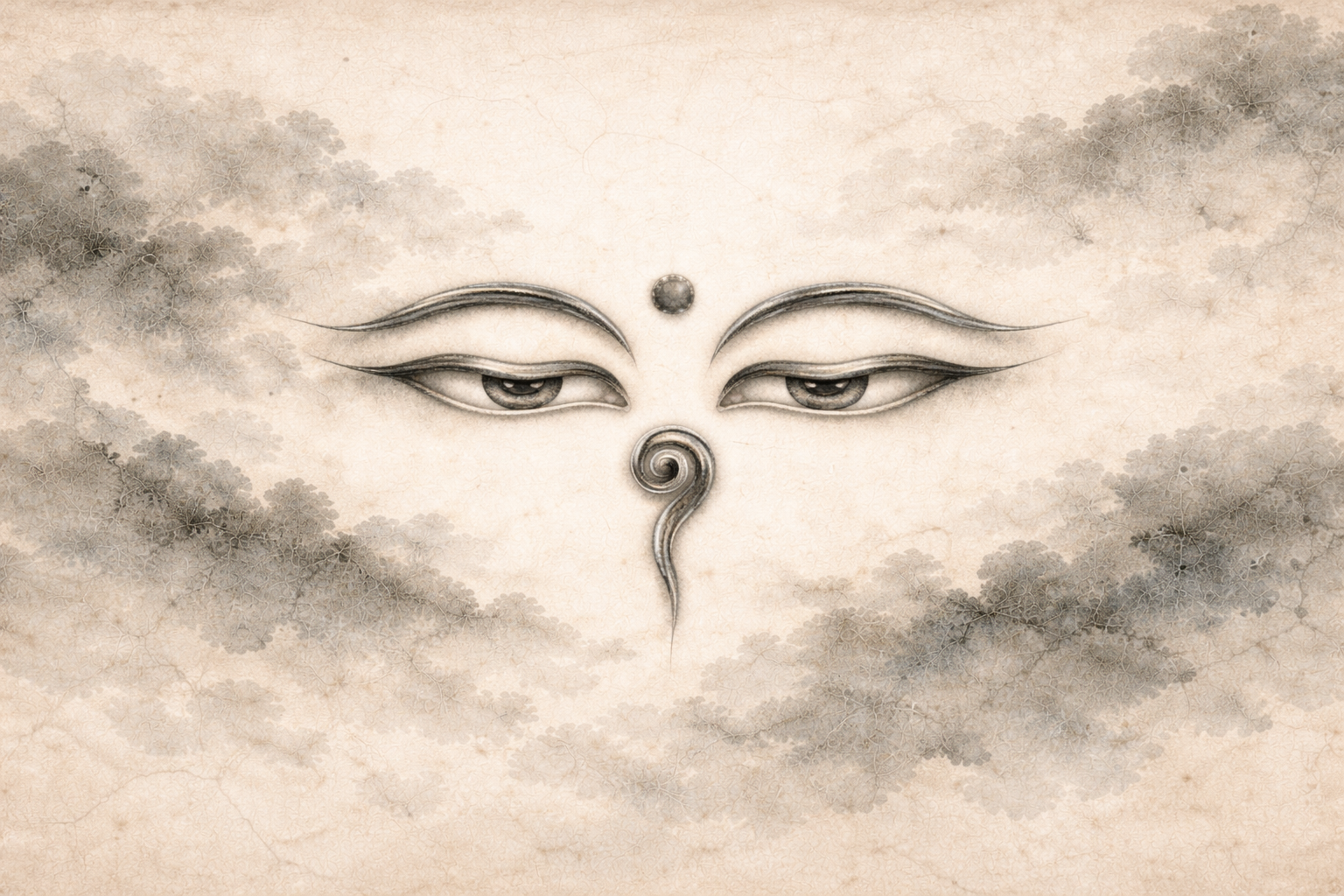
The Buddha Eyes Symbol: Meaning and Spiritual Insight
Quick Summary
- The Buddha eyes symbol is a visual reminder of awake, steady awareness rather than a “lucky sign.”
- The two eyes suggest clear seeing; the central mark points to insight beyond ordinary, distracted perception.
- It’s commonly seen on stupas and sacred architecture, especially in the Himalayan region.
- The symbol can be used as a gentle prompt to notice reactivity and return to presence.
- It’s not about being watched or judged; it’s about remembering to look honestly at experience.
- Different cultures render it differently, but the core message stays practical: wake up, soften, see clearly.
- Respectful use matters—context, intention, and placement can keep it from becoming mere décor.
Introduction
If you’ve seen the Buddha eyes symbol on a stupa, a wall hanging, or a piece of art and felt unsure whether it’s religious, decorative, or even a little unsettling, you’re not alone—and the confusion usually comes from treating it like a logo instead of a practice cue. At Gassho, we focus on grounded Buddhist symbolism as it functions in real attention and everyday life.
The Buddha eyes symbol is often called “all-seeing,” but that phrase can mislead. It doesn’t have to imply a supernatural gaze scanning your private thoughts. A more useful approach is to read it as a mirror: a reminder to see what is actually happening—inside and outside—without flinching, exaggerating, or turning away.
When you understand it this way, the symbol stops being mysterious and starts being practical. It points to a simple question you can apply anywhere: “What am I doing with my mind right now?”
GASSHO
Ask and learn about Buddhism in daily life.
GASSHO is a Buddhist community app where you can learn Buddhist teachings and ask questions to the head priest of Kongosanmaiin Temple on Mount Koya.
A Clear Lens for Understanding the Buddha Eyes
The core view behind the Buddha eyes symbol is not a doctrine you have to adopt; it’s a lens for noticing experience. The eyes represent clear seeing—attention that is steady enough to recognize what’s present, and kind enough not to turn that recognition into self-attack.
In many depictions, the eyes are calm, symmetrical, and open. That calmness matters: it suggests awareness that doesn’t lunge toward what it wants or recoil from what it dislikes. It’s the difference between “looking” and “seeing.” Looking can be restless and selective; seeing is simpler and more honest.
Between the eyes you’ll often notice a stylized mark. People interpret it in different ways, but the practical point is consistent: there is a kind of knowing that isn’t just visual. It’s insight—recognizing patterns like craving, aversion, and confusion as they arise, and noticing that they don’t have to run the whole show.
Read this symbol as an invitation: let awareness be wide enough to include your thoughts and feelings, and precise enough to notice when you’re being pulled off-center. It’s not asking for perfection; it’s pointing to a workable way of relating to what’s already here.
How the Symbol Shows Up in Ordinary Moments
In daily life, “clear seeing” usually begins as a small interruption. You’re mid-scroll, mid-argument, mid-worry, and something in you notices: the body is tight, the breath is shallow, the mind is rehearsing. The Buddha eyes symbol can function like that interruption—quiet, direct, and not dramatic.
Consider a common moment: you receive a message that feels critical. Before you even reply, there’s a surge—heat in the face, a story forming, a need to defend. The symbol’s reminder isn’t “be spiritual.” It’s simply: see the surge. Name it internally. Let it be seen without instantly obeying it.
Or take a softer example: you’re walking and suddenly feel a wave of sadness with no clear cause. The habitual move is to fix it, distract from it, or explain it away. The Buddha eyes symbol points to another option: stay present. Feel the sadness as sensation and mood, notice the thoughts that gather around it, and allow it to move without turning it into a verdict about your life.
This kind of seeing also applies to pleasant experiences. When something goes your way, the mind often tightens around it: “I need this to continue.” The symbol’s calm gaze can remind you to enjoy without clinging—appreciation without grasping, gratitude without anxiety.
In conversations, clear seeing can look like noticing your urge to interrupt, your impulse to win, or your fear of being misunderstood. You don’t need to suppress those impulses; you can simply recognize them as impulses. That recognition creates a small space where a wiser response can appear.
Even in mundane tasks—washing dishes, commuting, answering emails—the Buddha eyes symbol can represent a return to basics: feel the hands, notice the breath, sense the mind’s speed. When attention steadies, life doesn’t become perfect; it becomes more accurately perceived.
Over time, the symbol can shift from “an image out there” to “a posture in here”: open, steady, and not easily bribed by mood. Not as an achievement, but as a repeated, ordinary choice to see what’s true in the moment.
Common Misunderstandings That Cloud the Meaning
One misunderstanding is that the Buddha eyes symbol means you are being watched. That interpretation tends to produce either guilt or rebellion—neither of which is the point. The symbol is better understood as a reminder to watch your own mind with honesty and care.
Another common mistake is treating it as a generic “Eastern” design. When it becomes a vague aesthetic, it loses its function as a prompt toward clarity and compassion. Context matters: this image is tied to places of practice, remembrance, and ethical orientation.
Some people also assume the symbol promises protection or luck. While sacred images can feel supportive, the deeper support here is practical: seeing clearly reduces unnecessary suffering. It’s less about changing the world through symbolism and more about changing how you meet the world.
Finally, the central mark between the eyes is sometimes reduced to a simplistic “third eye” fantasy. You don’t need special powers to work with this symbol. The “extra” seeing it points to can be as plain as recognizing a reactive pattern before it becomes a harsh word or a regrettable decision.
Why This Symbol Still Matters in Modern Life
Modern life trains the eyes to dart and the mind to fragment. Notifications, headlines, and constant comparison make attention feel borrowed—pulled outward, then scattered. The Buddha eyes symbol matters because it points back to a stable center: the capacity to notice, pause, and choose.
It also quietly supports ethical living. When you see your own motives more clearly—your impatience, your desire to be right, your fear of being left out—you’re less likely to act them out unconsciously. Clear seeing doesn’t make you “better”; it makes your actions less accidental.
On a human level, the symbol can soften self-deception. Many of our problems persist because we half-know what we’re doing but refuse to look directly. The Buddha eyes symbol is a gentle insistence: look. Not to judge yourself, but to stop abandoning reality.
And in a culture that often confuses intensity with truth, the calmness of the eyes is its own teaching. It suggests that insight can be quiet, and that steadiness can be more transformative than drama.
Conclusion
The Buddha eyes symbol is best understood as a practical reminder: see clearly, without panic or pretense. The eyes point to steady awareness; the central mark points to insight that recognizes patterns before they harden into suffering.
If you keep it close—on a page, in a room, or simply in memory—let it do one job well: bring you back to what’s happening now, and help you meet it with honesty and a little more kindness.
Ask a Buddhist priest
Have a question about Buddhism?
In the GASSHO app, you can ask questions about Buddhist teachings, daily concerns, and how to understand Buddhism in everyday life.
Frequently Asked Questions
- FAQ 1: What is the Buddha eyes symbol?
- FAQ 2: What do the two eyes mean in the Buddha eyes symbol?
- FAQ 3: What is the mark between the eyes in the Buddha eyes symbol?
- FAQ 4: Why is the Buddha eyes symbol often painted on stupas?
- FAQ 5: Is the Buddha eyes symbol the same as the “all-seeing eye” in other traditions?
- FAQ 6: Does the Buddha eyes symbol mean someone is watching me?
- FAQ 7: What is the spiritual meaning of the Buddha eyes symbol?
- FAQ 8: Is the Buddha eyes symbol specifically associated with Nepal?
- FAQ 9: Why do some depictions of the Buddha eyes symbol include a spiral or question-mark shape?
- FAQ 10: Can the Buddha eyes symbol be used as a meditation focus?
- FAQ 11: Is it disrespectful to wear the Buddha eyes symbol on clothing or jewelry?
- FAQ 12: What colors are traditionally used in the Buddha eyes symbol?
- FAQ 13: How is the Buddha eyes symbol different from a “third eye” symbol?
- FAQ 14: What is a respectful way to display the Buddha eyes symbol at home?
- FAQ 15: What is the simplest takeaway of the Buddha eyes symbol for everyday life?
FAQ 1: What is the Buddha eyes symbol?
Answer: The Buddha eyes symbol is a traditional image of calm, open eyes—often painted on stupas—meant to represent awakened awareness and clear seeing. It functions less like a decorative motif and more like a reminder to notice experience honestly and steadily.
Takeaway: Treat the Buddha eyes symbol as a prompt toward clear awareness, not a mere design.
FAQ 2: What do the two eyes mean in the Buddha eyes symbol?
Answer: The two eyes commonly suggest clarity and wakefulness—seeing what is present without distortion from strong preference, fear, or distraction. They can be read as balanced attention: neither grasping nor avoiding.
Takeaway: The eyes point to steady, unbiased seeing.
FAQ 3: What is the mark between the eyes in the Buddha eyes symbol?
Answer: The central mark is often interpreted as a sign of insight beyond ordinary, surface-level perception. Rather than implying “magic vision,” it can be understood as the ability to recognize mental patterns—like reactivity or craving—as they arise.
Takeaway: The central mark points to insight, not supernatural powers.
FAQ 4: Why is the Buddha eyes symbol often painted on stupas?
Answer: Stupas are places of remembrance and practice, and the Buddha eyes symbol serves as a visual cue to return to awareness. Positioned high and visible, it reminds visitors to slow down, pay attention, and relate respectfully to the space.
Takeaway: On stupas, the symbol functions as a public reminder to wake up and be present.
FAQ 5: Is the Buddha eyes symbol the same as the “all-seeing eye” in other traditions?
Answer: They may look superficially similar, but the Buddha eyes symbol is typically framed as awakened awareness and inner clarity rather than surveillance or judgment. Its practical emphasis is self-observation and insight into experience.
Takeaway: Similar appearance doesn’t mean identical meaning—context changes the message.
FAQ 6: Does the Buddha eyes symbol mean someone is watching me?
Answer: In its common Buddhist context, it’s not meant to suggest you’re being monitored. It’s better understood as a mirror-like reminder to watch your own mind—your intentions, reactions, and habits—with honesty and care.
Takeaway: The “watching” is an invitation to self-awareness, not fear.
FAQ 7: What is the spiritual meaning of the Buddha eyes symbol?
Answer: Spiritually, the Buddha eyes symbol points to awakening as a quality of seeing: recognizing what is happening without denial, exaggeration, or clinging. It suggests a calm, compassionate clarity that can meet any experience.
Takeaway: Its spiritual meaning is clear seeing paired with steadiness.
FAQ 8: Is the Buddha eyes symbol specifically associated with Nepal?
Answer: The Buddha eyes symbol is strongly associated with Himalayan Buddhist art and is especially well-known in Nepal, where it appears prominently on many stupas. Variations exist across regions, but the recognizable “stupa eyes” style is widely linked to Nepalese contexts.
Takeaway: The symbol is widely recognized in Nepal, though its message travels beyond one place.
FAQ 9: Why do some depictions of the Buddha eyes symbol include a spiral or question-mark shape?
Answer: Some versions include a stylized form that people describe as spiral-like; interpretations vary by culture and artistic convention. Practically, it can be taken as another cue toward inward reflection—turning attention back to the mind rather than chasing appearances.
Takeaway: Artistic details vary; the consistent theme is reflective awareness.
FAQ 10: Can the Buddha eyes symbol be used as a meditation focus?
Answer: Yes, it can be used gently as a visual reminder to return to present-moment awareness—especially to notice reactivity and soften the gaze of the mind. The key is to use it as a cue for attention, not as an object of obsession or “special effects.”
Takeaway: Use the symbol to return to awareness, simply and lightly.
FAQ 11: Is it disrespectful to wear the Buddha eyes symbol on clothing or jewelry?
Answer: It depends on context, intention, and placement. Many people wear it respectfully as a reminder of awareness, but it can be seen as disrespectful if used carelessly, placed in inappropriate areas, or treated as a trend divorced from meaning.
Takeaway: If you wear it, do so with context and respect.
FAQ 12: What colors are traditionally used in the Buddha eyes symbol?
Answer: Traditional depictions often use strong, clear colors—commonly blues, whites, reds, and golds—depending on regional style and the surrounding stupa design. Color choices can be symbolic, but the central message remains the same: wakeful clarity.
Takeaway: Colors vary by tradition; the meaning centers on awareness.
FAQ 13: How is the Buddha eyes symbol different from a “third eye” symbol?
Answer: The Buddha eyes symbol is typically presented as awakened seeing and mindful presence, while “third eye” imagery is often used more broadly (and sometimes vaguely) to imply hidden perception. The Buddha eyes emphasis is practical: seeing clearly what is already here.
Takeaway: The Buddha eyes symbol points to grounded clarity, not vague mysticism.
FAQ 14: What is a respectful way to display the Buddha eyes symbol at home?
Answer: A respectful approach is to place it in a clean, intentional space where it won’t be treated casually—ideally somewhere that supports quiet reflection. Avoid placing it in areas associated with clutter or disrespect, and let it serve as a reminder to return to awareness.
Takeaway: Display it intentionally, as a reminder rather than mere décor.
FAQ 15: What is the simplest takeaway of the Buddha eyes symbol for everyday life?
Answer: The simplest takeaway is: notice what your mind is doing right now, and see it clearly without harshness. That one move—honest noticing—can reduce impulsive reactions and support kinder choices.
Takeaway: Let the Buddha eyes symbol bring you back to clear, kind awareness.